
James (Chapel Hill, Sydney)
Bec (Trinity Grove, Adelaide)
Christopher (Providence Church, Brisbane)
There’s more freedom to try new things and more freedom to innovate with less risk as we seek to reach the lost. The new things that church plants try and that ‘work’ often find their way into existing churches after the kinks have been ironed out, helping to refresh and renew broader church practice.
While this is true, the central reason for church planting is not to outsource creativity from the established church into a safer environment. The central reason for church planting is because new churches reach new people.
The National Church Life Survey statistics from Australia in 2011 show that 6% of people in existing churches weren’t in church five years ago. But this figure was 33% in church plants. That’s five times more effective at drawing in people who either have no history with church or who haven’t been to church in a very long time.
Church planting is not just a good idea. It’s a biblical and effective strategy that is reaching many people who would otherwise remain unreached by existing churches. If we’re going to reach Australia with the gospel, church planting is not optional.
Reality: We need to do both. We need to plant healthy churches and work to revitalise those churches who have forgotten the reason they were first planted. Churches at different life stages help each other.
Established churches learn from church plants: plants excel at contextualising the gospel for those they’re trying to reach. They help build a sense of urgency about the desperate need of the gospel across Australia and promote an attitude of being willing to try new things.
Church plants need wisdom and partnership from established churches: As plants grow and become more complex, they rely on the systems processes, policies and experience established churches have from years of ministry.
If we didn’t do both, we’d lose out on the rich and positive impact that churches at different life stages bring to the gospel ecosystem across Australia.
Reality: To see the flaw in this argument, I want you to do an experiment. Pick an area in Australia you would call a ‘bible belt’. That is, where it would traditionally feel saturated with gospel-preaching churches.
When you run the numbers you realise:
Of course we need more churches. To be more precise, we need more churches that are effective at reaching new people.
Reality: Church plants reach new people – period. On average in those first few years they have 5-6 times the number of dechurched and unchurched people attending on Sundays than established churches do. So we need to keep doing it.
Why are they generally more effective at reaching new people than established churches? Because of the clarity of their mission, the nimble-ness of the decision-making and their ability to do crazier things. They often reach those people established churches aren’t reaching.
Reality: When people think about planting they’re often thinking of one model – the pioneer/parachute plant where someone heads in to start a new church from the ground up with no-one but them. While for many plants in our network this is the story, more and more we’re seeing different models of planting emerge. A plant could look like sending 30 people from one church 20 minutes down the road or a campus model with one church in multiple locations.
Not all church plants are the same. If we think they are, we’re going to both limit the number of possibilities we see for reaching the lost and limit the number of people willing to plant.
Reality: It depends how you think about risk. If it’s centred on the possibility of something being here in 10 years or not, yep – church plants are definitely riskier than established churches that can last well into the future because of their deep roots and resources in the past. But if you’re centring risk around people not hearing the Gospel…then the risk is worth it, and the expense is worth it.
With that in mind, over the course of the past 15 years we’ve seen that there are a number of things we can do as a network to minimise risk, increase health, while utilising resources well. A strong assessment before launching into the church plant, connections with other planters who are walking the same road, bootcamps to prep for the launch of a church plant, coaching in those first few years, and connecting planters to prayer and financial partners to help get things off the ground, has helped the churches in our network more than double the chances they’re reach healthy sustainability.
There’s no guarantees with church planting (or any ministry for that matter), but it’s too important not to do, even with the risk.
Reality: One of the biggest myths we’re constantly battling with potential church planters is the myth that all church planters are the same. The stereotype is of a pioneer, entrepreneurial, rogue hipster who is very particular about what they wear (not that there’s anything wrong with that). Are there some church planters like that? Of course!
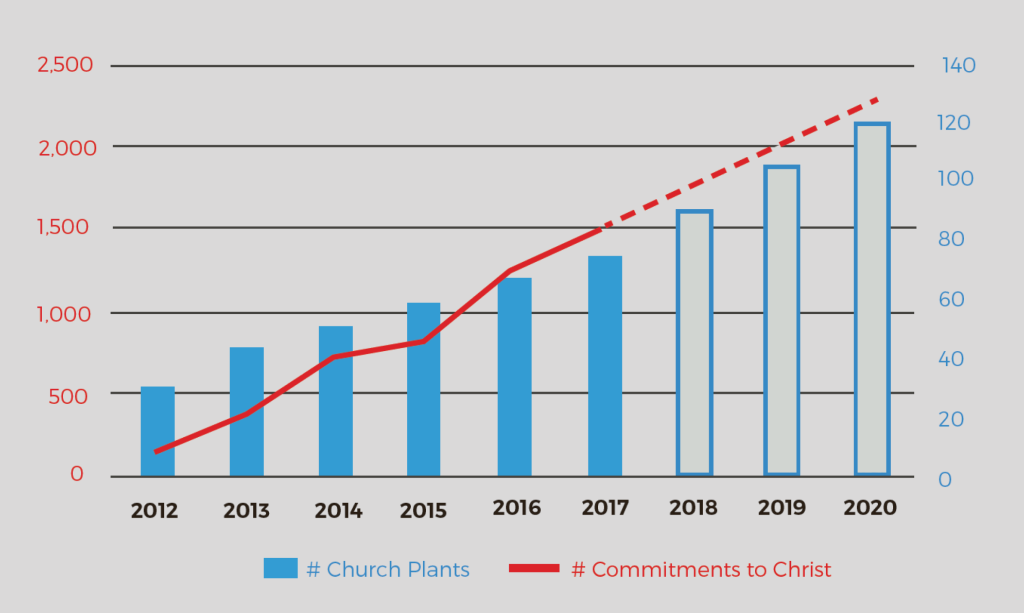
In our network of 120 planters we’ve seen many types of leaders emerge. Some are highly entrepreneurial, some are highly structured and systematic, some are highly extroverted, some not.
In addition, while older planters, say over 45, do not have hipster looks, they do have a wealth of pastoral experience reducing the risk of relational blunders. They have learnt to patiently accept the Lord’s timing rather than rush ministry plans. They also have biblical teaching and training to draw upon that can save considerable time in preparing sermons and the like.”
We don’t want all church planters to look the same because we’ve got a big and complex country to reach. We need different types of leaders.
Reality: Church planting is not a higher-calling nor the calling of one particular type of person. If we’re going to reach Australia with the gospel, we need thousands more people willing to church plant.
Not only to lead church plants, but to move to new churches and invest in new communities and people groups. To live amongst them and bear witness to the beauty and the power of the gospel.
Could that be you?

Church Planting Australia podcast

The State of Church Planting in Australia

New Trends in Church Planting in 2024

200 more church plants

When Not To Plant A Church

Church Planting in Adelaide with Des Smith

Church Planting in Sydney with Andrew West

Do I Have What It Takes To Plant A Church?

ABN: 92 139 724 806
Copyright 2024 Reach Australia
All rights reserved
Privacy policy