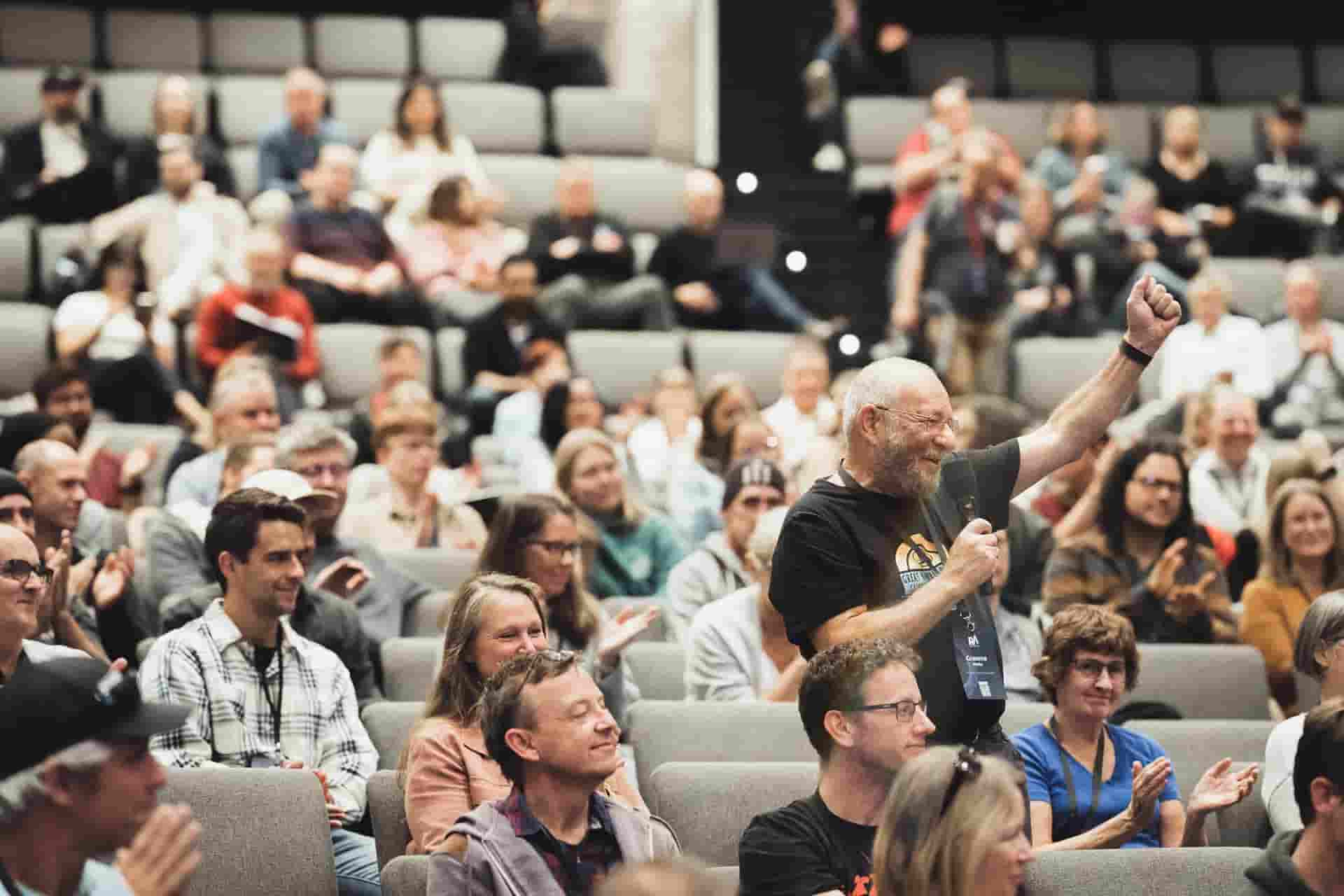
Andrew Heard speaks to three experienced pastors on the trials and errors they have made over decades of church planting. Includes Brian Vaatstra (TAS), Dave McDonald (ACT) and Greg Lee (NSW).

Transcript
This transcript has been generated, and can contain errors. Please refer to the original recording for the definitive language used.
Read transcript
[0:00]
So we've got a bunch of guys here who have been planning for some years. And if I might just be allowed to moralise for a moment or something, make some point that church planning's been happening in Australia for a long, long time. It's not just sort of the last five years that suddenly it's become all the rage. It's been happening in Australia for, well, at least since 1780, isn't it? Pretty much. So every church you've ever gone to, this one was a plant.
[0:30]
They've all been plants, and I think ours a very helpful line is, why did we ever stop? But it's been happening a lot, and these guys have been doing it. So we're going to dig into the next steps along. So these three have been planting churches. We're going to hear their story and also think into a little bit. The next step, you plant, how do you then keep growing the work? We're grounding ourselves theologically, and we want to learn the skills to grow the work. In each church plant we established, so it keeps pushing on. So let's go through. Some of them you've met, but,
[1:00]
not everyone. Brian, why don't you tell us, give us a quick rundown on your planting, what you've been doing. And now, in some of this, we'll be talking numbers again. I thought the conversation yesterday was very helpful that we need to keep helping each other to, before God, recognize that it's him who gives the growth. There's nothing personally that we ought to take to heart about whether it's growing or not. We need to deal with that individually. But each step of growth,
[1:30]
is an increase in the number of people converted. We trust, and that's what we're aiming for, so it's great news. So, Brian, why don't you kick off and tell us, you've been planning churches, give me a little bit of information about where and when and so on. I'll move down to Kingston in 97. So you have to tell us where Kingston is because… Kingston's just south of Hobart, about 10 minutes south of Hobart. Yep, great. And the first few years was just getting the gospel right. And then in 2000,
[2:00]
2001 had a small core group which were really keen to plant in a neighbouring suburb called Margate. Called? Margate, which is just 10 minutes south of Kingston. And so I got behind that group and we started public meetings 2001. Then we made a decision, well we made a decision prior to that as a Kingston church that we would be, this is a congregational decision that we would be proactive in church planning because the building.
[2:30]
building was full. And we wanted to, we thought, well, what are we going to do about that? Should we build a bigger building? Shall we, you know, run multiple services? And we decided, as a whole congregation, to be, we made a decision to be proactive in church planning. So that then gave me a license to pursue that. And so I, one way was planted. And then Bay, which is, again, a neighbouring suburb, 10 minutes to the east.
[3:00]
We planted there in 2005. And then Summerlees came along in 2009, I think, Dave, a year before Dave came along. So it came along. Well, it was a core group again. And we planted, that was an area which is about five minutes away from Kingston in the same Kingston. And then the recent one in late 2009 was Hewnville, which is about 20 minutes south.
[3:30]
and we're currently planting, this is probably the bigger challenge, the Kingston congregation had to have two services and we're currently moving the second, transitioning the second service into a separate church plant with its own leadership. I'm just intriguing. And how big was Kingston when you started this process? Probably about, about five or 600. And you planted five churches since then? Four. Four plus the evening, which is just happening at the moment. Yeah, yeah, yeah. And in each, occasion, you've gone to the plant with the core group?
[4:03]
Yes. And so you've worked it up. How long were you there before you moved on? Where? With each plant? Most of the year, although with Bay, I've actually stayed there. Okay. That's a nicer place, is it? No, no. Look, it's actually been really hard, particularly in the early years, to find suitable guys to take on the work. Hence Geneva. Exactly. Yeah. Great. raise up a whole crowd of people. Yeah, yeah, good, good, good. Greg, tell us about your planning experience.
[4:34]
Yeah, so very different. Our church was actually planted in 1989, I think, by somebody else. Hold the mic right up. I think that's the key, isn't it? Am I? That's better, sorry. Yeah, by somebody else. And through various, a whole bunch of different things, by 1999, they were at the point where they were about to make a congregational decision to close the door. So it had grown to, I think, about 70 or 80, and then had dropped to about 25. despite some really faithful people being there. They're faced with a decision. Do they shut the door, or do they try and find another new pastor?
[5:07]
I happen to be around. And so we, if you like, it's a repotting with 25 people moving on from there. And the nice, the other helpful thing about what you've been involved with up at Hunter Bible Church is that you've done a bunch of transitions during that time as well, and so we'll unpack that in a moment. Yeah, great. Dave, tell us about your story. Yeah, my initial ministry in Camden, was with AFES, student ministry. And the group… Point your mic at you. That better? Is that right? How's that?
[5:37]
And the campus group at the ANU in Canberra effectively died. There were about three people there. And we brought a team of seven from Sydney to Canberra, re-established that work. And that started to grow quite quickly, built up another local church. We became part of that. Out of that church in 95. we made the decision to plant crossroads, which was initially on the university campus. And we had, I guess, probably about 40 or 50 people
[6:11]
beginning that church. That started in February 96. Various congregations have grown out of that. We had, I guess, a church plant from there that we didn't really take responsibility for, but it took a number of people away. And that's been a good thing. thing, I think overall, that it's planted other churches since. That was in 2002. And then in the last couple of years, we've planted another congregation, which has now become fully independent church called Central to the south of Canberra.
[6:47]
And, again, a very strong core group there. We probably had about 20 family units in that part of Canberra that began that. It's quite viable. And, of course, we're leaving in three. weeks time to plant in Darwin. Yeah, it's fantastic. We look forward to hearing all of that story as time goes obviously. Can we now give us some sense of the scale now of each of these churches? The reason I want to do this is because we want to, we want to pass on some information about
[7:19]
what are some of the mechanisms that we can take advantage of to enable growth to happen under got. So Dave, give you some sense of the scale. How many people are coming along to the ministries at Crossroads and how many staff have you got particularly? Let's just hit that one. Okay. We have a morning congregation, which is a lot of families, probably about 260, 280 adults and as many children. We have an afternoon congregation for international students, usually about
[7:51]
40 to 50 people, which is very evangelistic. And we have an evening congregation on the university campus, which probably typically has about 300, 320 people, but over 400 kind of coming through. The church down at Central, which is now independent from us, they are regularly getting 100 adults plus children on a Sunday. Staff, eight senior staff, theologically trained senior staff, and we have a team of six ministry trainees and a couple of office
[8:26]
administrative support staff. Yep, let's run through. Yeah, three congregations, between them, about 500 adults, about 200 kids. So it's about 700 all up. I think we've got 11 senior staff and eight trainees coming on next year. We've got just over 1,000 in the network. Most of the church plants are around 100.
[8:56]
100, 120, 130. Hewainville's 70, I should say, but the others are around that sort of stage. And I've got six staff and three apprentices, I think. Okay. So that gives you some sense that we trust every church plant will keep growing, as new people are one to Christ, and you will have to deal with the issues that these three have dealt with. So let's hear of some of the issues they've dealt with.
[9:26]
For instance, can you, in a minute each, give me some sense of what do you think are the big headline keys that under God have facilitated growth? Make sense? I just tit you up at lunchtime and I say, look, tell me, what do you think under God has been the thing that's made this really fire here? You're going to Blacktown next year. Is that public? No, so don't tell anyone. Yeah.
[9:56]
It's like saying, can I tell everyone you're pregnant? No. So you're going to Black Town. So I guess one sense the question is, what have you seen happen where you've been that you'll want to transplant into that context there to get it going in? Make sense? Give you enough time to think? Go. Look, I'm really convinced. Thank the sitting aliens for that. Training is the growth engine of the church. And we've put it up.
[10:26]
put a lot of energy into training as many people as possible. We've got stacks of really great elders in our church plants as a result of that. A lot of the core groups came out of the training work, and we've done that together with the Presbyterians. And so we've used to help each other in that task because it's pretty difficult for a church on its own to do all the sort of training work, and particularly the apprentice training work. And that really, through Vision 100 has borne grapefruit, I think.
[11:00]
I think another thing, particularly in my context, is where Dutch is managing the money. It's always a real challenge. And so I think that's why when I started, when I thought about church playing, I actually did the work myself. So I was looking after the big congregation, as well as doing the church plant, because that way it was cheaper. It cost me a bit, but it was cheaper for the folk. Eventually, they're actually, quite generous. I don't want to knock it. They're actually quite generous and the budget's massive now,
[11:30]
if you look at the whole network. But, you know, they need to be convinced that this is actually a good thing and that they're putting their money in the right sort of places and they're very careful in that sense. So can I just summarize you saying training of, well, delegation into leadership to training, raising up leadership and running, you've got to manage the money in the finance to develop the work. Is that something what you're saying? Greg. Yeah, I think early on I had this idea that what we needed to do is just multiply structures,
[12:01]
get as many structures going as possible, and then I realized that it just didn't work. What do you mean by structures? Well, you know how you have this sense that the busy you are running events, so a men's breakfast, and then a youth thing, and then something for women, and then something for cyclists, something for surfers, and you've got so many structures going, and it makes you feel busy and therefore successful. I think we've started to realize the three. Three things that we're just going to keep trying to nail are the best preaching we can do every week, because people come to that.
[12:32]
They want to sit under the kind of preaching that teaches them the Bible and that they think that was worth coming and bringing my friends to and so on. Really nailing our front door. So as Christians come, giving them the clearest, most helpful way into church, and as non-Christians come, giving them a structure that really explains the Bible and that our people trust, and we just keep going back to that again and again. so that's the front door and then nailing the living room only having one or two structures that look after people every week so really pairing back the number of things we're doing
[13:05]
and making them very strategic and thought out and the other big thing was getting me out of the living room getting me out of our growth groups out of the pastoral ministry and teaching people the priesthood of all believers and the ministry of all believers that they need to look after each other and we're there but we're not their first port of call so I think the preaching the front door and the living room have been our three most important discoveries okay if you're doing a house church yeah just to use the image yes gotcha Dave our church has relied heavily and benefited enormously from the university ministry and I think
[13:40]
sometimes that is hidden things that we've not really made a clear commitment to one of them is the training and equipping of gospel workers and a whole range of ministries the campus work has done that very well we've benefited from it but I think as we continue now and more and more grow from other areas outside of the university we need to put more effort into that equipping and training of people to prepare them for their work and I think in our context seeking to
[14:11]
maintain a high standard of faithful engaging preaching of the word and having that platform at the core of what we do I think has been a significant aspect of our growth. Now think right back, so we're talking many years now, back to the beginning, there's just your quick headlines. Would you change or nuance them when you were thinking about I landed with a church plant of 10, 20, 30, 40 people, repotting with 20, half a dozen, whatever it was.
[14:45]
What do you remember in those first couple of years were for you, either the things you hit well and were significant for growth or the things you wish you'd gone back and spent more time on to be significant for growth? Do they change what you've just said or is it just to reemphasise it again? Reemphasise it again. Look, you know, I think I sort of muddle along a bit. I'm reasonably strategic but I muddle along a bit and you know I think that the spirit's got to lead the work in a sense. So for example
[15:19]
starting the work in each. of the church plants. I really held it back most of the time. The core group, you know, I got the core group together. I was driving it, but, and they were keen to start and we'd say, no, no, no, let's do a little bit more time. You know, let's finish the gospel-centered church booklet, for example, which goes on for 16 weeks or fortnights if you're meeting fortlighting, and holding them back a little bit, because I wanted to sense a spiritual energy in the group that was actually
[15:49]
really wanting to do this. I wanted to see that temperature rise. In the case of Bay, for example, we had a fairly small group that met for a whole year, planning in Blackman's Bay. They were keen to do that, but I didn't think there were sufficient people in the group. And at the beginning of one year, 2005, there were a whole pile of new families that moved into Blackman's Bay from interstate and other places that joined Kingston Church, and they were really keen. So God,
[16:19]
brought those people along and then, you know, away we went with that church plant. So, I don't know. I mean, the sovereignty of God, just go with it in the sense that, you know, I'm sure there's been heaps of mistakes I've made, but who cares? I mean, you know, in a sense, you learn from them if you can and you do it a little bit better. I think one of the biggest mistakes I probably made was handing over the work to a few people who weren't really suited for it.
[16:49]
one in the church plants and one of the main congregation, and that was partly because of the pressure of trying to find good people, just couldn't find them. We might come back to that. That's a good point to raise. But for you, the spiritual temperature of a group, I think that's a whole insight. Yeah, Greg. I was 26 when I started, and I think I made, there was the first church that I passed it, and so I think that the mistakes relationally I made in those first two years I've been paying for for the next 10. And so, I think, even though I'd done MTS, I still kind of wonder if I was a bit young.
[17:24]
We're still trying to work out whether or not it would have been good to let that group of 25 fail completely as a church, let them shut the door and then restart an entirely new one. I can still see benefits and advantages with both. One of the things I definitely would have done earlier is move away from having congregational pastors who are all rounders and do everything to move. towards specialists who take a particular role. I think I should have done that three years before we did.
[17:55]
Yeah. Love to hear more about that in a second. So thinking right back. Yeah. You can't put an old head on young shoulders, and I think I was very much being pulled along. Things were just happening and was being swept along and I don't think I had a very clear vision for where I saw things leading to, ending up. But on reflection, I think it would have been been helpful to have more clarity about the shape, skeleton, the structure, the kinds of outcomes
[18:27]
that we were looking for so that we steered things along those directions. Because I think our ministry was kind of fairly amorphous in lots of ways. And to get shaped that was sustainable for growth, we had to make changes and put things back and reconfigure it. And there was a certain amount of instability, I think, in our early years, just continually changing things, which on the one hand I would say is good. because you don't get set in a rut. But on the other hand, I think we fell into the trap of continually reinventing wheels, not developing systems that could be propagated, growing out of what we were doing.
[19:02]
So next time round, I'm keen to have a clearer shape structure to build things around that's scalable and think of what are the things to get at to the next level and the next level. Yeah, good, good, good. But, am I right in saying you wouldn't say to those of us who are starting again to stress over that but just get into it. I think you're saying you can't put an old head on young, just get going. Do you know partly what you're saying?
[19:33]
Well, it's easy to analyse things with hindsight and to think you could have done this and you could have done that. But yes, if you're stressed too much over getting things perfect, then you'll do nothing. Yeah, yeah, yeah, yeah. Who you watch is the clouds, never plants. Yeah, yeah, yeah, yeah. It's better to aim for something and fail, I think. but be clear what you're aiming at. Yeah. Yeah, good, good. Tell us, I want to talk about staffing and growth barriers, which will touch on this restructuring issues, and then we're going to open up four questions.
[20:04]
One of the first steps I take it for growing capacity, only one of the first steps, not the first step, is appointing staff, building a team. Now, you guys have all got larger teams, which means not only have, you appointed the first staff member, but you've appointed a number since, and so now you know how you wished you'd done it the first time, yeah? So what advice would you give to guys who are, you know, they're starting to hit one of those growth barriers that can largely only be broken by appointing another person to work in the
[20:34]
ministry with them? What advice would you give right back then? Who would the person be? What area would you give them to do? How would you work through some of that process? Do you want to, are you happy to start again, Brian? You want to? Yeah, cool. I think that I've learned over the years that you need to actually, there's three, I think the book, Sticky Teams actually helped me a lot in this. I don't know whether you read that. Yeah. Sorry to Sturley Thunder. It talks about three areas of unity in the staff team.
[21:07]
One is theological. That's obviously sort of ground zero. You've got to get that right. The second one is practical unity, which means you need to be on the same page, practically in terms of the outworking of how you're going to do church. And the third one is sort of personal, sort of relational unity, if you like. I mean, that's not big, but it's actually, it is actually quite important because, you know, you tend to think, oh, look, you know, it doesn't matter if we don't actually get on really, really well.
[21:39]
I think there's huge challenges in that area if you don't get that right. So I've learned over the years you really need to select staff that have those three things. that have those three things in place. I think, sorry, if I might just jump in, Bill Hewels, has, we have disagree with him over a number of big issues. One of the comments he made about staffing was, how do you know you've got the right staff member? Well, when he sticks his head in the door, when you've got yourself immersed and buried in a sermon, if you're not happy to see him, you've got the wrong staff member. I think there's some wisdom there, yeah.
[22:10]
It's got to be someone you're glad to see when he comes. Yeah, I found that book Sticky team so helpful. It came at just the right time for us. We've had a whole bunch of fantastic staff come through and join us, and we've also had a couple of, that have just been really hard. In terms of building a bigger team, one of the things that he says that we've started to latch onto where we're at is he quotes some kind of stat that when you hire from outside, the success rate is something like 50%.
[22:44]
When he says he hires from inside, the success rate, the success rate, rises to about 95%. And so I wonder if what I would have done and what we're looking to do a lot more now is, trying to find the people who we already know really well and bring them on, rather than search far and wide, and never to let our desperation to find a worker mean that we settle for someone we're not certain about it. I think there are two big principles that I've picked up in the recent times. Larry Osborne.
[23:17]
I'm frustrated. I've got a lot. I want to say it's interesting. Hiring from within is strong but has real problems that hiring from without doesn't have. Do you want to share some of that? Yeah, I mean, when you hire from without, you're actually hiring with some real criteria. So, you know, the person's got all the things you're looking for. They've got a fresh set of eyes. There's, they're able to, because of those fresh eyes, they're able to come in and interact with,
[23:47]
church without feeling like this personal loyalty to you is there. They've got a loyalty to the gospel. The difficulty is how well you get to know them and whether or not the DNA just is there. So over time, what I've discovered is it's not just a theological position we're looking for. We're actually looking for someone who's going to agree with us on gospel pragmatics so that we don't just constantly bump heads. And that, to be honest, I think is where it lands. I don't think it lands so much in theology, but just how do we apply this theology and you want to do church differently?
[24:20]
The advantage of the person coming out is they've got all of the qualifications you want, they've got the fresh eyes, the advantage of the person inside is you agree on gospel pragmatics, and you've known them long enough to know whether or not it's going to work. So, yeah, I'm not sure I'd want to say one is always better than the other, but our experience has been, of the people, our last five have been hired in-house and all, when they look in the door, I'm through, the last two we hired from outside, at the end of both of them, I thought I wish I hadn't hired them.
[24:52]
Can I just make a comment there? Sure. Maybe it can be a little broader than that. When you say hiring from within, our experience in the Vision 100 network is that, and they've been trained up across the group, if you like, of churches, and a lot of them actually have come from the Presbyterian end, is those guys know Southern Tasmania, they know Vision 100, they know the church cultures and people, and our best hiring has come from within the Vision 100 sort of group, if you like. I'd go with that as well.
[25:23]
Yep, yep. All strength, yep, but there are weaknesses too. Yeah, a couple of comments. One thing I've learned is that you never add anyone to a staff team. You just create a new team. That is, when any new person comes in, it changes the dynamics of all relationships, and you've got to appreciate the fact that everything has changed. and it's not just the way it was with another Cudley person. And I think, therefore, we've made some probably overly ambitious staff appointments.
[25:57]
So in the last year, we appointed three new people at the beginning of this year, and we probably didn't appreciate just the size of the impact that they would have, to have three new people and all of those new relationships. I think a lesson that was said to me very early on before I made my first additional staff appointment was that if you add somebody, then you're going to make more work for yourself, not less. And I didn't believe it. I do now.
[26:27]
And the reality is that you have another set of obligations relationally that are very, very important to your other staff. They will either really expand your minutes. and therefore just add pressure on the whole ministry or they'll they'll add problems to the ministry. So it's never going to be neutral and to anticipate that if we ever think, oh, I need to add somebody because I'm struggling and I'm underwater here and I need somebody else,
[27:02]
that's not the solution to add the person. There's other things we've got to deal with as well. Because they would just make it even more complicated. That's good. We don't add staff to take away tasks simply we're doing. We're adding staff to build strategic capacity and growth potential. Indeed. Yeah, yeah, yeah. Good. Good. Your early question about who do you add first, I'll just have an anecdote here. In the second year of our ministry, it grew very rapidly, particularly amongst students.
[27:33]
My wife was pregnant when we arrived and then had another child within two years and was really unable to engaged a lot on campus and we were addressing a ministry to over 50 more, probably around about 50% young women and so I made a first appointment of a woman to join the team, partly because of a whole range of pressures and issues and pastoral responsibilities there. But that was circumstantial and I think I think it will vary.
[28:05]
So I wouldn't anticipate it would necessarily be the same first move in a different context. That's helpful. There is no rule on the first appointment. Yeah. Good. We need to keep moving on. Actually, spouses in staff appointments. So you're hiring a bloke. How do you consider think about the wife? You're hiring a woman. How do you think about the husband? Is that part of the picture as you hire? The biggest question we ask and we try and figure out,
[28:38]
and it's kind of hard to explain the distinction is, Does the wife think the husband is going into the ministry and she's going with him? Or do they feel like they're both going into the ministry? And it'll be a different amount of time that they spend, because obviously she's going to have children and so on, but her heart is in it. So I think I've seen troubles when the wife's going, well, this is his thing and I'm happy to support him. Whereas when the wife says, no, we're both really into this, and I know that my job is going to look different, but we're both really into it.
[29:11]
for us has been a really key thing to help people not out. Yeah. Other input there? Nope. Great. I think the first staff appointment, the first couple are far more intensive in all the relationships you have together, and all of that process is far more critical than the 20th staff member. Do you know what I mean? Like, or as if we're going to get there. But you know what I mean? It's that kind of, you've really got to think harder about it. It's a mass.
[29:41]
marriage you're entering into, whereas later it's a team you're having someone join. It's a different dynamic entirely. Look, given time, let's throw open. We didn't get on to growth barriers, but that's another year. We'll be able to pursue that, and you can chew up that kind of thing with them later. Do you want to ask any questions? And if you don't, I've got a million more. We made a decision in different bodies. We made a decision early that. We made a decision early that that we would actually multiply the number of places where we would have a gospel witness
[30:19]
rather than grow the church bigger even with multiple services. Now, we could do that. In fact, that's a possibility still now to multiply services, and the guy who's looking after Kingston now thinks that might be a good idea. One of the things that we decided also in making that decision was that we wanted our communities to be intergenerational. And we thought that splitting the morning congregation into two would probably create a, you know, a problem with that.
[30:52]
So you'd have maybe the older people coming in the morning, the young family's coming at, you know, at nine, and the young family's coming at 11 or something like that. And we really felt strongly that we wanted to keep an intergenerational feel about all our congregations. And that's actually worked also in our church plants. got intergenerational congregations by and large. So that was just a decision that we made at the time. Not saying the other's wrong, but it's just the way we went. Let's see, Greg, he's thought a lot about this lately.
[31:22]
Not that Brian hasn't. I mean, but this is the reason I thought about is you were the one who bullied me into thinking differently. Bullied you. Yeah. My minister's not. Early on, I pitched to our church. Let's plant 30 churches and just see what happens. And Andrew Forksmeiter is some thinking about maths. And so there's 300,000 people in Newcastle. Say we plant 30 churches. They all grow to 100. What does that reach? What's that 3,000?
[31:53]
I can't remember the math. Can't remember the maths. 30,000. 30,000. So, yeah, we've got to plant 30 churches to reach 10% of Newcastle. The problem is, where do you find 30 planters? Where do you find 30 buildings? Where do you find all of the money that it takes? And I realize that if you've got a church of, say, 50, 60 people, it's very hard to plan another church. Because you're not making budget. You haven't got the people. I think what Kingston has managed to do is they've got the mother church that manages to keep sending off these other churches.
[32:29]
And you need some of those bigger bases, I think, to be able to then spit off the ministries. Because the cost for each individual church is actually still really. really high. It's still got to pay a minister or he's still got to work part time and so on. And so where we've ended up going is we want stacks and stacks of ministries throughout Newcastle and we want two or three very big churches that are going to fund those ministries. To be honest, the other thing for me, Andrews, it's so hard to get a church to grow that I reckon once you've
[33:01]
started growing, if the horse is running, you just keep running. I kind of figure we're in Newcastle until it stops growing because. Once it stops, it's hard to, once you hit those growth barriers. And so I want to just keep growing and growing and growing and start new ministries, but probably not plant a bunch of small ones. We recognized the crossroads in Canberra a few years ago that we had an effective ministry at the university campus. We were sending people out into the world mission-wise, but we didn't have any clear strategy for reaching Canberra, suburban-wise.
[33:37]
And Canberra is a very planned city. There are about five or six kind of key town centres. And so we thought what we need to do is kind of put beacons in each town centre. And that's really been behind our strategy of planting this year to extend our reach. Because whilst we had people who were willing to drive right across town to come to us, their neighbours wouldn't come with them. And so we realised that we needed to get church closer to them. And that was a real turning point after a lot of years for us to think that way. The thing that I'm only starting to appreciate
[34:09]
in terms of experience and not just theory, is the serious cost to the mother church each time you do that. And I think that cost is a lot more dramatic if the sending church is smaller. So a church of a thousand or so can send off 50 people. And yeah, it'll be painful for some, and there may be a strategic area that's now lacking or a key person that's not there anymore. But when you're sending off a group of 50 from, say, three or four,
[34:39]
100 or 200, that really bites. Now, it does open up opportunities for new people to rise up in the Mother Church, but there's a lot of grief and planning that needs to kind of be acknowledged in that, I think. Can I just have a quick rant? Look, we've got to reach 22 million people. We're not going to do it with one strategy. We've got to do both end. We've got to be planting hundreds of churches, thousands, and we've got to be growing each of those churches to be thousands.
[35:13]
Why choose one strategy only? It just seems nuts. It seems, especially when you've got a resource, sent it in a facility. Why waste this resource when you can actually invest in it to grow it and keep sending off? Just do both. It's easy. I think what we've done is we've defaulted to this is not growing. Let's not think about why it's not. Let's just get something else happening. Let's do both end. I want to ask anything else.
[35:45]
I really feel like, Andrew, you've got a lot more to say in this because you're five years down the track ahead of us. I'll tell you where we're at at the moment. Every week we hire, I think, six different buildings for things that we're doing. And as we get bigger, there's a certain fragility where we lose a venue, It's a monstrous hassle. So that's kind of there, especially with schools starting to get a little bit nervous. Our relationship with our school is very important. And so there are certain things that it's not as secure as we imagine going on renting.
[36:23]
Another thing that we've kind of begun to notice, and it was someone else who gave me these kinds of figures. In fact, Andrew can probably give them more accurately. For you guys, you spent, was it six million? How much was your building? Are you comfortable telling it? Because I know that there was another church just down the road built a building that held maybe 20% of the people, but it costs three quarters of the cost or something. It's a per head figure you've got to work on. The whole question is per head. The problem is we look at raw figures.
[36:55]
So we've just had a giving campaign last weekend, so just two days ago to raise another $6 million. And I think the total budget for our property is about $12 million. Now, you kind of lick. think of that and people go, gee, how many churches could you build in the sedan or, you know, Eritrea or something like that for that much money? Well, you've got to, there's a whole bunch of issues that we could wrestle into. But one of them for us in our context is per head cost. It costs us for, we're moving into a second facility, to build the next facility will cost us per head
[37:32]
three grand. Now, I don't know if you've ever done your figures on your church. facility, but you'll find for most of you, you're spending more per head on your facility than we ever will. Because we've got a bigger scale, so you build a bigger building, but it's per head cost that matters. We were spending 90 grand a year on rentals. Yeah, we're up around 60, 70, yeah. 90,000 bucks a year on dead money in facilities that were hindering our ability to do the ministry,
[38:03]
not helping. We grew by 20% as soon as we moved into our new facility. 20% more people, non-Christians coming just because they saw the facility. You know, gospel work was just exploding. And it was a facility that was planned for and designed and works for gospel ministry, whereas half of ours don't. Yeah, yeah, yeah, yeah, yeah, just the best we can get. One of my little rants on this, and I'm sorry we should stop, but one of my little rants on this is that most of us have done our ministries through the 70s, 80s, where we've been landed with facilities looking somewhere else that don't work.
[38:37]
work for our ministries. They cost a lot of money to keep them going, and we think money on properties are waste. But that's because we've been landed with facilities that aren't well suited to the work and it costing us an arm and a leg just to maintain. You build a facility that works well, and it's a massive increase. And just to say, too, a church of a hundred, we had a church of a hundred near us that spent some two or three million dollars on a building, and you kind of think, oh yeah, okay, you know, a couple of hundred grand, two hundred, you know, a million, two million
[39:08]
or whatever. And you go, yeah, okay. But when you do the per heat cost, it was like four or five times what we are paying for the many millions of dollars. Can I just add that we've been renting renting for 22 years in Canber and have no plans to build anything? Give us a different scene, though, different context. Give it to us. You spend like 50 bucks a week on a rent. No, no, no, it's gone up significantly, but… It's gone up significantly to what? We've spent $55, no, no, no. No, it's, we're looking at about 70,000 a year in rent now. We rent a Catholic girls high school with a big auditorium.
[39:41]
We got moved from that. We went into their gymnasium. We ran lecture rooms on the university. In our context, we couldn't, we couldn't do better in some ways than those university lecture complexes, because that's right in the very geographic heart of the group that are our most strategic mission field. So even if someone gave us 20 minutes, said, build your complex, we'd probably still want to rent on the campus. Yeah. Yeah. A lot of this stuff, which is healthfully hearing you, there's no right and wrong on it.
[40:13]
You've got to work out your context situation circumstance, but don't be naive. Don't just do a quick superficial analysis. You've got to think more deeply. And we're actually in between those situations. We've got two of our churches, the mother church and one plant have got their own buildings, and three of them are actually in rental. Yeah. That's helpful. We finish up there? Hansen, yep. And thank the guys. Very helpful to hear from.