
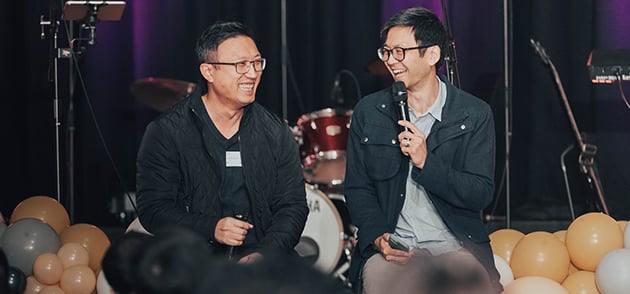
The Planter Sessions are a series of webinars, hosted by Geneva Push, interviewing different Australian planters and leaders on various planting, ministry, and pastoral topics.
In our fifth Planter Session Al Stewart interviews Peter Ko about the traps and trials of planning and planting ethnic-specific congregations.
Peter Ko is a Sydney pastor with significant experience in the area of ethnic-specific ministries – the founding director of RICE Regenerate, serving at the Chinese Christian Church Milson’ Point since 2005, and one of the planting pastors with South-West Chinese Christian Church since 2009.
Click here to download the research-intensive PowerPoint that accompanied this webinar.

Transcript
This transcript has been generated, and can contain errors. Please refer to the original recording for the definitive language used.
Read transcript
[0:00]
good morning everyone and welcome to the Geneva pushes next webinar in our series today we're actually talking to Peter Coe our student being a viewing him in a moment on traps for ethnic plants so we'd like to particularly welcome everybody who's come along we have 31 people who've registered to the webinar and I can see you filling up an hour in our webinar classroom if you like at the moment I've been particularly we'd like to thank the people who tuned in internationally we've actually got somebody joins us from the west coast of the US today and we also have all along
[0:31]
with him a couple of New Zealanders don't worry cousins we won't actually saury at the door we've also got some people from all around Australia so again thank you very much of being in part of the show and we look forward to taking your questions later I should say we actually have such a large registration this morning and a number of questions that have already started coming through that will be extending our webinar it's from 10 to actually 10 15 today so we understand if you have to go early but if you can stay around it'll be definitely worth your while and I'd like to begin by thanking our
[1:03]
sponsor for this webinar we wouldn't be able to do what we do with our ei insurance ei insurance provides particular packages for church planners so if you haven't actually worked out the church planning side of things in terms of insurance yet or if that it maybe you've just got some concerns and you're not sure how you would operate Olivia's encourage you to get away get along to ei org delay you and these guys will be able to help you think through all of the questions associated with insurance whether it be property or in fact our personal goods for church
[1:34]
planning so we encourage you to talk to them with those insurance needs now without any further ado I'd just like to introduce you to our Stuart altitude as a director at the Geneva push he is in fact one of the founding directors and he is a church planter in his own right and for that matter has just been working with churches for the bit well I'm not gonna say how long cuz he tells me that the photo looks have young enough for him to sort of be comfortable this morning but if anyone actually saw him there'd be a problem so our good morning how are you a good morning mark very well thank you
[2:05]
very well let me hand over to you and you can introduce our speaker today I speak today is Peter Coe P that is the senior pastor at Southwest Chinese Christian Church and is very kindly agreed to speak with us about planting churches with different ethnic groups so good morning Peter today our homeroom okay great to have you with us mate and I've got a group of people from around Australia and from the US and New
[2:39]
Zealand listening so mate Oh let's get to it can you give us a kind of a potted history of what's happened about the planting and so on of Southwest Chinese Christian Church over the last few years our church launched publicly in 2009 so we're about four and a half years old we started as quite a unique sort of joint partnership we are in an area now that for a little while our suburb had a big Anglican Church
[3:09]
building that was vacated for quite a few years everyone moved up the road to the neighboring church building so this big empty building had a senior pastor overseeing it who wanted to see ministry start again in the area but knew that the area was changing very rapidly too quite a if Nick but particularly a Chinese sort of demographic we haven't where neighbouring – very Chinese suburbs so he approached my my former church which is the mother church called
[3:40]
Chinese Christian Church Milsons point which is in the just north of the hub bridge in Sydney and that's probably one of the largest and the oldest independent Chinese churches in Australia and he approached us and said look we want to do some work there but we're not the right people to do it would you consider partnering with us to do Chinese ministry so after a bit of deliberation we formed a core group in 2008 and what was another unique feature was unlike most ethnic churches we we
[4:12]
strategically and I'll explain that in a moment but the reason we wanted – one of the things we wanted to do was to be able to reach across the different generations and language groups of Chinese culture of that ethnic community that we actually started one corner of about 20 odd people but we planted to public services when we launched Chinese one in Mandarin and an English one and we ran those one after the other on a Sunday morning and had to run to kids programs which was like planning to
[4:42]
churches almost and it was very tough going because our core group there needed to split into two working groups for each serviced but it was in the long run for 40 years on it was a really good idea because what that meant was each ministry group each language group got legs to stand on and now four and a half years on we're doing fairly well III guess by young churches go we have about 170 to 180 adults on a Sunday we have
[5:13]
about 20 high school youth who come on Sundays and another third overlapping thirty who go to youth group on Friday nights and about twenty twenty children under the age of twelve so it's it's it's been really blessed but one of the things we really tried to do from the beginning was partner together with the only good Church as well as working on how we can reach across the language groups so that's who we are across the nominations that that sounds
[5:43]
like a great idea now make 170 just quickly due to two services in Mandarin and English if they kind of grown in parallel they kind of grown a very similar sight yeah they're similar size in terms of adult attendants but all of our high school youth go to the English service rather than the Chinese service because they speak English but yeah we're looking at around you know 80 85 in each give or take in each service on a Sunday the difference is demographics so the
[6:13]
Chinese service is reaching a slightly older group so 50-plus are the kind of main group in terms of critical mass and the English service is probably the 30s young families are really growing as well as now we've got an injection of University students so they kind of have reached a different demographic we're trying to fix that especially with the Chinese service their opportunities I think to grow it amongst the 30 age group but they're the also the harder ones to reach in general from from the
[6:44]
kind of migrant population that are coming and wanting to go to church so we're working on how to how to perhaps plant something uniquely fitting for them in the near future okay now that when you say five minutes it doesn't sound a lot I'm sure it's been four and a half years of hard work for you I want to ask you what does multiculturalism look like in Australia I know we've got missiles in the US and New Zealand asking about Australia is it important for us to
[7:15]
start reaching different ethnic communities you can't you know just how significant is migration and different ethnicities in Australia yeah I've got some stats for you if you want to have a look at the the visuals so from the John 2006 so this is one census older but we've done analysis on the 2002 206 one the the series B population projection so this is how they project for a 50-year period to 2056 is that Australia will by then be thirty
[7:47]
five point five million people and Sydney will be seven million that's projection of population but what's interesting is that net overseas migration will contribute 36 percent of that growth I'm sorry 36 percent of the total population by 2050 six will be yeah and then it recedes migration in terms of growth though in those 50 years it's 87 percent of that population growth his net overseas migration and that's primarily going to come from Asia
[8:17]
so the sub-continental India Pakistan Bangladesh you know those sub Continentals are a huge growth area obviously mainland China but also the Middle East so we know that 68% of migrants who arrived in the eleven year period in Sydney from 2000 to 2011 were from Asia or Middle East I'll just give you a snapshot of a southerner today potentially planting next year in his Sydney Southwest has a
[8:51]
city called bankstown there's 30,000 people in base town and according to the latest census data 84% of that 30,000 have both parents born overseas 84% Wow 84% both parents born both parents so you know if you add one parent born overseas that even increases even more and the other thing we're noticing is that these ethnic communities are bunching together so I don't know if you call it multiculturalism because there are
[9:21]
certain suburbs like Hurstville for example that's so overwhelmingly one ethnicity it's actually quite moderate cultural but that's that's what Sydney is looking like and I would say a lot of Australian capitals experiencing the same but in Bankstown for example 15 percent are Lebanese 15 percent of Vietnamese 10 percent of Chinese and Anglo or Anglo British I think about 6 percent okay she got I mean really bored the world's mission gods really bought the world's mission for us
[9:52]
since okay so what is it I keep hearing people talk about there's a there's a difference between generations in terms of if you were born overseas and came here as an adult it's different to if you you will came here's the child to if you were born here but your parents are migrants what are the numbers about you know there's 1.5 and – and what does that mean mate if you're thinking ethnicity yeah I think this generational analysis is very important because while you want to talk about multiculturalism
[10:22]
and the idea of multiculturalism the reality is different generations integrate and feel comfortable that integrating with the dominant or the home earthy kind of Australian culture they integrate differently so I'll just show you in the next few slides that I think it's helpful to break it down into four different categories so there's the first generation migrants and what we first generation migrants are those who came as adults or late high school so just borderline nearly 18 you know major
[10:53]
the last year or so of high school now these are people whose heart language is whatever language they spoke in their home country and they're the ones who will speak this language you know in conversation if they had a choice that that's what they would speak to each other at home or if you have their first language that's the first word yeah there's a strong migrant work / study ethic as a lot of you will know and here's the thing they don't integrate
[11:25]
very well with other cultures and Anglo Australians so this is the reason why a lot of first-generation people do end up all migrating into the same suburbs because again in a suburb like Hurstville or KFC and other places in Sydney you can get away with speaking zero English because all the signs all the shop owners they speak whatever that language is that you've come from and if you can just stay there and stay there comfortably comfortable in your heart language your minds right yeah so they find a very daunting in fact to talk to
[11:55]
Australians and they I mean but they're they're very open to they just don't know how to approach it so that's generation one um one of the missing generations that then has until recently gotten neglected in analysis what are we called in 1.5 is so they are in between the first generation and the second generation and the second generation of those who were born in Australia or born in whatever country that's they've migrated to but the 1.5 us are not Australian born but Australian raised I
[12:26]
mean that's quite important because they're different to their parents the difference of the generation one is so these came as young children and probably up to early high school often puberty or around the puberty age is sort of a biological cutoff point and part of the reason is because if you try to learn a language after around the puberty age you can get very good and very fluent at it but you never will quite I mean there's generalizing but you never cry will you will quite speak like a native for some biological reason
[12:57]
they always have an action yeah you'll always have some sort of accent so you know Kevin Rudd speaks Chinese but he's got an accent so so these guys are bilingual are literally bilingual how many of them can read and write in their home and country language and their capital well they they can talk to their parents in that language but their heart language has now become English so they're very different therefore to their parents now they can mix and interact well with angular Australians but they won't feel
[13:27]
completely at home with them but here's the thing they feel particularly caught because they're not completely comfortable with their parents generation either so who do they tend to mix with they tend to mix with each other or even the Australian born the second generation words um so in a in a in a university campus where there's for example at the University of New South Wales a big commerce faculty probably 90% of Asians or Chinese a lot of them are second or 1.5 generation and they
[14:00]
mix together quite well and they sort of stick to each other they're hard to break into because the 1.5 is particularly will mix with each other or that group the next two are pretty simple you probably understand them a lot better the second generation are Australian born and raised their heart language is English they may speak basic or conversational language because their parents will speak to them in their language they will still feel somewhat torn between the two cultures but this group will have varying degrees of integration and it depends where they've
[14:31]
been brought up so the ones I grew up with when I was I'm an I'm at 1.5 but I was friends with a lot of Australian born second generation they at that time Sydney was not quite as Chinese and so these guys were quite happy to hang around with the Aussie friends nowadays especially if you're raised in certain parts of Sydney you may not meet many launch non ethnic people for example if you go to school around the North Shore or as I said again selective schools like James ruse in Sydney they're pretty
[15:04]
much 90% Chinese anyway so a lot of these second-generation actually though they consider themselves fully Aussie they still may be more comfortable around other other second genders and then the third generation plus is quite easy they're ones that only speak English on the whole they're very happy to integrate I just want to put a little note there in those born during the White Australia Policy a slightly different to those who've come post 1970s when the Australian policy had
[15:37]
Wallace scrapped in that those born during the White Australia Policy who might be third generation Chinese they actually tend to embrace their Chinese there's a lot more later on in age and I think it's partly because of the the stigma it was when they were growing up so they've kind of run back to their home culture even if there is speak much Chinese it's just something I've noticed amongst a fifty or sixty past generation yeah that's yeah that's a pretty easy breakup but it's helpful I think in general wise okay that is very very
[16:07]
helpful on I'm married to my 1.5 er yeah Chinese lady so do you do you think do you need a different planting strategy to reach those different groups or can you just have a kind of a you know like a blanket thing we're gonna reach Chinese people for we're gonna reach you know Greek people but what do you need a different strategy for those different generations yeah I think you do need to at least be aware of it because one of the traps is you might be thinking that
[16:39]
you are reaching an ethnic community but only scraping the surface so you might only be reaching your second and third generation is and not at all really getting into an ethnic community and penetrating it because you're not thinking about their home language ministry part of the reason why we started with both Chinese and English ministry was because we wanted to catch everyone between generation 1 and 2 yes yeah and so on unless you do some
[17:11]
thinking along those lines you will and then a lot of our Metheny churches go the other way they only think about their home language ministry and so they only end up reaching generation 1 and a lot of reluctant generation 1.5 is but by the time the 1.5 is grow up or they have second generation they don't feel a part of that church anymore and so that church ends up not not catching the the youth and young adults so you do have to think about these things otherwise you you will find
[17:43]
yourself in a little bit of a little bit of strife later on okay and we were talking earlier on then we'd call today bear traps for ethnic church plant it's playing to us that that was the first one about not being clear about which general right you want to run us through a few okay are you talking about you very clear in your jerky yep my first one is yes unclear objectives so you do have to think about Who am I trying to reach am I trying to catch am I trying to reach a penetrate a whole ethnic community or am
[18:14]
I just happy to reach you know english-speaking second generation third generation I mean in which case why am i if I'm only doing English ministry why am I particularly trying to why would I just just aim for that ethnic group why not open it up to other multi you know to other ethnicities if you're not clear at the beginning what happens is later on down the track things change or you meet obstacles and your objectives which weren't clear in the first place are going to get challenged so a classic
[18:45]
example is in a lot of ethnic churches they don't really think about that second generation and so down the track they start an english-speaking congregation but as that grows especially amongst the leadership and the young adults they want to now push for because they're second generation is they want to push for multicultural multi-ethnic kind of our feel now if you weren't clear about your objectives in the first place then you wouldn't know what to do with that push you know do you reject it a lot of you know the church is rejected out of hand
[19:15]
and in a sense forced their next generation to leave which is really unfortunate but if you had thought about that right at the beginning then you'd know how to deal with that how do how to clarify that with the group who's now pushing for change and perhaps how to work with them either to clance something different or to grow something that does fall within your objectives in the first place but is now the right stage to launch it so think you have to think through those things otherwise you're going to get in trouble these second trap I feel is that
[19:48]
you can be too ambitious as I said if you really want to penetrate an ethnic community you do need to think about first and second generation ministries operating side-by-side in some way so English ministry as well as the home language ministry but the question is are you able to do that off the back we were fortunate enough because our mother church was a he is a Chinese Church that has both so we could pull calls with people from both Chinese speakers and English speakers we have the luxury of
[20:18]
doing that as well as they are financially supported us for the first three and a half years of our life now a lot of churches won't get that luxury so if you're too ambitious you might not get anything done at all or you might just get something done that's pretty stroppy and then the other question is you might not be the right planter to be able to pull that off anyway so if you're too ambitious trying to reach both first and second generation but you're yourself not bicultural not bilingual you're a second or third generation person well maybe it's a
[20:51]
better idea to start something you can do and then pull people along the way as long as you're aware of it rather than trying to do everything yourself maybe it's better to start small and work in partnership with others for example so I think the two of ambitious can be a potential trap but then ironically the third trap is I think maybe you're not being ambitious enough and what I mean is this I think it's very Eve as I said it's easy to pat yourself on the back because you now have a congregation of second generation people because you're
[21:21]
doing it English or you have a growing congregation of first generation people because you're doing it in that home language and it's growing pretty quickly for example if you plant a Chinese speaking congregation pretty much in most places in Sydney it's going to grow pretty quickly you can just pat yourself on the back while doing a good job but you're not looking for opportunities to impact the entire ethnic community and so you end up doing a little bit of back patting and not thinking longer-term or how do i how do i reach the other segments of
[21:54]
this community that I'm not currently reaching how do I compliment my staff ratio so that we can reach others we're not reaching how do we grow it in the future so I think that's cause that's caused by not being ambitious enough ironically if number four I think we can sometimes make assumptions about culture that our assumptions were not actually true so well this is one trap I find and I'm the 1.5 person go ahead sometimes I
[22:24]
because I'm you know Chinese half Chinese at least I assume I know the culture but a lot of times I I still look at it from a Western point of view since I've grown up in the West so it's easy to assume you know the culture rather than inhabiting the culture and here's I think where the difficulty is you have to be theologians when it comes to culture you have to look at culture in a theologically nuanced way which is because it's very easy for us to not distinguish between Western and biblical
[22:57]
so a lot of times I look at the Chinese culture I think well that's just wrong well that's just unreal achill but I'm making a knee-jerk reaction about it rather than actually understanding it and critiquing it from a theologically nuanced way it's a very different thing so one clear example is face you know Asian cultures as well a lot of cultures have this idea of face and the importance of face culture and honor and those kind of things a lot of me just wants to say well this whole regard for faces on Biblical you know but actually if I'm to be a bit more nuanced and
[23:27]
theologically thought out I may not reject it out of hand I may actually see there's some parts of it that's part of God's common grace that I need to recognize other parts need to be redeemed other partly to be rejected that's a hard thing to do so we do need theologically trained thinkers I think as planters as well and then the other assumption of our culture is that you assume it's monocultural just because it's monolingual or mono-ethnic what I mean is this if you plant a Chinese Church just is the one that I am
[23:58]
familiar with and you think well they're all Chinese therefore there's one culture you fail to realize there are lots of different types of Chinese there are those from mainland China there are those from Taiwan and Hong Kong and Southeast Asia Singapore Malaysia as well as the Diaspora in places like Indonesia even places like Thailand and Vietnam and then even within China you'll find that the cultures vastly differing the East Coast Shanghai to the west you know in the desert and the dry arid places so it's any different so if
[24:29]
you assume that they're all the same you're going to make some serious mistakes and then finally my fifth trap for ethnic plants is disunity and if you know anything about ethnic churches especially if nick churches that start with the first generation is how easily they split and it's not just churches that split it's pastors who can't get along lay leaders who can't get along with the pastor's congregations even within the one roof the Chinese in the English for example you can't get along with each other the partner churches
[25:00]
can't get along in surest way I think to destroy any ethnic churches to have it unfortunately and it's quite a bit of I mean the NGO sovereignty of God this has happened but most ethnic church planting is planting in inverted commas usually it's because of ethnic church splits so it's putting a good putting a good face on a church split that's right that's right they're not actually actively proactively planting it's just
[25:31]
a group of people don't take it anymore and decide to go somewhere else unfortunately churches haven't got a monopoly on church splits yep yeah that's very nursing I'm gonna say – we're listening audience if you'd like to send in questions we can move to questions I'm about 20 minutes left so I'll be trying to send some of those questions given those five potential traps and so on and what you've seen over these how do you think evangelical churches
[26:02]
are going how successful are they being in reaching kind of the non-anglo communities around us oh yeah that's a bit hard for me to analyze because I don't have any hard data but on the whole I think we can say that much more work needs to be done regardless so my impression is you've got two types of churches trying to reach ethnics you either have ethnic community churches trying to do it and they tend to focus on the first generation or you've got now really
[26:32]
great denominations I'm trying to reach ethnic communities so they attach a you know a congregation to their existing English one I think though on the whole there's still much more work to be done because it's there's too few who are integrating and trying to reach the entire ethnic community and while we're having I guess moderate success or I guess relatively better success amongst some ethnicities in other ethnicities it's just not happening so I think yet
[27:04]
you know the Chinese workers is as bad as good as they can get the Korean work obviously has always been strong because the church is from Korea but once you're looking at Lebanese what you're looking at Arabic once you're looking at you know Greek Italian migrant communities where they have strong Christian but not evangelical ministries then you're looking at penetration that's that's hardly even there which is really sad so I think much more needs to be done yes okay it's a good answer I've got a
[27:36]
question here about them do you do you need for a pastor to be a church planter do you need to be of the same ethnic group as you're trying to reach so for example could an Anglo pastor or an Anglo plan to plant a Chinese church could someone from sri lanka plant a Sudanese church and I guess it's a subcategory too that you need to be able to speak the heart language of the people you're trying to reach yeah I
[28:07]
think the second part is is probably more important than the first in that if you speak a little of the hard language I think it's it's it's it's very desirable if you are the lead minister the lead planter but having said that I think you can get away with it if you have the right core group with you so I don't think it's impossible I'm trying to work on a church plant in Bankstown and particularly thinking about reaching Vietnamese because it's 15 percent of
[28:38]
that population and I'm not Vietnamese at all but I'm hoping that Vietnamese people living in the area will join my core group so I can stack a critical mass in there and they can help me do the evangelism so that's you know that I think it's doable but having said that I think you've got to work very hard therefore on your core group and the kind of people attach themselves with you it does help if you don't speak the language but you're willing to learn so
[29:09]
my main Matthew meek who's doing international students ministry down in Wollongong yeah he spoke Indonesian because he already knew it but now he's my Chinese and Japanese and I think he knew Japanese so he's he's a bit of a linguist but he just constantly is trying to pick up languages because he's trying to minister better to the people that he's trying to reach so I think that that shows the target culture that you are wanting to come alongside them it's a way of I think contextualizing at least
[29:39]
a willingness to learn all right so make sure you can make do with the core group but ideally we need to be praying that God would raise up church planters from those different ethnic groups that you said we've made very little impact in – yeah I think of your 1.5 generation people actually ki so anytime you meet a 1.50 who's interested in church planting you want to want to UM you want to target them because I think they're key in terms of okay got another question here
[30:12]
Pete one of the guys in the audience asks what can I say to my Japanese friends who say that pre unity is a quote Western religion and not appropriate for Japanese culture happens in a lot of interactions with different ethnicities who aren't Western I think because Chinese people ask the same thing I think the first thing I would say is that Jesus wasn't worse than he though he was given me more eastern / Middle Eastern and then I and then I
[30:44]
think the other thing is you it's harder for people to to to know the answer to that in isolation from meeting Japanese Christians so if you can kind of say to them we'll come and see I will introduce you to Japanese Christians and why don't you ask them that is very powerful so a lot of Chinese people can say oh yeah this is a Western thing and they're interested in it because it's Western then they start meeting people just like them who've become Christians and they realize no this isn't indigenized you
[31:15]
know Christianity this is something that's not Western it's something that you can be Chinese or Japanese and be Christian okay and your core group thing again answer is you're saying about them people following that culture in the core group okay yep another question when you decide to add or increase English ministry options to first generation focused outreach they got your first generation ticking on in heart language is there a time when you bring in an
[31:45]
English english-speaking option yeah I actually think you would have you should have planned to do it right from the outset so while you may again don't be too ambitious you might not be able to pull it off yet but if you're not ambitious enough and that you're not thinking long term right at the outset of your church plant or from the life of your church or when you've taken ministry at that church that this is something that must happen then I think it's gonna catch you by
[32:16]
surprise so I would that's the first thing I'd say and when do you decide to do it I think has to do with a lot of times has to do with resourcing when you have a significant number of one-point-five is in second generation who are just not wanting to worship and think and speak and learn the Bible in their own language then it's it's probably already you know I mean it's an indication it's probably you should have started at a while ago but then here's the tricky thing I'm a lot of ethnic churches then decide okay well we'll
[32:47]
start this English ministry but all you've got out of this first 1.5 a second generation they tend to be high school as a main main university age as you start in English ministry that's just very young and and it doesn't have you know people who are slightly older than them to model them to lead them and often Church their staff their second generation ministry sees it as a sort of a lot of times the home culture sees that well there are kids and as long as that kids are happy and being looked after that's okay that's a very different thing to starting a ministry
[33:18]
with a mission or focused you know mean like saying this is a it's an event Sunday school for our high school kids and so many ethnic churches treat their English ministries like that and if that's the way that it ceases English ministry it's a bit of childminding high schoolers minding we might even get an English posture to come along and help mind them but don't you know change the direction of our church don't really think about how to you know grow that ministry you're beyond its kind of boundaries which is church families because that just rattles the kind of
[33:49]
decay just too much if that's the way that you think then unfortunately you're gonna lose them once they hit about 25 which is of what a lot of ethnic churches experience with that so they have an English ministry but they have no one over the age of 25 because they've not ever felt that their church sees their ministry that were their service their English ministry is something that's core to their vision which is why call me back – are they not where you been yeah God they're not being treated as grown-ups so when they are gone actually Hey and so that's why it's more
[34:22]
important to think about the possibility or the necessity of starting something like that even if you haven't got the resources at the moment because if it's part of your core vision this is what we must do and it's part of what our church is about then you're not going to hopefully make the same mistakes they don't okay okay yep no another question here a lot of these tend to be about Chinese people but I think you're gonna you know we can learn to other groups as well another listener asks how how many subsequent
[34:52]
generations of ABC's Australian born Chinese is it necessary to the job to adopt ethnocentric ministry and like ham you know how many generations once someone's supporting South Indian eating Peter do you still need to run a separate church yeah I I actually think that this is where my first trap comes in you do need to think about your objectives because my belief is I'm I'm not convinced that if you're targeting second generation or third generation
[35:24]
that it's actually worth sticking to the the ethnic group so I mean some friends will differ with me on that unless there are some churches who started a you know particularly a B or australian-born Chinese or whatever it is in group ministries and very too much target towards that my feeling is once you're beyond once your second generation and beyond there's no reason why it shouldn't be more multicultural it's like for example in BN sin ovens you know me yeah why why stick to Australian born
[35:55]
Chinese now of course that may be different in different areas again there are certain areas of our city and maybe the cities everyone comes from we're second generation people still basically stick with each other about their social group and maybe you know to do a bit of a homogeneous kind of target group makes a little bit of missional sense but my personal feeling is that once you'll be a second generation and beyond there's no I think you can you can release that that it has to be if that's all you're
[36:26]
doing then but if that's part of a biggest church ministry like for our for our ministry our second-generation ministry we we are open to anyone but it's still particularly you know 1.5 is the second generation but we're part of something that also has a first generation ministry then I think it's different cuz your church is aiming to to reach an ethnic community and that serves part of the bigger vision but if you're gonna just start a second generation ministry to Chinese or
[36:56]
Indians or whatever yeah III a little a big part of me kind of questions the value of how tightly you target that and not just open it up for example so when you say go multicultural do you mean it like what people have in common is they're they're from a migrant the background or that they're they're from a non Anglo background yes so multicultural mean that's sort of a San Albans mbm sort of way is more Parkside Baptist for example is you're looking at
[37:27]
it's essentially second-generation ministries across different ethnic groups so they have in common the fact that they're migrants but there are angular Australians there too but you you know you're doing your ministry primarily in English okay okay one more question might we've got about 30 minutes before I need to hand back to Mark you've got the web people who are either planting or hoping to plant churches in the future do you think there's particular strains on a planter
[37:58]
or church planting couple when you start with a were you trying to plan an ethnic specific church you know their particular pictures that you're gonna get yes I think almost invariably there are now I'm married to an Anglo Australian so you can imagine that there's going to be difficulties there my associate minister is a first-generation migrant but his wife is ABC and so while he ministers in
[38:30]
Mandarin she can't really share in his Mandarin ministry so and it doesn't matter what combination looking at if you're looking at one of these ethnic plants that is trying to reach not just one generation group then at some point one of you both of you in some way is going to find a cultural shock going one way or the other you know me so I mean I hadn't thought of it that way in given those kind of factors I think they're
[39:00]
they're probably more pressures on ministry planting couples to have to communicate expectations very clearly like it's very important for my associate minister and his wife and it's still a struggle for them but for them to think okay the Mandarin ministry will be primarily Allen's domain and she has to be involved in serving in the English ministry which he has less to do with so it'll automatically splits you know and when we planted I could do things in their Chinese ministry but my wife obviously couldn't push ease I'm nan Chinese and non-chinese speaking so
[39:32]
there's that factor that you just have to I think be clear about expectations and be realistic and communicate about it but the second thing I think is that culturally there are certain things that are just culture shock for for couples because their expectation the family life are different so in some cultures people just drop over and you can randomly turn up at your doorstep bringing you food or you know they'll comment on a lot of kind of parenting things that in say Australian culture you you would not comment on and so some
[40:04]
some couples especially mums wives will find that very difficult to adjust to it's a culture shock sort of thing what expectations are on you as the minister's wife varies between cultures as well in in Chinese culture example they they generally see the pastor's wife is also a staff member without getting paid so it's two for the price of one so it's important that the church that calls these pastors are clear about what expectations are on the pastor's wife in our church I made it very clear to both my wife and my
[40:35]
associate that we are only calling the pastor's not their wives and the wives just need to be um active congregation members and that's all but it doesn't mean that the congregation has the same expectation but it's important that the church communicates that at the outset so their acts on some of the different cultural things that need to be fought through that could put added pressure I think especially on on plantus wives and their families yeah and there'll be different pressures and different expectations with different ethnic groups absolutely yeah yeah okay all
[41:09]
right mate thanks very much for your time we really do have to learn how to plant churches across ethnic groups that work you know God has brought the world to us and we we need to get busy the mission fields here I mean hand back to mark who's going to close the session Thanks hey thanks actually if I just get you to hold on for a second everyone in fact and al you might want to look down we've got some questions coming in now sorry for the late questions P but just got a huge
[41:39]
I'll just throw the first one and Pete wants to know would you have any tops for preaching to an ESL congregation and a loss in the wrists through as they come do you have any tips through an ESL congregation okay I haven't seen them um yes I just you know it's a KISS principle keep it simple stupid you have to keep it very very simple small words no long sentences and visuals are very helpful so using PowerPoint I think you
[42:11]
know it can be a hindrance in most preaching but – ESL can be very very helpful powerpoints pictures and just yeah look I'm probably not the best person to talk to on this kind of thing but anyone who does oversee student ministry again someone like Matthew meek any of the campus guys we do that regularly we'll tell you how how they do it and I think over the years they've worked out the best ways of doing it but you know some of the stuff is just just just have to think about how to keep your language
[42:41]
as simple as possible but it's it's an aspect of contextualizing and we actually have another question from John and John would like to know do you think you can communicate the implications of the gospel differently to shame based cultures as a pet as compared to others now given many Asian cultures are you know have a sort of a shame component to them it doesn't change the way you preach to them do you take that into
[43:12]
consideration when you preach me personally because I'm ministering primarily to the English congregation I don't write that yeah I think that's part of working if there's a theologically nuanced way to contextualize so I do think that the more you understand some of these concepts shame-based face cultures the more you can I think it's sort of what the Apostle Paul does in acts 17 you know he's taking there multiple gods and
[43:42]
then pointing out that you know one with whether God has no name home and I think that's the sort of thing we can do once you inhabit and understand the culture but the danger is to make too many assumptions and not really understand it before you contextualise your message but I think that there are certainly things we can do that will make a strong impact in that kind of way it's it's like that book Don Richardson's book peace child they're able to communicate the atonement in a way that's in a concept that's very culturally ingrained
[44:13]
and I think we can do that powerfully I just personally haven't had much experience doing Pete we've got a question the technologies working here now for me obviously the ones coming through properly Matt asks are there any theological reasons to not do homogeneous Church plants I've been a fair bit of debate about it about the homogeneous church planting but new leading reasons to not do it what have you yeah I think I think the homogeneous unit principle is something we have to
[44:45]
think through theologically I'm I'm sort of in two minds about it I don't think the HUP the homogeneous unit principle has a lot of legs to stand on in isolation as a you know as a theological II I think biblically it's very hard to justify it personally as a long-term strategy as well as as a you know as a strategy in isolation I do think that the Bible does push us towards
[45:16]
heterogeneous models but having said that we've got to realize that on this side of the new creation and revelation seven that there are certain limitations one of them is clearly language and secondly I think is to take into account generations so that's why I personally would push second generation third generation ministry towards Heather and heterogeneity whereas first in for 1.5 generation with an overlapping second generation
[45:47]
ministry I think does need to at least have clear clear goals about homogeneous outreach for the sake of the gospel but I think it's very important to not make it an end in itself and I think part of the way we sort of buffer for that is try and find ways to partner or to express fellowship across cultural groups I think if denomination can be helpful in that sense because if the denomination is thinking as strategically across say the whole of
[46:18]
its you know like in the Anglican Church of diocese to think about okay there are going to be some ethnic plants is going to be a lot of heterogeneous ones if we're going to do different you know courses for horses but we were working together as a denomination to reach everyone I think that really does because you're not saying you know the Anglican Church in Australia is only doing HUP so I think if you're not part of a denomination you've got to think about how the wider trade vision is not going to see the HUP as an in itself yeah it's kind of a maturity thing and
[46:49]
and in some ways your churches can be in transition is that once you maturity is is multi-ethnic multinomial anyway another another quick pitch to me oh I hope you'll want to you can now let this one go through to the keeper but I will ask it okay without saying quotes in what are the root causes for disunity in Chinese churches I'll put it another way how does seem manifest itself in Chinese churches serves to cause the splits I'm
[47:19]
happy for you to take the the word Chinese out of that in terms of the the splits in church's leadership pastors I've seen many many in Anglo churches as well have you got any thoughts about you know what splurge is what brings a disunity look I think you're right the church should have split across you know different denominations different groups I don't think the sinful reasons are unique to Chinese or any absolutely I think the cultural things tend to exacerbate it so you know just think
[47:52]
about the generational cultural differences within one ethnic church and you start understanding why there are more opportunities perhaps or at least more surface causes for some of these splits to happen but the sin is sin no matter what you know when it went judges with the simple reasons it's not uniquely definitely yes yeah absolutely but there's there's probably more pressures they're brought about by the different generations and so on yeah great question from Kemal on my
[48:23]
observation at one point five and second generation East Asians Chinese and South Asians Indians and Sri Lankans get along will but not necessarily 1.5 Africans Middle Easterners Mediterranean etcetera San Albans mbm is highly Mediterranean Middle Eastern because of the glue use sorts um I'd also let that one get
[48:57]
routed a keeper because I think it's an observation that has probably got likes to stand on given Kamal's background and his associations with different groups than I do but yeah I mean maybe maybe this this this is truth in that that I haven't got any particular yeah right on a faint you know Ryan he's time done a fantastic job a broody he'll that are probably the church they built reflects the area they're in just like your church at King's Grove for your II will keep
[49:31]
working on it oh my tum thank you very much for your time and I'm gonna hand back to mark now and he can give you some information as we wind up indeed you are and thanks very much Al and my thanks to deplete and particularly to the audience guys I've got to say I've never been typing so fast in my entire life this webinar has been not only one of the best attended we've had but just floods of questions coming through so the first thing I want to say is if your question didn't get answered don't get terribly distressed what we'll be doing
[50:01]
is sinning plead an email and here on I committee monter I'm sure he doesn't mind but if firm thanks we'll send him an email and we'll let him have a go at some of the questions and we'll put some of the answers up with the broadcast itself so if you've missed out on your opportunity or you needed to clarify something or for those people who well let's be honest there are about ten or fifteen questions and there we didn't get to so we'll do our best to sort them into categories and put them on the plate I'd also like to just draw your attention before you go the fact that will not only be pulling this up online
[50:32]
but we've actually got a lot of events coming up here in the coming weeks so I'm just going to I'm just sorry I'm just going to mute everybody else yeah just give me a moment thank you right there we go as basically we have a new event coming up oh sorry not a new event we have a new opportunity for you you know that the major conference for Geneva Porsche at
[51:05]
the end of the year is our multiply event we have a brilliant lineup for multiply that Ed Stetzer and our show and reverb will be working together you know to present a lot of not only research about church planning in Australia but also some key thinking about the theological planks of church planning and we're really how we should be laying the foundations the sorts of things that people have been talking about not only that we have a range of people coming along for seminars so we've encouraged you to go along and not only that we're going to try and make it as easy as possible for you we have the
[51:37]
earlybird rate open now now it's only on until 19 July so please get along to the website and buy an early we'll be able to actually make sure that your place is guaranteed because the accommodation that we have at the venue we have will be limited so please make sure you don't miss out on that also coming up on July 26 we have reaching the western suburbs Bray and Sandy Valley are going to talk about if you like the cultural mindset and working through techniques and styles from working in that part of Sydney but likewise it's just as
[52:07]
applicable if you have a heavily working class or into a suburb or area in which you're working I think you're really going to want to be able to hear what the daliyah's will be saying now we'll be recording the event if you're not going to be able to be in Melbourne on Jai 26 but if you are get along because there's always the opportunity to put your own questions and to come in and sort of you know finesse the idea with Rey and Sandy and then of course got all driven church is another one for the diary on 8 August we actually have add reverb talking about a whole principle
[52:39]
of delivering and developing a gospel driven Church how exactly do you do it how do you develop a congregation that is actually interested in going ahead and spreading the word and basically becoming a self multiplying church so these are things we'd like you to keep in mind I hope for the events and we'd like to close our webinar today by saying again thank you very much for your patience we've gone long but I can see that there are lots of people still in the room listening thanks very much for your dedication we'll have more webinars coming up in the next month I'd
[53:10]
encourage you to also check out our events link which will be coming through to you in an email shortly to let you know about the webinars that are coming up and we'd like to thank our sponsor that makes it's possible the a insurance is basically bankrolled webinars at the Geneva push making it possible for us to bring these sorts of speakers in this interactive environment to you if you can't get to a conference just because of geography there's no better way than actually to do it online and make the internet work for you and ei Insurance
[53:40]
has done that for us they provide great solutions for church planters who are trying to work out how to manage you know what can be a minefield of insurance litigation and things like that if you have any questions or if you'll just like to have a chat with somebody and work out the sorts of things you should be thinking about then we'd encourage you to go to ei org delay you and to check through one of their consultants about that and they'll be able to step you through once again thanks very much for your attendance this morning and we hope that you've had a great time this webinar will be on
[54:10]
line on the Geneva push website in the next week or so and we'd encourage you to download the resource share it with your friends and once again thanks very much for your attendance