
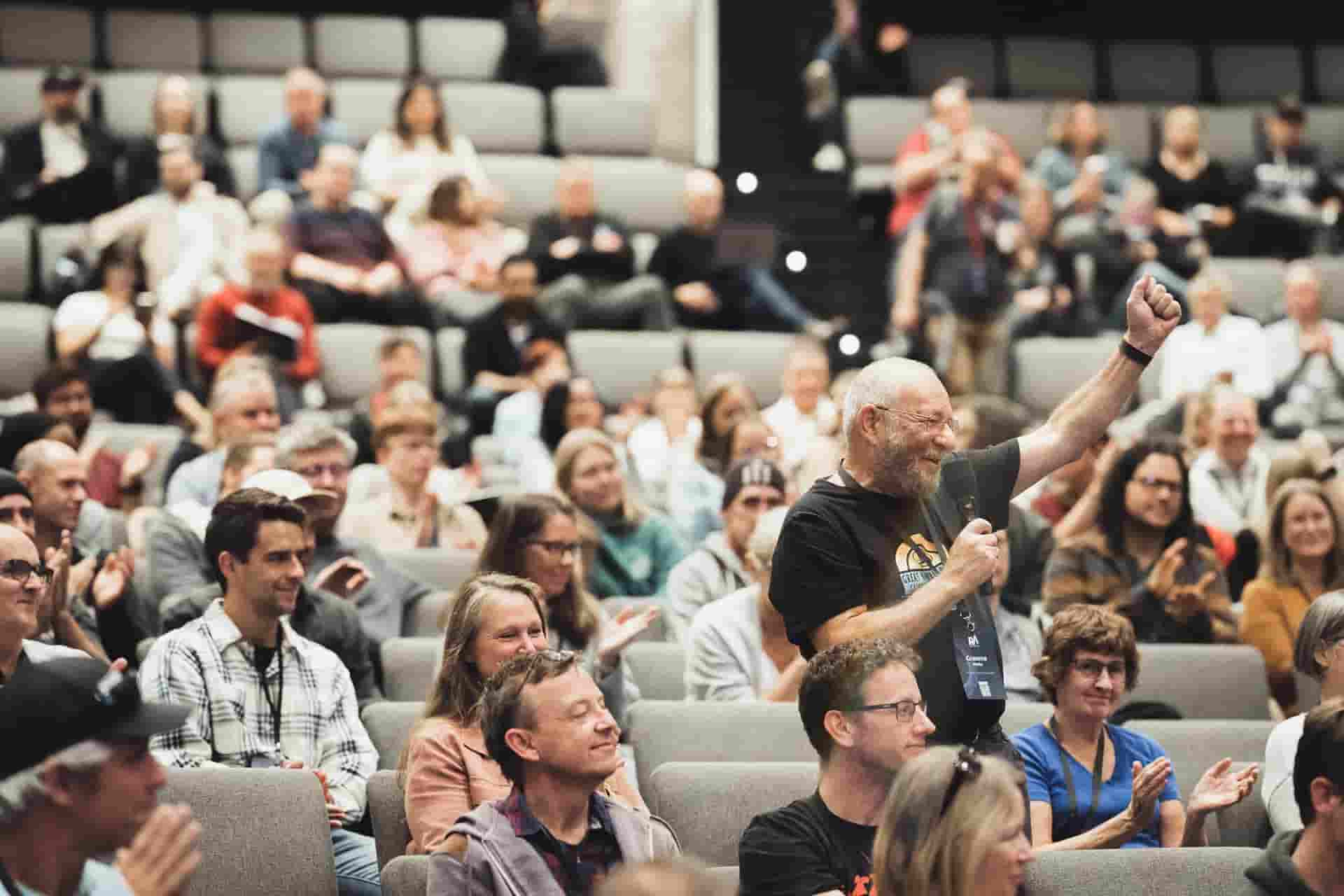
Geneva Push Director of Coaching, Cathie Heard, outlines developments in the Wives Network as part of the second session at the Multiply19 annual conference.

Transcript
This transcript has been generated, and can contain errors. Please refer to the original recording for the definitive language used.
Read transcript
[0:03]
next up we have Kathy heard Kathy heard started evie with alongside andrew a number of years ago she is also the director of coaching at Geneva push and I can confidently say given her years of ministry and her integrity she is one of the most respected female leaders in our network across Australia so please give a warm welcome to Kathy well I feel like
[0:36]
after that I'm gonna be bringing it down a few notches and where's Chris Eakins I'm just gonna get it right down and bring it up you can take it up a few that was great thank you very much I think Americans just produces amazing speakers I'm wanting to share a little bit about the wives Network and share a
[1:06]
little bit about what it does for our planter wives and purpose of that is to think into all this stuff that we're doing for planter wives what is it that we're aiming for what's the outcome that we're hoping for so I think that's actually good to know Geneva push what's what's it trying to do for the planter wives and I think looking around there might be a few guys here who are representing their wife she wasn't able to make it so I want you to take special
[1:36]
note because I want you to be encouraging her as well in these things and perhaps leading the way to help her get along to some stuff so to do this I'm gonna do a bit of a story who is the planter wife that we're talking about so she comes in all shapes and sizes there's my photo to show her it all shapes and sizes I don't think any of our planter wives look like any of those ladies though but you get the picture there's not a cookie cutter model she
[2:09]
comes in all different shapes and sizes different giftings different temperament different capacities different ages different family life stage we I think sometimes have this inner belief that there is the super planter wife woman out there and it's not us it's that other person that we know do you have this kind of secret inner pressure on who you think she is
[2:39]
and who you think you should then be there's kind of like a high bar that you never ever can reach voices in your head that kind of sound disappointed with who you really are best mom and wife ever skilled at every ministry handles all people in all situations with grace and charm always reads her Bible and prays in every situation these are good things I don't
[3:10]
want to mock this but it's a bit of a pressure and a high bar would you add to this list what are the inner voices do you think planter wives might have that's not rhetorical you can call it out amazing banquets gourmet food cooked for 60 people that happen to drop in good at speaking out the front could do
[3:40]
amazing talks and sound like dad yes okay so you've got it and here is how we feel the reality looks we're frazzled for most of us this is how it really feels how it really is we're tired we feel harassed we actually are overwhelmed with the demands we're not meeting them at all we're getting cranky a lot with our husbands and children we're running out of time to do
[4:10]
the cooking and we're not shopping enough and the cleaning is never happening so we have to do takeout all the time we actually filled out in ourselves about the ministries that we're doing we're actually scared of conflict with people in our church we feel like we're not the one for this role how did I get into this and I'm finding it really hard to find time to pray and read the Bible this is how we sometimes feel it is would you add to this list I think I've
[4:40]
got em all and then we remind ourselves of biblical truths that we know that God has told us that we are jars of clay and he's given us a treasure and he's chosen to put it in clay jars that was his privilege and he did it to show that he's the one that has the power the strength always comes from him not from us we have this sure promise that we have this high priest in Jesus Christ who actually knows us and knows our
[5:12]
weakness and don't use much text it's easier for people to understand with limited points I did write a text in there it hasn't appeared it was the one it was the one from Matthew's Gospel where it says he doesn't break a bruise actually you you finish it for me doesn't break a bruised Reed smoldering wick he doesn't put out it's that one all those what do they have in common
[5:43]
what is it that we find great comfort isn't it that it's dealing with the reality that we feel that we are weak that we don't meet the demand we're not up to the standard and yet we have a Lord God who not only knows this he works in and through us as we are in that place and in fact he wants that humility in us to actually know that so they are very comforting that church
[6:14]
planter wife needs to constantly comfort herself with these truths and realities what is it then that really matters if we can't be amazing super women what is it that really matters first thing I think is alignment alignment with God's Word firstly in that we know his purposes for the world and we want to align our lives with him and his purposes for the world and the second thing is alignment with our husbands that also matters that it's not just
[6:46]
planting a church is his dream and I go and make out my own life with what I want to be doing there's an alignment between husband and wife in this thing together we've realized that's hugely important to have and it's not that she will do exactly the same thing how it works out varies from couple to couple in some couples she might be upfront as well doing some ministries alongside in other couples she might be more to do with being at home looking after the family
[7:16]
and some couples she'll need to work part-time because there's not enough to support them both it looks different but there's still this common conviction and and alignment of God's purposes and wanting to work together in that and not hinder each other not live a life that then hinders the other one in it so that's really important repentance and faith a genuine living relationship with the Lord Jesus Christ
[7:47]
that matters being in a place of humility of knowing yes I'm a child that's been forgiven and adopted I have my nature of sin though and I need to just be in an attitude of repentance all my life every day trusting in the Lord Jesus Christ a place where he will grow me trusting in his word depending on his power that matters that we are that kind of person and that we have gospel priorities and convictions matter that we understand
[8:20]
the big thing God wants to do is save people at the time we're in a short that we're in a peculiar age which is the day of salvation but there's not many days of it so having all of these strong convictions they're the things that matters for a plan to wife with church planting what are the things that a plan to wife is facing I've got the top three
[8:52]
you might want to add to this list but they're kind of a good three because they all have the word ambiguity in them so they're easy to easy to remember I think the top three are role ambiguity physical ambiguity and emotional ambiguity so what is it what is role ambiguity that's where she doesn't quite know what she is meant to do but she does everything she does everything she's in every place she does everything that's needed and when people come along with the right gift she always is the
[9:22]
one that steps aside so in a sense she has every place in the church covered in another sense she has no place in the church covered what does it do long term it's tiring it can be very unsatisfying and it can be hard to keep purpose in that kind of situation it's hard to own a role and be creative in it and expand it in that kind of situation how does a wife in that situation help herself I think there's not much you can do at the
[9:53]
start I think that's just what it looks like at the start and that's why the start of church planting is really quite overwhelming and tiring there's not much you can do it the stuff but the time comes when you thought it dawns on you I could actually have a role I no longer have to do everything and at that point I'm often saying to planter wives sit down with your husband and say if I was just to come new to this church and be there in front of you what would you give me to do and actually have an appointment with him because I think
[10:24]
sometimes the husband can miss he's got this person next to him with gifts physical ambiguity what that what is that that's when you just feel like there's no boundaries and everything is on top of you so in the early days your house is being used for every meeting and for church on Sunday your kids toys are being used your kitchen is being overrun you feel like you are being used so when it's you're so busy you don't have time to actually sleep properly you
[10:54]
don't necessarily have time to do exercise those kinds of things feel like a luxury and so they're the first things to go and you think that that's okay and what should continue forever after a while there you can feel use in that no one is using you but sometimes we do it to ourselves and we can end up feeling used how do we help ourselves in that we actually need to know what's our capacity actually have to start to know ourselves and then in
[11:24]
that situation be able to know what to say no to what's healthy and realistic for myself am i an introvert am i an extrovert what what kind of things do I need to know about myself and the fact is we all need exercise and sleep that's not being soft that's not being I know luxurious or soft with yourself that's about helping yourself last the distance and then emotional ambiguity do you recognize any of these sentences I take
[11:57]
on everyone's issues everything that happens it's actually my fault when someone shares a problem with me I feel the problem as if it was mine I need to fix everything for everyone do you kind of recognize either that being you or aspects of it being you that's emotional ambiguity and at first you can get quite a high on it it's kind of like an adrenaline rush it's what they call a
[12:31]
Messiah Complex and to be honest lots of us have a little bit of it then too much of it we get a bit resentful and then angry and then at it's worse burnout and mental exhaustion how do you help yourself not get in that place I think it's about having a very clear understanding of what is your role in this what's your what's your purpose because if you know what you're to be doing you'll then know what to say no to
[13:02]
so that's an a really important development and again it's not so much in the early days that that can happen but it develops later the the option to have that develops a little bit later but also having a healthy approach that you are human and physical and fine and mortal so there's a limit you're not the Messiah and also having a healthy respect for other people they're
[13:33]
grownups they are responsible for their decisions you don't have to save them from everything they're doing in their life it gives each other dignity so these are all the kinds of things that I think the plan to wife does face and there are traps in it that she can fall into and there are things about it that just seemed very overwhelmingly huge in the early years but there are things I think she can do to sort of sustain herself and last the distance as the years go on
[14:04]
and I want to say it's not that you're a bad person if you let these things happen to you I reckon they're part of the early years because we have this real keenness to make this thing work we have a high ownership of this plant and so there's something good about that it's just that it's so easy I think for it to become unhealthy because it becomes about us and our needs and drives and that becomes unsustainable so
[14:37]
what is it that we are aiming for with all these kinds of supports that I haven't told you about yet but I'm going to in the wife's networks we're aiming that each of the plant wives is wanting to use her life with her particular opportunities one of them being that she's married to the planter of this church and that does open a lot of opportunities and with her personal gifts and skills and with her unique strengths and weaknesses and the situation that she has been put in by
[15:09]
God and called to by God and with the unique capacity that he has given her to serve Him to love him to grow in him to be used by God to be build his kingdom that's what we're aiming for which sounds quite a lot and I think we walk this sort of thing off we're resting in God and in His grace and in the freedom of what it means to be Christian and we're stretching ourselves and pushing ourselves and suffering for the gospel I think we have these kind of two
[15:42]
seemingly opposing tensions that we that we are in I think as we develop in our maturity and understanding of God's Word we actually see they're actually not two opposite things it's as we walk in His grace that we find real joy in serving him as we stretch ourselves we find rest in him as we give of ourselves and pour ourselves out we find ourselves blessed in that but I think it takes quite a long time for those two things to work together and I think most the time we
[16:13]
fall in one ditch and then fall in the other and it's a life long of working out what walking the Christian life looks like okay so what are the supports well funnily enough you may not think it is but the assessment that is a support because the assessment what that is about is uncovering for us what is there in our thinking what are our beliefs about planting and what it's going to be like for us it the assessment questions
[16:45]
actually uncover that kind of thinking in us and then gives the assessment questions give direction to the kind of thinking we need to have the kind of conversations we need to have with ourselves and with our husband and they help us prepare realistic for what lies ahead assessment people come out of it and go that was grueling that was so hard but it's really good for us it's a support the other support is coaching now some
[17:18]
women go I don't want coaching because they haven't there had this picture someone's going to sit and tell me what to do man I already have my own voices in my own head telling me what to do I could not cope with another person that is not what coaching is coaching is about helping a person process their own thinking it asks questions to help them work out what they want to do with the gospel umbrella over the whole lot of it it's a hugely helpful tool to help women
[17:51]
be intentional and purposeful in their life in their place it's a walking alongside kind of approach now some women find in the early years they actually wouldn't know how to use a coach because I think there is something about the female role that's different you're kind of responding to the husband's role he's the one working things out and so on and you're trying to work out how to fit in with that so there's a bit of a difference but I think once she's actually worked out this is what I'm going to do this is how
[18:21]
I will fit in with it I think a coach is good at that point which can be a couple of years in for some women and then we run ministry intensives at ministry intensives it's kind of this thing of it's lovely and refreshing we take you to a beautiful house you have beautiful food and with your bunch of people that become your peers and cohorts to talk with and relate with and there's usually a pool or a beach and wine and it's amazing and there are all these
[18:52]
workshops about ministry skills and God's Word and how to do this and do that and it's workshop workshop workshops so I've called it ministry retreat intensive kind of thing I read I think some of you have got this book resilience in ministry where they did a survey of a bunch of pastors in America like few thousand of them and found five things if you have these five things you
[19:24]
are more likely to last the distance in your ministry self-care was one so you know exercise eating all that kind of stuff spiritual formation was the second looking after your daily walk with the Lord and your growth in His Word third was marriage and family paying attention to that consciously looking after your marriage and family fourth was EQ interestingly enough self-awareness knowing who you are helped you last the distance helped you in your people
[19:55]
skills with and and negotiating with people EQ is really important and fierce surprisingly lead ship and management skills although not surprisingly because when you're in church you realize most of what you're doing is leadership and management skills is it true for the wife as well I'm not sure but I've taken these five things and built workshops around them to strengthen our hand in each of those things because I want us to last the distance and there's a nice place that
[20:26]
we do it in with a cohort and food and wine here's a few pictures just to whet your appetite of the ministry intensive and I've got some testimonies from some of the girls that have they've had the assessments they've had time with the ministry intensives they have either experienced a coach because I think you
[20:57]
need to hear their story and what it's been like for them so I should check how much time as I got for who's watching one okay I'm gonna pick two short ones I've got eight here to share so obviously that's not going to work I'll pick a couple of short ones so Katherine is in Cronulla and I think she's in the room I found the most helpful things for me are having a coach and the networking that happens at places like multiply and also at refresh I think to get to know
[21:29]
other wives in similar situations or even a few years down the line has been great the wives lunches multiplied has been really helpful for that and refresh is just such a beautiful refreshing few days away and a lot of the joy in that comes from spending time with other planters and I'm going to not read but show you Rachel enjoyed being connected with a cohort Kathy burns coaching was number one for
[22:00]
her Katherine loved the ministry intensive and it actually strengthened her hand to go back into her church and lead more fully than she had previously thought she would so that was great to hear so Jude Lenoir coaching ministry intensives were her top two things Sara and I'm going to read Natalie's one to you and end there so coaching at first I was very reluctant
[22:31]
and I resisted for about two years I was concerned a that I wouldn't jell and B I'd be with someone who didn't understand the rural thing so she's right in the middle of Central Queensland I also thought I'd be intimidated by being peppered with questions by someone who would be killing ministry life now she means that in a good way which you probably got and then she talks about how in reality her coach was awesome humble great at asking questions and prompting her to do the
[23:02]
thing that I'm not very good at reflecting so she's found that incredibly helpful she has loved number to multiply and the ministry intensives a place for ideas and enthusiasm to be born and grow or regrow I love brainstorming and usually come back from these buzzing I enjoy networking with the women and as a young planter I've really appreciated being able to listen in on the conversations and ask questions of the other ministry wives
[23:32]
that a year or so further down I think Natalie would be one of our youngest ones I think it's early about 25 through the Geneva Network I don't feel isolated and it helps me to keep focus on the gospel one of my sinful tendencies is to indulge in self-pity no one understands me how hard could this ever be I wish my husband had a regular nine-to-five job having met so many other women in exactly the same boat makes it somehow so much more okay and even more than
[24:05]
okay I'm reminded that it is eternally important and that we're not alone in our efforts to win people to Christ it's a privilege