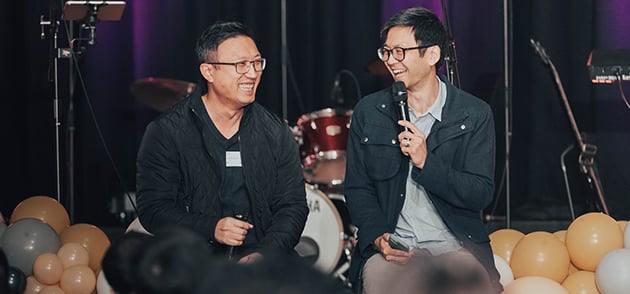
Derek Hanna and Scott Sanders move into their fourth episode of their first in-depth TOT collection: Growth barriers.

Transcript
This transcript has been generated, and can contain errors. Please refer to the original recording for the definitive language used.
Read transcript
[0:02]
LifeWay Leadership Podcast Network. G'day, I'm Derek Hanna. And I'm Scott Sanders. And welcome to The One Thing, a podcast designed to give you one solid practical tip for gospel-centered ministry every single week. Do you think people are actually doing it every single week? Or do you think people actually just binge, you know, binge their episodes?
[0:33]
Like House of Cards. Like whatever. No, I can't talk about House of Cards. Because I get that little, you know, reminder on Monday, you know, ding, you know, another podcast has come up and, you know, showing up, listen. Yeah. I go, well, we did that a couple of months ago and it's finally hit the… What? This is not live? This is not live. Because I have been coming into the studio every time when people email me to record it for them. And you're just recording. Sorry, you're not meant to make remorse to the fact that it's not live. The One Thing is brought to you with thanks to the Geneva Push. And we are not live, but we are an Australian church planning network.
[1:05]
We are. We are the Australian church planning network. That's right. And we're also proudly partnering with the LifeWay Leadership Podcast Network. And we would encourage you to check out them as well. Their podcast, their network page on iTunes and see all the other quality Christian podcasts that are there. But for now, you have pressed play on episode 69 of The One Thing, Growth Barriers Special. It's the fourth one, breaking 200. Now, the Growth Barriers Special was put together because most churches don't move past 125.
[1:41]
There's a number of growth barriers, 35, 75, 125 and 200. And most of the literature in the books is all around this figure of breaking 200. And so today, we are going to talk with Matt Lehman from Kernel Light Gardens in South Australia about breaking the 200. All right. Let's hear from him now. G'day, Matt. It's great to have you on The One Thing. Can you tell us a little bit about Kernel Light Gardens and the history of Kernel Light Gardens? Sure. Kernel Light Gardens actually is a suburb.
[2:11]
It's an interesting one in Adelaide. It's a heritage-listed suburb which was settled after World War I. And when I was growing up, it used to be Retirement Central. But when we were looking to plant a church, we did the demographics on it and realized all the retirees were moving out. And young sort of aspirational couples were moving in. And there was a big bubble of sort of people starting to have kids. So lots of young kids around and primary school-age kids, which was kind of us as a family.
[2:41]
And, yeah, we decided to plant there about six and a half years ago now. And you planted out of Trinity City? Yes, we did. We had a bit of an issue with the venues in the city. We lost a big cinema building next door. And our five services had to go back into four. So we thought we're not going to fit. We're into church planting. Me, with all my 10 months experience out of Bible college, got tapped on the shoulder to plant a church in Kernel Light Gardens. Nice. And so you planted with probably a bigger core team, thankfully.
[3:13]
Yeah. Because of the unique circumstances, it was the biggest core team we've ever sent out as a network to plant. So it was roughly 120 on paper, which translates to about 90, obviously, in attendance on a Sunday, given you've always got at least a quarter of your people away. So, yeah, 90 was sort of where we started pre-launch. And then we found as we plant, usually you pick up sort of 25%, 30% just in the process of planting as you go into a neighborhood, you advertise, your letterbox drop, you tell people what you're doing. So post-launch, we sort of settled into around about the 130 number from sort of week one of public launch, which is fairly big for a church plant.
[3:52]
So how did you solve it? You're bumping up about 180. You've had a few weeks where you've hit over 200. It's uncomfortable in the RSL club. People are struggling to get their beer after church. That's right. That's always a problem. The lawn bowl green is full. Yep. Yes. I've got one of those too. What was the solution? Well, it was good to have the leadership team along. It was great to have Paul Harrington, our network sort of boss, along too. We talked through the options.
[4:23]
We sort of thought, well, we'd love to plant another church. The fact is we don't have a church planter on board at the moment. So whilst we want to kind of get thinking about that, it's not going to be a short-term solution. And, you know, things will drop off a little bit through winter. But we were thinking the next sort of attendance spike in year for us, at least, is that spring, September, October, burst of enthusiasm before everyone gets busy for Christmas. And we thought, well, we need to do something. We knew from our initial venue search, which was only sort of 18 months older, that there wasn't any obvious larger venue for us to move to.
[4:59]
So we then sort of thought, well, we need to get on with thinking about church planning. You know, we do need to think longer term about buying buildings, building and developing. But neither of those are quick fixes. We need a quick fix within a few months. What are we going to do? Let's go to two services. So we used to have one 10 a.m. service. And we thought, okay, we'll go to two for now and keep working on those longer term things. And then we started the process of saying, well, what do they look like? What's the time slot going to be? What do we want that to look like together as a church?
[5:32]
And very quickly, we heard back from people, we don't want to have the old person service and the family service because people loved our all-age nature. So they said, we want two genuine all-age services. So we sort of said, well, that requires us then to double our kids' ministry, two lots of creche, two lots of preschool, et cetera, which is going to require a lot of, yeah, a lot of people jumping in and stepping up. Which in God's kindness was great because we'd picked up a lot of people who were sitting around thinking, oh, everything seems to be running fine.
[6:04]
And then suddenly we're saying, we need, you know, 30 more kids' ministry people now. We need more people involved in music because they'll be playing two services and playing a bit less often. But we need more of everything. And it was actually really good for our sort of growth and maturity and getting people involved in ministry, which was great. So tell us why – and I've kind of heard why you settled on that decision to go for two morning services. But often, you know, the logic is, well, we need to plan an evening service because we're missing those uni people.
[6:37]
And if only we had those uni people, they'd be able to do all the work. We need those uni people. Yeah. But your growth engine, your growth dynamic was young families. Yes. That's the area. You know, so it just seems kind of nuts to go and let's go and reach a whole group of people who we don't know how to reach and we haven't been reaching. So you settled on, what, a 9 o'clock and a 10.30 service? Yeah, we did. Our venue allows us to do that. Bear in mind, our services run for about an hour and 20 minutes. It's only a 10-minute turnaround. So we thought we could pull that off. I reckon the key thing that I'd picked up from working through what was going to happen in the city before as they were thinking about changing services when they lost the venue and kind of kicked us out to plant.
[7:17]
I think you've got to consider – I think you can convince committed Christians to do most things. But you really have to think about the people who aren't there yet. So in my opinion, and this might just be a local thing, so I'm not trying to say this is a once-for-all definitive thing. My opinion, you could plant an 11 o'clock service and you could convince your people to go to it. But it kind of sucks for anyone with young kids because they're going to be nuts and hungry by the time the service finishes. The kids will all be ratty and everyone will just gravitate to the 9 o'clock service.
[7:49]
I think, too, you can convince committed Christians to do an 8.30 service. But the fairly unattractive living are sort of part of the world. So we sort of thought let's get them as close as possible to the premium times, which is 9 and 10.30 with a fast turnaround. I realise everyone can't do that, but we thought we could. So we went with that. We've had full kids programs across both. Some people are sort of saying, oh, we'll just do the crèche at 9. We sort of said, no, we want all at everything because otherwise you're just going to – people come along at 10.30 and sort of say, oh, this is great.
[8:21]
I love it. But there's no crèche and it's only at the 9 o'clock service. I don't really want to go to a 9 o'clock service. They move on. Whereas I think – and also your families with five kids, they feel things are less than – one service caters for half their family. I think it's just a slowdown on your growth if you make those kind of decisions. As I say, people often look at the people in front of them and say, oh, no, we can make this work. You've got to be looking at the people not there yet. You've got to be looking at the people in the suburb who don't know Jesus.
[8:51]
This is who you're really trying to reach and sort of say we want to make this as convenient, as easy for them because that's why we're doing this. So I think we managed to kind of hold up those bigger picture principles which then had us landing on it. And then we sort of thought this is going to require some pretty careful coordination because we don't want 40 people at 9 and 170 at 10.30. So we surveyed everyone and said, tell us what you're thinking.
[9:24]
I'm going to one of these services. Like I'm going to 9, I'm pretty settled on that. Or I'm going to 10.30, pretty settled on that. Or I'm leaning towards 9 but open for a chat. Leaning towards 10.30, open for a chat. Or genuinely don't know. It very quickly gave us a quick snapshot of who was pretty settled at both services. And then as we tried to think, oh, to try and balance out our kids' numbers and different things like that, it gave us a group of people who told us their preference or no preference who were open for a discussion.
[9:55]
And we kind of just sort of gently sort of massaged people this way and that. And as those numbers firmed, we had a pie chart up on the screen and all that kind of stuff. And yeah, even with the best of planning though, 9 o'clock still started a bit smaller than we'd hoped. Yep. And 10.30 a bit bigger. So we cooked a lot of bacon egg muffins before 9 o'clock for a while there just to encourage people to think about 9. We were the poster child for perfectly organised, we were a poster child for that and had grown.
[10:28]
But we were convinced that that moved from that centralised rostering to a team-based ministry, raising up leaders, leaders of leaders, investing in, using our staff to invest in them and give people like a real sense of ownership and decision-making over ministries, actually allowed to change stuff rather than hyper-organised map world. So we're in the middle now of a fairly large change management process that came out over that. I think that's a multi-year thing because it's like a personality shift for how we run church and we're leading a few hundred people through that.
[11:02]
And when I was chatting to you about this a while ago, you've started with kids ministry for running teams, which is when we're talking to people about doing this, the one we say don't start with is kids ministry. Biggest one, most complex. But it's going well. What's been the change in people of the state? Because it's grown. People may have felt fractured relationships, changing service. But how has this reengaged them with church and your mission? Yeah, I think it's been really healthy for us and still a long way to go. But we're seeing some really encouraging signs now of people who had just kind of slipped into a regular pattern of this is what's being involved in church looks like to now feeling like they've got a genuine sense of ownership over the preschool program or how craters run or primary school programs.
[11:46]
We chose kids because 40% of our church on Sunday is kids. It's like it's a huge high percentage. So on a big Sunday, we have 125 kids in our programs. So we thought this is where we're going to see the best wins. It is the highest fruit on the tree to pick. But we sort of thought of – I often start that way. I think if we can solve the biggest issue, everything else would just fall out. It's just part of my personality, I guess. But it's great now seeing people who have – teams now that have all met and spotted problems that I never would have spotted and come up with solutions I never would have come up with.
[12:26]
Now when people come through our welcoming sort of membership course process, we've got people now saying, okay, we need three more people on this team and that team. And instead of it sort of becoming a phone call for me to make to ring someone to ask them to be involved to serve, you're just like, okay, here's – expect a call from this person and you hand it over to the crash team leader who leads the leaders there. There's recruiting going on. We still really need to embed discipleship and training into all of our teams and we're doing our best to do that.
[12:57]
But early signs are really encouraging. And, you know, our music and service teams on Sunday, you know, six months in, they're kicking some great goals. Last Sunday I thought was, you know, one of my favorite services we'd ever had run by our team. And music was awesome. It was all tied together beautifully. And I didn't have much to do with that. And there's heaps of stuff now I look at across church and people doing stuff, you know, far better than I ever could have done it.
[13:32]
All right. That was Matt Lehman from Colonel Light Gardens in South Australia, part of the Trinity Network. If you want to see the whole interview, you can go to our show notes and you can see the full interview with Matt there. But let's just dig into a few things that Matt raised there. And that really, what, he's a pretty thoughtful guy, Matt, about things that have happened, reflecting on myself in the church. So let's dig into, first of all, the maximizing resources, two services. Scott, what do you got? Well, unfortunately, this is often the reason why churches don't actually move past the 200 barrier.
[14:06]
They're unwilling to move to two services. You know, it's a tough one because it requires greater complexity. It requires, you know, not being in the same service as the people you want to be, you know, in touch with. It requires complexity for the past. They've got to preach twice. They've got to, you know, get twice the amount of, you know, kids ministries, music ministries. It's actually quite a complex thing to keep doing this week in, week out. And so often churches don't actually go through that painful process of actually spitting into two services.
[14:37]
But it is actually one of the key ways of actually moving beyond 200 people. So it's interesting when we're talking to Conan in a previous episode that he was saying they shut down one service and moved back to one because their issue wasn't space. Their issue was more the resources they had outside of the building. But for Matt, they'd hit the limit on where they were. So the next step for them was moving towards two services. Yeah. So there's a lot of, I guess there's a lot of mistakes that people make around this. They do it too late.
[15:08]
They don't understand the context of their, you know, environment in terms of, you know, the 80% rule or the 70% rule when, you know, the church space just begins starting to get full. And they just keep, you know, bumping up against that. But often we just think of the building space, but often it can be also out in the car park or it actually might be your kids' spaces as well. So we're not thoughtful about, you know, it could be a bunch of things. And, you know, you can look back in the history of a church and just keep seeing that they keep hitting this barrier. But then they, you know, they don't make the change, you know, that actually needs to take place.
[15:41]
I think as well, a lot of churches with this often make the stake of starting an evening service, you know, rather than or starting a morning service if they, you know, meet in the afternoon. And actually trying to reach out to a different demographic of people when, you know, your growth has been with, say, young families or, you know, young professionals and young adults. And you actually then start to reach to another demographic because that's who you want to reach. And so you actually, you split your focus, you actually make it harder. And that's often why a service is started and then, you know, goes back and shuts down.
[16:12]
Yeah, absolutely. Now, he spoke quite a bit about the method in which they made the decision to engage people. What did he get right? Well, I think he got a few things right. I think there's a, oh, and in the toolbox, I'm going to point you to an episode that Tim Clemens did. Tim Clemens, hopefully, in the sort of interviewing and the discussing and the, you know, the change management process, had a great survey tool. So I think what Matt did was he recognised the problem, started speaking about it from the front, you know, spoke with his key leadership team, let them be aware of it.
[16:47]
You know, again, you know, push that out through small groups. You know, people understood what was going on. And then he surveyed people and they acknowledged that we wanted people to come at, you know, 9 and 10, 30. And that was going to be good for some people. I think he did both services exactly the same. So they were both all ages. They both had the same kids program. They both doubled up. You know, he didn't do, you know, for the young, you know, the young, the young, young families and the middle to young families and kind of everyone else. He just said, we're going to do it exactly the same. He thought about the times, 9 and 10, 30.
[17:20]
9 and 11 just doesn't work. You know, 10, 30 does. And it requires a shift in, you know, making sure that your service is a lot tighter. I still don't know how he does it in an hour and 20. But the survey tool that I talked about with Tim Clemens, Tim asked people three questions, you know, and so he was able to put vision in that as well. He said, where could you most bring a friend along to? So, you know, 9 o'clock or 10, 30, which service is going to work best for that? Second one, where can you most serve and use your gifts? And then the third one, what's your preference? So he put mission at the front, where you can actually serve and use your gifts.
[17:53]
And then third, your preference. He actually acknowledges people do have a preference. We are human beings. We do like to wear maroon pants, for example, you know, versus denim jeans. What a strange example. What a strange example. And look, I do love when Matt was talking. We're going to move on from that maroon pants comment. We'll take a picture and you'll see the lovely maroon pants that one of the stylish members of the one thing he's wearing today. But anyway, one of the things that I loved Matt saying was he was, as he was casting the vision for maximizing resources, moving to two services.
[18:24]
He was saying to people, okay, we're not just asking what is good for us. We're thinking about the people who aren't here yet. And that's how we make the decision because it'll be a sacrifice to us to make that decision. But that's what we started for. Because what does two services do? It gives people options. And the options that it's giving, they're not options for the insider, but they're options for the outsider. And so, yes, church is for the insider. But, you know, having two services gives a lot more options for the outsider who we want to bring in and who we want to reach. And so you're giving those two options for people to decide.
[18:57]
So that's where you're opening up more pathways into the church and the life of the church. Now, listen, I want to, moving to two services, logistically, it's a huge thing. And particularly as Matt did there, as they kind of tried to push through this barrier, they duplicated kids ministry and everything. So they had twice as many things to do as they did beforehand. Yeah, so one of the things he acknowledged was just the staffing question. So the Holy Trinity Network always, you know, starts often with a planter, with an admin person part-time and, you know, with a trainee and apprentice part-time.
[19:33]
So you kind of start with a pretty solid staffed, you know, paid staff team. But he acknowledged that it was going to create a lot more complexity. And so he needed to bring on more admin staff. But he also acknowledged in the context of that, that he actually needed to have a team's culture. So he started to, you know, hit up against that growth. I've already talked about that Ed Stetson graphic and we might put in the show notes for this one. You know, so at 35, you need one leader and three volunteers. At 75, you need three leaders and 15 volunteers.
[20:03]
At 125, you need three leaders of leaders and 15 leaders and 50 volunteers. At 200, you're actually going to need six leaders of leaders, 30 leaders and 80 volunteers. And so, you know, Matt acknowledged this, worked hard on putting the pathway together, you know, thought about the role of team member and team leader, of ministry department leader. And then, you know, the senior leadership team that's actually driving decisions and working through decisions. He acknowledged that and started to build, you know, building the processes that equipped people and identified people and then allowed people, empowered people to actually make decisions.
[20:41]
So one of the things, we can set these structures up, but they're not actually empower the leaders of leaders to actually be able to make decisions and take responsibility. And again, acknowledging that, you know, you could probably do it better, but actually you can get more done. And actually, I think it was really helpful for Matt to acknowledge, wow, people are doing church better than what I, you know, what I could pull off. And he's excited about that. He's not saying that, is it that terrible? Wow, I sucked at what I was doing. He's actually going, isn't this great that the body of Christ is actually, you know, doing what it's meant to do, which is loving, you know, loving one another and making disciples.
[21:16]
Yep, absolutely. And a big turning point for him in that was going to team pastoring last year when they were talking about the volunteer revolution and moving towards that team's approach so that not only did leaders own the vision, but everyone within the church owned the vision, not just responding to a rosticle. Cool. So as you've reflected on what Matt said there, particularly around the team thing, what did you hear Matt saying about his own leadership? Because he's an organized guy. How did you see him personally having to grow to be able to lead through that barrier?
[21:48]
Yeah, I think he acknowledged that it did still need organization. It needed a system. It needed a champion. And still needed him to, you know, cast the vision for it, but to then build, you know, build in and acknowledge that as we move to these two services, we're going to need, you know, two of this. And we're actually going to need to be, need to have someone who's above that, you know, managing the two of this. So he saw the increased complexity and then he didn't get frightened by that, but actually staffed for it, resourced it.
[22:22]
And as he said, actually, there was a whole bunch of people who had come into the church, you know, were just sort of sitting in the pews looking for something to do, but everything was kind of covered. So the starting of the second service actually enabled all these jobs to, you know, to be created and they were able to feel because, again, you had already a culture of people modeling it and putting it into place. But what it needed was the structure and the, you know, and the resource to actually, you know, drive it and push it forward. Yep, that's good. One of the things I did love hearing Matt talk about was the fact that moving in the direction they're going is creating more heat for planting, not reducing that heat.
[22:59]
And so, you know, learning how they do it more, owning the outcomes that he's seeing the lost reached. Each time they sacrifice something by starting a new service or planting a service, at the moment it seems to be building heat rather than diminishing it. Yeah, and again, you know, they've got a culture of that. This wasn't the first, you know, the first church plant. This was, you know, way down the line for them. But he has been able to send out another plant. And, again, I think, you know, the vision question, we talked about it all the way back in our first podcast.
[23:31]
But vision, you know, it needs to be there the whole way through. But particularly as you want to keep driving past the 200 barrier, you know, a bigger vision that you can't just do, you know, by yourselves. And so they've got a vision for the whole of Adelaide. They've got a vision to be a church planting church, ascending church. Now, they've reached out to the young, you know, sent out the young families church. But now they're saying, well, actually, there's a whole bunch of young professionals here. We didn't kick off and intentionally reach them. And we're probably not going to be the church that does that. But actually, with church planting, we can reach that group and actually send someone out.
[24:01]
And we can be a part of that sending team. And so you can see with Matt that he's forward thinking, you know, that he's not content to just be sitting at, you know, 300 or 290, as he said now. He's actually, okay, what does it look like for us to keep growing and to keep being, you know, a church that's on mission and making disciples? And, you know, that requires energy. That requires, I think, you as a leader, again, as I've said, you know, reminding people we've got to spend time with leaders. We've also got to spend time with the lost.
[24:32]
You know, keep having that urgency to reach out to see more of the lost one to Christ. Absolutely. That vision, making the most of Sunday, building it there, and then letting that, working hard to let that vision trickle down into everything. So teams own it. People own it. Everyone throughout the church owns that vision so they can understand why the sacrifice and the hard decisions are being made. And I think a mistake that a lot of pastors make, because we do, you know, do find it hard to hand over responsibility. We do find it hard to work through others, is actually, you know, how do you make decisions?
[25:09]
You know, as you grow, all the decisions can't rest with, you know, you and your MTS and your admin person or you and the core team or the launch team. And you've actually got to push those, you know, down past the ministry department leaders, but actually down to the team leaders. You know, they need to be able to make decisions, you know, about the ministries that they're involved in. And you need to have systems and processes for, you know, communicating those things back. So what does a church over, you know, over 200 look like? Well, it looks like a whole bunch of meetings.
[25:39]
You know, it doesn't look like rosters. It actually looks like a whole bunch of meetings where decisions are being made, you know, regularly, you know, with boundaries, you know, with communication back up and with accountability as well, actually expecting people, you know, to do what they say they're going to do. And again, that requires, you know, I guess a giving up from the senior leader, but also being intentional about, you know, where and how, you know, those decisions are actually made down the line. I think delegation is the key there. If you can't delegate, you don't get to this point and you won't grow up past it.
[26:14]
It's not handing off ministries. It's actually handing on ministries while still, you know, being a part of it, praying for it, engaging with it. You have to be able to delegate. Now, I haven't done my toolbox. Oh, Scott. Okay, sorry. We got carried away. Scott, what's in your toolbox? So my top three must-have resources for breaking through the 200 barrier are, well, there's two church in a box courses, the team pastoring foundations and the building teams course. They're really important. And I'd encourage you, you know, to work through those with your team, work through those with your team, with your leadership team.
[26:49]
I've already talked about the podcast with Tim Clemens from one of our previous episodes on starting a second service. That's excellent to jump in on. And my, I guess, my third sort of growth barrier book, it's an old one. It's actually not in print. It's by Harry Fowler, Breaking New Growth Barriers. So that's just another resource as you're thinking into this topic and jumping into it, jump into that. And I might also provide just a link to a dissertation from Raj Gupta, some really helpful stuff in that, you know, worthwhile reading.
[27:20]
He summarizes a lot of the literature, has some great insights about the Sydney Anglican Diocese and the churches within the diocese there. And again, I think it's always worthwhile reflecting on, you know, things in your context but also outside of your context as well. So there's a great paper that has some really good reflections in it. So that Harry Fowler book, not in print? Not in print. Can they pop around to your house and get it, though, if they want to borrow it? You can get it on Amazon. Okay. All right. There you go. Okay. Well, I'm going to throw back to Matt Lehman about the one thing that people should be taking away when it comes to breaking through the 200 barrier.
[27:51]
You can't run it through one person, however gifted or capable they are. You need a team of people around you. You really need to seriously think about not just, you know, having team leaders but investing in leaders of leaders that aren't you. And it really is a false distinction whether they're paid people or unpaid, high-capacity volunteers. But you need to start leading through others, not just hyper-managing a larger team. Now, the one thing is part of the Lifeway Leadership Podcast Network, and this is a good chance to point you to one of our podcast partners.
[28:23]
Have you listened to Ask Me Anything podcast with J.D. Greer and Matt Love recently? Well, it's part of the network family. They cover a whole bunch of topics and just recently answered a really good question. What would you say to an atheist? And a key question a lot of people in our churches are asking, should I expect to feel satisfied by my job? So look up Ask Me Anything on your favorite podcasting app and check it out. All right. Do you ever feel like you don't know where to start with volunteer training? Or do you find it hard to get people in one place at the same time?
[28:55]
I can't even do it with my family. But anyway, look, Ministry Grid makes it simple to train every volunteer and leader within your church. Three and a half thousand videos. Gee, three and a hundred thousand videos would be good. But they're getting there. It's a growing library. Eight hundred courses. You'll find training for every area of ministry and leadership level. Volunteers to leaders to ministry directors. Ministry Grid's scope and sequence of training makes it easy to know where people are at, what you can train them in, and how they can be trained. Now, here's the best news of all. The month of August, you can get unlimited access to Ministry Grid for your entire church.
[29:29]
The whole church, no limit, $400 a year. And you are locked into the $400 a year every year after that. Just that introductory price, $400. But it's every year. Now, listen. If you want to take advantage of that awesome deal, just go to ministrygrid.com slash podcast to get that $400 unlimited training. Now, once again, ministrygrid.com slash podcast. We'll put that link in the show notes. Thanks for joining us for another episode of The One Thing. Coming up in our next episode, we're going to be tackling the question of how it is you should know when to step back from ministry.
[30:02]
Now, that's a really hard question for yourself to ask because you just want to get involved in ministry. So I'm really looking forward to this next episode. Yep. Anyway, I'm Scott Sanders. And I'm Derek Hanna. Chat soon. I'm Derek Hanna.