


← All resources

The One Thing Episode 190 – Burnout (Part 1)

Burnout tends to hit us 12-18 months after the event. It’s now about 12-18 months after COVID began to disrupt our ministries. How are you feeling? In this weeks’ episode of The One Thing, Derek Hanna speaks with Dr Jonathan Andrews about burnout in ministry.

SHOWNOTES

The Reconnected Heart (Book) by Dr Jonathan Andrews
 width=

If you are experiencing burnout, please reach out.


Transcript

This transcript has been generated, and can contain errors. Please refer to the original recording for the definitive language used.

Read transcript

[0:00]
Lifeway Leadership Podcast Network. Good day, I'm Derek Hanna. Thanks for joining us. On the one thing a podcast designed to give you one solid practical tip for gospel-centred ministry every week. Now this is the first episode of a three-week series we're doing on burnout. One of the things that Australia has

[0:32]
been experiencing in the world has been experiencing in the last couple of years is the impact of COVID and isolation. And for those who are leading churches and leading ministries, as with other people, the impact has been significant of that. But often the impact of COVID and of these kind of moments and disasters and traumas isn't felt at the time when we feel like we can hold it together. But often 12, 18 months later, we're just being around that 18 month, post the beginning of the pandemic, as well as a lot of Australia at this point, being back in lockdown. Now is a point which we realise a lot of church leaders are

[1:05]
feeling tired, possibly feeling burnout. So we've put together this three-week series to help you understand burnout and to help you hopefully take some steps to either avoiding being burnt out or if you're feeling like you are burning out, they're heading off for the past. We've got a special guest on for the first two episodes, Dr. Jonathan Andrews. So let's listen to his first episode today on burnout. Two, you're a clinical psychologist. You've written a book which your reference are

[1:38]
being read. I said to John, just before this in my recent quarantine, it was the one book I had. It's been recently released. It's called The Reconnected Heart and I'll put a link in the show notes to it. The concept of burnout that we're talking about in these two conversations, it's just one thing that you work with. You work with a lot of people in ministry, you do a lot of helping assess or inform people who are going into ministry about things they need to work on or work out, prior to going in and as they work in. Just define for us,

[2:11]
because burnout seems to be a really vague topic. It's quite a broad term used for a whole number of things. Can you talk us just initially, define burnout for us and talk about the symptoms you're looking for when you're talking to people to indicate they might be approaching burnout or in burnout? I think the most salient feature and the one that would be probably part of all experiences of all of us who have burnout here, so we just feel exhausted.

[2:43]
I guess this is one of the misconceptions that you first see about it is that is all it is. Because you get a funny picture with burnout, when we think it's just about lack of energy, people understandably respond to it in a way where they go, well, I need some time off. That seems understandable and quite logical to me. I have no significant reservations about that.

[3:17]
But the puzzle emerges when you see someone who's taken six weeks off because they burned out and they come back and they're still not recovered. They still complain about feeling weary of that system. They talk about being overworked and being stressed. Again, you get this other puzzle where I speak to someone just the other night, he said that he had a thousand emails about a particular topic that he was dealing with. I said, what a hat do you feel about that? The distinct

[3:51]
impression that you got from him is he feels fine. He's someone who's overworked and he feels fine and you get other people who work and quite hard and then they take a whole chunk of time off and they still feel exhausted. The silent feature of burnout is one of exhaustion but there is more to it. I guess that's one of the most common misconceptions that you see is that's all people. That's all we think it is. So more than just exhaustion, there's something else going on with

[4:24]
how people process them. The two other things that you see that are probably the cardinal features of it some sort of I guess in a way cynicism or some sort of dissociative sort of stuff, almost like a sense of detachment from themselves, a sense of detachment from their work, from people. Also, and this is a curious thing, some lack of efficacy, like a lack of impact.

[4:56]
So the reason why my friend, the friend who I just mentioned who'd got a thousand emails, he wasn't fatigued. I think because he knows he makes impacts. That's one of the safeguards about it. Even I had to do some work last weekend but I don't go back to work on the Monday. I mean, it's not an ideal scenario working on the weekend. But I got back to work on the Monday and I just noticed that I felt fine. I didn't feel resentful. And I think that's because of efficacy,

[5:29]
like I knew I could do what was in front of me. I completed what I did and I felt I could do a pretty good contribution to the person that was trying to serve. So it's about these its core feature and the silent feature that we all know about has to do with fatigue. But there are other things like cognitions or detachment from yourself and agree with cynicism but also this lack of impact. That's all for so it's more than so exhaustion is not all there is. Is there

[6:02]
something about purpose in there as well that you're talking about? Absolutely. Yeah, feeling like so the lack of impact. Can you talk us a little bit about purpose we didn't that had? Is that in and yet? Yeah, I think one of the most common things that you see is because of that lack of impact that it goes, you see that the difficulty goes deeper than just too much work because often what you see is kind of like a misalignment between the values that someone has as a person

[6:40]
and the institution that they're in. So you know, in a particular church the stated value is, you know, they're swear. Something to do with Jesus, of course, and rightly so. And this is good but in practice, you know, it may represent something slightly different like this we work really hard, we're available at all times. That's the first time. Right, so division statement is love God, love others, love our community. But the internal culture is

[7:14]
years of roster that needs to be filled, get on it. And in practice it reads or in parentheses, we flog ourselves. Yeah, this job done. Yeah, yeah. Now the theorean represents a slight misalignment with values, particularly for maybe the ones that are quite prone to burnout. So some of the ministry, people in ministry who I see at a particular time in life where they've got young kids, they're fully aware that their partner is lifting a load.

[7:48]
And of course, these are really decent people and they want to spend time connecting with their kids and growing and sharing in their lives and stuff. But the amount of workouts is compromising them and the values are now out of sync. Because you know, often senior ministry staff have had their own kids progress in life and you know, their kids take one step outside their family home. So they're not in the same space and you get this values misalignment because

[8:24]
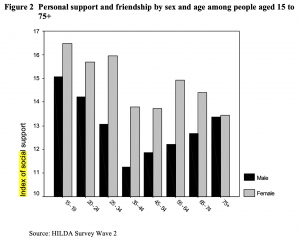
the younger staff valuing Tom and their family, but the senior staff may not be Tom and their family. Yeah, yeah. So I want to I want to do want to come back to to hear a few examples you're seeing of people in ministry because you know, I know you said a lot of people who are hiring ministry. I do in reading your book, there's this as I was reading through it, this is great graph on connectedness in there that I was mentioning to you before. And so most of the people that

[8:54]
I work with, that's Genoa portion of Red to Australia works with are people who are leading churches, guys who are leading churches or leading ministries and they are often in that 30 to 50 age group. No, and so even that 25 to 50 age group. Yeah, but they're doing, they're leading at a higher level, they're leading significant ministries with significant stress or through significant change periods. Yeah. And so the hours they're working often quite hard, the environments they're working in in a stressful, this graph though talks about the connectedness of people, not in ministry necessarily.

[9:29]
This is just connectedness, not caring for all right, connectedness of people to others at different stages of life. And what it seems to show is that in those age groups that I just described them, that is when all society is allowed. So the thing I took away from reading that graph was, I'm working with and talking with people who are at a stage like with a job itself, ministry often pulls you out of those connected energizing relationships. On top of that, this graph in your book

[10:00]
seems to show that just in general, let's compound by the fact that people in that age group are also disconnected. So the double where me there, the job and stage of life. And gender as well, I think that comes out of the graph doesn't it? That's right. So men, yeah. Yeah, so men maybe more. And this brings us back to previous conversations that you and I have had. It's not unusual to sit with a young guy and you say, listen, who do you get on with? Who do you have a pool with? Who do you laugh with? And I say something like, you know, Tony and you go, that's great. What do you like

[10:34]
about Tony? Oh man, we laugh, you know, we play tennis. It's just, it's just a really joyous company. And you say, well, that's great. And how often you catch up with Tony and this particular person might say something like, well, you know, you know, even out of gear, you know, every now and again. You go, hey, how often? Okay, okay, six weeks, two months. Okay, right. Okay. And when was the last time you saw Tony? You guys 2007. I get the picture. I got the picture. So and how do you know, Tony?

[11:09]
Oh, I went to Bob College with now. This is just not sustainable. Yeah. That limited amount of the limited dose you were to see, were to see connected. This says as a dosage. And if the dosage of connection is underdone, then you just won't receive the benefit at all. In one part of the book, I talk about any biotics and it's akin to biotics. And we've got to have it in our system. We've

[11:42]
got to build it into our system. So we're going to have connections with our partners. We've got to have connections with our kids. We've got to have connections with friends. Got to have connection with God. Got to have connection with our bosses. And when we're dosing up on that, then we'll, that's a bit like antibiotics. You'll feel it, at a particular point. Because it's incredibly soothing and blows away so much inflammation in our system. But if you underdo it, then you won't get that

[12:13]
soothing. You'll be left with that stack of inflammation. So what that, that's interesting. So the impact of COVID on what you just said there is profound, isn't it? Because that soothing hasn't been able to happen in this environment as much as the book of you. Exactly. So what, so have you seen that with people you're talking to, the impact of COVID and disconnection, even masks and stuff? Yeah, yeah, absolutely. This is, and you and I have had conversations

[12:46]
about this as well. It, in my experience, and of course, in my experience, maybe typical and indicative, but it's in my, it is my experience, maybe limited, but I haven't had a glut of people come to their clinic being hyper-condriker about germs. I mean, it still does happen, but it happens no more than it did two years ago. But what has happened is a glut of people who present with more of the same. So there are more people at depression and more people at anxiety.

[13:19]
I don't think this is related to COVID, but it's only indirectly related to COVID insofar as the thing that would normally soothe us has been tremendously compromised. So the thing that soothe soothe us, of course, is connected since a rapport between people and always the picture is of that and you see it in action is parents with little kids and toddlers. We get emotional, we get upset, what do we do? We reach, they reach up to us and we reach down the beam and we hold them.

[13:53]
And we speak to them in tones and just gentle and we reassure them, you're going to be okay. And we hold them and we touch them. Now, so many of those things have just gone out the window. I was sharing with you before I came. Even in small ways, those things have gone out. The window went to the shop to grab some bread before I came here. The guy is talking to had a mask on and I don't know if he was smiling. Maybe he was, maybe he wasn't.

[14:23]
But I suspect he may have been but I just didn't know it and that little dosage of connection and warmth just has gone missing. So the soothing has gone missing. So we're in a time where, and particularly particularly for the group that we're talking about like mid 30s, there are all these overlaying things that are making things difficult. One is across the age group, two is because of gender, three is because of the sort of job that they're doing might require a

[14:57]
lot of hours and high expectations. But lastly, quarantine and COVID, that's tough. So it's a tough, it's not easy. Yeah, it's good. I forgot one last question. We're going to, and this is really lean to the next episode we're going to record in this because could you just talk to us a little bit about the connection between the connection between connection and purpose here? Because a lot of the guys in ministry, they do have a sense of calling and purpose with what they do. But connection is so much a part of, and so purpose can help you get through hard times.

[15:33]
But connection seems to be a massive part of that as well. Could you describe the connection between those two things, connection and purpose? Yeah, I think when you share a purpose with someone, the connection is automatically going to be a lot easier to establish. But if people are in a situation where the church or the institution that they're in has some sort of misalignment with their own purpose or their own state of values, then you get a compromised connection because of that misalignment. So it ends up with this

[16:10]
deeper sense for a lot of people of not belonging. So their role, they may sort of presentism. So they sort of turn up and they do their job. Not many sort of vigorous so way, but they do their job and they're present. But part of the reason why they have that sort of vacant experience on their faces because their purpose isn't exactly aligned to their current environment. And because of that, their connection gets compromised and they may not feel like

[16:43]
their role is valued. So now you've got this curious mix of not really, not really feeling like you're belonging, not really feeling like you are hitting your own purpose in that environment. And because of that lacking in impact that you think is meaningful and your pet trust coming out of your tank. So at a heart level, it's just, it's not a pretty picture. And it's kind of serious as well because burnout is often predictor future hospitalizations and cardiac events.

[17:20]
So it's potentially serious as it also is a predictor of future antidepressant use. So it's not, it's not something that's ever sustainable for people. So that lack of connection and the lack of purpose in the environment can lead not only to burn out in that, but you know, you written cardiac events and depression anxiety. Wow, okay. So connection is huge within that in order

[17:53]
to write a context, a positive context for purpose. Yeah. A volume burnout. But there are other things as well that are worth mentioning. Like, you know, connection in the book, I talk about three way connection, memory is in three way connection. What it's a it's a prescription for how to rebuild a heart. And the three points of connection are connected with yourself, connect with others and connect with God. And you can see that the need to do this when you sort of turn the definition of burnout inside out. Like, if you

[18:31]
want to think, what's the antennae? What's the what's the complete opposite or the negative image of burnout, you might think of someone who's evigorated someone's who's on top of thing, someone who's got a sense of drive, someone who's someone who's caught, you know, alive in some sense. But when you when you see the burnout picture, you see someone who's disconnecting from themselves and sort of like a mess. It's a lot of a you see there are two

[19:05]
there are two steps in when you analyze. Well, the initial two steps when you assess depression are the presence of something bad. So sadness, tears and the absence of something good from the perspective, which is the absence or the compromising of positive emotion. Now, when someone gets when someone suffers burnout, you don't automatically see the presence of sadness. But you do see a lot of the absence of positive feelings. So they come across as an adonic, they come across as they're

[19:41]
not experiencing much joy or laughter or they're just kind of flat and neutral. And what happens there of course is they end up the distress is coming out for them physically in a way, they're lacking energy. And but one of the connection points has to be to connect with themselves cause they're not. What's going on? And why do I feel this way? That's good. That's it. Those three things are exactly what we're going to talk about in the next episode. Okay. So let me put you on the spot for your very first one. The what's the one thing you want people to take away from

[20:12]
this conversation that we've had today? I think that burnout is significant. It should be taking seriously. But low levels of energy isn't the only thing that you need to attend to. That's great. Thanks, Jon. Look forward to changing your style. Thank you for having me. Well, that was our first episode in a three week series we're doing on burnout. Can I encourage you if you're listening to this wondering whether you're in that position of burnout?

[20:43]
Can I encourage you? Your next step is to talk to someone. If you don't have someone who's a professional who you feel you can talk to context us, we've got people across Australia who we know who we can recommend you to. So please don't hesitate to reach out for this. All the books and references we mentioned in the episode, including Jono's book is in the show notes. So check that out and Exxon places start. We want to see you be healthy as you pursue the calling that God has placed on your heart. To care for his people, to reach the last. And so we're having you'll join us

[21:15]
next week as Jono explores those three areas of connectedness, connected to God, connected to others and connected to yourself. Thanks for joining us on the one thing. I'll speak next week.

Contributors

Derek Hanna
In 2009 Derek worked at Mitchelton Presbyterian and then planted Village Church in Brisbane. He then began working with Geneva Push to help see hundreds more churches evangelised into existence across Australia, and his work now with Reach Australia is to inspire, equip and unleash thousands of leaders in new churches across Australia to reach Australia.
Jonathan Andrews
Dr Jonathan Andrews is the author of The Reconnected Heart. He contributes to Reach Australia’s resources on burnout and the importance of connection with God, other people and oneself.

Your support helps keep these resources free for all to access.

With your financial support, we can help keep these resources free and available for ministry leaders across the world. We don't want anything to get in the way of equipping and resourcing church leaders - so we offer these resources from our network free of charge. Yet, we can't do that without your ongoing support. Please consider giving financially to help keep these resources available for gospel workers across the globe.

Partner with us

Want Reach Australia updates straight to your inbox?