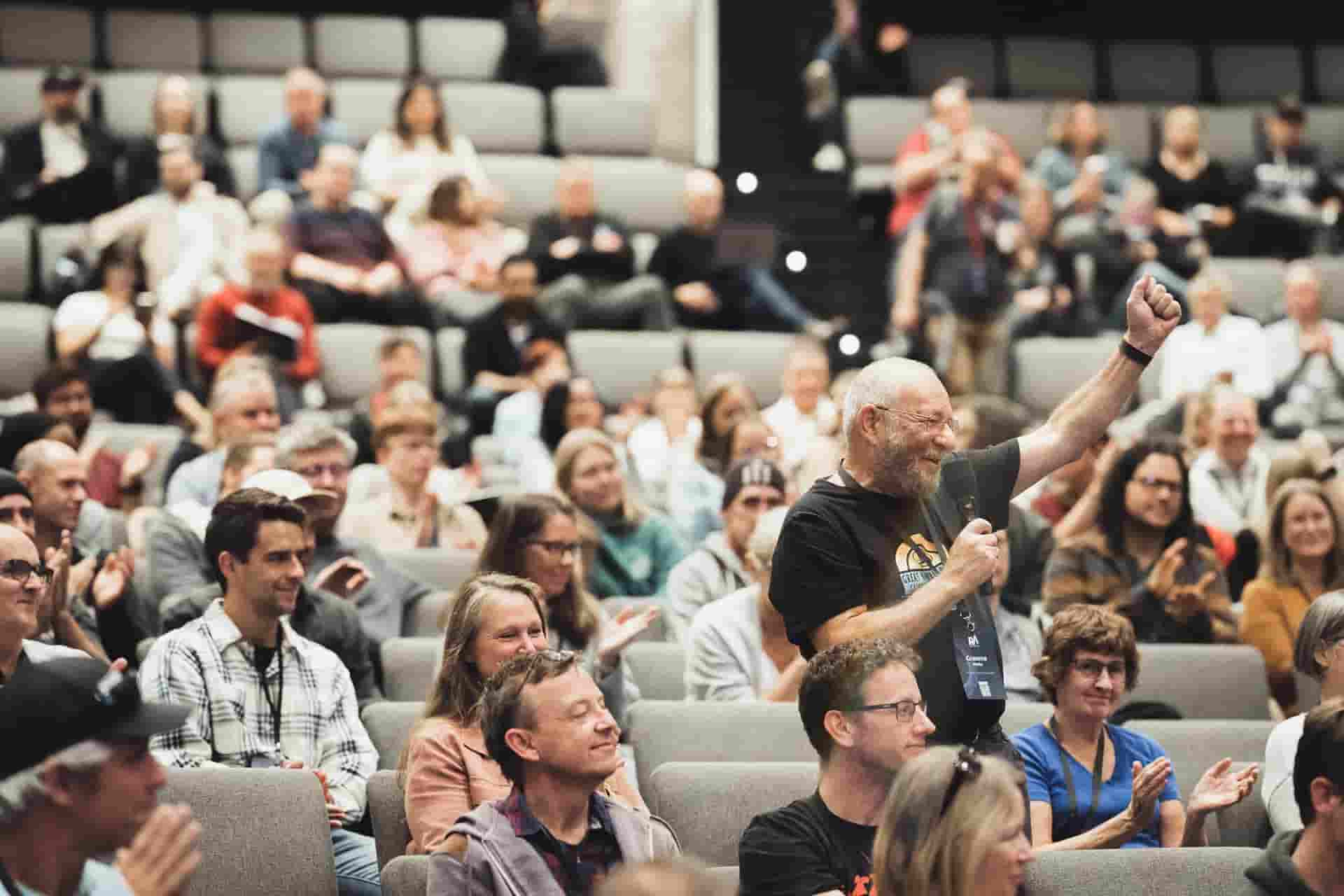
Cathie Heard and Rhett Harris from EV Church outline and answer questions on the process necessary for transforming a congregation from grudging roster-based duties to personally owned mission service.
Part 2 of a two-part talk.
Transcript
This transcript has been generated, and can contain errors. Please refer to the original recording for the definitive language used.
Read transcript
[0:00]
We're going to have a go looking through the questions that you presented earlier as your crises or your points where you're overwhelmed or not quite sure what to do. We'll give you some thoughts and open it up for further questions at each point. We're going to take them. We think we can work our way through most of them. We'll bundle some of them together and if you are not happy with that answer, you can come back at us and ask more.
[0:31]
There'll be a point where we just can't help you though. That'll be our fault, not yours. And then we thought it could be quite fun to do a consult. So if there's something that you would like us to work together on with you in front of everyone, you could bring that up. So the kind of thing we're thinking is, have you got, for instance, an area that's rostered on and you do want to move it to a team situation?
[1:03]
And we could sort of talk through the steps and use the whiteboard. Or another example might be, have you got kind of a team and it's not really functioning and you can't quite work out why it's not working? You could come up and just give us the short story of that and we could consult with you and maybe put some things in. We could get audience participation and it could go crazy. And then we'll shut it all down when it's out of control and Rhett will take us through just the final piece for our afternoon session
[1:39]
and then we'll let you go for the evening. So that's how we're going to work it. So the questions that we received earlier, we've had a think about and we're going to look at. And so I'm going to invite Dan to talk firstly about the question that was raised. I don't have enough people to do the ministry. I don't have enough leadership in my church. Thanks, Kathy. Okay, so I just want to kind of share with you, I guess, three things that we've found helpful that will help us.
[2:09]
I mean, as Rhett said, we're always looking for leaders. But some things that we try to do at NBM that keeps us on the front foot in terms of raising leaders. So Ray spoke before about staff meetings and we asked the questions about anyone become a Christian. We also asked the question, is there anyone who's got leadership potential? Anyone that's impressed us from, you know, a conversation on Sunday that's just gone or from the past week. And we actually stopped to talk about that, you know, in five minutes in our staff meeting. Just kind of air the names.
[2:40]
So anyone who's got leadership potential, anyone that we should consider tapping on the shoulder for MTS or internship, year 13, that sort of stuff. So that's our kind of way of pausing to think about potential leaders. Those names then get collected onto a list. And then the second strand in our kind of leadership development piece is we run leadership groups. So these function as someone's growth group for 12 months. They're led by the staff. And we actually do a bunch of different curriculum rather than what our normal growth groups are doing.
[3:15]
So the names that we're in at staff meeting, we'll kind of have a look through those names. Should we invite this person to a leadership group? And then they then, if so, then they journey with us over 12 months. Now, I think in your booklets, I've actually put the curriculum of what we do. And again, if you want the actual studies, I'm happy to share them with you. So just contact Derek. But basically, term one is leading yourself because you can't lead others unless you know how to lead yourself first. And we cover kind of the seven habits of highly effective people with a gospel edge.
[3:50]
Term two is the character of a leader. Work through a gospel-centered leadership, that booklet there. Term three is what a leader teaches and believes, so doctrine. And then term four is leading others. And associated with that curriculum is also a bunch of homework, exercises, you know, ministry of the pew stuff that we want people to be putting into practice. So those would be the two key parts. The third part in terms of raising leaders is also equipping those who are existing leaders as well.
[4:24]
So twice a year, we would gather on a half-day Saturday all the leaders across church to run team leader training. And Sandy's here. She's the one who basically runs that through her KidsWise ministry. And we basically say to every team leader at church, you need to be at one or the other. You need to be at one of those sessions every year because we just need to keep on equipping our leaders to keep on growing in their skills to do their jobs as leaders. So those three strategies would probably be the things that we have focused on to try to raise more leaders.
[4:59]
Is there anything else that I've missed, Sandy, just while you're here? I've seen you. Yeah. So just in case you didn't hear that, equipping people within your ministry teams to recruit other people to join those ministry teams as well. Yeah. I think I've got the question on people's hearts, and it's also linked to one down below. Duty-driven serving versus heart. But it seems to me, or it's seen, I think, was kind of one. Anyway, that's always a threat, isn't it, to all of us all the time?
[5:29]
I mean, I think we need to own that and just recognise that. But I think Cathy did say earlier, certainly at EV, we are wanting people can't join a ministry team until they're in a growth group. So that's one of those things we really want people in because we actually, one, just for caring for them, to be in the Bible each week. And we're wanting to communicate that we don't firstly want to use you for ministry. We want you to be part of church and all that.
[6:00]
Now, we've got a little slide clicker thing go. Okay. Now, this diagram was done by a person in kindergarten, and that would be me. Sorry about that. But what I want to try and draw your attention to in particular is the fact that there's a number of things that go on in this ecosystem to try and deal with these heart issues. That is, you see my wonderful little orange sun things that are supposed to represent kind of heat, preaching heat, these sorts of things.
[6:40]
That is, hopefully, if church, if preaching, if the Bible read, if prayer, that is, there's a number of things that hopefully should be going towards people's heart and making sure it's not driven just by duty. So that is, it does mean bringing the cross of Christ to people week in, week out. It's growth groups. It's, it's, but it's also in the ministry teams where hopefully, particularly if you think about your meetings, and I don't just mean the kind of a big sort of strategic once a term meetings, but I mean maybe the debrief that you might have, either before, that might be 10 minutes or before or 10 minutes after you reflect on the meeting.
[7:23]
You just keep reminding people why we serve. It's about Jesus, right? This is, we've got to remember the gospel. And it's all of the, there are all these little pieces that are part, that work together to, I think, combat this kind of, the sin in us that will drive us towards duty. And I think the other thing I'd say, we didn't, for me, teams are very powerful, not just because of the output of ministry, that is this group of people using the gifts and the kind of collaboration thing.
[7:53]
But also because of the, the discipleship that goes on within a team. As, you know, they kind of, you become friends, people, you know, if people share that they're becoming embittered, not only may they be connected to someone in the growth group, they actually might find that they're connected to someone in their ministry team who'll share with them. And I say this, I've said this for a long time, particularly for blokes, being kind of shoulder to shoulder with someone doing ministry, that's actually in a very natural form. And so when they can share, they're not in a great place, they might have a Christian brother who'll say, you know, are you okay?
[8:26]
And, and can then start to speak into Bible open prayerfully, how are you going? But there's no simple, there's no simple bullet. It's the normal fight of the Christian life to deal with heart issues, I think, in an ecosystem. All right? Is it me? Am I, am I burnout? No, I'm burnout. You're burnout. Sorry, you can have that. I was writing notes. Burnout. I'm going to take this in two ways.
[8:57]
To start with, when you're bringing people into ministry, you get low-lying fruit. By that I mean the people that are already convicted, already can do it, are highly motivated. They're the ones that are easiest to recruit into ministries. And so in the early days, it's usually just the senior pastor recruiting, and he gets in the easy people, and it kind of really works. And then some time in, maybe up to 100 people, there's a bit of a burnout because he may not have got into, that's kind of the inner, the core people.
[9:29]
He may not have been able to reach that next layer out where there's less motivated, maybe less skilled, not quite as ready to jump in. And that's kind of where burnout territory can happen, I think, because you have often at that point 20% of people doing all the work. And it looks like everything's working because all the work is being done, but you can forget that as the church has grown, it's still the same 20% doing all the work. And so what can sometimes have happened is they were the low-lying fruit.
[10:01]
They were the easy ones to get in, and they kind of gave you a sense of, the wrong sense, the sense of comfort when you shouldn't have had it. There's a word there, there's a phrase that says that, the sense of comfort when you shouldn't have had it. That's one. False sense of security. Because you thought recruiting was easy and you were doing a really good job. You just didn't realise you were recruiting the easiest people. And you haven't yet thought into that next layer where they're not so ready to jump in and you actually were meant to get to them pretty soon after.
[10:38]
Because as your church got to 100, you needed to have them ready to go in order to use them. So kind of thinking into that means that you want right from the beginning to be building that ministry heat, that ministry ecosystem, so that while your church doesn't, you know, can look around and feel like it doesn't quite yet need it, as you're, as you're, what you want to be doing is planning for the future when it will, and be putting things down in place, foundations down in place now,
[11:09]
for the future shape that you want your church to look like. And so if the future shape is I want nearly 100% involved in ministry, I want everyone who can be involved in ministry involved in ministry, that means right back here you need to start thinking into how do I make a lot of noise? So it's using your sermons. It's using growth group studies. It's using personal conversations. It's having people standing up the front talking about ministry and interviewing people about their heart to serve the Lord Jesus,
[11:42]
create ministry heat all over the place, which means when you come to that circle that was maybe the outer circle, not as naturally inclined, they've heard enough that your pastoral conversation now is not, it's not raw, it's not on hard soil. There's now something to work with. And even if it's not an immediate yes, they're on the journey to being able to do it. So I think that's one aspect of burnout that's important.
[12:14]
We, I think Rhett said it earlier, we had this phrase, leaders, we used to sit around going, we don't have enough leaders, and then go, we have to make our own leaders. Leaders are not just going to turn up on our church door and go, hey, I'm a leader, and I know you needed a leader for your comms team. Here I am. And we'd sit around wishing it would happen and realise that's never going to happen. And so we coined that phrase, you've got to make our own leaders. And the people that were actually the best ones were people that had grown up within our church.
[12:45]
What we noticed is the areas that didn't struggle as much for leadership were the areas with our youth, where they had good leadership systems and they could see, we had kids in that area seeing what leadership looked like and quite naturally moving into that role when they were of the right age. And the other area was growth group, because in growth group, we put in early enough that a leader had to have a leader in training. And so again, there was quite a nice arena
[13:17]
that someone knew could slowly be trained into the growth group leader role. So we had a couple of areas where we were sort of naturally growing them, but then this massive area where it just wasn't happening. And so burn up was a real thing. And so that's where our sort of more programmatic approach started to have to come in. But to start with, say you're a church of 50 people, you can train leaders by just meeting with them and talking about what it looks like to lead that team
[13:48]
and continually meeting with them. It's a continual process to help them in that role. So you can do it one-to-one and then eventually you need to move to doing it in batches of people and all of us will need to work that out. But we're going to get Derek to come up in a second and talk about the different kind of leadership, training things that they are around. But another thing with burnout, and this is the other half, is how many ministries has your church got going?
[14:19]
Is burnout because you're trying to do too much with too few? And it's really quite, again, critical to work out, as a church, what's our future going to look like? Are we going to be doing 200 different ministries? Or are we going to be doing a few but do them really well? And there'll be kind of ministries coming out of the purposes, but basically, and this is where we've gone, you can hear, we've decided we're doing five things really well. They do have like a bit of a web of ministries coming out of them.
[14:51]
There's lots of ministries, lots of platforms for people to do, but they're within constrained areas. And it means that right at the beginning, if you do go that way, you only need to have five ministries and maybe a bit of a support team who does catering and admin and comms. They're kind of our support team. And then kids and youth is also in that. And so you're not doing too many things. And if you're clear with what ministries matter for your church,
[15:22]
what are the ministries that really matter that we're going to do? If you're clear with that right at the beginning, it helps you know what to say no to, what to say yes to, and it can help you not do too much and be clear about which ones to shut down. If in fact people are being burnt out, well, I know which matters most. So I know which things we can actually cull and which things we must keep doing. So I think all of that's helpful. All right, Dan.
[15:52]
Just actually on that burnout, one of the first things, so that leadership group that I was talking about before, it was for potential leaders, but it was also for existing leaders. And one of the first things I did when I came to NBM was actually say, because I used to oversee growth groups, was I ran a leadership group of sorts, but I called it a refresher group for my existing growth group leaders who were actually on the verge of burnout. And I said, I actually need you for the long haul. Why don't you take this year off, come and do the refresher group with me, and then step back into leadership. So sometimes giving people a break or calling it for people
[16:23]
and then investing in them so that they can then go back out and lead, I think is something that might be worth considering as well. I'm going to talk about the second congregation. So in March, so I wear two hats at NBM. I wear the ministry M hat and I also wear a 4pm hat, which is basically at March this year, we started a second, not a second service, a fourth, fifth service with 100 adults plus their kids and youth at four o'clock on a Sunday.
[16:55]
And I guess the tension that we had there was the impact it was going to have on the other services because we're obviously going to need to create new teams. We're going to, we're doing kids ministry, school age kids ministry, not an under five kids ministry. We're going to do youth Bible studies, obviously all the other teams associated with the service. We're going to do dinner. So that had a big impact on the existing services because that's where our pool of 100 adults came from. And I guess the thing
[17:25]
that looking back on, I learnt was starting off with 100 was really helpful because of the fact that we were going to need a lot of people to service the new ministry. But I also realised, obviously that's a big gap on the other services that were being pulled out of their existing teams. And so what we had to do was we had to name it, name the grief that was going to be associated for the existing services, but actually help them to see that they were part
[17:56]
of sending those folk off to be involved in furthering the cause of the gospel. And so we had a public commissioning the week before we launched. We said to the guys, you know, you guys are freeing up people, but that's also creating opportunities for you to step up to. And we want to begin those conversations with you early. So before we even launched and went public, I guess we were looking for people and training people ahead of the game before we went and launched.
[18:26]
And so what that meant was a re-envisiting of each of the services. It meant that they needed to, we really, no, we casted the vision for 4pm, that was great, but we also needed to recast the vision for 9am, for 10.45, for 6 o'clock church as well and get them on board to go, well, yeah, we're still a service, we still want ministries to thrive here and encourage people to step up into those, into those ministry gaps that were left there. And that's been a real highlight,
[18:57]
like six months down the track, well, not quite six months, where yesterday was 100 days since 4pm launched. we've seen people who weren't serving previously actually step up to serve. And maybe that was because they felt, oh, everything's taken care of here, you don't need me, that's fine. And so actually putting that need front and centre, them seeing it and feeling it has caused them to step up. There's been certainly a proactive element in saying, you know, these people,
[19:28]
this person used to do this role at 10.45, but they've moved to 4, so there's an opportunity here now. So I think communicating that to your people is really, really helpful and then being on the front foot in terms of getting on it early before you decide to launch that second service or that extra service and trying to work out what will be the needs of the next service and then how can you tap people on the shoulder who are sticking around. One of the questions that came out
[19:58]
this morning, this afternoon, was about prioritising resource and I'd like to invite Tamara and also Dan is going to talk about this because we do have this scenario in a particular area of our church life which Tamara has been heavily involved with which is kids and youth and that kind of thing so I'll let her explain it and I think it's just interesting to hear one way of working out how to prioritise resource so take it away. Yeah, so I'm the ministry rep for our night congregation
[20:28]
and there's a real, we call it a crunch between our night kids, youth congregations as they're all trying to be resourced by the same group of people, the mature young adults amongst us and so I'll give you one scenario of where we've got to figure out how we prioritise resourcing those areas but I'm heaps happy to chat later, I've got lots of thoughts but here's one way that it plays out. So each year we have year 12s who graduate with us
[20:59]
there's a group of about 30 of them 30 to 40 and we've got to figure out as they move into adult life with us where are they going to serve amongst us. We love having them serve in both a next generation ministry, kids or youth and a night ministry but figuring out what that looks like for the 40 of them where they go that's a big thing and so what we do is we recognise our interdependency with each other as we come to that conversation so it actually is a conversation
[21:29]
we sit down in the same room we get the kids person youth rep a night rep we all sit down and we talk together about where the people where we're going to ask them to serve which team we're going to ask them to join and we have principles that we put up on a board in front of us and so our principles are that night our night congregation has to be able to resource and run itself that needs to be able to survive but secondly if we kill our youth ministry we kill our night ministry because a bunch
[22:00]
of the flow of the pipeline into our night is actually our youth ministry so we've got to make sure that survives and then thirdly if we kill our kids ministry then we also kill our youth ministry and kill our night ministry so we need all to survive but an extra principle that we have in there is who can serve uniquely in particular roles and so we've recognised in our context we need night people to be able to do the night ministries that's where those people need to be able to serve
[22:30]
but we've recognised for us our youth ministry runs using young adults in a way that the kids ministry isn't quite the same we can use adults of more varied ages in our kids ministry and so why we want to make sure that that survives there is a slight priority for us in making sure that the young adults end up in the youth positions all of the gaps there end up filled and so it doesn't
[23:00]
become an even split where we just halve them off and take half each but we actually look at the gaps in the youth team look at the gaps in the kids team and we try and make sure that if there's people who can do youth they end up in youth and if there are people kind of who we've filled most of the gaps in youth then we can start placing them in the kids team with a few exceptions because it's a tricky complex thing yeah
[23:31]
so we centralise the ministry allocations at NBM so remember before I was talking about the free agent versus the centralised so and then we've also because we've got people who are having the conversations with people in our congregation about areas that they want to serve in we don't in that course of that conversation on a Sunday we don't promise them that they're going to land in that team so someone might say yeah I'm keen to serve in coffee and we'll take that note on the Monday morning I will email all of our staff
[24:02]
and say this person has expressed an interest in this particular area but if you had in mind actually asking that person to serve and join your team because you've chatted to them separately or whatever then you need to let me know by Wednesday and so I wait for the conflicts to kind of rise the emails to come through and if there are people who say yeah I was actually having that person in mind for kids ministry or whatever that's when we will get in the room and try to work out where that person is best placed so remember
[24:32]
we've got that one week time frame so it's a quick turnaround but as much as possible I'm seeing ministry or I'm seeing my role as kind of being the gatekeeper and trying to train the staff to not promise that people will join their team and in a sense when we go back to that person who we've had that conversation to say hey thanks for expressing interest in this particular area there's also a need in this area or there's an opportunity in this area would you be open to that or maybe they've kind of given us two preferences in that initial serve chat and so I've gone
[25:03]
back to the staff and tried to work out actually we've got this at the moment someone who's interested who's a great vocalist but also has experience in kids ministry and so I'm trying to have that conversation between our youth pastor and our mag pastor about where the best place is for that particular person and then we'll go back to the individual and say hey there's a greater opportunity for you to serve in this particular ministry how do you think about that what do you think about that so that's the way that we try to at least make sure that the staff are on the same page in trying to work out
[25:34]
where the best place is and then go back to the individual so I hope you got I'll just add a piece all that's true in EV as well but also if you went to foundations yesterday you would have seen that we have a strategic plan document that we use at EV and that's all excellent and wonderful but eventually the rubber hits the road around that strategic plan because where there's a crunch ultimately in ministry is usually around dollars staffing or resource
[26:04]
so the human resource we all wait forever here we get our consolidated needs document if you like of all the needs people say they need and I look at what we've got and there's a gap that is someone's going to go without now how are you going to this is the hard bit and at the end of the day we have worked out strategic priorities which does mean we have to cut our cloth to mean we're going to have to just keep that ministry going because we've decided
[26:35]
as a church and leadership and staff this is what we're prioritising and that's where the rubber hits the road with our strategic plan which is why at strategic planning time everybody sits right up on the front of their seat and makes sure that they argue that why their area is really strategic because they know it's got implications alright that make sense yeah so it's done brotherly and sisterly right but at the end of the day that's that's kind of we have otherwise it just goes to you know
[27:05]
not where you really want it to and that's not really going to solve your problems we're going to have a bit of time for questions in a little while but this is the last one of these that we wanted to do it's the one on closing down ministries but I'm going to smuggle it in in a slightly different way which is how do you have that difficult conversation when someone wants to run a ministry that you are not really sure you want to run but hey they've got initiative and they're excited and they're passionate what do you do do you have those kind of things
[27:35]
happening in your church and it's part of the bigger thing is ministry in your church going to be top down or bottom up that is are you going to sort of say I love the idea of people just volunteering ideas and when they have a desire to do a ministry they run with it and that's really exciting and good for them or are you going to say no none of that we're the ones at the leadership level that work out what ministries happen in our church we're saying no to everything except for the ones that we've decided
[28:05]
or is it kind of like a hybrid between the two like where do you sit in all of that I don't know how you would answer that but one of the things that I use is this cost benefit analysis have you seen this I find it really quite helpful when someone's thinking about a ministry and I was in conversation with a girl I keep picking this blue that runs out I was in conversation with a minister's wife two days
[28:35]
ago who had this very thing she wanted to run a community mission group must just be me like a play group kind of thing no actually I won't use that because there's complexities to that illustration conversation so someone comes and says I want to run a craft group so that happened to me within a few weeks our church started and someone said I want to run a craft group and I thought it
[29:06]
wasn't great but anyway they're excited and it was because they wanted it to be a mission thing they wanted to be able to invite non-Christians and sit around and do craft together and they could see lots of people coming into church as a result of running this craft group and so how do you work out if it's a good idea or not and then how do you work out how to talk to them so with this method you're actually able to have an open fairly objective conversation together by saying to them what's the
[29:36]
outcome you're after let's think first what's the outcome we're after okay so and she said well I do like doing craft like sitting around doing craft together but it's people coming into church as a result okay great so people coming into church is the outcome we're after and there are two axes up here is the cost to run this thing and here is the benefit that is will it reach the
[30:06]
outcome so what's the cost well lots of women sitting around doing craft like there'll be some preparation it will probably involve well she thought about eight women like doing it and it would be once a week and I was will those women be able to do other ministries or will this be their main ministry so that's a sort of thing of a cost probably it's their main ministry okay so we kind of didn't say it like this we've got eight people sucked into this once a week thing I'm thinking
[30:37]
that's reasonably high costs so let's put it there what's the benefit how many people so best case scenario how many people do you think will come to this craft group and come then into church well it takes a long time to develop relationships I said and you know lots of people are going to a craft group because they like craft and that's as far as it will go for them yeah that's true how many people do you think will come well there's eight of us
[31:07]
so you could at least have a group of 20 do you know 20 that might yes so on it goes and best case scenario like this is a bit hard to sort of thing maybe maybe two or three might come to church out of that that would kind of be you know so let's say there and what about worst case scenario okay no one okay so looking at that in light of our present resource problems and stage of church life this looks like
[31:37]
a hard ministry for us to run as a church formally you're free to run a craft group just run one but we as a church probably formally can't put resource into it and make it a church thing so it became a useful tool to have a discussion and say no still a hard conversation but the group ran a craft group anyway because it just wasn't a church one so that's actually quite
[32:07]
helpful with lots of things and just helpful for ourselves so we sometimes sit as staff and go what's the cost of this thing what's the benefit sometimes if it's high even if it's low benefit but not much cost we might say well let's just do it anyway it's not going to cost much at all sometimes if the benefit's really high and the cost is still high yeah that might be debatable but you still might do it but you'd need everyone on board and it
[32:37]
would mean saying no to other ministries so it's kind of a useful tool okay so we've had a go thinking through some of the issues that you raised when you first came in would you like to ask questions about any of those or other things hands are gone straight up so we might get some roving mics and you might like to point your question to one of us three so that we have a sense of who you'd like to
[33:07]
answer hi I'm Dan Bidwell at St Ives I hit Dan Lee on this one how well have you gone with the suite of training stuff how well have you gone at hitting that second layer because the low hanging fruit's easy the second layer is obviously we all know much more difficult to reach what's what's kind of your best results in that do you mean second layer people joining a ministry team sorry you're getting past the low hanging
[33:37]
fruit the easy recruits and getting into that next layer of church the next most obvious leaders have you gone with that yeah sorry can I just clarify Dan sorry in terms of a team member who's not serving because there's low hanging fruit for that that come out of our belonging course they're keen are you talking about that group of people who aren't serving moving them into serving no so yeah I mean I think the serve pathway for the newcomers is actually clearer because we put them through a course there's people sitting in our growth groups
[34:08]
who've been in church for 5, 10, 20 years and they're underutilised how have you gone with those guys yeah sure so yeah we recognise that there's people that come through our newcomer pathway belonging etc generally we've got reports of like we kind of I guess track whether like we use CCB so we can kind of work out are they in a ministry team yes or no and so automatically we can get that data of who's part of our 1045 service who is not serving I guess part of the low hanging fruit
[34:38]
next step would be are they in a growth group if they are and they're not serving then we try to hit up the growth group leader just kind of maybe even just have some intel of okay there's a reason why they're not serving you know they're caring for their elderly parent etc so we know that there's people who will you know not be in that and then I think it's what we've done is started to actually put them on the list for a serve conversation so we just have framed that serve conversation in a different way rather than hey you know you've come to belonging that's
[35:09]
great let's now talk about serving we'll still have a conversation and cover off those four things that I outlined before and it's surprising I've actually had a few people so we've started to dig into this a few people who thought oh you didn't need me you know I thought everything's taken care of here at church it's a pretty schmick operation you don't need me so they actually get hit with the opportunities and then they go oh yeah I could do that there's a few people who have I guess thought that you
[35:40]
know I wasn't aware of the needs so you know that's why we've tried to avoid doing the mass broadcast and so if we do the one-on-one conversation that's usually borne a lot more fruit whether they're a newcomer or whether they're yeah someone who's been around for a while I think we also realise there's a percentage of people who will always be spectators and they won't jump in and I guess it's that balance of how much time do we pour into trying to move that group of people versus living with attention that
[36:11]
they're just going to be passive but we'll still keep an eye on them in a sense yeah I think it's it's good that that group doesn't grow too big that you're watching it all the time and so this is where I found we needed this special crack force team to do this work and so once a term or twice a year we scan through these lists and we're actually aware of the needs and we're thinking what could these people do because then it's nice to be able to go to them and go here's an
[36:43]
actual job that I would like to offer you you know you've actually got the role in mind recently too one of the members of the crack force team visited a group and said here's all the ministry opportunities around our church and she was aware in that group half were involved in ministry and half weren't and we're kind of like okay we've now got energy to maybe go and visit growth groups and give them a bit of a hey ministry here I am come and find me one day but what I have found is
[37:14]
it needed a different kind of person to the ones that look after new into church new into church coming into ministry that's one kind of skill set interviewing finding maybe hardened people who've been in for a long time that's a different skill set and so yeah it was just good to recognize that and in a small smallish church one person could be that person that has all those conversations and looks through those lists but someone has to be mentally thinking about it as it
[37:44]
got bigger I noticed I needed help to do that and also relationships I think as well so that's the whole team members recruiting other team members so sometimes if someone's been hanging around for a while they actually know some people at church and then you can tap that ministry team member say hey why don't you come and join my morning tea team or whatever so it's just starting to work out who's got the best relationship with that particular individual sometimes it's a staff member sometimes it's a person that they already know at church and tapping them on the shoulder too yeah thanks for that question another one yeah hi I'm Pete
[38:16]
I'm from Beecroft I've just got a question about the sort of language that you use when you're recruiting people so I guess the the difference between using the language of gifts rather than the language of skills and on the back of that if you've got somebody who comes along and says yeah look I've been told that I'm really quite gifted at something how you actually figure out whether they really are or whether they might actually be a bit incompetent and potentially a problem down the track
[38:47]
I'm just laughing there was a guy that wanted to be on the singing team and when we sent him off to the magnification team the leader came back to me and said what have you done he's terrible and now I've got to tell him so yeah we just palm them off and let the leaders do it we do have conversation where the the I find the skill talent gifting language a little bit fraught so the way I maneuver my way through it because people come with different concepts and loadings on those
[39:19]
words depending on where they've come from and their background so I just use six or seven words interchangeably so that they're confused and and it kind of boils down to you know what am I good at what do I like doing yeah so that's how I solve that problem yeah we would ask also what are your passions I guess the next step after they've expressed interest in a team is that they would so if they're going to
[39:50]
join the band they'll go through an audition and and you know the person from the mag team will hear them singing will they'll play guitar with the band after church one day we also encourage people to check out a ministry so not commit dipping their toe in the water to say go check out kids ministry and observe it before saying yes you've placed in this team and here's the manual here's safe ministry training etc etc so giving them an opportunity to taste it have a conversation afterwards go is this the right fit for you do you think before then
[40:21]
we've committed to them joining that team I think it is very important and it's hard to do to have the courage to not say yes to the person if it's the wrong person and I think because we're Christian we tend to do the gentle thing but we harm so many more people in our fear of harming the one person and so it's good that we just now and again have to be brave enough to say look I really don't think you're good at this you're not quite
[40:52]
what we were looking for can I point you in a nut we've got needs over here and just a quick clarification question on the crack teams that you had just the drug team that's what I'm saying you need the word force crack force it's quite a different team I have been concerned about what Kathy's been up to anyway and now and again we call ourselves well one of the girls keeps saying
[41:22]
putting on our calendar the crackpot team's meeting today at four crackpot I just wanted to clarify that that's sort of the we need 40 people to pack up tables on this thing but also where are you pulling those people from are those a list of people who've said you can give me a call if you need this done or are you just sort of like closing eyes and pointing on a roster that's a great question we're looking through our list of who's not in ministry so it actually is a way of going back to
[41:52]
that initial thing that there are always people in your church sitting not involved so we're scanning through that even then it might be thin picking sometimes because people have various reasons season of life new baby terminal illness like things are going on we have notes that we're keeping so that we don't keep going back to the same person they have to explain yet again they have a terminal illness and three days to leave and how come you didn't know this you know which is really bad so we have notes to make sure those things don't happen but we're
[42:23]
looking through those lists and the other thing that we would do is this is where you need people in the room that have a fairly good between us all knowledge of everyone in church we're thinking through who could maybe double up to two ministries or who is ready if it's a higher level ministry can they come out of something and we can backfill that a little bit more easily with a new to church person but they're now ready for a higher level one which is harder for us just to get a new
[42:53]
person in and we're we're having to make those decisions so again this is why that more specialist team has been needed because they're a harder thing a harder thing to think into and again one person with a lot of knowledge can do that for a limited number but it gets to a point where that one person it can no longer be the brains trust and they need to have a bigger team to do that. Hey my name is Pete and I'm pretty happy for anyone to answer this question just to give you a little bit of context I'm in a church in
[43:24]
Brisbane about 300 people and we've been sort of implementing what you're talking about for about six months so we're just rolling out with an initial few teams. My question is the scope and size of teams so you know for instance different areas you could arguably have a team that's sort of over the welcoming connecting sort of hospitality area or you could split those into different teams if that makes sense.
[43:55]
So just your experience of maybe the the size of the actual teams that's helpful for team leaders to lead and what's reproducible across services and things like that. Yeah it's a value it's just a value call it's a bit about timing in the size of church I think. So your question you really got the classic question of how like a really specialised team at one end of the spectrum which has advantages versus through say a generalist team at the other
[44:26]
end. I don't know what's a specialist team. They're all welcomers that's just what they do. They're all table talkers at life right through to I mean a classic youth team is a classic generalist team in my view they are running all the different elements of running youth group the games the talks the camps that you know all growth groups whatever the G teams. So there's so you've just got to work out I think what you think is best at a certain time. So for instance I mean I raised I was pushing the team thing a couple years ago and Dominic Steele kind of at Village Church and it was like oh no that can't work right.
[44:56]
But anyway I went back to church and thought about it and he did implement the team thing. And but what it was interesting for him it was there were advantages he saw of putting the this is my shame my is it the pro presenter guy in with the sound guys in with like that is you get a number of the guys who may be specialists but put them in a more generic team so that they actually problem solve together to make a really good product. And so I think it just depends on it's a bit of a it's a value kind of judgment.
[45:26]
My view of course is you start typically at the more generic end and you head this to the specialization end generally. And remember so I'm a I'm very passionate for teams so you don't really want to get me started. But really I only need two in a team and so I do like three but that's once you kind of get going they're very powerful things. And so does that help? Yeah okay well I mean like I'm you I could say stuff you speak
[45:58]
then. I was just going to reflect on when I used to oversee the Bible study groups we had leaders of leaders. These guys were working full time you know some of them had young kids and things like that. I found that the reality of them to be able to do that job well visit disciple their growth group leaders probably ratio of one to three maximum one to five as in a leader spending time going deep with an existing leader. The leaders themselves were busy and hard to catch so there's that element as well. And yeah I found that that was what we could pull off.
[46:30]
I suspect that's probably similar for other teams. That's team leader level isn't it? That's leader leaders. Leader of leaders. So in our situation I think we've had to push to one in eight because we just don't have enough. I was thinking if you were leading a team of greeters or welcomers the average person who's been raised into that layer of leading might I think eight to twelve is fairly manageable and over that it might need a higher
[47:01]
skill level. So I think most people can manage eight to twelve. But with this role it depends yeah if you've got more responsibility visiting groups. Yeah we found eight was the limit and six was the comfort spot. So efficiencies you want efficiencies but yeah. Yeah and of course as you know communication channels go exponentially bigger the team. So you're quite right it depends on the capacity of the leader. But the task too as you say welcoming is more
[47:31]
straightforward than some of the comp. Anyway so you might have a bigger team in that particular area say. Other questions sorry we should speed up with our answers so that we get more. Hi I'm Cathy Barrandito Community Church. We're at about a hundred. Just wanted to hear your thoughts on your expectations of team leaders in recruitment. Do you have them doing the conversations or should we already be thinking about guarding those conversations to be had with someone who's
[48:02]
specifically in recruitment. Does that make sense? Yeah early I think early days organic and recruiting a little bit more free market is a good way to go. That really formal process is kind of weird when you're small and so that's a good thing to be careful of. Like imagine you walked into a church plant in someone's lounge room and there were 20 people and you were visiting for the first time and then in the week you got a form letter that said welcome to our church hoped you enjoyed us please be in touch with
[48:33]
so and so. Like it would be weird. So I think we have to be careful not to do formalizing of things too quickly. So I think organic is the way to go in those early and what you find is it'll get to the point where that doesn't work. That's your red flag to say okay we have to bring in something a bit more helpful and formal for people. Can I just ask again then if you're getting resistance from team members this is too scary for me to do. Are you looking to train them up so that we've got more on the ground who are used to having those conversations
[49:04]
or are you better just going okay I'll look after that. You just get your team sorted. Yeah so again early days I remember Andrew I think recruited for everyone. Yeah so you have your key recruiters a couple of staff might be good at it you might just only have one staff and they just do it for everyone and that's fine. We have got support special recruiters around certain departments because those departments did struggle with the recruiting load. So you do it as a bit of a gifting thing and get support around it if necessary. That'd be about 400 when we were about
[49:34]
400 when we were 400 then the writing was on the wall for that natural recruitment. So Rhett was doing it well at night and youth. Andrew did it. Craig was doing it. I came in and said hey I like matchmaking. Can I be a person who helps this as well. But we weren't doing it fast enough and because we weren't doing it fast enough we actually plateaued for quite some time. We couldn't grow and everyone in their area was going I need more help to make this ministry fly. We're not growing because my ministry is not flying.
[50:05]
I need more people. And that's when it was like okay Rhett can you stop being the night pastor. Can you now move to this new role of being ministry person. Which was a bit of a sacrifice. Yeah and as you see when I started I knew a bit about recruiting but by now I don't know anything about anymore. Because what happens is you start as a generalist right even within a specialised world and then as things grow you then specialise within that specialisation. So you know Kathy now heads up recruiting but under her you've probably worked out by now there's
[50:36]
a number of teams. And so yeah. I try to encourage my team leaders to do particularly the re-recruitment of people in their teams. And I think Sandy you've been training your kids ministry leaders to re-recruit. So as we do that each year we're trying to encourage our to recruit back their existing team members. So they may not have the expectation to recruit people who are brand new onto their team but certainly we're trying to help them re-recruit. Just wondering just to clarify the
[51:07]
sort of pathway someone who's new in church so with the EV start-up belonging then growth group and then from once in a growth group then that serve chat happens. If someone's been in church for a bit wants to serve but not in the growth group you know what's the rationale behind growth group you know does that make sense the why are growth groups serving and that relationship? Yeah so we're probably a little bit different from EV. You can we've distinguished between
[51:39]
core and non-core roles so non-core roles you're able to serve but not necessarily have to be in a small group. But we will we want to ask the question if there's a reason you know would you why aren't you in a small group that sort of stuff. And so we have those conversations going in parallel out of belonging. So I guess timing wise the first conversation will be joining a small group but equally I'm probably about a week or so behind that conversation to then have the conversation about serving as well.
[52:09]
So yeah they kind of happen in parallel and maybe inefficient but that's the way that we're doing it at the moment. Yeah and I think our philosophy was because you're serving from a heart conviction of serving the Lord Jesus we want people to be having the word fill that so that the serving is out of that grace being poured into them. So being in a group is pretty critical part of that happening. Having said that we do have exceptions if we can understand what is stopping them coming to a growth group and we sort of sense an understanding of why
[52:41]
we do have exceptions but I think that's a principle that we've not regretted and it's making being in a growth group a really key important aspect of life in our church. We really do prize it and it kind of sends that message. Just got a question about you guys picked up shift workers. Ministry teams, I love ministry teams but there's a level of shift workers
[53:14]
find it hard to be in a regular team. What are some of the things that you guys have tried to do to love shift workers? Like I've thought about it for like our growth groups and possibly having two that they can alternate to but with teams part of it is investing into that team so what have you guys done? Well we have lots of teams that suit shift workers. So comms team, you're a photographer or video editor. Ministry team where you're helping someone
[53:45]
new into church. We have lots of teams like that where it's flex the kind of time you spend and the only tricky part is finding a meeting time that everyone can make but if you have sort of once a term meetings you tend to be able to pull that one off. So I think that's one way. The flight attendant in our church, he's got such brilliant welcoming skills and gifts that we say whenever you're in the country just join the team. So even though that team functions month on month off we just say hey if you're around we'd love to have you on the team.
[54:16]
So we kind of try to work around that. That's good. Okay we'll take one more and then we'll see if there's a consult up the front kind of thing that you might want to do. I'm just wondering about teams that are on a very long rotation say like you might have a morning tea time where the different groups are only rotating about once every two months. How do you make them into a team that's going to be able to form that sort of nucleus of vision and responsibilities?
[54:49]
Put them on more often. Sorry I think the reality is if you're right if a team ministry is so sparse is the word irregular like too big a gap between it it's the classic thing is you don't want to put too much of a load on a team so they can't handle it but if you put too little a load on a team you actually don't load them up properly you won't form up the team properly. So that what I would do is I would maybe I don't know you'd have to look at it but I'd form up maybe a bigger team and
[55:22]
put them on more often or something like that because you do really want them only the vision of how do we make this morning tea really rock around here and what could we do. So that's what I'd do. Okay. Is anyone brave enough to have something that they would like to share up the front and be consulted on and it's okay if you don't. I'm actually starting to freak out about this offer. Good.
[55:55]
Yeah you can give us a crisis. This is a story about crisis. Yes. Yeah welcome. How do we do this? Thanks I'm Dave. I'm from Tasmania from some of these church down there and we've things have been pretty encouraging. Church is growing which is really good but part of that is we seem to be growing heaps with really young families so lots of kids coming in and then kind of a lot
[56:26]
of the core team that we started with are at the age now where they're having lots of kids so just everyone's pregnant and the women are pregnant. And we're one born every minute at the moment so we've just got this really rapidly increasing kids ministry and up until now I think we've gone okay with sort of the recruiting thing but now the pressure's really on just in terms of meeting ratios of kids workers so mainly that sort of little kids age kind of I guess sort of kinder up to sort of mid
[56:56]
to late primary school and so yeah just huge amount of pressure on in terms of trying to get enough leaders to do that at the moment yeah so that's the kind of that's kind of the crisis we're in. Yeah. Okay what have you done so far and what's not working? So so far we've we've got a sort of a ministry team I guess like like you guys but we're sort of pretty new at at rolling all this out I think we're now sort of maybe third year of doing it so they've been trying to recruit through
[57:27]
our small groups they've done some recruiting from up front which kind of yielded some results that was okay. There have been a few kind of taps on the shoulders that's worked okay so I suppose a little bit like the serve thing which has been good. And that's about it and then I'm sorry and then the big broadcast email went out this week because I think last Sunday was sort of hit a real crazy point because we had some visitors and it was like oh
[57:57]
gosh we're you know sort of desperately trying to pull people out of the service to come and help and things like that so. Do you have teams? Are these people who are teaching kids part of teams? Kind of so they always do it together so they're the little team but they're probably not as advanced in terms of what you're talking about here. Like I don't think they would they wouldn't really meet up outside of just the things that they get. I think they might shoot an email like if they're on for maybe on for two or three week stints or something like that and
[58:28]
then they have a break and then the next team comes in and then they might sort of communicate a little bit via email about okay who's going to grab the material and run the session and who's going to be helpers but they wouldn't be sort of like I don't think any of those teams would have like a term meeting per se. Okay so they're on two weeks then they have a break? Yeah I think maybe three weeks and then they have a break for yeah. Okay. I can't remember the details. And how many people have you got and how many are you short? Oh I don't know off the top of my head.
[58:59]
I reckon I reckon we're short maybe I reckon probably each team needs at least one other person and I reckon we've got maybe I'm going to say so maybe six teams maybe seven something like that. Okay. Yeah. So six teams and each of them needs at least one more person. I reckon at least one more yeah. And six teams manages it over the year with this kind of. Yeah rotating kind of. Sort of rotating and if they are out
[59:30]
two weeks do they miss church totally for those two weeks? Yes. Is that it? Yeah. Okay. So it's just one service on a Sunday is it right? No night service? No. What's the total number of church attending? Probably on average Sunday you're at 150. Yeah. That includes kids? That includes kids yeah. How many kids would there be? I reckon there would be let me think probably just a bit under half. Yeah. You're in the absolute crunch time. This is exactly right. This is when we were really under the pump. Yeah. When you had lots of kids coming out like that.
[1:00:02]
Yeah. And that. Feels like it. That sounded terrible didn't it? Praise the Lord for the children. They're excellent right? We are very thankful for them. For Jews yeah. What's that? That is a very. That's nice. Yeah. Yeah. But it's a young church right? That's a young. Yeah. Yes. It's a young church. Yeah. Can I keep talking to try and buy us time? What are you doing? Let's go Sandy up. Yeah. That's right. She can't Sandy up. That's right. I actually am because this was literally this has been our greatest conundrum trying to
[1:00:35]
work out how particularly to resource our kids ministry. Yeah. So there's a few things. A couple of things we started to realise over the years was resourcing the children's work was our hardest challenge. That was actually the most difficult. Most adults are happy with lots of ministries that you offer them. It felt like offering kids. It was a special kind of person that loved kids and after that it was hard for them to do it. So kids ministry had to I guess do something special, be cranking in a kind of a way that
[1:01:07]
would help draw people in because it was naturally hard. And the other thing was we and so one of the things that we did was actually rave about kids ministry in lots of places. So we had kid ministry heat. Here's how we do it. Every person that we interviewed in our ministry team the first offer was about kids and we would labour the need for kids before we talked about any other ministry. So that was helpful. Our ministry team helped.
[1:01:37]
The second was we talked about kids from the front in church constantly had kids paraded. Sounds bad. Here's a kid. No, people that were teaching children talked about the joy of it and being part of that. And then the third thing that we did was create the team aspect of kids work to really raise the enjoyment level of being part of kids. And so it would be helpful to hear Sandy's thoughts.
[1:02:09]
I'm wondering if getting all your teachers in a room and starting to set the vision and showcase how to do this more from a team mentality than a roster mentality, whether you're ready now to move into that would actually inject the next sort of sense of enthusiasm and buy-in that would actually help it move to that next section of growth. Every team has a competitive advantage. That is, there's something that's really attractive about doing that ministry and you've just got
[1:02:42]
to think hard into what is the particular thing that this thing's got that people want in on. The mag team, there is something great in leading people like that, but to be a bit honest, there's something great about being up the front for people. Now that's just something that's both a positive and a negative. Kids is draining. But it does have a fundamental thing that what you're doing in shaping the next generation for the rest of their life to serve Jesus is a profound concept that you really, as a vision,
[1:03:16]
if you really sell that, and I mean, I don't even sell it, like you don't have to, but let people understand that biblically, that's powerful. You know, the hand of rocks, the cradle rules the world. Like this is really, really important, this next generation. So friends, it was for us a realisation, a lot of people didn't want to do it, they were saying no, and I think we weren't valuing it maybe enough. And so it was literally getting Andrew to literally do some preaching heat intentionally on that. And I shared with people last night, it was an instance where our no's flipped the yeses. So, but I think this is to say, literally, we had to get a strategy, a deliberate strategy
[1:03:51]
that was intentional and multifactorial, multi-pronged to deal with that issue. I think as you get, it would be great to get everyone in the room that is now involved, set this kind of vision, and then let them be able to speak about what's working and what's not working. What are they enjoying? What are they not enjoying? How would we reconstruct this to make this do what it needs to do, to have a great quality outcome? And I think talk about the quality of the outcome that you're wanting with the kids,
[1:04:21]
because that is much more exciting to be part of something that's got a good, really good product. So talk about that. And then with all of that, okay, who's up for it? How do we structure ourselves so that we can serve this outcome best between us all? Who else can we bring in that might also get excited about what they're seeing? So I think that kind of room ownership discussion can be very helpful too. I do feel we need to get Sandy. Sandy, come on. Yeah. As Sandy comes up, I think asking what do they think they're doing as well?
[1:04:52]
So do they see themselves as babysitters or do they see themselves as discipling? Are they almost saying that this is my mission field? This is my opportunity to share Jesus with a captive audience and to show them and introduce them to Jesus and set them up for life. I think Sandy's… You've got Sandy in the room. It would be a bit wrong of us, I think. Yeah, it would be a bit wrong tonight. I've got a couple of questions. One is you mentioned you had six teams. So that means you've broken your ages up. Is there any space to bring those teams together?
[1:05:24]
Because you understand ratios of kids, as soon as you start to break them up, you're going to need more leaders. So do you have space to bring age groups together? Because you'll actually need less people. We just… So we did have them all together. So we've just gone to the extra age group, just because it was starting to get a bit crazy in our… So we meet in a school which only gives us two… It was only giving us one classroom, which just was… It was getting insane.
[1:05:55]
Like, they just wouldn't all fit in there. So that was getting a bit crazy. And it was sort of a fairly big age group. I think it was going from sort of around prep to grade… I'm just trying to think. Three or four or something like that. So it was quite a big group. But then definitely not fitting in the room we got. And then we sort of pleaded with the school and after months and months and months… So it was a space issue that forced you into the extra team? Yeah, that was the real crunch thing. Yeah. I think they're finding it a little bit hard just with the broad range.
[1:06:25]
But yeah, then the space issue was… If you explore space and there's any opportunity where you can get a larger space… with an age group that is okay. Like, you can't put two-year-olds with five-year-olds. No. They will hurt each other. Yeah. But if you can actually do that, you'll actually find that you need less… If you have larger spaces, you'll need less leaders. Yeah. The other thing is, if you actually increase what you require of the leaders… and protect those people on your teams who are discipling kids from any other ministry…
[1:06:58]
like, you really protect them when they go out of kids' ministry when they're not serving… and you increase what you require of them in terms of time… then in the end you'll actually need less leaders. So we did this years ago where we had rosters. We started with two weeks on, four weeks off. We went to one month on, one month off, one month on, two months off. And then the year that I… I realised that I was invested in the kids' ministry… but everyone spoke of it in terms of it was my turn.
[1:07:30]
I was the only one that was speaking about my kids… because I knew them, because I was there every Sunday. And we only had a single service. Sorry, we had women's church on a Tuesday. That's where I was fed. And then what we did was we raised the bar and we said, you can't serve in kids' ministry unless you serve for an entire term. I lost two-thirds of my team straight away. But the third that I had left… most of them are still in kids' ministry today… because they had not only the gifting, they had the heart.
[1:08:00]
And it's… and when we raised the bar and we required more of them… we had people who served for that term. Some of the people who said, no, I can't do a term… we kept as our holiday teams. And as we went through that year… we had enough leaders… because we needed less leaders… because they were serving longer. They served term one… and then they were…
[1:08:31]
then they were to come back the next year and serve term one. But by the time they got to term two… my term one team was saying, I miss my kids. Who's teaching my kids? And then by the end of term two… they were begging me to come back on to term three. So we ended up with a single service… with basically two leaders… in the lives of every child… serving them term one, term three, term two, term four. And we continued that… and continue that today in our church plants as well.
[1:09:04]
But if you require more of your leaders… you actually need less. You create teams. You can train. You can cast vision… a lot more easily… than if you have people coming in and out of the lives of kids. It's really hard to create a team mentality… when people are in for a couple of weeks… and then out. And they… and in a way… you know when you disciple a person… and you see the work of the Spirit… and as you open up Scripture… and you see the impact of the Scripture…
[1:09:35]
on the life of a person… you see that in the life of a child… then all of a sudden it energises you. So unlike what Rhett said… kids suck the living daylights out of you… for me… they energise me. They always have. And you're looking for the people in your church… where kids ministry energises them. And that's the heart. That's what you've got to search for. And they're in your church. But you've got to protect them… from every other ministry team.
[1:10:06]
Because discipling kids is absolutely key… in growing your church. You see Sandy's got a gift, right? That's fantastic. I think that's right. And although I will note… we too have moved to permanent teams… across our kids. And it has brought those benefits. Right? But it is… but it is a… It is a complex transition. That's the key I think. Trying to wrestle with how do you do it. Particularly as Sandy's saying… that means they're not in church… for quite some time… trying to wrestle with it. Yeah. And the issue for most… most people think…
[1:10:36]
they're not hearing the teaching. But I actually think… the grief is the connection with… the other adults… in terms of community. Because so often… we can hear teaching online. We can actually… we can be really well fed… 24-7 in this country… with good preaching. But it's the community… and the connection… of gathering with God's people on a Sunday… that is the real grief. But if you create community… within your teams…
[1:11:07]
then you're… then this… they've got community there… at least… within your teams. Which is why teams are so critical. We do life together. Dave, thank you for sharing that. Is there a couple of things… that are helpful… that you can take home? Yeah, heaps. I'm just trying to remember it all. I've got to go down… and quickly write it down. That's all we've got time for. Thanks. Rhett is going to do… a bit of a close for us… and then that's it.
[1:11:39]
I thought I'd do a quick… a quick… quick thing. I'm going to finish… speaking about the… the ecosystem… and then I'll… well, it's part of the close, really. What… I just wanted to speak about the fact that… I think you've heard the words… poetry and plumbing… and that is, of course… the poetry is all that kind of… preaching heat and so forth. And… but I've… mainly… we've been speaking about the central engines… what I'll call the plumbing pieces…
[1:12:09]
those engines of the recruiting… the ministry teams… and then the leaders of leaders. I just wanted to highlight those yellow arrows… and that is… that what we've also done is built… you can actually build up those layers… by building platforms. So, for instance… if you take as a kind of a… paradigm… MTS… has those three elements to it… that is… there's content… theological content… they have a coach, if you like… and it's on the job.
[1:12:40]
Right? So… we… we really got that working… and people are drawn to doing that… but what we… could… also did… was… we said… I… I read a book called Mega Church Myths… and I was struck by… the classic mega church of 2000… had… I think it's like… 20, 30 people giving 20 hours or more… as a volunteer… and we said… what could we… at a reverse engineering level do… to try and see… us raise up that level of volunteers… people who'd cut back on work… or take early retirement… or whatever… and modelled on that thing of MTS…
[1:13:11]
where they're in tutorials… they're… they've got a coach… and they're running ministries… in our case… they're doing 12 hours or more… we created a thing called EV Generate… a platform that we've seen… I think significantly more than 150 people through… and that raises up leaders there too… we've even got another thing… called Make a Difference… which… you know… was to do with… explaining the nature of ministry… and why… understanding… why… spending a life on ministry matters… but that is… we… we… we built platforms…
[1:13:41]
that would actually… if you like… would be the poetry… or the heat… for making this whole thing work… that is… there's all of… church's heat… if you like… the pulpit… preaching… you know… we do celebration spots… little bits in church… people talking in teams… but there were also things that we did… those yellow arrows represent platforms… that we also built… that would build this system… but the last thing is I think… what you need to do… so… if you're thinking of possibly doing that… and that's probably beyond… well… you could form up groups…
[1:14:11]
that seek to do that… but the other thing is to pay attention… to your ecosystem… that is… we couldn't build this… make a difference platform this year… we didn't have the bandwidth… but I wasn't as troubled… because our teams… fired more… that is… they became more attractional… and so the need for us to kind of… do that heat… by having that event… could make a difference… diminished… does that make sense? that is… to look at your entire ecosystem… and say… where are we winning…
[1:14:42]
and where are we not winning so much… and where do we need to kind of put… our attention to kind of make it work… does that make sense? that makes sense… now we… we're going to get Derek… well I'll just… the big idea here though… of course is… we're called… to equip the saints… as Grant was saying… I think what that means… for a lot of us… we're like Grant… we need to learn ourselves… how to lead ourselves well… and then lead others… which means… we need to learn… how to lead leaders… one of the biggest things… for the ministers… is to learn how to do that…
[1:15:12]
and even to get… high level volunteers… or the saints doing that… and if we can… we really will be able… to mobilise… many many more people… at high levels of leadership… and actually see the kingdom growth… I'm convinced this area… of church life… this whole ministry area… is critical for us… to see… us do reach Australia… that is to genuinely… see the gospel go to… at least this nation… and indeed the nations… so it's not an optional thing for us… it's… we really need to learn… how to do that… and a piece of that… that's a good segue actually…
[1:15:43]
I'll stop right there… and because it is a piece of that… I'll hand over to Derek… Sure… I'll introduce Daniel to you… in a second… one of the things that we've been… we've seen in EV… and Hunter Bible Church… and MBM… a number of other churches… we work with… within the network… is the way in which… they're developing leaders… leaders who are busy… don't have a huge amount of time… but maximising the time… that we do have face to face… with them in order to do these things… to raise up… how they're doing leadership… to train them… to build missional heat…
[1:16:13]
all those kinds of things… and had to deliver that training… one of the things… which we had done… is created a site called… training.churchinabox.com… where we've been building courses… we've been developing… some training that… based on what EV… and Hunter and MBM… have been doing… and making it… more available to people… but… we realised that… had limited ability… to deliver what we want… and we came across Ministry Grid… we work with Lifeway… where Daniel is from… Ministry Grid is an online tool… to do that… let me ask Daniel… Daniel's from Lifeway…
[1:16:44]
he's an author… in fact if you want to… hear an expanded version… of what he's going to be talking about… a little bit more… you can check out online… after this conference finishes… at the Geneva site… Daniel's talk about… flipping the classroom… but can you just tell us… a little bit about… Ministry Grid quickly… and how come about… and what it does… yeah… so… you can obviously go to the site… ministrygrid.com… and learn… but really… regardless of what's there… the whole paradigm is… how do we… how do we… take advantage of the fact… that everyone has one of these…
[1:17:16]
and it's increasingly difficult… to get 100% of your leaders… in a place where you can train them… right… I mean that's just… it's… I don't know the last time… any church has gotten… 100% of their leaders… in the same place… for some sort of training seminar… you obviously get the committed… you get a ton… and then there are all the people… who just can't… because they're traveling… or this… that… or the other… so… we just end up… catching them up… and just repeating ourselves… over and over and over again… which can be pretty tiresome… or we just end up…
[1:17:46]
not training them at all… so the whole idea… around ministrygrid was… okay… how do we approach… development… and leadership development… and training… in a… in a manner that's both… high-tech… and also high-touch… right… so the big vision around it is… let's say you have a new… volunteer… who's with the connect ministry… or a new growth group leader… and you… in person… connect with them… talk to them… cast the vision… shoulder tap them… recruit them into the ministry… and they're like… yes… okay… I'm ready to go… well the next thing you need to do… is you need to train them…
[1:18:17]
but what if… you can't train them that week… what if the… the training time is three months later… or… or you obviously aren't going to ask them… to wait three months… so then it's more time for you… to then train them that week… so the whole idea is… recruit them in person… shoulder tap them… tap them… you know… envision them in person… and then you're like… hey… next week… when you come to this growth group… or next week… if you come a little bit earlier… to the service… we're going to actually… go through and lead together… but this week… I want you to watch… these two or three videos… that are going to be…
[1:18:48]
skills training… you actually on ministry… can see if they've watched it or not… there's 3,500 videos on there… and this is what I encourage… most churches… if there are 850 courses… and 3,500 videos on it… and you can… you know… you might be like… but there's an American accent… right… the guy has an American accent… or they don't… the church doesn't know who this is… and the easiest thing on grid… is you just film yourself… and do a 30-second intro… to the course… so it's 30 seconds of you… being…
[1:19:18]
hey… you know… the church knows who you are… hey… Paul Tripp is about to teach you… on this… right… or this person is about… who is an expert in this ministry… is about to teach you on this… but I just wanted to let you know… that I'm so excited… that you're going to be serving with us… and I love this material… and then we're going to get together… right… what you've basically done… is you've… you know… they know you… they see you… you know… they get the training… but then… you connect with them again… right… so it's not digitizing development… it's not digitizing discipleship…
[1:19:50]
it's high-tech and high-touch… so it actually frees you up… to do more of what… you can uniquely do… right… a platform can't recruit for you… a platform can't train for you… because we believe that… transformation… happens at the intersection… of knowledge… experience… and coaching… so the platform provides you… with knowledge… the volunteer with knowledge… but they still have to have… the experience… and you still need to coach them… so that's kind of the big… kind of the why behind it all…
[1:20:20]
that's great… Daniel's here for the rest of the week… so you can grab him… and talk to him about that… but one of the things we're doing… at the moment… we do love Americans… sorry… we love Americans… and we love Canadians as well… but we do… we do think about things… slightly differently… so we've been… leveraging… we've just recorded Sandy… doing a kids ministry course… the most popular course… we've got on Church in a Box… is Kathy and Red… doing building teams… and Graham Fuller… doing building teams… if you want to know how to do that… it's an excellent course… we're transitioning that… over to Ministry Grid… we have Dan Lee…
[1:20:52]
on doing team member level… team… if you saw the ministry map before… building courses… and videos on each of them… so you can leverage them… and the point you get to say… okay… I think I can do this… better than Rhett… you record your own video… and put it on there… that's fine… that would be where… we'd want to end up… but at the moment… we just do it like this… we want to fast track… some of these things… which are hard to do… in your own context… so we'll be making those things… more available… as time goes on… yeah… so it is this high-tech… high-touch thing… with reference to training videos… so we…
[1:21:22]
on our site… created 50 videos… which is our… latest operating system… so that our… our leaders could access… that three to five minute thing… which is that… and that… and we are then of course… working with others… so we've been working in teams… with Craig… Scott, Curtis… different churches… and working with… with Reach… with Geneva… and Ministry Grid… so that we can make… indigenous videos… that you could… literally could take our material… and Wayne here… can put it… make his own… using our material…
[1:21:52]
so it's really… he could do it really quickly… he could load up his own stuff… so it's local pastors… doing the training… and it links in with that ministry map… so you can do… core competency training… or ministry specific… or whatever module… you think is helpful… so that we can deal with… that question that came out of the middle… how do we do… this complex training… when you can't get people together… okay… so there's great things… going on in this space… and we'll keep helping us… train and equip people well… how about I pray… Gracious Father… we thank you so much… for the gospel… that you've called us to…
[1:22:23]
and that you've called us… to this wonderful work… to see Christ… Jesus proclaimed as Lord… and we do pray for us… that we would… help us work… at whatever church we're at… and so that we continue… to see… equip the saints… for this wonderful work… and so we can see… the mobilised… whether it's being… team members… or just recruited into teams… or sort of… stepping up into leadership… so that they would see… that what they're giving themselves… is so… it is the labour… in the Lord…
[1:22:54]
it's eternal… and it's… and it's so satisfying… because we know that it lasts… because of course… Jesus… and the resurrection… and so we pray for these things… in his name… Amen…