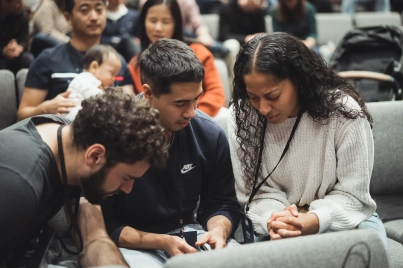

As part of the Reach Australia conference, Jono McKeown runs a workshop on how to develop an effective ecosystem for youth ministry that translates into increasingly mature believers.


Transcript

This transcript has been generated, and can contain errors. Please refer to the original recording for the definitive language used.

Read transcript

[0:00]
So, who in the room is here because you're not necessarily the person running a youth ministry, but you might be a lead pastor somewhere or something like that, or the person in leadership responsible to lead the youth person who's running the youth group? Are there people in that kind of a category in the room? Beautiful. Yeah, we'll chat in a bunch of ways that will be really helpful for you. who here is the person I guess directly responsible for leading the whole of their youth ministry a lot of you that's to be predicted awesome um there'll probably be a handful of people who are responsible for aspects within the youth

[0:32]
ministry is someone like responsible for yeah if you're not responsible for the whole but a particular bit chuck your hand up what do you what are some of the things you guys are doing okay so you're running that Friday night program other hands that went up where were they yep what's your specific area okay oh yes yep yep uh mission okay so driving that purpose of mission within the whole youth group yep other hands went up the yep ministry so getting youth particularly on board with serving in the ministries

[1:04]
in the youth group yep other hands that went up there a bit other ones yep junior high what's that junior high junior high so running the junior program yep any other hands awesome all right that's helpful just to know um another thing that um this is zero to do with bragging rights or anything like this but rather just to give me a sense of who's in the room so don't misunderstand this all but um who he would have less than 25 years in their youth program just roughly yeah So a good number of 25 who would have less than 80 in their youth programs.

[1:40]
Yep, that's wonderful. And is there any people with more than 80 in their youth programs? Thanks, my hand falls off. Okay, so it's worth acknowledging that there's a diversity of responsibilities we have in our youth ministries and also just a diversity of sizes. As much as I can, I'll be working really hard today to talk in terms of principles, not prescription of what you should do because of the diversity of our size. So I'll do that as much as I can. But in all honesty, the majority of my youth ministry

[2:11]
is in a particular context here at EV and so I'll have to draw on that from time to time. But any time I'm talking about my own church, I just don't think I'm telling you what to do and do it my way. I'm just talking about my own experience in ministry here. So one obvious diversity we're going to talk about is the fact that we've got different diversity of sizes in our youth groups, which dramatically shapes what you do and don't do in youth groups and the context of size. Another thing that creates, it just brings diversity to what we're doing in youth ministries is some people will be operating with a homogenous unit principle

[2:44]
in youth ministries where you're seeking to, so homogenous units when you grab a bunch of people who are similar for a particular reason, whatever that is, and seek to reach them and grow them as Christians, like convert them and see them grow as Christians, as a group. So any youth groups, that's primary expression of the youth group is when they get together on a Friday night with just the teenagers there and the leaders leading them. That's homogenous ministry in that context when you grab them and that's what you do with them. But there will also be people whose youth ministry, the shape of that is that

[3:16]
the goal would be to grab teenagers and also meet teenagers that grow up in your church and see them grow up in the faith or see them converted by bringing them into the diverse adult church life as the primary way of doing youth ministry. So both of those are things that people do and seek to run their youth ministries through. Or you might have a combo, which is probably more common, where you might do something that is essentially a homogenous unit thing where you'll run a Friday night program or a Sunday afternoon thing

[3:46]
or something like that, and that's for teenagers specifically. Come on in, don't be shy, and sit on the back bench is my suggestion. Sorry for lack of space. Yeah, so you might do a combo where you're doing something that's essentially a homogenous unit thing on a Friday night or something like that. And then you might be trying to get your youth into church gatherings on a weekend or find other ways to connect to the whole church life. I'm not going to try and win any arguments about this today because it's not the point of the seminar. But I would say, while you're doing things using that homogenous unit principle in your ministries,

[4:22]
if you are doing that, recognize that there's a potential shadow attached to that way of doing ministry, which is, you don't want to do homogenous unit stuff in such a way that people will never grow to maturity to appreciate the breadth and diversity of God's people. So you don't want to just see people saved through a homogenous unit ministry. or grow up in it, and never move them on to maturity where they can enjoy and appreciate and engage with the wider body of Christ. You don't want to just leave them there forever.

[4:53]
You want to move people along in their maturity such that their allegiance is to Christ, not a teenager in a youth group or a young adult's church, or I go to Christian service or whatever homogenous unit you choose. But the second thing to say is people who are pretty against homogenous unit ministries often end up running a bit of a homogenous unit in their own church, which is people who don't like homogenous unit stuff and diversity, and that is a homogenous unit of people as well. And so, anyway, there you go. Worth noticing that. Next question I want to talk about is this.

[5:24]
What is the goal of… This is another diversity, right? This is the thing that we'll have plenty of variation on. It's this. What is the goal of your youth ministry? What would you say is the purpose of your youth ministry? What are you trying to do? That's a worthwhile question asking, and you'll hear lots of diverse ideas about that. Are people brave enough to shout it out? Maybe you have a sentence that captures that or something like that. What's the goal of youth ministry? Making grow disciples. Making grow disciples, yep. Beautiful. Other ones?

[5:55]
Hard to disagree with that as well, all right. To grow a community of followers of Christ. Yep, to grow. So not just individuals, a community of followers of Christ. Come on in. Come on in and find a space. Sorry for the squashiness. Good. Feels like youth group. It doesn't work. Yep. Other visions? I have a community of other people-centered youth who love Jesus and his world. Yep.

[6:26]
Lots of these are quite comprehensive because they might represent your youth group's mission as a whole. To give you the spectrum of things you could encounter, worst case scenario, some youth groups exist primarily as a form of babysitting. That's a thing that can happen. or not babysitting, teenage sitting or whatever you call it. So church is on, we've got to do something for them or we've got to keep them occupied on a Friday night so they don't get drunk. Let's, you know, worst case scenario, it can be glorified babysitting.

[6:57]
Some youth groups can exist with quite a narrow focus of really this youth group exists for evangelism. And we've got other ways that we want to see our… So I guess you might talk about your Friday night. They might say our Friday night is for evangelism and our Sundays and what we do there and the whole package is to mature our youth or something like that. Some youth ministries might primarily exist to see youth matured as Christians, and they have a bit of an eye to the non-Christian, almost the inverted of the last thing I said. So there's a whole diversity of different things you might be doing in your youth ministry.

[7:28]
It's worthwhile being aware of that and being clear on it yourself into what you're trying to do there. Another question that then just captures our diversity, and we're almost done with this stuff and we'll dive into stuff. another thing that is helpful to a helpful question to ask and there'll be plenty of answers to this but in fact turn to the person next to you and ask this question when do your youth go to church okay chat to someone nearby when do your youth go to church yeah what did you say like there's not too many answers to this right but yeah what did you say

[8:02]
Okay, some of the answers were… When everyone else does. Yep, so our youth go to church when the rest of the church gathers on a Sunday. Yep. Anyone have any different answers to that? Fridays and Sundays. Yeah, a combo. Yeah, that's kind of where we sit here at EV. So we would say that one expression of church is what we do on a Friday night. But it's definitely not the only expression of church. but it is an expression of church in that they're gathering with God's people around the Word,

[8:34]
praising Him, sitting under the preachment and so on. So we do that. But we also have an important complementary expression of church as they also gather on a Sunday. But we recognise that actually, for some of our kids, some of them aren't yet engaged in that Sunday expression of church. But the goal is to see them land there, not just stay in this place on a Friday night. but it's worthwhile being clear on what you think your youth ministry is as you shape your practice as well. And if you're saying church for our youth is Sunday,

[9:05]
then what's a very clear implication of that? What is an important goal to have if that's the case? What are you trying to do? As soon as possible, you want to see anyone who's a Christian landing in your church, of course. One other little aside, and there's, again, a diversity thing that's worthwhile covering. I've been talking about this for a long time. A classic thing that I hear from lots of people is they'll say, is your youth ministry a discipleship ministry or is your youth ministry a fun, attractional youth ministry?

[9:36]
What youth ministry are you? I don't know if you've heard that question before, but books have been written about it. Lots of people have strong convictions around that question. And I want to go out on a limb and say, I think that's a bit of a silly question to ask and a bit of a false dichotomy to draw, in my opinion. I just don't think you have to choose. To quote the great poet from that old El Paso commercial, why not have both? I honestly don't think you have to choose. I think our youth ministries should be fun,

[10:08]
but that's not the most important thing. But I think they should be fun, they're youth ministries. They're not just a normal church. And the blockage to doing both isn't that you have to choose. The blockage would be time and resources. So if you've got adequate leadership and you've got the ability to invest that leadership in making your youth ministries both fun, where you do a bunch of just crazy stuff that is fun and is attractional and appealing to the outsider, culturally on point, we were talking about this morning, that takes energy and effort and time.

[10:38]
But if you can do that and, of course, go about the core business of seeing people discipled, do both. If you have to choose, then you want to see people discipled. But I don't think we have to choose. just run a longer program if you have to do more things in the night recruit leadership to yeah anyway i don't think you have to choose but if you did obviously choose discipleship um because the other doesn't really do anything on its own anyway there's a bunch of things that will just kind of capture some of the diversity that exists in our youth ministries around the country um and

[11:09]
a bunch of things that are worthwhile thinking about before we then land in the context of thinking about how youth ministry lands in the wider ecosystem so on all that stuff we've just talk about though do people have any questions anything you want to raise questions thoughts encouragement we go yeah do you think it's true though that sometimes the focus is so much on the games and the final element that you

[11:41]
kind of start to think of magnification as an N language in terms of… So you mean your music ministry, is that what you mean? By magnification? Like in terms of enjoy, the joy element of it, I guess. Yeah, okay. We kind of ruin or kind of turn people's attention away from the discipleship teaching stuff because we do so well at the games. Yeah, sure. Yeah, yeah.

[12:11]
Yeah, I think that's always a possibility. I think the things that will impact whether the crazy fun you're having cuts across the sobriety of engaging in learning about Jesus and knowing him, the thing that undercuts that isn't usually that both are present in the one program or on the one camp or something like that. I think a big piece is how you emotionally shepherd people throughout a night. It's the same with our gatherings, actually. so you could emcee a gathering where um you sing and the words red and then the emcee gets up and

[12:47]
goes all righty that was red wasn't it and kind of and you kind of give people whiplash out of i need three volunteers yeah yeah we're gonna throw cake at them you know so so the way you transition people through those changes i think is probably more jarring and then then you can just like you have a bunch of fun do a bunch of crazy stuff and go hey we're gonna change gear we're going to do something really different we're going to do something really important we're going to look at the bible now let's let's do that take a moment get your head right and team like adults are different to teenagers so it would be really weird if we ran um our evangelism adult

[13:21]
evangelism ministry with crazy games up the front and thanks being smashing faces and then we're going to hear about the meaning of life i'm going to get up that would be really weird for adults but teenagers seem fine with it in my opinion um and so i just think you can do both so there's that piece and in all honesty the other thing that i've seen in terms of having them a youth ministry that's attractional and fun and crazy good stuff going on and deep discipleship i think the blockage isn't that both those things are present in your program where i think you can hit a tipping point is when your youth ministry starts attracting so many non-christians to it

[13:56]
the non-christians themselves are probably a bigger factor in terms of the damage they might due to the ability of the youth ministry to see youth discipled. But of course, discipleship isn't just maturing people, it's seeing them reached as well. So also, it's a very great opportunity to see people reached. But even a big model of naughty kids can impact your ability to evangelism well to the good kids who aren't Christian, but they're good kids. So anyway, so I think who you attract is probably bigger than having elements in that program.

[14:28]
to give you some idea as far as I'm all put your hand up and tell me if you're preaching longer than us because I'd love someone to be but we tend to preach like 30 minute sermons 20 to 30 minute sermons on a Friday night to our youth and do discussion groups and Bible stays and all that as well and also spend a lot of time doing crazy stupid stuff to attract people here we just do both our program runs for two and a half hours if you've only got an hour, good luck, that'll be very hard but if you just run a longer program you can do more things in it or do multiple things anyway

[15:03]
yeah um other questions before we dive into this idea of youth ministries that sits within a church ecosystem any other questions all right good um well let's um let's dive in and um we've already talked about what this is about i need to tell you you know what we're doing let's um i'm going to be speaking to the headings that are in the other seminars are on actually and so those headings in your book so the first one is into was community integration and flows i'm not going to talk lots

[15:36]
about community today in terms of community within your youth ministry i'm really going to talk about um yeah how to um so this is just a general ministry thing but it's there's a bunch of complexities around this i'm going to talk a bit about people flow through the ministry so not so not in a calendar year but as in flow from kids to youth into other places and so it's really important to talk about that um so some ministries are essentially like a river where people are flowing through your youth your ministry and youth ministries are almost by nature what they are

[16:10]
river ministries and so people come from somewhere usually out of kids and they'll flow through that ministry and pop out the other side somewhere um but lots of ministries can be river ministries So a university ministry, AFES group, some whole churches are river ministries. If you go in a church in the middle of a city or something like that, where there's a general expectation that people tend to be flowing through and moving out to other places, that can happen. But youth ministry is usually by nature a river ministry. Unless you're not operating with a homogenous unit, Friday night type thing,

[16:43]
and what you're trying to do is from the get-go, I was a baby and I was in this church on a Sunday morning and I turned 70 here. You could do ministry that way, where you're growing up functionally in a church gathering and there's no river ministry to flow through the formal youth group. And then a dam ministry, like rivers flow somewhere. So a dam ministry would be somewhere like a stable morning church congregation where people tend to flow into it and don't particularly have wholesale, lots of reasons why they're always going to be leaving it.

[17:15]
And so people might end up there at, I don't know, 25 or something and stay there for the rest of their lives, conceivably. So, no, there's dam ministries, river ministries. Where the spot's for youth ministries is you want to think about the flows, ins and the flows out, and even internal flows within your youth ministry. There's kind of transition gaps to be made there. It's really important to think about this stuff. And so, first of all, inflows. People will come to your youth ministry in one of two ways. They'll either come because they're outsiders who are Christians,

[17:48]
who've moved in or, best case scenario, people who were evangelised, reached and brought into this ministry. Or they'll come from your kids' program, pretty much. They're going to come from one or two places, the outside of your kids' program. And so what that means is you really want to pay attention to that. You want to pay attention to that flow and you need to recognise that kids' ministry is your friend. So if you're someone who sits over, say, all of Next Generation Ministries kids use and so on, that's pretty easy to work out because you know that's the case.

[18:19]
But if you're the youth person and the kids person, kids are not your enemy. They are your best friend. But it's very tempting to fight them. Like, what are the reasons you end up being tempted to fight with the youth ministry, not physically in the Greek school? Yeah, there's a tension. Who's going to get leaders? Who's going to get resources? All that kind of stuff. So there's reasons why there's tension points. But, man, kids ministry is massively your friend. And it all does flow. So the youth flow through. but often leadership will flow through from your kids' ministry

[18:50]
into youth ministry sometimes too. Quick note on staffing. For those of you particularly who are overseeing things at a higher level, you might be trying to work out when you'd want to staff a youth ministry, when you'd want to staff a kids' ministry and things like that as opposed to simply having it run by volunteers. There's a million things you could do with that. I'm not going to tell you how to do it exactly. But one thing I'd say is if you're in a church where you don't currently have a strong youth ministry

[19:22]
and there's three kids in the youth ministry or whatever, and you're a long way from putting a staff member on that, that makes plenty of sense. But the place to watch and pay attention to, to project when you're going to need to staff, is obviously your kids' ministry. So keep an eye on your kids' ministry. And what you don't want to do is notice that there's 20 year six kids who are about to leave us and join year seven next year. we'd better scramble and find a youth ministry and a person to drive it you don't do that watch the flow and so if you see that your primary ministry is three four five is starting to fill up

[19:56]
you want to have your youth ministry functioning and firing ready to catch them rather than kind of scrambling to work it out on a fly when you realize suddenly these kids are in your seven we just leave them in the kids ministry for another like you want you want to spot that stuff ahead of time and one thing i'll say about kind of critical mass in youth ministry that goes along with that is um typical like some youth ministries do just kind of um wonderfully get evangelized into existence cold turkey there was no christians and we found 20 teenagers and 10 of

[20:27]
them became christians that happens like that that kind of stuff does happen um because youth ministry is crazy like that here's my computer just hit close i guess you got it no one worry about that um yeah so um what are we talking about we're talking yeah no lost it yeah so some youth ministries can kind of pop out of nowhere um but often they'll be pretty unstable and pretty volatile so we've got 29 christians and 10 of them are slowly thinking they're christians none of them from christian families youth ministries are born that way rarely but it's very hard work and

[21:00]
often hard to sustain um but usually youth ministries tend to explode when a good chunk of kids come through the kids ministry to bring critical mass and it's not just oh hooray we've got 50 kids because 50 kids came from the kids ministry now we're done but actually that 50 kids brings a critical mass which means when they start inviting their friends and momentum gains there's something to bring them to and so 50 kids becomes 100 kids and it grows and booms from there when you get critical mass flying through the kids ministry so i'm saying is pay attention to that

[21:32]
and staff accordingly and staff ahead of time, not reactively when it's too late. All right. Can I drop, John? Yeah, go for it. Yeah, yeah, please. How do we think about this, I guess, in a church planning context? So when we're a parent church or a grandparent church and you're setting off a good chunk of the young families because they're the ones who want to go. Yes. And so the particular problem, you're talking from the parent church's perspective. So what's the profile of that church? Just spell it out for us. So 800 people on a Sunday, 120 kids in the kids' programs from years of reception, kindergarten through to year six, seven.

[22:09]
Okay, yeah. And then we plant, we send families with about 50 of those kids away from a summary of years. Are you from Trinity as well? Is that right? Yeah, okay. So you're sending half of your kids' ministry away when you send. Okay. Well, so it sounds like you still have 60 kids in your kids' ministry, right? So I'd say, I presume you've still got a very viable youth ministry there. but your planting ministry is incredibly costly to both your kids and your whole church, really. But youth ministry is highly scalable.

[22:40]
So if you've got five kids, you can start a youth ministry that look different to 60 teenagers or whatever. I think one of the questions is a complex question, but it's a worthwhile question to think about. In a church planting context like that, you've got two options. You can start… How many churches are in your Trinity network? Ten. Ten. So you could have 10 youth ministries attached to the 10 churches, and that could be good. There's strengths to smaller ministries. They've got an edge at other ones. There's strengths to big centralised ministries.

[23:10]
Your other option is how far, if you put something dead in the middle, what would be the longest drive to get to it for those 10? Or five? Eight of the, what's that? An hour. An hour, okay. You can clump things. So you can centrally run a youth ministry that's big and booming, and maybe the majority come to, but some of those outliers in the vineyard area might need their own youth ministry. There's a whole bunch of options. Yes, the question I'm asking specifically with this is inflows when the church planting teams just want to think about

[23:40]
how do we get things running on day zero? We don't want to think about youth ministry. That's a second generation question. We'll burn that bridge when we come to it. How do we deal with that? Well, I think the inflow questions that you need to answer at the level of your particular church, not the whole network, is what is the inflow that I'm left with? And you probably need to agitate and point out to the people making those decisions that their decisions are significantly impacting these things. Yeah.

[24:12]
I think a booming, strong youth ministry somewhere in that network will grow the gospel witness in that whole city. And so make sure that the plan doesn't ruin the ability to do that and you want to hold that in front of the people for making those decisions I'd say it's a very particular context so it's very good to think about yeah yeah so we've had a one campus plant down the road 20 minutes away and I think from the get-go I can't remember when anyway we had a season where they were at Youth Group with us

[24:45]
and we had a season where they had their in Youth Ministry and now they're just two separate entities Yeah, anyway, we could talk more together about that. So there's your inflow stuff, and it's pretty simple because it's pretty much kids and then, of course, the evangelism you do. Outflow questions are probably a bit more complex. So what are some possible destinations for outflows of the youth ministry? What are some places where youth ministry, people leave year 12, where could they be going? Best case scenario, worst case scenario, what are they?

[25:16]
Jobs, uni. Yep. So are you from a place where people graduate and tend to leave? Well, they can. Okay. Where are you from? Western Sydney, Blacktown. Okay. So they could go to uni in Sydney and stay on campus. Yep. Yep. So one common experience, and I reckon a good number of people in this room, would be the experience of having people come through youth ministry and tending to not then transfer into a young adult, say in your church but rather moving to like so so my father-in-law's at um bathurst and for his

[25:52]
youth group people a lot of them finish up in year 12 and then move to sydney and other places for university or work and things like that and so that's a really common theme and we'll press into that exact dynamic in a bit so there's one what's another possible pipeline flow out into your church yeah yeah and so another really good outcome um and it's not that that is all about that is inherently bad depending on what's happening for those people but another really helpful one for growing your particular church is that i flow into adult church um not that they

[26:24]
probably weren't attending already but they'll move from being i'm a youth group kid to now i'm an adult member of this church yep other options there's still at least one more they can transition the leadership and not be part of the youth group. Yeah, yeah, yeah, yeah, which probably runs parallel to… Yeah, just fall away altogether, absolutely. And so this is, yeah, that's a sad thought, but it's real. I mean, it was the statistic, was it 40%?

[26:55]
Is that right? 40% of our teenagers in our church statistically won't be there later on. Now, that's a projected statistic maybe. God, under God, that could actually change because of things we do about youth ministries in this room. But there's a whole spectrum of outcomes. And the thing to note is that, like, that's kind of the… I mean, the goal is seeing them as saints for the rest of their lives, in a sense, and equipping them to be that. But at very least, you've got to have the goal,

[27:26]
where are youth landing out the other side of our youth program, as opposed to how many are attending right now on a Friday. they're huzzah, but what's the destination when they're leaving is a critical question to ask. Now, if you're in a… So what was your name, sorry, at Western Sydney? Glenn. So if you're in a context similar to Glenn's where, let's say, the majority of your youth tend to be graduating and heading off somewhere else around the country, a few things I want to say in that context, just as you lean into that reality, is that one thing I'd say is own that as your reality

[27:59]
and be glad to send well-equipped teenagers onto the next stage and see that your youth ministry may not functionally grow your church in the way that some other ministries might in individual church spaces. But that doesn't have to change the ability for your youth ministry to impact Australia as well-equipped teenagers are sent to other places. So own that reality and then send well, rather than simply just go, ah this is terrible i'm not talking to you anymore no one's doing that right um send them well and

[28:32]
so work out ways to do that well so if you've got a lot of people moving away to uni then you want to profile the destination places and the ways they can be involved and just send them well um depending on the scale like if you've got two year 12s leaving each year sit down and have a coffee with them individually you know but if you've got a cohort of 10 year 12s leaving the majority of and often going other places, you might want to run a whole afternoon or a series and talk about the next steps of life and all that kind of stuff, chatting about schoolies and other things they're going to run into turning 18,

[29:05]
a whole bunch of things that will happen in that season. Yeah, the other thing I would say, though, in the context of the church where the majority tend to go is own that, but you really do want to, for the sake of your church, and this, in a sense, might be beyond the scope of your job, but your church really should be trying to find a way to make it a genuinely viable option for them to stay as well. Because not everyone from these towns or places are all going to uni, or like some of them are like, I want to live right here and whatever,

[29:35]
do this apprenticeship right in front of me in Bathurst. But you want a viable community for that person to join there. And so you've got to, does that make sense? So you might not be shooting for the stars and expecting perfect flow from youth into that next stage, but you want there to be a viable option such that it's possible for them to stay and not just go well clearly i need to move to another church down the road that doesn't teach the gospel or whatever you want them to have a destination even if you're not expecting the majority to flow there so work on that and that's a system-wide thing you can't just go all right i guess i run two

[30:08]
things or three things now you can't run the youth ministry and and and but church-wide you want to press into that with your leadership now if you're in a youth ministry that is predominantly flowing into essentially adult church in your church there's a bunch of things you want to be aware of there and a bunch of things you want to do well because just because that's the expected norm doesn't mean you'll actually do that well or capitalize on what you could just by virtue of that being the normal thing you might have 20 people popping out the top of year 12 every year

[30:38]
and and it looks good but actually when you dig around and look 10 of them are actually sticking in church and 10 aren't and so you want to press into that um so you guys i get some thoughts from you guys actually what are some things that you've done or seen done or heard of to help transition points in your ministry so perhaps from kids into youth what's some things that you've heard of or functionally seen done kids to youth or youth into adult church what are some

[31:11]
things that you guys have seen model yeah so yeah what's my ideas yep uh so alongside normal sunday church we've got connect groups so bible studies yep uh and we started a transitional one that is for 18 to 23 25 year olds yeah finishing out a youth group they don't jump straight into a full adult group because they're going to be intimidated by that so i can in the middle so so that group does it have year 11 and 12s in it? No, no, so finish school,

[31:42]
they'll finish youth when they finish school. Yeah. So the clear transition thing you're going is there's a clear destination as a community for you to belong to. How do you get people into that group? What do you do to get them turned up? So we have the end of the year that those Bible study leaders would maybe visit the youth group and introduce themselves. I would know most of them through Sunday Church. They're hopefully mostly, most of the older youth are attending as well. Yeah. Okay. So one thing you do is you bring connection to your youth ministry. You don't just say, this is great. You should know we also do a thing on a Sunday. You'll meet some people there if you do come. But rather some of those people come, meet, hey, come and join us on a Sunday. That's cool.

[32:22]
this is a general philosophy thing so I'd say transitions I think kids to youth tends to be a pretty clean break does anyone have a season where their kids program people are also attending their youth ministry for the sake of transition because that's yeah you got right year six a youth group but it's still on sunday school okay so the transition happens because they're attending kids on a sunday morning but imagine so do you have a program on a friday for year four or five kids or whatever okay yeah yeah yeah we kind of have one uh heaps of things that's difficult about

[32:56]
this but our kids and youth ministry ran the same time slot for the church i just left um which yeah you can like huge logistics and resource problems there but uh transition wise it was wonderful um families still just bring those kids particularly for those parents but that gave us the ability to just pick uh in term three we take a half hour time slot yeah where while they do their small groups in the kids program yeah the year six small group actually just comes in the 10th youth group yeah and so that that kind of functioned in that way yeah um and the other

[33:27]
thing we put into place there which we're now doing at the church i'm at as well where um where it's on at different times uh is because we transition halfway through the year yeah so term three we make us all of our transitions um to year 12 as well um we've got a leader who term one and is a kids ministry leader and then they just come with the kids in terms very important they become a youth group leader yeah yeah yeah cool so you've got so the common thing is like introducing leadership connecting leadership across

[34:00]
the gaps things like that yeah that's great so there's a bunch of ideas it's probably harder to have people operating in there's literally people sitting in the corridor out there. Hey guys, sorry. There's some space in here, but to be honest, it's probably a nicer air temperature out there because it's pretty stuff in here. Come and join us. You said it's cold, is it? No, I said come and join us. It's good. Anyway, it's probably harder to blend things from kids to youth. There's a bunch of ideas, but certainly

[34:34]
I think a really good model from your youth ministry into your church. So some of you, your goal is that your youth are always attending adult church. For us, there's a transition where they're kind of coming with their parents on a Sunday morning up to year nine, and then years 10 to 12, there's this jagged edge. But what we don't want is, oh, quick, it's almost the end of year 12. You guys need to start coming to our young adults church, let's get on board, but rather year 10, we'll sit a bit loose if they're perhaps with us on a Sunday night.

[35:05]
Year 11, we'd warmly encourage them. Year 12, we're really worried about you if you're not attending our Sunday night gathering as well as Friday night. So the transition doesn't look like this. It kind of looks like an ogre. So I've lost my notes a bit. So we've talked about some… Yeah, so there's some ideas for kids to youth. Do you guys have any thoughts about transitioning from youth to adult church? You may not do this because there is no transition because they're always there.

[35:35]
But if you do do it, what are some things you do? I was just thinking about getting the older youth serving in teams surrounding sort of adult church before they finish up that youth. Yeah, so connecting them into ministries on a Sunday church gathering. That's right, so they're serving and shaping the community that we're encouraging them to continue to be part of post-year clubs. Yeah. Part of, you know, welcome or set up or whatever it might be or sound or ideas and stuff. That's good.

[36:05]
there's a bit of a culture at our church where families like to go to church as families and most of that happens in the morning but we do have an arvo service that attracts more young adults and uni students and so we kind of have to actively kind of encourage families to consider having their senior youth start going along to their congregation while they're also going to senior youth so that they, I guess, start developing relationships and feel established in a church so when they actually finish youth

[36:37]
and they do hang around at our church, that Harpo service is home for them in independent ways, not relying on their parents. So that's something that we've done. So we do a lot of things people talked about. One we've done, which wasn't intended for this purpose, but it's something we recognised actually was something we should capitalise on. We run, so we talk about being part of the kids and youth ministry team. So whether you're a youth leader or a kids leader, like you're part of a one team, but you might serve in one of the areas.

[37:08]
So it's a unified thing. And that means that when we get together, we get all the leaders together for the training and meetings and things like that. And so you're serving someone who's leading a youth ministry, but the kids that you're leading are actually on this level of they're a leader in the kids ministry so you're actually serving on this team so you see that you're working together also with some of the adults who are there in the morning congregations actually alongside them

[37:38]
and so that expression of a broader community that you belong to outside of maybe Friday night so finding ways to make them feel connected to the whole whilst they're not yet all the way through I was just going to say things like opportunities for modern manhood, you know, the four-wheel driving thing with some older fellows in the church that are actually discipling and taking on. As well as I do that, yeah. Yeah, outside youth.

[38:10]
Yes, yes. And so what you're doing there isn't a formal program, but you're just creating these relational and discipleship connections to the whole. Yeah. Yeah, thanks. Look, there's a million things you could do. One thing I'd say that is a bit of a no-brainer, but we still could easily forget to do these things, is do work around your roles. So it's probably borderline a little bit illegal to not keep a role to your kids' ministry, I presume. Sorry if I've said something that you're not doing.

[38:41]
But I presume you probably know who's at your kids' ministries if you won Friday or just Sunday, whatever. You're doing things with kids, and I presume you're writing their names down and their parents' names and numbers down. And so a no-brainer is, as you know, a cohort is leaving year six. You've got a working database, hopefully, of some numbers and so on. And so do some contact work with those people, whether it's through leadership under you or just literally gross communications and text mess, whatever. But do contact work with your pool of people. And what I mean by that isn't check who was in your kids' program

[39:17]
over the last two weeks at the end of year six and invite them to your youth ministry but go back like a year and a half back through that pool of data of attendance and en masse invite them in because i imagine you've seen this dynamic but everyone in year six is way too cool for their youth their kids ministry but in year seven they're loving it and everyone in year nine is way too cool for their junior youth ministry but in year 10 and so on and so on and so do that contact work backdated a bit to anyone who's ever walked through the doors of your kids ministry hey it was great

[39:48]
to have you over the years in our kids ministry i want to warmly invite you to something different and new and blah blah blah and also you'll feel older there you know and so pulling across do role work is really important um i think particularly leaving the later years of high school into adult church you want to sell them a vision of owning it and this might actually help that culture of everyone moves away to go to uni um there might be you might look around and go there's not many people who are making good youth youth leaders in our church at the moment but we've got some wonderful year 10 and 11 kids who are absolute guns they're awesome

[40:22]
and i hope they don't move away as well start pitching a vision to them now about what could be if they stuck around to be the next generation of youth leaders in two years like so sell a vision for the future and serving and making a difference um yeah have try and make it a normal thing that if you leave when you leave your 12 if you're a christian who loves jesus we will invite you to come and serve in our next generation ministries whether that's continuing kids or whatever or starting being youth group leader or something like that like make that the normal

[40:53]
expected thing rather than a yeah yeah secret club or whatever um another thing i'd say on that contact work front is you'll probably have by the end of youth ministry if you've got a youth ministry 50 kids or whatever um you'll have a role of people some of whom the destination is pretty much you want them in a growth group of adults in adult church because they're christians but you might have five to ten contacts of people who over the last two years have a presence in youth ministry and they're not christians and so work out who those people are and give those 10 names

[41:27]
to someone who's running some sort of evangelism in your adult church. But, you know, Christianity, it's four or whatever. We're going to have one in term one. Give those ten things and just chuck out a text. Hey, we're going to talk more about Jesus. Not like youth group days. It'll be for adults. You know, just do what you can. Anyway, there's a bunch of ideas around that. We're going to speed up a little bit just to cover the other three or four areas to talk about. So another one is the category of the Serving Revolution, which the seminar's running right now for that. and I want to say that youth ministry can impact and be impacted by the wider picture of people

[42:04]
serving in your church in a whole myriad of ways and it's really good just to be aware of that essentially it's youth ministry is a blessing and a curse to the wider functioning of people serving in ministry in your church I use the word curse a bit cheekily it's a curse because your youth ministry whether you realize or not is an enormous drain on leadership resources in your church that's just a reality it uses up people's time and it's also a blessing because it's wonderful what it does for those people as they serve but you do need to own that our youth

[42:36]
ministries particularly if you're someone responsible for thinking a bit more about the whole ecosystem of church our youth ministries have a real bite in terms of the resource they use one way that it can bite is that you can find yourself in competition with the kids ministry where are we going to put our best leaders should they be here should be there's one thing The other thing, this is probably more common, I think, is our youth ministries can easily take and use the best hours and the best people who would otherwise perhaps be focused on reaching out to young adults in your church, growing young adults, reaching young adults in your community.

[43:14]
Youth ministries are a pretty good competitor for that. youth leaders can come from a variety of ages and places but often our youth leaders are 18 to 25 30 year olds often and those 18 to 25 30 year olds are the people who we also want on mission to the young adults for us in the central parts of you and so on and so on and so your youth ministry can rub up against the ability to run an effective ministry to young adults because it's run by young adults and so that's a really tricky dynamic that you just have to own and seek to

[43:47]
navigate but a really common dynamic I've seen over the years is flourishing youth ministry and okay ministry to young adults it gets by kind of gets the second hand scratch as best you can I think when that happens that the normal profile is large youth ministry going well majority of young adults pretty much running and giving all their time to that. Really mature young adults in that church who are running a large youth ministry, which is really good for them, grows and matures,

[44:17]
and that's really wonderful. But typically it's very hard for that ministry to be reaching other young adults. So your evangelism happens in youth and then we stop because we're all doing evangelism to youth as young adults. Just be aware of that dynamic and keep an eye on it. And so one thing you should probably pay attention to is the size of, it doesn't have to be young adults, but whatever the pool of people is that are where you're drawing your youth leaders from, look at the size of that pool of people

[44:49]
and look at the size of your youth ministry. So if the expected norm is our young adults are our youth group leaders, how many young adults are in your young adult service or how many young adults are in your church? What's that pool of people? What's the size of your youth ministry? And turn it into equation and you'll learn some interesting things about whether you've got problems or not, essentially. So if you've got a youth ministry that's like double, quadruple the size of your young adults ministry, you will forever be chasing leadership for your youth ministry,

[45:19]
unless you get creative about where you're going to source leaders from and find other ways to do that. If you're in a church with a large, booming university ministry attached to a university or something like that, you'll probably have a million people dead keen to do youth ministry. sorry it sounds like I'm talking in a way where I expect that only young elves can lead a youth ministry that's not the case it's just common practice but recognize that it's a drain it's a curse in one sense but my goodness it is also a tremendous blessing to the whole church the whole ministry ecosystem it

[45:52]
is a huge blessing because for the people who participate in that sort of a youth ministry it does wonderful things to those leaders themselves of course there's a wonderful thing that you're doing to the youth in front of you as they get led but our youth ministries are the most incredible training ground and doing ground like you're not just training you're doing something real when you do youth ministry but it raises up so many good youth so many good leaders doesn't it it raises up preachers it raises up growth group leaders it raises up just people who are keen and their servant hearts grow

[46:26]
it does a wonderful thing um so your youth ministry will have a drain on your church ecosystem but it will contribute to the outcome of glad service flourishing and growing people and sending people into mts and beyond like it's a wonderful thing but it's costly as well if i've been aware of that um one other thing i've talked about this idea of um what have i written here the serving revolution we talk about ministry as an area to work on here at ev but in the serving revolution one other thing to note is that your youth ministries can be a place where you raise

[47:03]
up teenagers to be people of service i think that's literally your job description right is that right your job is to mobilize teens into into ministry themselves and so recognize the opportunity that we have in our youth ministries if they're um you know flourishing communities of people where you can mobilise the youth themselves to reach out and to be on mission and to be serving in ministries. One little dynamic to watch in this is you need to make a conscious decision,

[47:36]
not a reactive or laid-back decision, as to when people are allowed to be leaders in your youth ministry. So if you let your 11 and 12 kids become leaders of the year seven eight kids or whatever you can do that but you need to recognize that you probably cut the nerve of the ability to reach years 11 and 12 kids you'll mature though you live in 12 the year 11 and 12 kids you've got but it's very hard to come in as a non-christian i'm in year 11

[48:06]
and i'm not one of the leaders but all the other year 11 and 12 people are that you it's you kind of it's very hard to reach out at that point so you want to make a conscious decision about when you would allow a youth age kid to be a leader. So we typically have a really hard line, even though we've got some year 12 kids who would make better leaders than half our leaders. Some of them are just guns. You're a youth kid and you're on mission to your year 12 friends, not here to lead the year seven kids. So keep that, you've got to work that out. But within the youth ministry, there's all sorts of ways you can mobilise your youth to serve.

[48:38]
And so build connecting teams around them and set up teams. And if you have a music ministry, get them serving in the band. and don't just get your young elves to do it all. Whatever, just anything you can imagine, some sort of a big evangelistic night that your youth is running, mobilise youth kids. The sky's the limit, but you can see really cool things happen when you mobilise youth kids into service. So think about that. On the area of mission, I think we just called this mission in our booklet. There's the mission stuff the guys have been talking about all week. I want to say our youth ministry is one whopping opportunity for mission

[49:12]
in the whole church ecosystem. Youth ministry almost, I think, stands alone as an opportunity. And of course, there's opportunities in other places, but it's a unique opportunity. 81% of people become Christians statistically in Australia before they're 20, and a good bunch of them are people who have essentially always known the Lord as they grew up in the kids' ministry. The highest proportion of people who are converted from I'm not a Christian, from a non-Christian background to I'm now a Christian, that happens in teenage years.

[49:43]
And it's wonderful. High school is a particularly unique time of life. I'm probably preaching to the converted here, but it is such a unique time. Socially, your best friends, even if you're a keen Christian, usually your best friends are the people you go to school with, not the people you go to church with, even though you might be a really keen Christian. And when you leave high school, that tends to invert. Primary school is similar to this, but primary school has the disadvantage of having parents who are a lot more protective about what

[50:14]
I will and won't let my kid to go and be a part of and so on whereas high school has all the same dynamics of friendship with everyone and anyone in my school and also their parents like if you want to go that Jesus thing I guess you can and so inviting is right and teenagers make really good evangelists as well this is in our context just by way of example tomorrow I might be able how many kids would we usually get on the role from our kids ministry in year six changes different yeah yeah um well whatever it is often we have doubled or tripled yeah so if we get a

[50:49]
role of say 50 kids from year six who are involved in after school our friday arbo thing on our sunday morning together that role might be 50 year six kids in a year is that right in a year that role of people who we now know to be in year seven who have come to our youth group at least once goes from 50 to 100 or 150 people just through sheer crazy inviting it's just we're not doing anything good to make that happen it's just they're just doing it these teenagers just it's easy to invite your friends to a youth group um well sorry it can be easy to invite your friends

[51:20]
to youth group but some youth groups could be really hard to invite to so you want to make sure youth group is a place that is easy to invite your friends to but anyway there's an enormous opportunity a huge opportunity for people to come in and hear the gospel yeah have you guys got stats on the 50 that came from church and then 100 that come in the year how many of them are going to church yeah yeah so so that 50 is our entire role of both evangelistic contacts and church family kids so that 50 is everyone we know of in year six who's been to anything with us in year six yeah

[51:52]
and that'll grow um yeah to give you an idea at the other end of our particular context of of our youth, it shows the impact of youth ministry, I think, anywhere, generically. If, whatever, if 20 people leave our year 12 and come into our night church at the end of it, and they're already there, up there now, this is the place you live, not youth kind of thing. I would guess around 40, I'm going to sit down and do the math on this one day, but I think it's around about 40%-ish of them

[52:24]
are not from Christian family. So we've got a young adults church service that has got lots and lots of people who aren't from a Christian family. And so we've got this weird thing where we've got young adults who need to learn how to parent their dysfunctional parents because they didn't grow up Christian, but they're Christian and slowly converted down. So youth ministries make a wonderful impact on the whole church ecosystem by doing good evangelism and then disciples, growing them up in the faith in youth ministry. It means they pop out the other side into adult church and contribute wonderfully to the whole.

[52:57]
That's a great opportunity. One thing I'd say as well… No, I'll leave. That doesn't matter. Yeah. So one other contribution to the whole is this. Often we can teach people to be good evangelists when they are teenagers. So it's harder to teach an old dog new tricks. And so one opportunity we have is to raise up people who are courageous enough to speak the gospel, to throw out an invite, to do all that kind of stuff when they're teenagers and that's a habit that can carry on into adulthood as well and so take

[53:32]
that opportunity to raise up your youth as evangelists as inviters and so on now and the other thing i'd say is a blockage to watch is you might raise them up to be good evangelists during high school but they can very easily lose their non-christian friends by the time they're now university age so if you've got a hump you know the typical profile of the person who is a youth group leader, they're 20 years old or whatever in church somewhere heavily involved, they might not actually have as many non-Christian friends anymore because they're pouring themselves into all of this, whereas in year 11

[54:03]
they have all these mates. So help people think about keeping those non-Christian contacts even as they get more and more involved in church. Last thing we'll talk about is I don't think we had any material on this conference, but it's kind of assumed in the background at all, but the idea of maturing people in the faith, essentially. How does youth ministry contribute to that whole ecosystem? in the area of maturing people in the faith. This is a kind of foundation of youth ministry. I hope you've worked this out by now, but two things are true.

[54:36]
Deep youth group kids who grow deep in the faith as youth group kids equals deep adults later on, and deep leaders who are maturing the faith equal lead to growing deep youth group kids. Those two things are heavily interconnected, and they're the inverse of each other. So first of all, deep youth, people's deep adults. Just like there's this unique opportunity to reach out and meet and see people evangelised as teenagers, youth is such a wonderful time to see people deepened in the faith

[55:08]
and form deep convictions and love of the Scriptures and know God deeply. That happens so awesomely for teenagers, and I would say as well, kind of through to 25, but people tend to not grow in leaps and bounds as much the older they get. And so we've got a unique opportunity to really deepen people in the faith as teenagers. And so push into that. It's such a wonderful, unique time. That principle is kind of presumed in the background, everything I've talked about in our whole youth ministry here at least,

[55:40]
to the point that I forget to talk about it. But man, what an awesome thing it is to deepen youth in the faith. So push into that. And I would say as well, if you're in a church where the culture of that church has been on about seeing deep disciples and followers of Jesus made, if that's the culture of your church, that's awesome. But if you're in a new church where that's the culture, that's the goal, but it's a relatively new church,

[56:14]
you'll find your adult church is a very diversity is good but your adult church will have some very mature people and some very deep people in it as people kind of gather around this mission of getting really serious about jesus but growing up through a kids ministry youth ministry you then into adult church in a church where the whole time the the catch cry has been knowing the lord deeply in the word if you grow up in that kind of a context it does produce wonderfully deep disciples into adult life and equips them really well and so get excited about the bigger picture

[56:46]
what you're doing there um yeah so on that idea of mature leaders lead to mature youth um that's that's a bit of a no-brainer but what you need to own there is that the maturity of your leaders is going to massively impact the maturity of your youth in your youth ministry and so that's a wonderful place to start investing using those leaders to see them deep themselves you need to Keep your eye open for things that are like cultural holes or sins or issues within your youth ministry.

[57:17]
So big problems with the leadership in your youth ministry transfers into your youth as well. So you've got to infect your youth in the right way, not the wrong way. Some thoughts around teaching content and Bible content in your youth ministries. So in terms of what things might you teach from the Scriptures and so on as you run your youth ministries. There's at least two options that I can see. You could come up with a really tight syllabus of things that you want to teach over three years or six years or whatever

[57:48]
and say, this is our syllabus, a six-year cycle or whatever, and you work your way through that syllabus so that anyone who's with you from year seven or 12 always gets to do Romans and whatever, blah, blah, blah. You could do something like a syllabus. You could sync up your teaching with church, with adult church. and so what they're doing in Bible studies, churches doing in Bible studies and so on. If all of your youth always attend your Sunday gatherings, that would add complexities but it's not unavoidable. Some pros of syncing up your teaching with your church stuff,

[58:23]
some pros of that is your leaders get really well equipped to lead good Bible studies. So if your adult Bible studies say are one week ahead of your youth ministry's ones, your youth leaders can sit in adult Bible studies around Colossians 1 and they can lead a study on it the next week perhaps. It also means it's easy to produce material because you can lean on other resources being built within church. Some cons. You lose freedom to move exactly where you'd like to.

[58:54]
You've got to stay in line with what church is doing. You won't be able to hit topics as readily as you'd like to in some ways. where's Jordan, who's preaching on 1 Corinthians 11 this week at youth group. So there's the dark side of being synced up with our church. Enjoy that. Not that you don't want to preach on 1 Corinthians 11, but it's going to be a very tricky night at youth group to preach on that, I think. Anyway, there you go. I will say on youth and maturity Bible study, daily read notes, resources and stuff like that.

[59:26]
Rachel, could you put up your hand? That's Rachel. She's in a pink jumper thing. She runs the era of maturity at EV Youth, and we produce a lot of Bible study, daily reading type material that we're happy to distribute to people in term chunks. So you might be like, you have Colossians, and we can go to his Bible studies and daily reading some Colossians. So feel free to talk to her if you want to steal resources off her. And there's lots of other great resources all around the place. So on the following adult teaching, so we don't just take their studies necessarily

[59:59]
and go, no, no, no. Is it following their teaching? No, no, no. There it is. Yeah, yeah. So the benefit is you might get a breakup and a helpful structure for the term, but we don't just grab adult things and say youth, ladies. Although you could sometimes with data reading notes or something, but I think you'd want to change a lot as well. But you can leverage off it. You can follow, but you lose your freedom and agility. Anyway. Oh, there's still more. I'm sorry, guys. Some of you have fallen asleep in this hot room. There's 20 minutes left. Okay. All right. I'm going to finish up in like five minutes. I'm going to chuck around questions or finish early if you want.

[1:00:30]
One other area is around the, what's the next slide, say? Intentional gatherings. So how could your youth ministry be impacted by and contribute to the whole church ecosystem in the space of intentional gatherings? So one question I want to ask is probably what size of a number of youth would warrant starting a gathering for those youth? By gathering, I mean something that looks vaguely like a church service of sorts um so if you've got uh five kids in like five youth age teenagers in

[1:01:07]
your church right now you probably don't want to try and run a gathering for them where you get together in a hall and attempt to sing and preach a sermon at them and stuff like that's a bit of a no-brainer um so you need to recognize that in that context you have this enormous ability to do just a very youthy youth group where you get together in a lounge room and you do Bible studies and things like that. I would suggest, so, you know, your youth group's 20 people and there's one person with one afternoon a week

[1:01:39]
and worth of energy to run it. We have two leaders who sometimes come, you know, 20 kids or whatever. If you are already preaching a sermon week in, week out in a youth ministry where you've got 20 people, my guess is 90% of your energy is going into writing a sermon every single week. and I would suggest you might want to hold off on heading into that space of writing a preach sermon for a while and just find a resource, like just grab Bible sleeves from Matthias or whatever, or just work your way through. Like find a way to deliver Bible content to that smaller group of people

[1:02:12]
in small groups or something like that, and work on the youth ministry as a whole for a season. But once you get to a critical mass, small, 30, or above, those are arbitrary numbers, but the bigger it gets, the more worthwhile it becomes to work on preaching sermons to that same group of people because of the efficiency of doing that. So don't presume you should be writing sermons for three teenagers in a lounge room. They might be socially weird. So you'll build in pieces of a gathering type thing the more people who come just necessarily. So you want to think about what point you might start preaching sermons.

[1:02:45]
You might want to build a music ministry into a youth group perhaps. Some people do that. but don't go there when it's premature to be overreaching for this thing it's just going to be a big resource drain when it's not worth it so you might not do that till there's 80, 100 people in the room or something who knows but you want to pay attention to that but if you do head down the place down the road of making your youth ministry a thing that is something that looks more like a church so it's a gathering

[1:03:16]
there's some awesome things that will contribute to the whole ecosystem if you do do that one thing is it becomes a pipeline for musicians and people who do production and powerpoint and sand and all that kind of stuff if if that ministry is functioning in your youth group you'll be raising up people who start earlier in those particular ministries and get quite good at it as time goes on and so there's a there's a thing you can press into there the other thing i'd say is that um i think our youth groups have this is almost the same thing as everything i've

[1:03:48]
said really that there's a unique opportunity in high school right i think you can shape people as gathered worshipers at a young age that you typically won't form people when they're 40 and so you can create culture of joyful gathered worship in a youth ministry that will flow into adult church and become the norm there as well um so there's another opportunity to press into but there you go there's a bunch of thoughts under a bunch of headings what is the time it is

[1:04:20]
we might chuck around questions for five ten minutes and then i might say we're done but then people who want to chat more can hang around more and ask more questions and i'll dig when the step is hot in the room so yeah any questions while we're sitting here and if you need to dash now just please dash yeah yeah um just thinking through because you said you've got maybe you bring 50 kids from your six and then by the end of the year it's doubled yeah do you find a um that's our role not so it's not that we now have the contact list is doubled

[1:04:50]
yeah i'm gonna say do you find a you know a distinctiveness or a trouble connecting in um outside you've been invited into the sort of like core with this church this is our youth group kind Yeah. This is just our experience here. I'm interested to have people's thoughts as well. But I think it's not very hard to assimilate into a youth group in years seven to nine,

[1:05:22]
because typically people are less mature in that age. So it's harder to tell the non-Christians and the Christians apart. There's still some blockages. But you can go from, I don't know, Jesus, to a converted and pretty quickly. and then the older they get typically the harder that gets and so a year's 10 to 12 can probably have a more clicky there's more the cultural clash between the hardcore non-christian and the christian in years 10 to 12 is a much louder clash and so so i'd say if i was to stereotype

[1:05:56]
massively our year seven to nine problem can be how do we control this mob of people some of whom lots of whom are christian lots of whom aren't and the non-christians can influence things and that's a tricky dynamic years 10 to 12 it's more like come on a christian here and then the non christian feels like the outsider so this year for the first time i remember your 10 kids coming into an older crew still being like the annoying non-christian junior youth kid in year 10 like making fart noises in the talk and everyone else in the room is going what is wrong with you like

[1:06:28]
just like this is just you're a weirdo and they kind of i don't know if they figured out yeah Are they figured out they're weird or they're still making fart noises? I think they know it and they'll still do it. So we've got a particularly robust bunch of you, Tenters. But yeah, so there's a piece of the dynamic. In terms of what do you do about that, so there's acknowledging, I don't know, what would you do about it? I think the key is bringing your youth along with you with the mission that you're on. So sometimes non-Christians arrive and we're just going, yes!

[1:07:00]
and the Christian kids go, I don't like them. They're the yucky person at school. And you're like, what is wrong with you? They need to hear the gospel. And so you want to bring your youth along with you and envision them to be on mission to welcome, have them running the connect teams and so on and so on and help them to value the outsider and not despise the outsider. And you must protect them. So you don't want the outsider coming in and bullying your Christian kids and driving them out of youth group. so there's a delicate ecosystem there to look out for.

[1:07:31]
Yeah, thanks for that. Just keen to maybe hear some lessons that you guys have been on as you're thinking about the roles of your leaders because, you know, within the ecosystem, you try to think about that in a youth ministry context as well. Yeah, yeah. They're all as, you know, leading, being in the word and all that sort of stuff. So how have you been doing the change? And so that kind of stuff is typically the bread and butter of the kind of things I've done in seminars today. I don't know if today felt like a bit of a bizarre topic, but it was about how youth ministry fits with the whole church.

[1:08:04]
And so this hasn't been just a seminar about youth ministry. Lots of it is about how it connects to the whole. But that's at the guts of our ministry. What are we doing with our leaders? If you've got a full, well-trained leadership team, your youth ministry will grow. And if you don't, it won't, unless it's a crazy room of 100 people with no supervision. and they'll enjoy that as well, but I won't be doing much for them. So there's whole seminars that we could talk through on that. One, this will be more helpful than anything I can say right now.

[1:08:35]
So one thing I'd say is if, so Tamara, chuck your hand up. Or I don't know if you should be chucking a hand. So Tamara runs our Youth 7 and 9 program, and so she has a resource handbook that we use to induct our leaders into youth ministry. And we've got a similar one for Youth 10 or 12. I don't know if you've got any of the rules for that. But anyway, so come find tomorrow if you like. And so she can give you our leader's handbook, which is like a three-page thing that we'll spend an hour and a half a weekend thing taking leaders through, outlining their responsibilities, expectations around godliness,

[1:09:06]
what you're doing as a youth group leader and so on, and then lots of other units of training that aren't contained in that book. But this is our leader's handbook. So there's a helpful resource you can look at as an example for us. My guess is there's probably half a dozen of those or a dozen of those in the room as well. And so you talk to one another. That's comprehensive. But you were after, what was it, like, lessons over the years? Yeah, I guess so. And maybe the way you devolved as… I don't know.

[1:09:37]
But it's too big of a question. Yeah, it's a broad, big question, but it's a really helpful one. There's a lot of things. Do you have any immediate reflections to Mara or Jordi? Well, like, if we're talking about story, Do you want to say how we've gone from, we had free agents for a while, but then we decided that didn't work? And so I feel like that's one example. Yeah, we've tried a million things here. So one thing we worked out was, yeah, this is a broad principle.

[1:10:08]
You need leadership ready and available to catch growth when it starts to arrive, not reactively. Does that make sense? And so if you've just got enough leaders for 30 kids and then 40 kids start attending, you're outside of your capacity. So you need to find a way to get leadership in with some fat such that when new people come, you're ready to catch them versus a new person came, but this leader's got eight Christians and I'm very busy and that one's family sick and I'm ignoring this new person.

[1:10:40]
So you need to find a way to have leadership there ready to catch growth as it arrives rather than reactive. so one thing we tried was a thing called free agents so we attach leadership well this is a there's a very important but basic thing i'd say is you do want to find a way somehow to attach specific leaders to specific kids within a youth program so you've got 30 kids you don't want to just say there's all five of them go there's 30 of them you work out who you're going to intentionally disciple here because typically there'll be this kid who's friendly

[1:11:12]
and outgoing and ask lots of questions and then there's the naughty kid and if i'm a leader and i'm feeling a bit tired i don't talk to the friendly kid in fact all five of us talk to this kid and ignore the other naughty kids or whatever um so you want to find a way to structure things somehow you know you're the leader of year seven and eight girls or whatever or you four are the leader of year seven boys depending on your scale um you want to attach leadership to specific kids somehow and that's kids who you've got who are christians and then also have a way knowing, oh, I knew your 10 boy arrived.

[1:11:42]
Who's on that kid? And you don't want it to be you, the youth pastor. You want to have a leadership team mobilised right here. But we try to think about free agents where we say, all right, these people are leading out, these Christian kids are attached to them, and then we've got these floating leaders on each year. And what we found was very hard for those leaders to exist in our youth ministry, waiting for the hypothetical person who may not be there yet. that's a tricky leadership position. So we've typically still attached people to year groups

[1:12:14]
with a group of kids, knowing that every year group's got capacity to also reach out and welcome in. That's one thing. Oh, there's a million things we can talk about. Do you have any? I think that's a good example. Yeah. Other questions? No. So I know it doesn't sound like you're calling them the 5Ms anymore, but the church… Oh, no, we do. Yeah. The church runs 5Ms. Does your youth group have 5Ms within it? So you've got five people running the 5Ms within the youth group as well. Can you explain how it works? So full disclosure, I literally made that PowerPoint

[1:12:45]
and just had the 5Ms in there. And then I'm like, no, I'm going to line this with the conference, not what my church did. So I changed it to names I couldn't remember. But yeah, so we did run the 5Ms. I've been out of it. But the point is, I'm trying to talk principles, not do 5Ms, right? Sorry, your question, though, was… Yeah, so the question is, within your youth group, are there 5M teams running the youth group? Yeah, yeah. So I would describe our youth ministry as having a classic youth ministry structure that is scalable and probably similar to all of you,

[1:13:18]
in that we would have leaders who are there to see youth caught as disciples and grown as disciples under leaders, under leaders, and so on. So our structure is Jordan oversees our youth ministry since I've stepped out, And then we have Tamara and a guy and a girl and a guy over years 10 to 12, 7 to 9. And those leaders, those guys also have, they have all the year groups under them essentially. And we also have what's called a year group coordinator. So the year 10 girls year group coordinator and the four leaders with her are chasing year 10 girls under Lauren and Jasper's leadership.

[1:13:55]
So we have that, it's just a kind of a line management structure for our youth ministry. and I think in lots of ways that remains the bedrock of our youth ministry structure and if I had to choose between having 5Ms or having that I would choose that I wouldn't chuck that out the window but additionally we run a 5M structure through sorry for Rachel and our membership and maturity person out the back like ah but you guys are also leaders I'm not going to dig a hole but the end stuff is really really helpful and really important but it's overlaid over the top

[1:14:27]
of that discipleship structure and feeds it and assists it and so on. And so a mission person would be focused on running mission events and running an equivalent of life for teenagers and championing the purpose of mission through our youth ministry and getting our youth on board with mission and profiling mission and centrally managing the follow-up of new Christians, but again using that leadership structure, the form and structure I talked about.

[1:14:59]
So the M's work through that discipleship structure. And with the MAG person, would they also be the MAG person at 10.30? No. Oh, actually, yes. In our case, the person who's running our MAG ministry is also running our night MAG ministry, but not morning. But that's only just recently happened for the first time, actually. Yeah. So we run that structure through. So I will just do this really quickly. Sophia, chuck your hand up.

[1:15:30]
Sophia oversees our membership area. If you are a person who's somehow connected to trying to connect people into your youth ministry, you're good to chat to Savish. She can learn from you. You can learn from her and so on. Rape Shover sees maturity for growing the Christians. I think that's all we've got in the room. There's other people I can introduce you if you're responsible for a particular thing. Anyway, yeah, other questions? So just on that, are those people that are in charge of those different ends yeah are they also like leading a group or are they kind of a separate yeah yeah um so i would say if you're so our youth ministry now on a friday night is 250 kids and

[1:16:08]
quite a few mts involved like a lot of staff um and in that context we now have some but not all of our m people their main job is i'm here to coordinate mission drive that here and i'm not attached to any one year group so in that sort of context that makes sense so what's your name oh sorry the person trying to be i've forgotten your name you yes you so sophie runs ministry at what church again at st paul's um and i think this is the perfect model um but she's running

[1:16:39]
ministry but she's also responsible for what year girls yeah and so that just makes that's a no brainer you don't want to have a person attending a youth group of 40 people or whatever going i am here to look after ministry i hope these kids get looked up like you just do both just wear two hats and so yeah for a while until scale requires that you don't i'd say yeah quick mission question you said it's time to train you do you have any resources that you like to use to train you

[1:17:11]
in evangelism mission yeah yeah um well that partially ties into some of the stuff that um graham was talking about today in that i would say our sense of priority for our youth ministry in the way we're trying to mobilize them in mission would mean that we're working on their confidence and conviction primarily over the years we probably did more training and less these days and we don't spend ages regularly trying to train all of our youth in mission.

[1:17:41]
We have taken them all through Two Ways to Live before. So we, I can't remember how we did it, it was Bible studies, wasn't it? So we left the normal teaching series and I think we took them through, trained them how to present a box for Two Ways to Live in their Bible studies over six weeks and things like that. And it's good also just for evangelism. Can you explain this? You know, you're teaching them the gospel as you do it. But we haven't done heaps of stuff like that lately. But more in that broader ecosystem, confidence and conviction,

[1:18:14]
and seeing them do stuff, you know, going into their high schools and running lunchtime groups where they're evangelizing their mates and bringing and chatting. Do you guys have, like, a life course for your youth ministry? And just another one, if you get a non-Christian along or lots of non-Christians at the time, do you just funnel them straight into that? Yep. So if you heard Hunter Bible Church talking about their mission stuff earlier, I think they said this in their seminar,

[1:18:45]
Hunter Bible Church for them, their front door to mission things is their life type series. It's for adults. Here at EV, in our night church and in our youth ministry, and to a certain extent probably our morning church as well, our front door is actually our church gathering. Not that we're not running seeker services or something like that. It's just people come to church first generally and then they'll often end up going through a thing like that. And that's certainly the case for our Jesus Uncut, which is more of life.

[1:19:16]
I don't think we're nailing that. We're doing it and some people have been converted and it's been good, but lots more people have been converted in other spaces other than that. And we run it particularly for Year 7 and 9 kids and we now just invite a year 10 to 12 kids to come through our adult life series, which I think they have a heaps higher confidence in that event than the event we're currently running, which is okay. It's highly scalable, what we're doing there, and we're happy to share that material. The best person to watch is Jordan. He's over there.

[1:19:47]
He speaks at it. He can distribute material that we use if you're interested in or something like that. Yeah. Yeah, might just wrap it up. We're done. I went way over. No, no, you're good. Round of applause to Jono. Thanks so much.