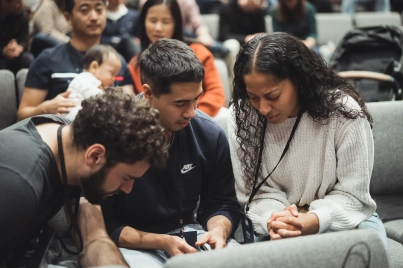
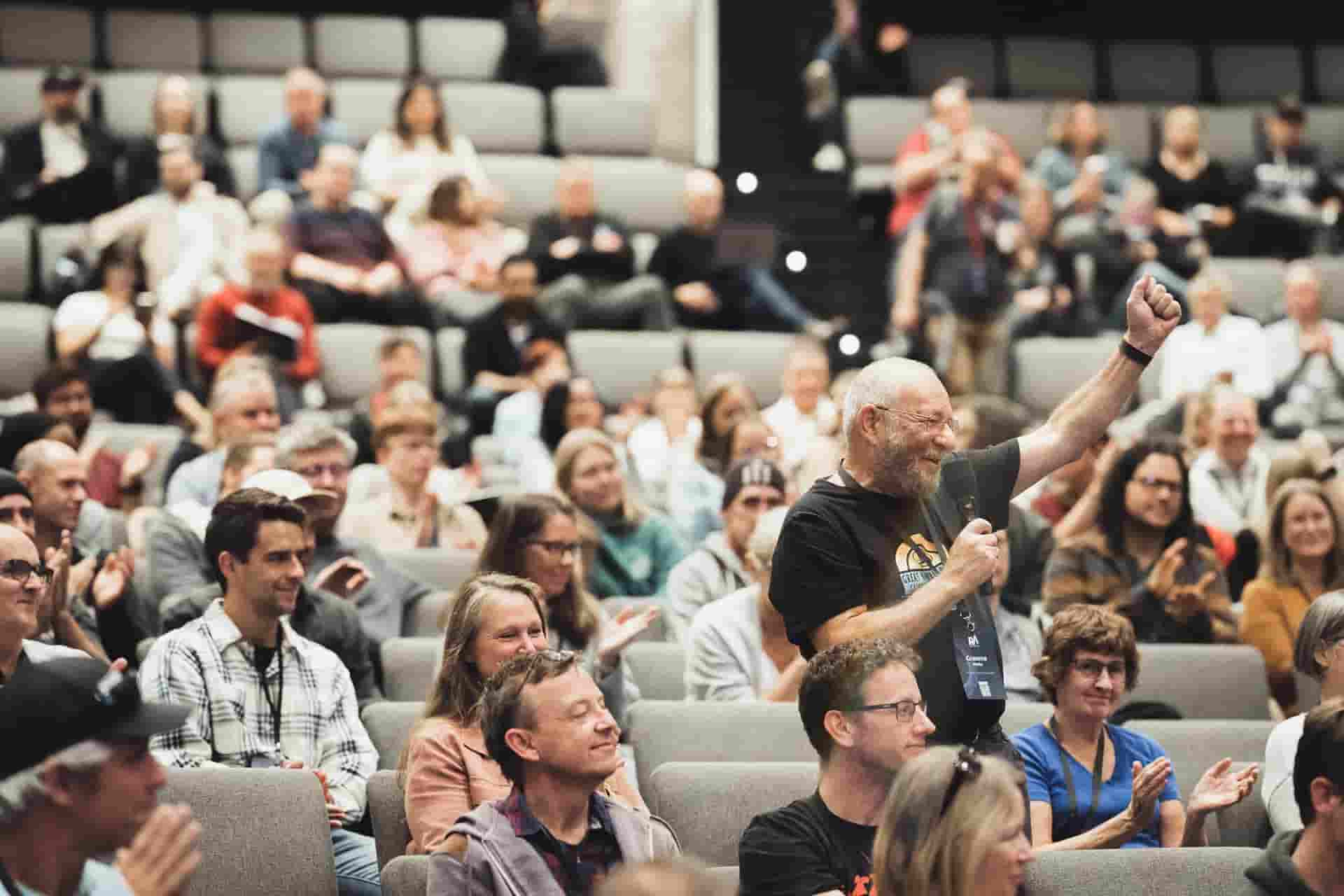
During the 2019 Reach Australia conference, Cathie Heard, Geneva Push’s Director of Training, runs a workshop on the practical steps involved in locating and developing women leaders.


Transcript

This transcript has been generated, and can contain errors. Please refer to the original recording for the definitive language used.

Read transcript

[0:00]
I love that. There's so much wisdom there. And I was in writing this talk, part of what I wanted to do was just hear the thoughts of lots of women that I know that are in high level leadership, both in our church here, but across the country. And so I actually wrote those questions down and sent them out to about 20 or so women and got the answers all back, read through them. And there was such a common thread running through. So much similarity of what was important and what matters.

[0:32]
What I'm going to do with us is actually do a bit of a race through what I think are the major points for raising and developing women leaders. And maybe take about 40 minutes to do that. Maybe half an hour to 40 minutes. and then what I'd like to do is give you time to ask questions from your own situation with the questions that you have and then invite some of those women to come up and I've got a few

[1:04]
more questions I'd like to ask them. I think it's good to hear their personal life and how it all works and you can also then ask those women questions or any of us. So a little bit of a panel at the end. So that's kind of where we're going to go. So you need a booklet. Hopefully you got one there, some at the back, some here. And mostly I'm following the booklet. I did do some last minute changes, but I'll keep you in touch. So as you heard, what women need most, number one is conviction. And what was surprising, not shouldn't have been surprising, all over this

[1:37]
conference, every talk I'm hearing that conviction is number one. For women, if you're going to make the sacrifice to come into a ministry, perhaps not work, perhaps work part time, juggle family, juggle all the things, to do that you have to have a very strong conviction. You're not going to do it otherwise. It is to be counter-cultural, I think, to take on extra stuff in our church. So we're going to need women to be convinced of gospel priorities and not just once but over and over again to be hearing it and be confirmed and affirmed in it that serving the Lord fully in all the places that we

[2:13]
can, especially giving ourselves to the work of the Lord matters. It's a work that's not in vain. Serving the body with whatever gifts you have, with whatever opportunities God's given you, that's important. It matters. Hearing what God's purpose is in the world, joining in, being part of it, that's important. That matters. So hearing that over and over again. Women need a meaningful role. I think women in our churches are asking these kinds of questions when we invite them to think about ministry or leadership.

[2:46]
Is what I'm going to do really going to add value to the kingdom? Are the ministries that you're offering me worthwhile? In what way? Am I going to be wasting my time doing this? Have you got like a hundred other people that could do this exact thing? Or do you really need me? These kind of questions. So I think knowing in our mind what is it about this role that's meaningful is going to be important. And then it needs to be attractive to them. It's great to be doing growth group leading of women's groups,

[3:18]
to be doing kids ministries, to be doing scripture. Often our churches stop there though and there's not much else on offer for women who have gifts in maybe a whole variety of other areas and are being able to or being invited to use them in the workplace and we can't sort of match it in any way. One of the things I love about purpose churches, team structured churches, is that it does seem to open up a huge variety of different giftings and opportunities and platforms for women to serve.

[3:51]
So you can ask more about that. But I think having an attractive role is an important one. Do you have enough variety in your roles and in the responsibilities that women can have in your church? To be asked is important. Most women actually don't put themselves forward. I'm good at this. Do you want me to help you in this area? Most women will never do that. They won't think they can do it. They won't believe that you think that they can do it. It may not even be on their radar to think about certain roles in your church. We know they exist because we're on the inner.

[4:24]
Lots of people have no idea what exists in church life. And it's nice to be asked. I think women are surprised and flattered that you've thought of them, that you know them, that you, they feel loved, that you thought to ask them, that you think they can do this. So to be asked is important. That means, though, that we need to be intentional. It means, actually, I think, going through, so this is missing, put it in, intentional. Going through lists of names and thinking about each person

[4:57]
and who could do what. which person can do what ministry? That's important. Women need feedback. They need assurance that I can do this. Have I got that anywhere? Yes, assurance, I can do this, page two. I find women can be very over-conscientious. That's one of our strengths. It can be a weakness as well. Women can be quite perfectionist. It can be a real strength.

[5:28]
It can be a weakness. It can mean, I feel like I'm in a, hey Isaac, these lights are going up and down. Do you have any control over them? Thanks. Women can be perfectionists which can lead to a self-doubt. They can be doing a really great job but at the same time think they're doing a terrible job. And I think here's a little bit of a difference between men and women. If nothing gets said from the leader, I think men assume I must be doing a great job.

[5:59]
If nothing gets said from the leader, women think I must be doing a terrible job and they might even resign without telling you why. Women need to hear that what they're doing is what is needed and they need to hear you are doing it right. It seems to be an important thing that I'm doing it right. So feedback is important. And I think also need to hear 80% is good enough. Please don't keep going for the 100% all the time.

[6:33]
It's interesting how many people will not attempt in a role, not attempt to do a role or pull out of a role because they can't give you their 100%. And so you're left with 0%. So I sometimes have conversations where I do this kind of maths. Without you, I'm down to 0. Do you mind giving me 30, 20, 80, whatever? It's better than zero. Kind of just helping with that.

[7:05]
Women sometimes need baby steps moving into the role. For example, I was with someone who oversees all our comms work, and one of the things that she wants to do is get someone else to project manage the hundreds of tasks she has to do in the comms. and she listed them for me on a board and it was a bit mind-blowing that she looks after all of them and so we were thinking of some names of women who might have the skill to do that and as we were doing it realized to show this to any one person could be overwhelming start with baby

[7:40]
steps we can show them the big picture that's where you could go if you would like to but we would love it if you would do one and do it like this so I think ministry is being broken down in baby steps can be quite helpful. But I don't think it means hiding from them the bigger picture. I think the bigger picture is exciting. It's overwhelming, but it's exciting. And to know that's where I could go if I so choose is quite attractive. But if I so choose and need to stay

[8:10]
with one or two steps and that's enough and you can cope with that, that's also attractive to have that option. I think that's helpful for women. As I said, some women sometimes do just drop the ministry that they're doing. No discussion, maybe just a polite email. I'm not doing this any longer. What do you do? One of the things that I think is important is to actually have a conversation about it, not to just take the email, but to ask questions about the dropping of it that are neutral

[8:44]
questions that keep accusation out of the question. So this happened to me just recently. Someone was in a role which involved, I'm thinking, shall I describe it to you? Is there any point in hearing my example? And I'm sort of making a judgment in my head and I'm thinking, yeah, I will, okay. So we have seven groups meet here on Tuesday, Wednesday and Thursday, seven each day.

[9:17]
This room is pretty horrible for growth group and someone had the role of making it warm and inviting and they dropped it and my, beware of your initial thoughts. My initial thoughts were, oh no, I've done something wrong. Oh no, how slack are they? Like it oscillated between those things, blaming them, blaming myself. I tried to think of what's a good question I could ask that's neutral, that doesn't have accusation in it. So I came up with this one and then went up to them after church

[9:50]
one Sunday a week later and said, what's it been like for you doing that role? Isn't that a nice question? And it was such a lovely conversation as she explained what was good about it, what she enjoyed, what she hadn't liked, what had made it hard and her reason for dropping it, which was not actually particularly to do with any of those things but home life but she did let me know that it was a hard role because it was very nebulous and I realized if I'm going to have someone do it I need to have a stronger clearer vision of what they're trying to do than just warm up the vibe

[10:23]
that didn't sound nebulous to you did it warm up the vibe so here's another example a church planter wife gave this example to me on Tuesday she was saying to me I don't know what to do about this that two people have dropped being a growth group leader women need the right amount of responsibility so it depends on the person and their capacity but sometimes we don't make roles meaty enough we need to invite people to have their own say

[10:54]
about how big they want this to be, how far they could take this thing. And they may not know until they've been in it for a little while. But show her where it could go so that she can actually help make that decision about how much she could do. If you're a leader bringing women up to being leaders, you need to, and I need to, make sure two things, there's two sides to this. We're delegating, not abdicating. So that means, and you've heard it around the place, You actually have passed on a responsibility, but you're still part of the picture.

[11:30]
You still need to help manage the person, meet with them, encourage them, give them feedback, make sure the structures and processes are working. So you're still involved, but at a different layer of leadership. But that means, too, you need to do a value shift. You are still involved, but at a different layer of leadership. So there are now things that you are not doing that you used to do. So the problem can be either total abdication, great, you've got this, run with it. I'm so glad I don't have to think about it any longer.

[12:02]
So that's my tendency. Or you've got this, oh, I'll just come in and just fix that for you. Oh, I'll just do it like this because you're not quite doing it right. So coming in and interfering and disempowering leaders can be another temptation. So stepping back and working out, hey, I've got losses now. There are things I used to like doing that this person is now in the role and it's their responsibility to do.

[12:33]
It's actually good to articulate. What am I going to miss about not being in that role? Articulate it. If I'm a growth group leader and I've stepped back to another layer, what am I going to miss about the fact that I'm not a growth group leader? Okay, I need to have a good cry about that, get it out of my system and now move back into a new layer of leadership. Then set them up to do the job well. When we're raising women as leaders, we need to make sure we are aligned. And that's particularly true for a high-level leader.

[13:07]
And alignment is not just theology, it's also the culture of your church, the social context of the team. There are so many hard to define things that go on to be aligned with. And so sometimes it's much easier to bring up a person into leadership who comes from within your church. You may have already noticed this. Someone who's grown up in church and been part of it just gets it. Someone who comes in from another church and they're an amazing leader and they've got so much talent,

[13:42]
they can actually be quite difficult to bring in into a leadership capacity even though they've got those gifts. So it's actually recognising alignment is one of those hugely important aspects. I've got a microphone in my hand so it's hard to do but someone showed me this and it was really helpful. Say my alignment's here and theirs is just a little bit off but you know reasonably close that I feel like, oh, we can do this. That won't be a problem. Look what happens over time.

[14:14]
And I've seen that over and over again. So how do you stop that? I think not putting people into leadership too quickly, actually giving it time for them to learn the culture of church and you to learn how they think. What are their values? What are their beliefs? So I'm not, I'm talking doctrine, but even broader than that is important. Part of it is bringing them into high-level meetings. If you have staff meetings, being part of that,

[14:44]
whatever layer you're wanting to bring them into, being part of those meetings and seeing it and just soaking up the DNA of you, your church and the staff is incredibly helpful to bring people in. And you know the people that are hardest to bring into your church alignment, sadly is ex-retired ministers from another church or missionaries. So there is something that just makes that turn from where they've been leading, coming into a church, incredibly difficult for

[15:16]
them. So sometimes I'm like, yay, we've got a minister coming to join us. They can do, no, they're actually the hardest ones. And it's been a warning for me. When I retire, I'm going to have to work really hard to sit under someone else's leadership and learn the DNA of their church before rushing into anything. So yeah, keep that in mind for that day when you're retired and join someone else's church. Women need support. Now when we talk about support, I think we kind of think, oh, I'm going to hold their hand and make them feel really good and have lots of coffee chats.

[15:49]
Do you know that can be nice, but that's not the key support women need. The key support women need when they're in leadership, is actually good structure. It's a team structure where there is the place to talk, to troubleshoot, to brainstorm, to talk out what's going well, what's not going well, where our next steps are. That kind of meeting thing, which doesn't feel like a support kind of thing, you're not sitting and having coffee necessarily, actually is support. So having a good team structure, meetings,

[16:21]
being on the same page with a bunch of people, That is a huge support. And then relationships, which the team structure provides. But having relationships with people that are on the same page as me, the same layer of leadership as me, that's incredibly helpful to help women keep going. On our own, lonely, it's a killer. Having people around, being able to talk things out together, have fun together, that just makes it a joy.

[16:52]
And it's interesting to see how much Paul through the Gospels loves the people in partnership with him. It makes ministry a real joy. So women need that, but I'm guessing men do too. Women need to see the bigger picture and be part of the bigger picture sometimes in our staff. So there might be layers of leadership of women in your church where it's actually appropriate. They come to staff conferences away. They come to staff meetings.

[17:23]
They get to see those bigger things because that's often when we get excited and energised. And so it's helpful to invite people into those places so that they get a bit of the same DNA. There are some places where that wouldn't be appropriate. There are some places where it's exactly right for them. So sometimes you might want to stretch. I think sometimes with lay leadership that we're bringing up, we can kind of keep them out. but think where are the meetings that actually they could come in and be part of it and that

[17:53]
could be really good for them alignment's a little bit part of that as well and then there's all these resources we've heard so many of them through these last few days so I think helping um quite a few girls in in their survey back to me it was leadership books that also helped. The ministry map helped that we've got. Leader training videos helped. Gave them too the language in order to train other people. So those things are helpful. Now what if men and

[18:28]
women are working together? What are some of the challenges if women and men are working together? They do think differently to us. They do operate differently to us. Okay so what I've seen is in meetings, it can swing, but men can tend to dominate the airspace. If there's a lot of men in the meeting, it's very hard to get a word in if you're a woman. Good for men to be aware of that. Men can be more blunt in the way they just talk to each other. Women can hear that and feel like,

[19:02]
whoa, that's so harsh and take it very personally. So there's a difference there and both sides need to be aware. There's a difference there and kind of compromise a bit I think. Sometimes in staff meetings women can be in the minority and they can feel quite overwhelmed by that. And there'd be other things that probably you have noticed. It's being aware of those kinds of things. Here's a few random thoughts I've had as I was doing this. You don't need to train women entirely only by other women. Women

[19:37]
can be trained by men, but you might. You don't need to train women one at a time. You know, all my training is one-on-one. You can do women training in batches and bunches, but you might. And women don't have to go to Bible college and get a degree to be in high-level leadership in your church. It's nice if they can and they might but they don't have to. I actually have found

[20:11]
that consistent reading of the Bible every week for Bible study has been massive training and learning and so as long as women are in their Bibles each day working out what it's saying, perhaps preparing studies, they will keep growing theologically but if they can go to college and get a degree, that's nice. But it's interesting, a lot of the work that we have in our churches is about running teams. It's about managing people. It's about doing things like that. And so sometimes

[20:42]
women can feel frustrated if they've done four years of Bible college coming out of that, feeling like I hardly get to use that. Now that's a shame if you do think like that, because that training is never wasted. That Bible knowledge is never wasted. but it's just one of those things you don't have to have it in order to have high layer leadership and then the last thing is just for you for me to think into as a person who might be raising

[21:12]
women into leadership who am I and how does that impact on the way I would raise leaders because we ourselves have our strengths and weaknesses that we bring to it like are you a person who plans meetings or do you do them all at the last minute? Do you have an agenda or do you just turn up and it's like whatever I think of? Are you interested in the ministry that you're raising people into or are you just wanting to dump and run? Do you follow through on what you're

[21:44]
responsible for? Do you listen to the opinions of others even if they're kind of negative and you don't agree with them? Are you a person who's in the detail? Are you a big picture person? When you play to your strengths but forget to cater for your weaknesses, what kinds of things get lost? So just having that awareness of ourselves. And then let's go deeper. What things really irritate you? Are there personalities that grate with you? Do you know why those

[22:17]
personality is great with you? Are there things that raise your defences? If someone disagrees with you or says something about the way you're doing the ministry, it's wrong. How do you handle that? Something I learned from a counsellor is when something really upsets you, ask what's the message I heard when that happened, when that got said. What's the message that I heard? Yeah, sure, they may not have said those words, but I heard something. Just being aware of what goes on inside

[22:48]
us. What do you, what do I need? What do I hunger for? What are my insecurities? Is it to be admired? Is it to be thought of well, as competent, as useful? People need me? And are you aware of how it might trip you up sometimes as a leader? Jenny Brown in her book Growing Yourself Up has a great phrase, what are people up against when they have to relate to you? What are people up against when they have to relate to me? Sometimes resonates in my mind. Think on that. Knowing how you affect

[23:26]
others, how others affect you, it's hugely helpful to grow in that knowledge as we develop as leaders raising other leaders. So EQ, that's a really important aspect of our leadership because we're talking about people, people helping people. There's my kind of summary of what I think is important in developing and raising women leaders, of what the women I wrote to all seem to be saying, the same kinds of things. Now, what I want you to do is have a think about your questions,

[23:56]
if you've got any, but I'm going to invite three women to come up, maybe bring up your chairs onto the stage, and I'm going to ask them some questions. I'll get a chair too.

[24:27]
Okay. Okay. First of all, it's Sarah, and I'm going to ask Sarah too, Tell us a bit about her family and then what ministry she's involved in and how she got into that ministry. I'm Sarah. I'm married to Chris and we have three kids, Inder's 11, Noah's 8 and Sullivan's 5.

[24:57]
I lead a group of 15 women in a day group in one of the mornings that Cathy was talking about in this hall. so it's called day groups and I've been doing that for about I think this is my fifth year how did I get into it Kathy asked me ages ago before I would have ever actually I never would have volunteered myself to be a leader so yeah so it's taken a long time to get there yeah ages ago yeah and it actually failed first time around yeah so it took a long time to get

[25:35]
there but yeah give us that journey from first being asked to actually getting there okay um so first time asked was just an email when we were meeting in greenpoint um community center asking if i'd lead a group a new group um and i said yes pretty much because i got the opportunity not because i thought i was capable actually i was terrified uh but said yes and it didn't quite work just because of dynamics we had lots of young mums with babies that couldn't get there I was a

[26:07]
first time mum it just it just didn't work and so we kind of folded that not too long after we started the group and that was pretty discouraging for me but then Kathy then took three of us into her group and we kind of were under that leadership for a while which was really awesome and then I was asked again if I'd like to lead and I said no and I actually I remember saying I think I'd make a

[26:39]
good co-leader because I can do the people work it's the bible study part that I'm scared of now five years in it's completely the opposite the people work is the most draining part of the whole thing and anyway so then I was co-leader for a while and then my leader left to go church plant and in the crossover between getting the new minister's wife in who had only been here not very long to lead I did that I covered that term and then I went back to co-leader not ready not ready not ready and then eventually took over

[27:12]
oh I don't know Inder would have been little um yeah years Yeah. Yeah. There you go. So patience. Yeah. Thanks. Pastor Brooke, because I'd like to hear what ministries are you in? Well, tell us about your family and what ministries are you in? And what do you think has developed you as a leader? Family first. Family first. We have four children. I'm married to a guy called Murray. Our eldest is 20.

[27:43]
Then 18. I can see your face then. 20, 18. Oh, my goodness. She's nine. and then a six-year-old at the end of that. So we had a 10-year gap between second and the third. Same husband. I get asked that a lot. I always get asked that. So what ministry roles are you in or have you been in? Because you've been in a few years. Okay, so originally I think I started on Connect or something but then I ended up doing like PA type stuff in a staff meeting and then from that I ended up becoming the ministry rep

[28:17]
for one of the services that we had. Can you explain each of those? Connect, admin for staff, what are they? Oh, so connect was like welcoming and then admin for staff was kind of like doing the PA secretarial stuff in the staff meeting. And then I ended up the ministry rep, which is the person that helps find ministry for people to get into kind of like the HR sort of thing. And then also organising the women's events. And I think that was because I was the only woman in staff. That's what I put that down to because I thought, what the heck am I doing organising anything?

[28:48]
yeah so that's how I did that and then now I'm involved in the ministry team and the Sunday services and running I'm an area leader for the connect group so that's like three connect teams at 8 30 that I kind of oversee and support yeah yeah that's great okay and Karina Tell us a bit about yourself. And Karina is now a leader of leaders. She's raised leaders.

[29:20]
So tell us a bit about that journey. So family, yeah. I have two kids that turned into four because they both got married. And two granddaughters now as well. One's over here. Very excited about that. yes and a husband of well I have a husband as well who I love over the years so I also started as a growth group leader very similar to Sarah

[29:55]
you know Kathy asked me I'm like yeah right I'll do it waiting for the day for Kathy to tell me that I shouldn't be doing it, I'm still doing it. It's been about 22 years I've been leading a women's growth group. And so still doing that and loving it. But, yeah. So another part of that role in the maturity world is community leading. So that is looking after leaders of women's day groups.

[30:30]
So I think I'm looking after about five leaders now. It was about eight. So meeting up with those leaders, looking after them as they lead their groups. So that's a big part of my ministry. Also in the ministry team under Cathy, similar role to what Brooke was doing, but on Sunday morning. So Brooke was doing it Saturday night and has come into the Sunday morning team. So M-rapping for ministry. How many people are in the team, the established team? The established team is, ooh, nine messages go out.

[31:04]
So we must be nine people on the established team. Men and women. Men and women, yes. Yeah. Yeah. Yeah. So part of that, part of, I don't know if you heard Kathy talk about the crack force team, which is the other side of ministry. So under Kathy, I'm part of that team also. Yes. And another role that I really do love is coaching for one of our MTS girls, which is really wonderful too.

[31:35]
So can you tell us the difference for you leading a growth group to now leading leaders of growth groups, that value shift and what that was like? Yeah, that's really tricky and I laugh because I'm still leading a growth group, which I am trying to pull out of a little bit. But it is that value shift of, and a grief maybe, of leaving that on the ground work, working with women in the Bible directly, to moving towards stepping back from that and actually meeting up with leaders.

[32:12]
So I think there is a real grief for, or there was for me in thinking through that. Do I need to give this up? am I going to have as much effect for the gospel by stepping back and not leading these bunch of women so taking a while working through well how does this role of leaders of leaders how's it how's that impact the gospel more than what I was doing before and so working through that idea of multiplying myself yes we can reach more women we can affect more care for more women if I

[32:46]
do step back and do that so um hard but really helpful thing to think through and grow in now i'm going to invite you to think of some questions to ask i've got one more and actually i've got heaps of questions so if you don't think of them i'll just keep going for a little while but yeah use this opportunity to think into you're raising leaders in your church what do you need to know with how they're thinking, what they're feeling, how to help them come into the role and stay in the role. So think of those questions and you can ask these ladies. But I'd like

[33:22]
to ask you about impact on your family. Like over time with the different roles you've had, have there been some tense moments with your family and your responsibilities there? Can you give us a little bit of a feel of that, what it's looked like? Anyone? Have there been some tense moments? You have a chance to explain it, Sarah. It's impacting. So one today is her kids have to be picked up from school and she's got to get someone else to do it. She's here. Yeah. Yeah.

[33:52]
But that's, yeah. Thousands of those. Yeah. I think there's seasons, depending on what's going on in your group. The commitment isn't super impacting because it doesn't take me out at night, but it does take me time to prep, so that does take time but I've probably more found it impacting when there's been intense seasons to do with a particular need in the group so I had a woman who had terminal cancer and so that took me away from my family a lot to visit her that kind of stuff but I wouldn't say for me

[34:26]
it's been consistently intense yeah yeah for me I think with all the ministries particularly now that I've been involved in. It takes a long time, so I'm volunteering almost full time up here. And so that does… Can you just slow that down? Pretty well six days a week. Karina is working for church six days a week. So my poor husband, you can imagine, pays a cost for that. When I am at home, I'm tired.

[34:57]
He gets the worst of me. And yet he's happy to pay that price. And so that is a tension. Over the years, it's been interesting, though, for me to stay in ministry. We made a conscious decision for me not to go back to work. There was tension in that because we were struggling for quite a long time. And I was picking up things like ironing and different things. But it didn't mean that the family had to go without certain things. And so tensions in that, well, how much do we go without to enable me to do this?

[35:30]
How much pressure should we put on Dave to bring in the money? So that's been an interesting tension to work with. Yeah. I think we had the same kind of tension. We made a decision that I wouldn't go back to work so that I could do more ministry. And that was a real cost, even socially, when women ask me, what do you do? And I go like, um, and I try and think what I used to do and try to answer with that sometimes. And, oh, sorry, God. So that's actually a real cost sometimes.

[36:01]
and people do look at me like, why do you do that? Like how much time does that really take? Don't you just turn up on a Sunday? I'm like, you have no idea what goes on before Sunday. But I think a positive cause would be particularly I sit in our older two that are 20 and 18, they've seen me work in church and they've seen my husband serve and it's just natural for our kids just to be involved in ministry. And there was a time where I had a little small mini kind of break and my daughter was like, what are you doing, Mum? Why aren't you serving in ministries?

[36:31]
This is what we do. We're Christians. We do this. Come on. And that was really cool. I was really stoked. I didn't actually have to really say a whole lot. They just kind of watched, which is good and then it's bad because they've also picked up all our bad stuff. But, yeah, that's been an awesomely encouraging thing to see the, yeah, the good fruit that God has brought from putting our back into it and just doing this stuff. And it's a great privilege. I mean, it's awesome working with people who, people like these women and stuff. It's great. And the men. They're okay too. They're good. They're good guys.

[37:03]
Okay, have you got some questions that you would like to ask? Just raise your hand. Yeah. Great. Just thinking through the kind of initial lack of confidence for a lot of women, is there a way to address that, that even like over years on an individual level, like in the culture shift, like greater visibility of women in leadership roles, or like is there a way to address that? so are you asking is there a way to help women's confidence to saying yes to

[37:34]
leadership roles just by culturally within your church they're seeing women in leadership roles and so kind of feeling like oh here are some examples in front of you is that kind of what you're yeah so if you were to think into women that have kind of you look at that and go that gives you confidence to step into that role has that happened for you? Cathy is a good example but I was on staff there was like four men and there's

[38:11]
like I think I said in the video seriously like strong kind of alpha males and it was really hard and it was genuinely it was a friend of mine I said what the heck am I doing here God's made a mistake I shouldn't be here I should take up something else and um and my friend said brooke god has put you there and he's put you there because of who you are and because of your insecurity so when the opportunity comes you speak as your heart knows you're a christian woman who reads the word you love god and i'm not there because of the guys i'm there because of god and i'm there to serve them and to be a good teammate

[38:44]
to the people that i was ministering with and that gave me a whole heap of confidence just that girlfriends saying God puts you here not them even though they did but they didn't but they did but yeah I think I'll just say something quick a little bit different to Brooke so as a woman looking on at someone like Kathy in leadership would not give me courage at all I just look at her and go there is no way I could do that and so for me that's not necessarily what would have

[39:15]
helped me. What did help me was Kathy coming to me and saying, I think you can do this. And really, and just that trust that she had in me. And I couldn't see it, she could, for her to articulate what it is in me as to why she would ask me to do that was really helpful because I can't see that in myself. So those sorts of things I found really helpful. I would agree with that I'd also say I'm not sure about like cultural shift or how to do it in a big

[39:49]
kind of group but I do think personality plays a part so for me and Karina from the sounds of it we're probably a bit more insecure and not going to put ourselves out there which then takes a bit longer to get us there which needs lots of encouragement but then I have a lady who's a leader in training who's kind of the opposite and is overconfident and so then there's kind of issues that come with that too. Like, yes, she's jumped into the role really quickly, but now I've got to work out how to kind of help her be less confident in the nicest possible way.

[40:22]
So, yeah, I think personality. One of the amazing things that's happened in our church that I think has been really helpful is so many women choosing to do ministry. So now there is a lot of women around. and I think every time staff joined, we found the wife was really keen to throw herself in and not necessarily go to paid workforce. Now, I think that's had a huge cultural flow over into church life

[40:53]
because so many of the staff wives just do this heaps as well and so that has kind of set models and examples. So for free, voluntarily, they're just doing heaps of ministry around the place. Do you reckon like just seeing all the girls, Nicole, Megan, Fiona, like heaps of them? Just, yeah, so it's just made it now a thing to do. Whilst we still have lots of women that need to work, need to work part time. Still got lots of that, but also everyone's just throwing themselves in as much as possible.

[41:26]
That was a good question. Yeah. I wonder what to do with strong women leaders that really want to lead, but you struggle to meet that alignment and they start quite far apart. How to encourage them to lead, but what can they do with that? How to slow things down a little bit. Yeah, strong women leaders that don't quite align. And they're already in the role. They're not already in the role? Want to be.

[41:56]
They want to be. Yes. Yeah. I'll give a few thoughts. I think it's really tricky and this is almost what you're dealing with now, isn't it? I think having a long training process is helpful. So having meetings that they can be part of where it's a group situation so that there's lots of people modelling alignment in different ways for them to slowly catch on to the DNA.

[42:26]
Now, most people with enough social EQ will pick up through those kind of frequent social settings what the thing is that you want them to pick up. Where people don't, they may have low EQ and so not be very helpful and you might need the more direct conversation of what alignment looks like. But I think you need the courage to speak and say, can you be that person? Can you do that thing or not? And give them the feedback.

[42:58]
If they can, great. Or if they're not, still not. Do you really think this is the right role for you? Would you want to add anything? So I think taking longer, as long as you need to, but having them in the meetings where they, if they're going to catch it, they will catch it. They've got to be in the training meetings. So one example is when we have our leaders all get together each week before they lead through the week.

[43:28]
So it's a great opportunity for lots of people who aren't leading yet to just be in the room with it. So that's just an example. Yep. At the back. My question, I think, is what you're talking about. I'm just wondering if there's some on-balance things, I guess. So if one is the, I think it's possible to live,

[43:59]
doing ministry, but is how do you balance that with the expectation that they must, or they have to have a new one, to cancel at all? Yeah. You're going to get my bias here. I think, I don't care if people think I must. Like, I would just want to do, I just think it's great when wives want to do it, you know, and they just do lots. I think it then means that next conversation to someone that's not a ministry wife or a staff wife, that next conversation makes more sense.

[44:36]
Would you like to just join in and be part of this? Because they see the example in that person. So, they're not paid for it. They're not running off and doing full-time work somewhere else. They're wanting to be in this. And so I think it gives great credibility to ask that next layer. So I think, yeah, that's helpful to do. And the more then you have of people who are non-staff involved in all sorts of ministries in all sorts of ways, then it's easier and easier and easier. But I think initially when it's just, you know,

[45:08]
the senior minister and his wife and then maybe another appointment, initially, if she chooses to have a career separate, that's going to be really hard from then on to actually establish that culture. So I think because of the influence staff wives can have and do have just by nature of being a staff wife, they didn't ask for it, but they've got it. They've got that influence. That's a really positive way they could use that influence.

[45:39]
Yeah. Yes? From a ministry of improvement perspective, do you have any hints and tips for conversations, particularly with women who have insecurities about whether they hang their lives or whether they feel like they're fit for ministry? And you can see a lot more potential than they think that they have. I guess it's how do you have those conversations to encourage them?

[46:10]
Yeah, so I think these girls were sort of saying that was them. What was it? I think opportunity first. So like Karina said, Cathy saying, I think you could do this. Would you be up for it? That gives you a boost even if you're an insecure person. You go, oh, like she thinks I can do that. And so it gives me pause to think. and then if they take it, great.

[46:41]
I think from then on in it's encouragement, a lot of encouragement, not a you failed kind of… So I found it very helpful when I led a study. I wanted feedback but the feedback was helpful not in a you failed kind of way but as in a you did this really well and this really well and next time let's work on this. So it wasn't like you suck at this, you're no longer allowed to do this kind of thing which is the fear right like the fear is that you're going to stuff it up you're going to do the wrong thing and you won't be asked back

[47:12]
which at the start is kind of like oh well um but uh I think encouragement to keep going and and I had older women in my group who one of them's there were really good at saying like that was a great study say like um I got a lot out of that and that even is just like oh okay they heard me, I was obviously somewhat clear, thank you Jesus so I think encouragement, encouragement and a belief that they can I think slowly they get on board

[47:43]
Another question? In the front here Say you went to a church a fairly small church say about 60 people These lights are hot There was nothing really happening officially for women or anything. Nothing about leadership, trading. And basically it was just anyone who was in the congregation

[48:13]
who felt that they had a burden for doing things. They were just doing them, but nobody had asked them. They just initiated it. They were never encouraged from the top or never… Yeah, nobody at the top really seemed that interested. if I went into that church yeah that's a real that's sounds like a painful experience you're experiencing

[48:44]
yeah and still be like that yeah okay yeah I hope there's a lot of ministers wives and ministers in the room hearing this because it's very hard to change the culture if you're not leading the whole thing. If you're coming in, it's really hard from bottom to change something bottom up. It rarely, rarely happens.

[49:15]
So you can have conversations with the guy, but at the end, it needs to come top down, that whole culture shift, which means for senior pastors and wives on staff and all sorts of things, our influence, the culture we bring, is immensely powerful. Don't waste it. Because there's a bunch of churches that just don't have that, and it's such a shame. People who have come to this conference, who are thinking this way, we can bring this kind of culture to a whole bunch of churches.

[49:46]
So let's make sure we do. Yep. I'm just wondering about the, in morning women, in lots of different things, not just wild study reading, in this ministry. Yep. In a lot of different seasons of life, when you begin this training process and, you know, like, can you come on a Wednesday with your preschooler to this staff meeting? All those logistics of things. Yeah. Do you think people in the right season of life, do you pick them while they're still breastfeeding

[50:16]
and you ask them to bring their pram over to the high-level meetings? Do you have any thoughts about approaching them? Yeah. All very different. Yeah, different things for different women. So women who are still breastfeeding and still got lots of kids at home, maybe the ministry they do is something they do in their home. It's flexible. It's with a computer. It's comms. It's taking photographs. It's whatever. Yeah, the person that's coming to the staff meeting is probably one whose kids are at school and it happens to match. So you've just got to work it with their lives and be flexible.

[50:48]
And then you've got women with different capacities. So some who are breastfeeding don't mind leading a whole Bible study group while they're breastfeeding. Others won't even come to the Bible study group for the first year of the child's life. You know, you've just got this spectrum of what people say, really having to work with that. So that's one of the things of flexing. Yeah. Is that helpful? I think it's just like finding your head, like, you know, sort of just someone might have capacity now,

[51:19]
but then something's going to change. Yes. that's it that's it yes that's it yeah that's right that's right I have felt too as someone who's sort of got my eye on the whole thing in some ways and and a lot of these girls who are involved in ministry placement same thing you kind of get a bit cut up when you just see these holes suddenly appear and they're all you know someone was doing a great job but life circumstances mean

[51:49]
they've had to, you really have to have a very healthy trust in the sovereignty of God at that time. Because I think you find yourself constantly feeling disappointed. And I used to say, I feel like our church is stuck together with sticky tape. It only needs 10 people at the moment now to pull out and we are done. We have nothing. And it's this real, that's true. You know, you just go, that is the truth of it. How does it keep going? Yeah, just God, his sovereignty, praying, trusting.

[52:19]
Boy, you need good holidays though, don't you? Like it's pretty exhausting living that way. Yeah, it's exhausting living that way. Yeah, now can I just see how many hands? I'm watching the time because I don't want to go over. How many hands with questions so I can just get a sense of we'll take this one, one, two, three, four and stop there. So those lucky four, I hope they remember who they are.

[52:49]
There's one over here. Can you go first? As a recruiter of women, often you're looking into the church and how women function within the body to see if they have different abilities. How much do you look outside that, what they do in their workplaces, to place them into roles? So maybe they're managing a bunch of people in their workplace. Yeah, yeah. So we've got a couple of girls involved in placing people. Give us your answer. Do you want to do it? I don't know.

[53:19]
Yeah, we look at the skills that people have because it's quite, sometimes it's a very specific need like comms or visual gifting. Some people who are teachers love to teach. Some hate to go into Sunday school or kids' ministries. So, yeah, it is the gifts and talents that people have given them that they often go and choose a career that you can actually then double into ministry. We've got one of the girls, Emma. She's a virtual assistant and she's been part of our ministry team

[53:52]
but she's just now become part of comms because we found there was a need and she fit really well so we kind of cut her. We released her from our team to go and do that because she's got this natural ability that she does. She does it for her clients and she's like, well, okay, I'll do it for church as well. So it's a bit of a mix really but you do have to look at the whole person and the whole situation like the babies, kids, family, where they're at to figure out where people might be best suited? So we do, when we're recruiting people,

[54:22]
we do meet up with that person and that is part of that process is finding out what they do for a job, where they're at, all those things. So, yeah, we do get a holistic view of that person, yeah. And I was just thinking with the question before, sorry, Cathy, the different life stages and you have people in ministry and then they're taken out, that training that they've done in that ministry, I think is valuable. They can come back to that. And so I don't think that's a lost thing. I think that's a really a good thing. And, you know,

[54:52]
our breastfeeding mums can be in a trainee, a training ship thing that they can be popping in and out of. And I think that's a really good thing for them. I was interviewing a doctor and he said, I want to be on the car park team and that's it. Nothing else. I can't bear to speak to people on the weekend. So sometimes people want the very opposite of what they do. But it all comes out in the interview process. Okay, there was a… Yes, thanks, Sarah. You spoke about clarity and

[55:22]
ability and being able to encourage women to lead a mixed group in, like, Bible study situations. I'm just wondering, how do you train women in that if they're not being a model? So if you put, say, a man and a woman together Yeah, in our situation, and I don't want to say that's the theology you should follow,

[55:57]
it's just that's how it works out in our church. In our situation, there's a girl CL who looks after six leaders, and so she's able to gather them together and prepare them for the week that they're leading and make that a bit of a training thing but some of them haven't needed that they've just prepared it themselves and and given it and they get feedback from the guy as to how it went and from the girls so yeah it seems to just happen without needing to be too careful about it almost or too detailed about it just have a go yeah I

[56:34]
No, I think what else has happened is a lot of those people have grown up through our youth program. And so they're just leading all the time anyway. And what happens is when they get into night church, they're in a group where they thought, now I can't. Because they were leading girls groups all through that way. Now they think, now I can't. And I'm going, no, no, you can. It's just he's still the main leader. You can choose how many you're going to lead with him. And so they already have lots of the skills in place.

[57:04]
But yeah, they'll prepare with their CL. That's just, yeah. Our leading is like that. Our leading is like that anyway. It's asking questions. It's not preaching a sermon. Asking questions, digging into the word. What does it say? What does everyone else think? What answers have you got? Where did you get that from? What made you say that? it's lots of good questions helping people dig into the word.

[57:35]
That's how we write the studies anyway. Yep. So that was the second where I do hope you can remember. Yes. Thank you. yeah yeah yeah so um very much our mts scheme is kind of the pointy end of that so people wanting

[58:15]
to go into full-time ministry we encourage them to apply to do mts within our church so have we got got a few can you put up your hand if you've done mts in our church so jazz here we go lauren And how many are doing it at the moment that are females? Is it four? Four of them five six. So yeah and Yes, we've got interns and so from that they'll work out whether this is something they want to do

[58:45]
You know, they want to go to the next stage and go to college So yeah yep so are you asking do we employ women full-time yeah yeah okay there's heaps of volunteering yes we we have very little money we're seventy thousand dollars behind our budget so we really encourage lots of volunteering and all churches should but yeah we do have

[59:20]
part-time and full-time women on staff as well but it's a funny thing because we have so Karina's full-time not paid. I'm full-time not paid sitting in staff. So what are we, Karina? Quasi-staff. And Brooke is there as well. So yeah, we call ourselves quasi-staff. So it's like, if you can do this without needing to be paid, please do. If you've got the gifts that we really need and no one else does, and you had to have money, we would want to pay you to keep you. So we've done that as

[59:52]
well. And there's a number of women in that boat that we say, we need your gifts. No one else can do what you do. We don't want you back in the workplace and you need the money so stay here, we'll pay you. But if those women said I can stay here now and I no longer need the money, great, we'd take that. Yeah. And that's what being a pastor is, like you freed him up from doing full-time work because you want him here doing this job and you want him here doing this job. So you give him enough money so he can live and doesn't have to go to the workplace

[1:00:27]
and get money there. Does that make sense? So that's what we're doing all the time with all our staff. That's what you're doing. You're not paying him to be the pastor. You're paying him to stop him having to go to the workplace so he can be freed up and be your pastor. It's just a mind shift of what we're doing in paying for Christian workers, if you like. You're all looking puzzled. Well, lots of you are. Talk to me later. It's a really good mind shift to have.

[1:00:57]
I think, yeah. I think there was one more question. Okay. Hi, Leanne. Okay. So, summing up. How do we sum that all up? I think you can see how much conviction plays a huge part, but how much being intentional and actually going out and asking women also is a huge part of it. and you can slowly grow and change the culture of your church I think with those things

[1:01:32]
conviction and asking but you've got to make sure you have a good lot of roles that are fun to do or meaningful at least yeah hey why don't I pray for you guys and then there's afternoon tea stick around if you did have a question that didn't get answered heavenly father pray for all the churches that are represented here by the people sitting here. Lord, we pray that you would please bless them and grow those churches, bring people in them and use both men and women in those

[1:02:06]
churches to serve each other, serve you, serve those coming so that more and more in their community can come to know the good news of Jesus Christ, what he has done for them and how their lives are heading towards either eternal hell or eternal heaven with you depending on the choice they make and so lord we pray that we would continue between us to raise many workers that can be part of bringing that message and that in that way we would see many many more

[1:02:39]
come into your kingdom and from that you be glorified amen