← All resources

Reach Australia Podcast 8.4 Mission Part 1

How is Mission going in your church’s ecosystem? Grahame Fuller and Scott Sanders ran this learning lab on Mission as part of the recent learning labs. Get the whole thing on the Reach Australia podcast or youtube channel: https://www.youtube.com/channel/UCRnKMDRa-XyNBfJPuLmt3_Q


Transcript

This transcript has been generated, and can contain errors. Please refer to the original recording for the definitive language used.

Read transcript

[0:01]
G'day, I'm Scott Sanders and welcome to the Reach Australia podcast. Reach Australia's vision is to see thousands of healthy evangelistic multiplying churches across Australia. This podcast is a special grab from one of our learning labs. The 2021 Reach Australia National Conference was live streamed across a number of state based hubs. And we were forced to move our seminars and workshops online. These are usually one of my favourite aspects of any conference, the chance to wrestle with stuff together in a small group. and this podcast is no different.

[0:33]
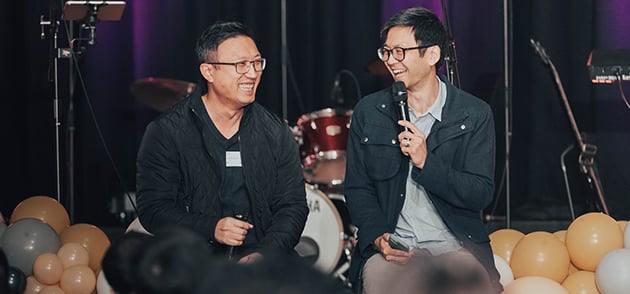
In this podcast you hear from yours truly and Graham Fuller from EV Church on the Central Coast. We talk about mission and the ecosystem. The ecosystem is something that Reach Australia talks about lots and so this podcast is an opportunity to do a deep dive into one of the key purpose areas or parts of the ministry ecosystem. So check it out, mission and the ecosystem. Well, welcome to The Learning Lab, Mission and the Ecosystem.

[1:08]
I've got Graeme Fuller here, the Mission and Maturity Pastor at EV Church on the Central Coast, just a little bit north of Sydney. Welcome, Graeme. Thank you. Graeme, I want to find out, how did you become a Christian? Yeah, so I grew up in not a Christian home, although we would have thought we were Christians. We called ourselves Church of England, so ticked that on all the forms and that sort of thing. But never really went to church, maybe once or twice in my growing up. But always thought there was a God, always thought he was important, always listened in Scripture at school,

[1:40]
learned a little bit in primary Scripture. But then had a mate in year nine who grew up in a Christian home but started to take it seriously around that time. And he just kept bugging me, inviting me along to stuff that I didn't want to go to. And I resisted, resisted, resisted until I came to understand that if I wanted to be a Christian, Jesus had to be the boss of my life. And I suddenly realized I wasn't a Christian and I thought I could never be one. And then six months later, I heard the gospel again and gave my life to Jesus as Lord.

[2:14]
That's great. And you've been working at EB for the last 20 years now? No. 16? No, 13. 13, okay, 13 years and before that on the Northern Beaches in Sydney. Now, today's lab is going to be all about mission. In our first section of teaching, we want to talk about building mission heat and talk about some of the key principles that come out of the mission funnel. Then we'll have an opportunity for questions and then we'll break and we'll push in our second bit of teaching into the mission calendar

[2:44]
and some key aspects of actually planning out your mission for the year. Fantastic. First things first, though, we talked at the conference last week about the ecosystem. So Tom's going to put up a slide just with the ecosystem. I thought we'd start there, Graeme, just to sort of speak about the place of mission in the ecosystem. So you'll see there that the whole ecosystem needs to be fuelled by the word of God.

[3:14]
You know, it's the engine room, it's the fountain, it's which sort of drives everything. But we actually want to see each of these purpose areas, each of these outcomes being seen in the life of the disciple, the individual Christian, but also in the life of the church as well. So mission, how critical is it? What place does it sit? You can give us an unbiased approach because you're a mission and a maturity pastor at EV. Yeah, each of the pieces is absolutely key. Obviously, deep in the word is the primary means of grace,

[3:49]
the fountainhead of everything else, which fuels growth in Christ. But each of these pieces are really critical. So you really want a church where people are engaged in God's mission and where we're actually seeing people become Christians. Just a critical thing that churches are to be on about. And if mission is a really key thing, the great thing about an ecosystem is that you can make sure a mission is represented everywhere, throughout everything. It's not just you'd run a couple of mission events or do a couple of mission things.

[4:19]
think I want to infuse mission through the whole, through everything we do. So for those who are perhaps on staff team and have, you know, sort of a mission, you know, role or perhaps they're part of a church plant and they're not a staff member, but they've been given the task of sort of driving mission. Your role is to sort of infect mission throughout the whole ecosystem, as well as actually be responsible for some of the key champion structures that actually promote mission as well. Yeah, that's exactly right.

[4:49]
And you do want to make sure that the senior ministry, if you're not that person, is also really on board and just driving harder about seeing people converted. Yeah. So often in a small church, really, the mission pastor is going to be the senior minister. That's exactly right. Or pastor. Yeah, that's exactly right. Okay. So in this first section, we want to talk about some of the key sort of building blocks for building Mission Heat. And then we want to press into that mission funnel. Yeah. Fantastic. Fantastic. Key building blocks for building Mission Heat, because that's the starting place, is you want a growing conviction and passion in all of your people that this is what we're on about.

[5:24]
We've got to see disciples made. You know, there's a real heaven. There's a real hell. Life is very short. Eternity is very long. We need to see people saved. It's God's great passion for the world. And so you want to be slowly building that heat so that as a church, that's your culture. But the whole culture of churches, we've got to be on about making disciples and then growing them as deep disciples. So the slide on the screen here, just to give you a bit of context, is to say that you don't build Mission Heat with one event. No. You don't build Mission Heat with one thing.

[5:57]
It's actually going to take a few years. And so this slide here kind of pulls off a bit of Cotter's change management stuff. But the idea of in year one, you're going to want to build a guiding coalition. want to build a group of people who are actually identifying this problem and seeing it uh they're doing the hard work of actually analyzing reality and really pressing into what's actually going on we haven't seen a convert for a number of years uh there's there's there's really not a lot of people who are actually passionate about uh evangelism mission and and and really doing

[6:29]
that hard work so you can actually go here's here's our sort of base point then in year two as you build some of these systems and processes you want to celebrate those wins you want to work out what's working, what's not working. You want to do things well and keep adding it and then finally do that pipeline and that review. I was just going to say some of the pieces though in terms of building that mission heat. It really is key to have the top guy, the senior minister passionate about it, speaking about it, but all of staff, so particularly getting staff on board. But it has to bleed from you in everything you do. So preaching is key, the way we preach.

[7:04]
Preaching with an urgency and a passion and a desire for disciples to be made, for people to be saved is critical. The sort of things that we celebrate in church, so interviews or videos or the people we get up front or the stories that we tell. If we're telling stories of people becoming Christians, people having a shot at inviting someone along to stuff, even if it didn't work, people who just your average bloke invites someone along, and they become a Christian at the Christian Explained or Life Course or whatever you run.

[7:35]
All those things do heaps in terms of saying, man, people really do become Christians. We really care about that. And any old monk can have a shot at it and that person got saved in our course. Isn't that fantastic? I could have a go. So it builds confidence. It builds passion around these things. And it builds heat. What about the prayers? How do you get Infect Mission into the prayer life of the church? Well, I think it's exactly the same principle, but often you've got to be quite intentional working with whoever's going to be doing the praying to make sure that as they pray,

[8:08]
they're the sort of things they're praying. They're praying for the nations. They're praying for people to be saved. They're praying for missionaries. They're praying for local evangelism. They're praying for any sort of evangelistic event or course that you're running, along with a number of other things you're praying about in church life. But it's trying to get that fundamental piece into everything that you do, the stories you tell, illustrations that you use can really give a sense of how urgent and critical our mission is. So the mission pastor, the mission leader in church,

[8:41]
they're really responsible for sort of seeing these things happen, which doesn't necessarily mean they have to do all the videos, do all the prayers, do all the preaching. What does it actually look like to encourage the whole church or encourage the team to be doing this? What does it look like sort of day to day? I think if you're the mission person, and you might be the senior person at the same time, but if you're the mission person, it's having the eye to this everywhere and then speaking into each of those other areas of church life.

[9:12]
So if someone's in charge of services and the prayers that go on and those sort of things, it's chatting to those people and giving feedback to those people in a helpful, warm partnership way to try to help them to think about How do we think from that mission framework in terms of building mission heat? In the serving area of church, as ministry teams start to be built and are doing their activity, you want to try to train the leaders in such a way where whatever they're doing, setting up tea and coffee

[9:42]
or whatever they're doing, every time that team gets together, they're reminded of why are we doing this? What's the bigger thing we're trying to do? We're trying to see disciples made and disciples grown. And that's how this activity actually fits into that. So you can actually, every piece of church life can be just drip, drip, dripping this bigger vision and bigger passion. Because it leaks. Vision leaks all the time. So you've just got to keep dripping in your vision. And mission vision particularly, because mission vision leaks more.

[10:13]
Because it's other person centred. It's much easier to do things in church life that serve us. much harder to do things that are costly to us to serve and love others. So, yeah, you've got to overdo it. So let's press into the funnel. I want to think about it as a whole and then want to look into the parts and then want to think about it as a planning tool as well, how you can use it as a planning tool. Fantastic. So, Tom, if you could put up the big sort of picture view of the funnel for us, let's understand it.

[10:44]
You talk about contact, connection events, you talk about a conversion engine and you talk about the importance the church so yeah so um it's it's just a way of trying to break up what's what what's going on for non-christians um they're in different places and we have different um engagements with them in different places and so it's working out that there's um there's some people who are contacts like they're not connected with us at all they're out there in the community there but we want to contact them how do we contact these people how do we make start to build a relationship

[11:15]
Often it's through our people, someone they meet in the local sporting club, someone they meet at their kids' school, that sort of thing. Sometimes it's through advertising, marketing, social media. And we want to generate as many contacts as we can, as many people who we can then pursue the things of Jesus with. But then, and there's a number of ways to do that. So that's kind of the top of the funnel. Top of the funnel. That some people actually might know of you. They might have heard of you just because of a food bank or because you're that church that's on the main road.

[11:47]
You've got a sign on the street. You've got a big carols event, whatever it is. But it's doing all those things intentionally to actually try to develop as many contacts as possible. Warm contacts, positive contacts. Yeah, so sort of making noise. Yeah. Okay, so you want to move people from contact, though, to actually connecting with Christianity and with Christians. Yeah, so that's how do you then get them into the next step? more Christian someone meets, the more powerful that is because you actually start to think it's not just that weirdo, there's a bunch of weirdos. And actually, they're not as weird

[12:21]
as I thought. And actually, they're quite lovely. And they seem to have hope and their world seems to make sense. And the things they talk about and seems to drop into conversations quite naturally actually means I see that their life, their spiritual life actually integrates into their real life. All those sort of things start going on. So connecting Christians is quite profound for a non-Christian, and starting to connect to Christian truths, a Christian worldview, bits and pieces that come together,

[12:51]
even if it's not a full gospel presentation. All that's very powerful. And it often takes people quite a long time, when we get to the funnel, quite a long time before they're actually ready to accept an invitation to something more, let's come to hear the full gospel explained. And so connect type events that are just designed to do those two things, connect non-Christians to Christians, connect non-Christians to Christian truths and teaching in some small way is quite powerful.

[13:22]
And each event will be slightly different. So we've all been to the Christian event where, you know, you brought your non-Christian friend along and there's just been a real, you know, clunky, hard gospel presentation. They've had to do the altar call and you're thinking, I wasn't expecting that. happen, this sort of aspect of the funnel is really helpful just in helping you think into what are you actually trying to achieve in this event? Is it going to have heavy evangelistic content? So, you know, are they actually going to be asked to make a decision, which, you know,

[13:53]
often might happen at a service or a gathering? Or is it just going to be really light? We're just going to talk about church on Sunday. We're just actually just going to catch up and hang out and share something. to the relational side of things as well. You know, thinking about walk-up, high strong evangelistic content potentially, but low relational connection. So actually using this framework to sort of think about what are we actually trying to achieve? And you might have different events for trying to achieve different things and you're not trying to do all one type or all another type.

[14:26]
And it is the social contract thing. Like if you've designed an event in a certain way, you want to advertise and market it and get the communication to your people so they know what they're inviting their mate and their mate knows what they're coming along to and they haven't been, you know, baited switched. Yeah, there's no smuggle. Okay, moving down the funnel into the conversion engine. Because ultimately you want to see people saved, converted. So you've contacted people, you want to then try to connect them to Christian things, Christian people, but ultimately you want them to come to somewhere

[14:57]
where they can explore the gospel thoroughly and what the gospel will actually mean for their life. And in today's society, that seems to take actually quite a long time. in a Christianised past where people had lots of pieces in place shorter, I think today it takes a lot longer. We call it a conversion engine. Well, it says integration engine there. Conversion engine just, and it can sound mechanistic, but the idea of an engine is it generates a lot of power. It punches above its weight.

[15:28]
If you've built it well and you fuel it, it really does a lot of your hard work, your heavy lifting. actually have two parts. I think two parts are helpful to a conversion engine. One is a really clear gospeling part. So some sort of evangelistic course or evangelistic program, and people set it up for different lengths and that sort of thing. But something that's really easy for a non-Christian to come to, it's engaging, it's warm, but it's clear. You're clearly explaining the things of

[16:01]
Jesus, the gospel, to the point where someone can actually make a commitment, a decision to follow Jesus, and opportunity for asking questions and having those questions answered and those sort of things. Often people become Christians in that sort of four, five, six week course, but actually often they don't because it's not long enough, but they're keen, they're interested, they're eager, and they're really warming to the things of Christ. And so the second component, I think, to a good conversion engine

[16:32]
is a longer follow-up course, which is a continuing gospeling of people and bringing them into assurance of salvation, establishing them in the faith, ready to then integrate them into church life. So the follow-up part, it's doing multiple things simultaneously. simultaneously, we actually find lots of non-Christians get converted in the follow-up piece rather than the evangelistic course piece, just because it takes a long time. But some who've become Christians then are more established in the faith, and it provides

[17:08]
a context where those people can really be nurtured where they're at before they move into like a small group Bible study, which otherwise would be very difficult for them to land in and stick in. So I'm in a small church and I'm thinking, man, it's just going to be a lot of effort just to get a Simple Christianity course or a life course up and running. And you're saying have a follow-up course as well and have a mission team that wants to do five weeks and five nights out and then another five to seven weeks for a follow-up course. Why would you encourage someone, just again,

[17:40]
why would you encourage someone to have that in place as a system and not just maybe just the life course by itself, a Simple Christianity course by itself? I think there's ways to pull things off as well, isn't there? So, you know, your evangelistic course, that can take many different shapes. And it doesn't have to be a course. It can be dialogue dinners. It could be, you know, people have done all sorts of things throughout history. But what's going to be most effective, do you think, in actually evangelising, explaining the gospel clearly to people? But then also your follow-up. It can be one-to-ones.

[18:11]
Like you've got three people who are interested or two people who are interested. You make one on two. It's not a massive, I have to run a big program food and it's just meeting up with them once a week doing that sort of thing or a small group. There's lots of great video courses as well. So I know a number of people would do a life, you know, life explored, they use EV's resource and bespoke it for their context. But then they'd use a video resource, Christianity Explored. And so they'd just spend seven weeks digging into Mark's gospel. So there are lots of good video resources out there, which means you don't have

[18:44]
to design it all, develop it. Yeah, that's exactly right. And then you scale it, adjust for your context. I think having the two pieces. Yeah, having the two pieces, yeah, I think is really important. So I just chatted to a pastor the other day. They had 20 people complete their life course. Praise God, five people, you know, became Christians at the end of that. But there were 10 people out of the 15 that didn't, who still wanted to keep meeting up and gathering. And so to have the next thing that they can invite them to with those five people who have already made those decisions

[19:15]
is really helpful. And as Graeme said, hopefully the 10 non-Christians will, half of them will make a decision so that you actually see great fruit. We actually find it's interesting, from a certain number of people who actually start evangelistic course, a certain proportion tend to get converted. God can do anything. Certain proportion that end the evangelistic course get converted, which is much more than those who start. and those who enter into the follow-up, a lot more of them get converted.

[19:47]
So it's actually quite a powerful thing and people are warmer and warmer and warmer and coming closer as they move through. So it would be a shame at that point to stop doing it. Yep. So if we move from the conversion engine now to the integration engine, Tom's just going to put up that final piece of the funnel, which is to say that people then need to be moved into the life of church. So often that might be a member moment, a member course. But we want to see people actually established in the faith. And often, you know, the best way for that is in small groups.

[20:19]
We want to see people serving and being discipled and in ministry teams as well. And then obviously giving and regularly attending church. So you'll see a dotted line into that black line there. The church gathering, you know, small groups, but being intentional about actually moving people out of the conversion engine into that integration engine is really important. as a pathway. Yeah, absolutely. Absolutely. Because you don't want a non-Christian to sit distant

[20:50]
from the gathering or distant from the rest of church life or become dependent upon that small group that they've been part of. You actually want them to integrate fully in. It's critical for them. It's really important for the church. So thinking about how you do that. So we talked a bit about REACH Conference about the importance of the gathering. Can you speak about the importance of the gathering in the context of mission? um well there's there's two parts uh we've already spoken a bit about one one is you're actually trying to set a whole culture and tone of the urgency and importance of seeing people

[21:22]
saved so you're creating you're creating a mission heat the other side though is it's your primary front door you're going to get so many people um come to church either just totally randomly because they saw the street sign, they had some sort of background of God, they had a crisis in life, they looked on the web, whatever, they just come along, or more often invited by a friend, and they're going to come along to church and it's going to be your front door. So thinking about how do we intentionally design and shape church

[21:54]
in a way that it's accessible to outsiders. So accessible, what do you mean accessible? Yeah, because theologically we hold the conviction that church believers primarily, but with an eye to the outside, 1 Corinthians 14, we want to make sure we always have an eye to the outsider. We want to design things in a way that doesn't put any unnecessary cultural stumbling block in the way of people. Now, there will be things we do which are odd and weird, but necessary for the edification

[22:25]
of believers. So we don't want to lose those, but no unnecessary thing. And so thinking about the language we use, the dress style that we have, the sort of things that we say in announcements that creates insider-outsider mentality, the way we pray. Do we speak expecting there to be non-Christians in the congregation in the way we preach, etc. And preaching in a way where we are regularly, as part of our preaching, calling people to repentance and faith, even in the midst of sermons that are designed to edify and encourage, because we're always gospel in both Christians and non-Christians.

[23:08]
But also we find that it can be very helpful to have certain services in the year, which are particularly mission services. So we particularly, well, Christmas and Easter are interesting. Because, again, they're primarily for believers and they're real moments of celebration, high points of the Christian life. And we want to have that for believers. But you get religiously people come and friends, family often come at those times of year.

[23:40]
So we dial things up a bit towards the let's have clear gospel explanation type end of things. There are other services where we do that, too. So Mother's Day and Father's Day, we really quite dial it up towards an evangelistic sermon. And then we do a big thing. We do it in January. You could do it any time of the year, but where we do four weeks in a row of really gospel weeks of church, invitational weeks of church, where we're doing sermons that are really hitting where people are at

[24:11]
and really explaining the gospel. And so you're communicating that to church. They're clear that, hey, this is what we're on about this week. Every week should really be an invitation to the outsider. The outsider should be welcome to come. Every week you're doing that by paying attention to these things. Totally. How your building looks, how it feels, is it hot, is it cold, what sort of seats are people sitting on? All those things which I come from a tradition previously which who cares about buildings?

[24:42]
Just get on with preaching the word. And, yes, the word is the power to save, But all those things can be barriers that are unnecessarily unhelpful to someone coming in. So again, if you're in a small church team, how might you go about actually equipping the mission person to be speaking into each of the other purpose pastors or actually to be speaking to you as a senior pastor to say, hey, you're preaching. he's not preaching to two audiences or when we did this in the service flow,

[25:14]
this was really clunky. Are you aware of this? How do you sort of equip and train people on your team to be able to have those fierce conversations with you where you go, hey, you just really missed the mark this week? That's good. That's good. It's always hard, isn't it, to receive feedback, particularly critical feedback. It is. But I think one of the key things is it's awesome, ideally, if the senior guy can be pulling together a team, a high-level team who represents the key different areas of church life, and that team actually functions as a team.

[25:48]
So we're actually discussing how is church going, how can we make things better, ideas, problems, and we actually make decisions together. Because in that context, you actually grow in trust. You grow in the ability to highlight issues in each other's work your fault. We all own everything. But you can actually point out those issues and we can work on them together. And usually every issue is not just there's one issue and it's your fault. Usually every problem, there's three solutions that actually takes three different areas of

[26:22]
church life to solve. So we've got to work as teams. And even if you're the senior guy and you actually have two of the other hats as well, it still functions that team. well no doubt you found this podcast helpful my prayer is you've got one or two things you can implement with your team in your church in the next two to three months now if you enjoyed these learning labs and a bum that you missed out on this year's conference then i'd like to talk to you about the 2022 reach australia national conference we're aiming to hold it in person at

[26:56]
EV Church on the Central Coast in New South Wales on the 17th to the 19th of May in 2022. For more information, go to reachaustralia.com.au and save the date now, 17 to 19 May 2022, the Reach Australia National Conference.

Contributors

Grahame Fuller
Grahame Fuller serves at EV Church on the NSW Central Coast. His teaching and ministry training address discipleship, gospel leadership and helping churches equip people to serve others.
Scott Sanders
Scott is responsible for leading the team at Reach Australia’s to implement our network vision of 1,000s of healthy, evangelistic, multiplying churches. Scott has been involved in leading Geneva Push and Reach Australia since 2009. He lives in Sydney and is a member of Vine Church.

Your support helps keep these resources free for all to access.

With your financial support, we can help keep these resources free and available for ministry leaders across the world. We don't want anything to get in the way of equipping and resourcing church leaders - so we offer these resources from our network free of charge. Yet, we can't do that without your ongoing support. Please consider giving financially to help keep these resources available for gospel workers across the globe.

Partner with us

Want Reach Australia updates straight to your inbox?