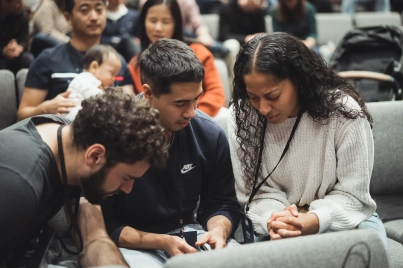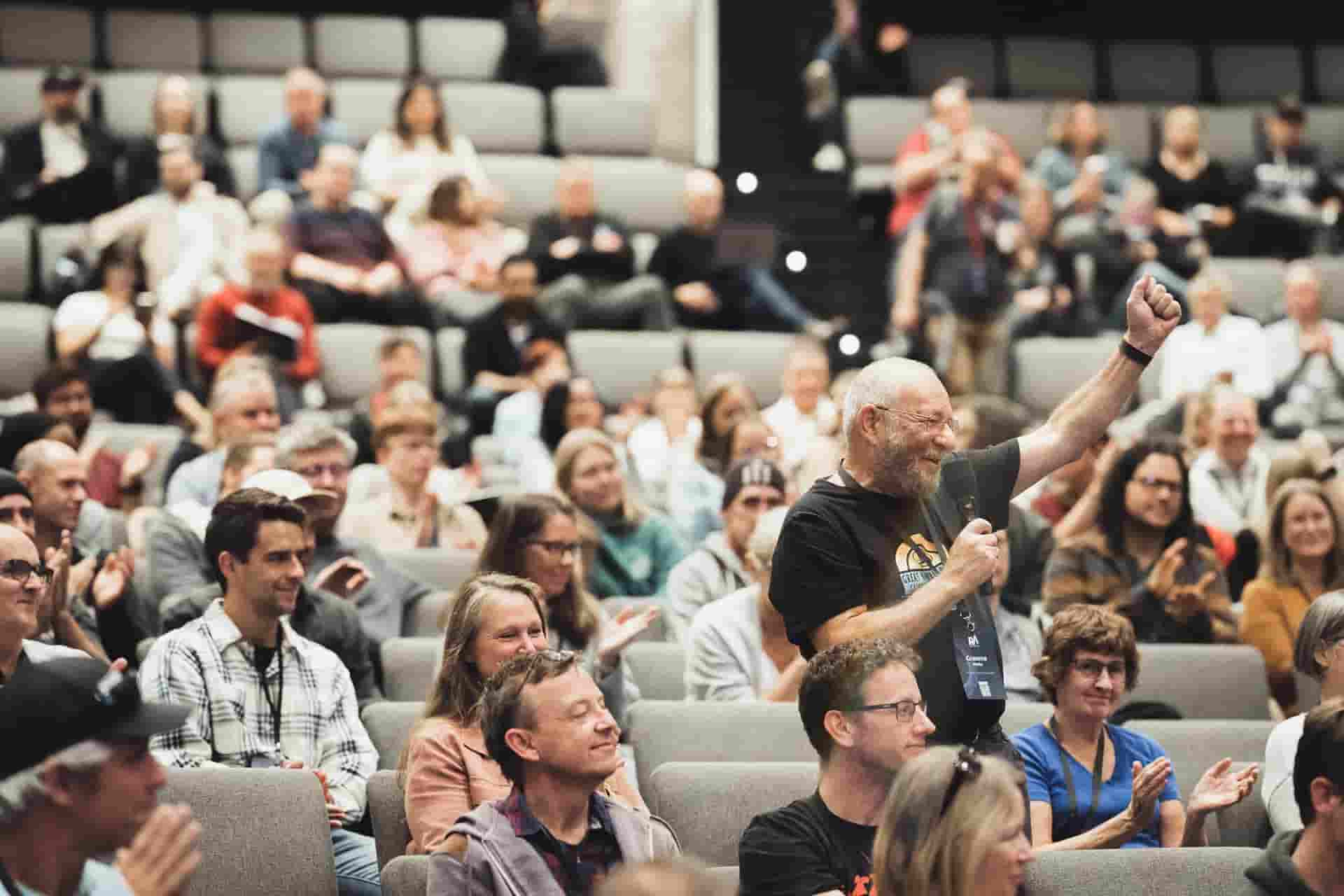
Tim Clemens from Grace City Church talks through 7 important questions churches need to ask about community in church.

Tim’s ebook can be downloaded here.

You can support the Online Resource Library here.


Transcript

This transcript has been generated, and can contain errors. Please refer to the original recording for the definitive language used.

Read transcript

[0:00]
Good day on PQs and you've clicked on the Reach Australia podcast. Today we have an incredibly important session from our recent national conference Tim Clements who is the author of our ebook on community takes us through how to think about community in the light of a healthy ecosystem of church and he asks seven really important questions that every church needs to ask about community. Enjoy.

[0:30]
Hey, and about half an hour or so we're going to get a panel up and they're going to help us think through the specifics of size dynamics and how things like size and demographics and culture impact the community in our churches. Before we do that I've been asked to speak on the topic of community and the church ecosystem, community and the church ecosystem. So something vaguely resembling that will come out shortly. As we jump in though it's helpful to recognize I think that we use the language of community in two similar those slightly different ways and I mean that

[1:05]
you know first we'll often use the language of community to speak of the church as a whole. So for example we might speak if we're speaking of the St John's community we're thinking of all the people who belong to that church and gather regularly each week. It's the church community. But we also can use the language of community to describe the warmth and the depth of relationships between people in a particular church community. So maybe people come to St John's looking for a loving community or they leave St John's complaining about a lack of community and apologies if your

[1:41]
church is called St John's. Now there's obvious overlap between the two isn't there but we are touching on slightly different things when we use the language and so if we just lean into the first one for a moment the church is a whole and we ask the question well look what kind of communities does God want our churches to be. I suspect that each of us will have slightly different language that we put to the answer to that question but most of us will probably come up with some description that is trying to be captured by this picture here. What do we want? Well by the way this is the

[2:16]
famed Pentagon that Ben and Faith spoke about before but we want well God wants our churches to be communities that love God are deep in the word that serve one another and a wrong mission and if you've been around reach Australia for the last few years you'll know each national conference we've taken one of these what sometimes called outcomes and taught sort to zoom in and focus in and give some specific attention to them. And why is that well it's partly because whilst we believe that a church needs to be humming and all of these outcomes to be healthy there really is benefit

[2:52]
that comes from focusing on zooming in and giving specific attention to some of them individually. And so over the next few days we're really going to try and zoom in on this one of the in community outcome and as we do that you will notice that our language will often, though not always, but often shift into that second usage of the word community that is we're often thinking about the warmth and the depth of relationships that exist among and between people at our churches.

[3:25]
So if we try to break that down what does it exactly does it look like? What does it mean to be in community together? Well there's probably a range of ways that we could break this down but one that a number of us here have found helpful is to think in terms of connection, community and care. Now again that's not because we believe that the totality of Christian community is summarized by those three words far from it. After all what makes us the church is that we are the redeemed people of God, what makes our communities distinctly Christian is that they are communities that love God

[4:00]
are deep in the word seeking to grow and maturity that serve one another and that we're on mission together. But when we zoom in on that in community outcome we're really saying that we want the individuals in our churches and the communities as a whole to be people and places of connection of community and care. That is we want them to be places where the people are warm and welcoming and it's easy for the Christian or the new believer to make their way in and become a part of

[4:33]
the community there. We want them to be people in places of community where people have a deep love and affection for one another and they live out the reality of being a spiritual family and part of the household of God. We want them to be people in places of care where we carry each other's burdens where we pray for one another in the midst of hardship and we encourage and spur one another on to persevere and grow to maturity and Christ. Now as we're going to hear from our panelists a little later, those principles of connection, community and care are really consistent

[5:08]
irrespective of the size of the church. Now the practicalities may differ but the principles are consistent. So look out for that. But how do we build it? How do we lead it? How do we facilitate communities of connection and community care? Well to flag for you, my goal in this talk is actually not so much to give you the answers but rather to help you ask what I think are the right questions. And there's two reasons for that. The first is that I had 20,000 words worth of answers and so I

[5:39]
wrote them in this book, Gospel, Growth and Christian community. I know you're not supposed to promote your own stuff but it's free so like you can, I'm allowed to do it but a lot of what I had to say if you want my answers you can go and have a look at that. Second reason I'm not going to major on the answers is because I think so many of the answers will come from the other plenaries, the other workshops, the consultations, the conversations together that we have. And so really my goal now is just to help by suggesting some questions that I think will be helpful for all

[6:12]
of us to be asking over the course of the next few days. So I'll give you seven, some will vary in length but number one. To what extent am I the obstacle to people experiencing connection, community and care at our church? I want us to ask that question and I've come out swinging on this one because my hunch is that whether you're here as a pastor or not you have a pastor's heart, right? I think of Jesus. Jesus saw the crowds and he had compassion on them because they

[6:43]
were like sheep without a shepherd. If you have the heart of Jesus then you, when you see a person in need of connection, maybe you notice there's a new person at church, you will want to go up and welcome them and make that film at home in your church. If you have the heart of Jesus then when you see a person in need of community, right, maybe you notice, do this person's been around for a while but they're just, they're kind of on the fringe, I'm not sure that others are really loving them and welcoming them and bringing them in, then you want to have a bottom of a lunch or dinner,

[7:16]
you want to make them fill at home. If you see a person in need of care, maybe they're going through hard times, you will want to pray with them, you will want to counsel them with descriptions. If you love people that will be the inclination of your heart. And yet the reality is that while you can and you should do this for many, you can't do it for all. And what's more if you try to, you will most likely burn yourself out, limit the size and impact of the church and ultimately

[7:47]
stunt the growth of God's people. Why? Because you cannot and you should not be the locus of relationships for everyone at your church. Do you remember this diagram I put it up as everyone was coming in? It helps us to see you can build community around any number of things. It's not your job to take the place of the question mark. That place is already taken. In the church, Jesus is the locus of relationships and therefore our job as church leaders, whatever

[8:20]
role you have is not to be at the center of the community but to shepherd it, to pray for it, to equip it with the Word of God so that it can build itself up in love as each part does its work. Right? That's the beautiful vision given to us from Paul in the book of Ephesians. Now if we want that vision to become a reality, the only way that we are going to be able to do it is if we do some work on ourselves, if we die to our need to be needed, you want to be needed? I want to be needed. I want to be at the center of things. And yet we need to die to our need to

[8:56]
be needed, start raising other leaders up and then equip the people in our churches to work, to share in the work of connection and community and care. Now just to be clear, that's hard. It's painful. It hurts. As of this last Sunday, Grace City is eight years old. In the first year of our church, my wife and I had every single member of our church over to our house for dinner or lunch twice over the course of the year. That's just not possible anymore.

[9:26]
And although not everyone will believe me, that there is always a part of me that feels left out when I'm not invited to an event from people that used to come over to my house. Or when they want someone else to marry them, or when they don't even think to let me know that they had a baby or that they were in hospital. And yet I know that is also a sign of health because it means that I thought that the work of connection, community and care is happening without me being at the center of everything. There's question number one. Question number two is how well do we stir

[10:02]
people's hearts and cast a vision for life and community? I don't know if you've noticed, but a lot of people treat church like it's their spiritual gym, you know what I mean? They may see the pastor as their spiritual fitness instructor. They may have friends that they do spiritual workouts but they primarily view your church. Our church is through the lens of what they can consume rather than what they can contribute. And so sometimes they don't even do that. I don't need to, they might think to themselves, well I don't need to go to the church or to the gym

[10:37]
to stay physically fit. So why do I need to go to church to stay spiritually fit? As long as I'm self-disciplined and following my own self-directed spiritual program, what's the problem? Church online, it's awesome. Look, I don't need to convince you how problematic that way of thinking is. Our churches are not, it's not just an event you attend, it's a community you belong to. But the problem is so many in our churches have either forgotten this or never known this. And so my encouragement to all of us is teach people this and remind them again and again the group that

[11:11]
meets at 8 a.m. or at 10 a.m. or at 6 p.m. at church on Sunday is their spiritual family and God calls us to love one another as brothers and sisters in Christ. All right, you're telling us to do it how. Well, again, you want to come up with the answers. I've got at least four small suggestions but I know there's more than this. Number one, sermons. But ask yourself, does the preaching regularly cast a vision for the beauty of Christian community and does it use the gospel to motivate people to

[11:42]
live it out? Well, what about services? Right, the way you do your services will communicate something. What does it communicate? Does it communicate where family or you are an audience? There's no one way, I think, of doing this the right way but our joint decisions and a range of things will impact the kind of message that people hear. Well, think about stories. How often do you share stories that celebrate and kind of illustrate for your people the beauty of life in community?

[12:12]
Maybe you do it from the stage, maybe you share it in small groups, maybe in your emails, maybe in your social media. Constantly sharing stories is just a practical way to help encourage and celebrate the vision of life together. What about the sacraments? There's obviously going to be differences among us in our practice and beliefs about baptism and the Lord's supper, but both of them really are key opportunities to cast a vision for and then share together in Christian community together. Question three, how effectively does our community welcome and integrate Christians

[12:49]
and new believers into membership? But if one of the key outcomes you're seeking to be is a community that is welcoming, that's warm and connects the outside around, it's important to ask okay, well how are we actually going at this? And if you're new to this, one of the simple ways you can do it is by calculating your integration ratio. As you can see there, the integration ratio is the number of people who've joined your church in membership, divided by the number of first-time guests that visited your church. Now I know in this room we're going to have people with different

[13:25]
convictions about church membership, maybe it's very formal, maybe it's more of a partnership for you, maybe it's simply expressed through attending your church or joining a group, but at the end of the day it is helpful to ask this question, what is the ratio? Why? Because the higher your integration ratio, the more effectively your church will be connecting new people into the life of your community, which is a helpful reflection of are we being warm, welcoming, hospitable to the outsider. Paul tells the Christians in Rome, welcome one another, as Christ has welcomed you for

[14:00]
the glory of God. Now I know he's not talking about integration ratios, but when we as a church are a community of people that go out of our way to welcome the outsider in, aren't we demonstrating a modeling what God has done in Christ? He's gone out of his way to welcome us, the outsider in to his family. Now if you're sitting there thinking, well what exactly is a healthy integration ratio? The truth is I'm not going to give you an answer. And the reason for that is I honestly

[14:30]
think it's different for every church depending on size and context. And so it will be specific to you. And so rather than giving you the specific number, the goal that's healthy instead, I want to say measure what you are now and then seek if you can to build on it and improve on it year year. If you want help in knowing how to do that or improving at that, then let me direct you to the ebook or any of the numerous workshops that are going to be digging into some of these things over the course of the next few days. Very quickly though, just two practical things. Number one,

[15:05]
clarify and communicate your pathway. I think this will help. If you've never seen this before, this is just a simple diagram. Kind of trying to illustrate the journey that someone will go from first hearing about you and becoming aware of you, attending your church in person, getting converted, stepping into the life of church, getting into a small group, joining an ministry team. That's just an integration pathway. And so if you want to get better at welcoming people, becoming more hospitable to others, then figure out what is your pathway? How can we help people

[15:40]
take their next step and then communicate that to the right people and in the right context? And specifically in this area, I want to say think it through for the Christian who's joining your church or maybe the new believer and then the non-Christian. What's the most helpful next step that they can take? Maybe it's joining a members course for one, maybe it's joining a simply Christianity or a new discovery class for the other. Secondly and very quickly, I'll just highlight this diagram for you. I won't try and talk you through it again. It's in the ebook, but this is just trying to

[16:13]
capture all the different things that we can give attention to in our church so that before someone comes their time with us on the Sunday to even beyond their time, that we can ooze hospitality in everything we do. Now we want to do that for even our members, our regulars, but particularly for the outsider to make them feel welcome, to want to come back second, third and then join us together. Question four, what are the biblical expectations of church membership and Christian community and how effectively

[16:49]
have we actually taught these to our church? Now when it comes to expectation and membership, I'm not talking about things like help join our vision for this area or our expectation is that you join a community group or a small group or a minister. Those things are good and have their place. That's not what I'm talking about. I'm talking about the basic expectations in the Bible of membership and the local body of Christ, things like having a saving faith in Jesus, living a

[17:19]
holy life, serving others, submitting to godly and humble leadership, gathering regularly with His people. Right at the end of the day, if we haven't taught our people these things, then we can't expect them to live them out. Now of course, you'll say yes, but these things come up regularly in the course of our weekly preaching as we work through books of the Bible and they often will. But I want to say there's also, I think, great benefit in just sometimes teaching on these things more explicitly as a topic to join the dots for people in your church. Now where do you do it?

[17:53]
Well, I think one of the most helpful places you can do it is as people join your church. In fact, this is really the main reason that I'm such a fan of the membership course of the membership moment. It's a discipleship moment. You can help people know what is the Bible teach about belonging to a church, but it's not your only opportunity. As I my encouragement is do what you can to find other avenues. Maybe it's a sermon series every couple of years. Maybe it's the topic of a weekend away. Maybe it's, is there a small group curriculum you can take people through to

[18:25]
help them think through some of these things? What about the biblical expectations of Christian community? And you might say, well, what's the difference? And that's a fair point. But one of the ironic things I think about Christian community is how divisive it can be. And so I actually touch on this in the ebook. I explore seven community landmines that might be lurking in your church. And so just consider some of them. You've actually already heard some of them. First of all, the gathering landmine. Carl in his book, and again, I want to recommend it to you.

[18:59]
He estimates that most people today will spend little more than four hours in church-related activities each week. That's about 3% of their time waking hours. Now is that okay? If so, why? If not, why not? How would you respond as Carl has suggested? If someone comes up to you and points to Acts 2 and says, hey, look, they were gathering together in the houses, in the temple courts every day and from house to house. Why don't we do that? What's your answer? Have you thought it through? Have you taught on it? The organic landmine. Apparently there's a good and a bad sense of organic.

[19:35]
I don't know which is which, but look at its core. The church is a living and breathing organism, not an organization or institution, and Ben will say amen. But if that's true, then what is the role of organizations or institutions? Do they quench the spirit and deprive people, God's people from participating in the works of ministry? Or some people think so. And let's face it, sometimes they can. And yet as you read the Bible, the organization does also,

[20:06]
at other times, seem to help facilitate the growth of God's body, the church, sorry, Christ's body, and facilitate it. So what is the Bible teach on systems and structures and how can you make sure they don't strangle the growth of God's church? Or third, the size landmine. Is there an ideal size for church to have a strong biblical community? Should every member of your church know every other member? And if not, why not? And if so, why? Right, when people join your churches, they

[20:37]
certainly did in the early days for us and frankly sometimes still do. If they join and say, hey, I'm coming here because I want to be a part of a small church. How do you respond? Well, good, but hopefully we don't stay small. Or what if they, again, like many people do for us, say, look, as the church has grown, I just don't know everyone anymore. How do you respond? The homogeneity landmine number four, Paul tells the Ephesians, God's wisdom and glory is on display

[21:08]
when in the church people who have nothing in common, right? Like Jews and Gentiles, once upon a time, all they shared in common was hostility and hatred. And yet in the gospel, God brings them together. And when they love each other like family, God's wisdom and glory is on display. And so what place does homogeneity or how different do we have to be in the church to demonstrate that if someone comes to your church and they say, I'd like to join a small group with people just like me, please, how do you respond? Can they? Why? Why not? Again, my question is how much of

[21:46]
we ourselves thought on some of these and then how effectively have we taught the people in our churches about these? Because I do believe that these landmines, if not addressed, if not defused, could become ticking time bombs that are just going to kind of explode and actually do damage to the community of God's people in our churches. Number five, where do people experience and contribute to community and belonging in our church? And what can we do to help facilitate this?

[22:19]
That's a bit of a mouthful question, but I'll try and explain it. But everyone wants to belong. We saw that from the Simon Sennick Quote at the very start as well as the NCLS data. Everyone wants a place to and a people to belong to. And the beauty of the gospel is that God actually gives us belonging. We belong to Christ and we belong with His people. And importantly, and significantly, actually, that is true whether we feel like it or not. And therefore, part of

[22:49]
sort of growing and maturing as a Christian is actually learning more and more to live by faith rather than by sight. But that doesn't mean we just disregard how people feel. And so someone says, I don't belong here. You don't respond. We'll get over it because you do. The gospel says so. Rather, we want to both disciple people and what it means to belong. But then also, I do think we need to proactively think, how can we build context for belonging where people can experience

[23:24]
belonging themselves and contribute to the belonging of others? As my question is, where does that happen in your church? Does it happen in the Sunday service? Sorry, not yet. Thanks, guys. Sorry. I got excited. I'll go back. Does it happen in the Sunday service or the small group or the ministry team or something else? Well, the truth is it probably happens in each of those places if you have them. So just by way of example, this diagram is a relatively simple church. It runs

[23:55]
three services as well as a series of midweek small groups and ministry teams. But all it's trying to capture here, each of the formal communities that might exist within, again, for example, St. John's Church. Now, there's going to be a whole bunch of informal communities there as well. But people will be able to belong to, not all of them, but at least two or three possibly, even four in many cases. And actually, we're going to hear from our panelists later on that the larger your church gets, the more critical, the more important helping people to find one of

[24:30]
these smaller communities and get into and belong to those becomes important. Why? Well, part of the reason for this is that the size of a community and the context in which we gather actually changes the way that we interact with others both in terms of what we receive and also in terms of what we contribute. Now, there's more in the ebook on this. It's called Proximix, but I won't make you on it because I honestly think most of us know this by experience or know it intuitively. So just for example, think of this conference. They've set it up in such a way that we all get to engage with

[25:06]
one another in a whole range of different sized contexts and different sized ways. And so, you know, there's the 1100 of us gathered in an auditorium where it's mostly a talking head. There's the workshops where it's slightly more interactive. There's the consult where it's largely discussion. There's the dinners and the lunches and the meals where we sort of just get to discuss and hang out in smaller groups. And then there's the time where you skip the session to just go and hang out with a friend. Just don't skip these ones. Now, if all we ever did was gather

[25:37]
together as a group of 1100, it wouldn't work with it. Right, you'd all be passive just sitting there when you get over it because you haven't shared anything. You haven't contributed. You're a consumer the whole time. But instead, the different sizes, the different contexts all contribute both to your overall experience, but also we help one another by getting into smaller groups discussing working things through. So, apply that to your church. Your church most likely has a variety of different sized communities and contexts. Some formal, some informal, that someone can engage in

[26:13]
both to experience, but also contribute to the community and the belonging brothers. And so, if I pull up this next diagram, if I move from the left to the right, the number in the middle sort of just vaguely represents the number of people that might be in a particular context. So, moving from left to right, someone might be part of an informal accountability group of three. They might belong to one of your small group Bible studies with 10. Perhaps they regularly hang out for morning tea after church with a broader group. Maybe there's 30 people in their particular

[26:46]
section of the room. Maybe they attend the 10-30-A-M congregation of about 150 people. And they do it all in the context of being aware that they belong to the broader fellowship of St John's Church. Again, it doesn't take a genius to figure out that this person's experience of community and belonging is going to be so much richer than the person who only ever comes to the church service and they leave early or they arrive late. And not to mention the fact that this person is going to

[27:19]
play a way more significant role in actually building the church as they speak the truth and love to one another, as they care for others. The other person, when they leave, they rob the church of the opportunity to love and care for them. Now, there's lots more that we can say on that. But I suppose my encouragement to you is just to consider each of the formal and the informal communities in your church and consider how you might be able to both help and then encourage people in your church to take steps and be a part of each of the different groups. Now, I know there will always

[27:53]
be people in every single church for whom even getting to the Sunday service is a hard battle. And that's okay. Our systems, our structures, they are servants, we are not slaves to them. And so there's going to be people in your church that that's not going to work, you're going to need to bend the system, do what you can to just help them, get around them. But for many, and I want to say most, actively participating in a number of different communities in a range of context will significantly improve both their experience of and their contribution to the community and the

[28:27]
belonging of your church. Question six, and this one's very quick. What is Christian care? Who is responsible for it? And where and how does this take place at your church? Now again, I'm not going to answer this because we're going to do an entire plenary session on this tomorrow. And so these two hours tomorrow will be digging into this question. So look forward to that. It's going to be great. Seventh and final question that I want to encourage you to ask.

[28:58]
Am I willing to embrace change and lead for growth? Every church community is in a constant state of change. Yours, mine, everyone's. People will be joining the church as you can see in the diagram. Others will be leaving the church either because they're being sent, maybe to start a new church, maybe they've just moved house and so they're joining a church somewhere else. Or if they're not being sent, they're being lost, either because they just never quite felt like

[29:28]
they connected or they've walked away from the faith. But people bleed out the back door. And then in the middle of a church is the people in your community at the moment, which is always in flux, but they're going through the ups and the downs and the highs and the lows of life. This is a picture of all of our churches. And naturally that the location, the size, the context of your church will influence the degree to which you experience that flux. But it will be true for all of us. And that can be an intimidating concept, can't it? Particularly if you value stability,

[30:03]
like you want to build community, sometimes it actually just helps if nothing changes for a while and I can get to know the people. And it's okay to want stability, right? Stability is good often, particularly in a marriage. You don't want instability, but in a church, well, stability can actually sometimes be a barrier to the gospel. After all, if nobody ever joins the church, then it's only going to be one generation until that church dies out. And so as church leaders, we need to embrace the fact that some degree of change in our communities is not only

[30:38]
necessary. It's actually also good. And we also need to help train and equip and bring our people along with us. Yes, there will always be pain when you experience change. Change is hard. There's always sorrow when you have to say farewell to someone or what you had that beautiful slice of heaven you had for a little while. Have they moved or that person's life stage has changed? But that's okay. Actually, walking with our people and going, yes, it is sad, but actually

[31:13]
the more we embrace change, in some ways it's going to be necessary because it's a necessary consequence if we're going to lead healthy and growing communities that reach Australia for the gospel and so we need to do the hard work of trying to connect people in, do the hard work of helping people to grow while they're in our communities. If we can send them out, but do the hard work of also caring for people so that when they go through hardship and struggles which will happen

[31:46]
to every single one of them, God uses that as an opportunity to refine them in the furnace rather than having them go out the back door or leaving the faith or leaving the church. And so to help us dig into this a little further we're going to get out. Well, that was Tim Clements on Community and there'll be, well, that was Tim Clements on Community and that panel discussion will be available on our YouTube channel soon. So keep an eye out for that. If there is any resources that you would like

[32:18]
to see please make sure you email us resources at richestrayer.com.au. On PQs, chat soon. This podcast is part of the Reach Australia Resilce Library. It's your toolbox of Biblical and practical wisdom from gospel workers. We want to equip you to reach more people for Christ. It started as a drop box and now contains over 4000 podcasts and ebooks and it's free for anyone to use. It's all possible because someone like you was generous and it only continues because God

[32:51]
uses people like you. Will you give $20 today to keep sharing resources like this? Click the link in the show notes. We thank God for generous people like you.