

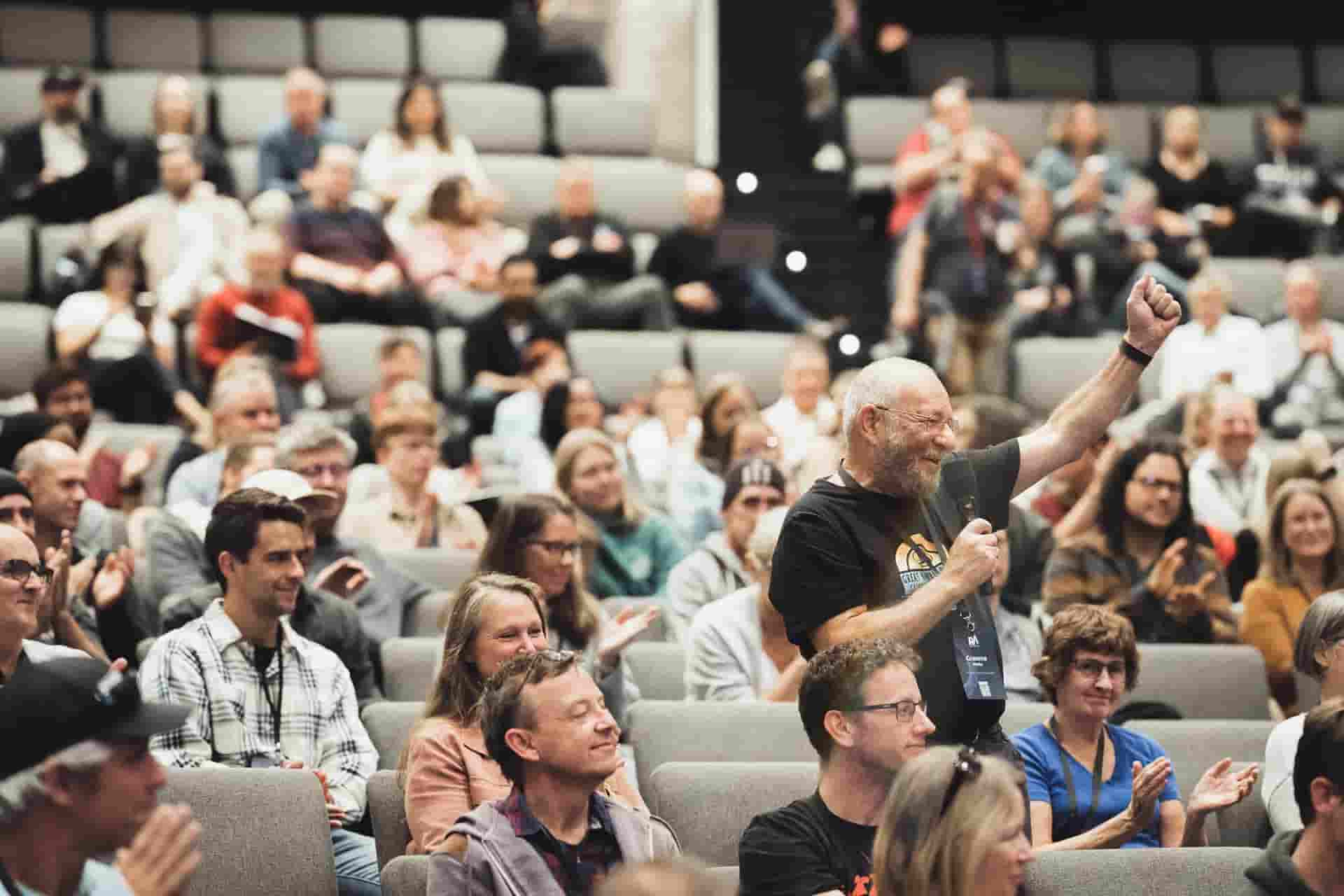
Trevor Hodge unpacks the ‘loving God’ area of the church ecosystem. This is an Ecosystem Workshop from the 2022 Reach Australia conference. Slides attached below:
https://reachaustralia.com.au/wp-content/uploads/2022/06/ECO-WORKSHOP_LOVINGGOD_TREVOR-ANDREW-CHARLES.pdf

Transcript
This transcript has been generated, and can contain errors. Please refer to the original recording for the definitive language used.
Read transcript
[0:02]
Hey, I'm Alan Al and welcome to the Reach Australia podcast. The vision of Reach Australia is to see thousands of healthy, evangelistic, multiplying churches all across Australia. This podcast you're listening to is an ecosystem workshop from our last Reach Australia conference on loving God with Andrew Hurd, Trevor Hodge and Charles Cleworth. Now, what I really loved about this workshop was not only did it take us deeper into what drives gathered worship, I especially enjoyed the dangers we need to look out for in forming our principles and practice. And of course, there was robust discussion on how it's expressed on the Sunday.
[0:35]
So I hope you enjoy it. I just wanted to talk about a few other potential challenges or issues as we talk about this area. And then Charles and I are going to get into some practical things to be thinking about. And we will have some more time for questions afterwards. A couple of things I think we need to be aware of.
[1:06]
thought we'd particularly think about things that might be triggered in the context of this conference and the things that we're talking about. We have to take care of pragmatism, you know, particularly in our gatherings. But core at the essence of what we are called to be as worshippers is God's, God is centre. He is glorious. And as Andrew's reminded us,
[1:36]
catechism, we're called to glorify God and enjoy Him forever. So they're tethered together but there is a real danger, it only takes a slight twist for us to seek our preferences, seek our enjoyment, use the things of corporate worship as a means to an end and that totally flips on its head what worship is at its core. So I like to think about it, if Elon Musk invited you to his birthday
[2:12]
party, I imagine it'd be a pretty lavish birthday party. He would be going out of his way to make his birthday party pretty amazing, and I reckon you'd probably enjoy it. Now, if we then start going, well actually Elon, I thought the Ferrari rather than the Lamborghini, can we sort that out? And we start wanting to seek our needs, seek our preferences. What it does is it's not a worship of God anymore where this is something that is to serve my needs. And so we need to be careful
[2:50]
that our gatherings don't become just kind of levers we pull for certain outcomes. And there's a book that was written during the, this was a critique of the seeker service movement as well in the late 80s, 90s, and a lady called Marva Dawn wrote a book in critique that was called A Royal Waste of Time. And just in the title, there's something really helpful there,
[3:21]
inherent to what we're doing, it's for God. It's for His glory. It's not about us. In some senses, it should be a lavish waste of time for the honour of Him. And we just have to be careful that we don't do that twist and start trying to gear it up for us, because that then becomes kind of like a Christian paganism. How do we get what we want by doing certain things so that God will deliver certain things. So keep your eye out for that.
[3:54]
I think we've covered that. Here's something why this area matters. We've touched on this a bit, but I think it's worth digging into a little bit more. I usually do a tally at conferences of how often we misquote one of the key verses that we believe in. And you would not believe how often it is. Jesus said,
[4:24]
Therefore go, make disciples of all nations, baptizing them in the name of the Father and of the Son and of the Holy Spirit, and teaching them everything I have commanded. And surely I'm with you always to the very end of the age. did you catch it who caught it what was missing to obey to obey it's it's been a 50 50 sometimes we we leave that out and I think there's something
[4:57]
to be noticed there and this is touching a little bit on what Andrew is talking about rationalism. Sometimes we think that we equip people by teaching them everything Jesus commanded. And so obviously we can't teach people to obey everything Jesus commanded if we don't teach them what Jesus commanded. So I'm not saying we don't teach what Jesus commanded. But if we are to teach people to obey, it's like saying I could know everything about John Coltrane.
[5:27]
I knew everything about the jazz saxophonist John Coltrane. Now, does that teach me to be a jazz musician? No. There's practice that I need to do. There's habits. There's formation. There is years and years and years of jam sessions before I could consider myself a jazz musician. Obedience is, as Romans 12, tested and approved. and so we need to be careful that we don't fall into this pattern of rationalism that thinks
[5:59]
we've done our job as we just teach and our gatherings are such a helpful helpful time as we've already talked about to be in a sense a gym to practice submission and service what does that look like we get to practice it here among friends so that I'm strengthened for that obedience when I go out. And when you think of those, the winds and the waves that Ephesians talks about, it's so often in our cultural context, that's not going to be clearly articulated doctrines that
[6:35]
people are wrestling with. They're not clearly wrestling with the tenets of transhumanism or capitalism or they're not sitting there with the kind of the text there. They are being influenced by the culture around us. Their desires are being tugged and pulled. And so our gatherings are so important to strengthen us in our wholeness, our thinking and our emotions, to be ready for what that obedience looks like in 24-7 life.
[7:14]
I'm just looking over what we have. One of the really important things I think that we need to think about in this area, I talk about in the terms of what you might say cultural erosion and calcification. now if you think of you know your limestone caves with your stalactites I can't remember which way it is I know there's a thing that has come about over eons of drip drip drip drip drip
[7:54]
drip drip a road a road a road and for in our church contexts so much growth and transformation us as a church together happens in that same way. What's formed in us is formed by our habits and our practices, little, little by little by little. And so attention to this area of what we call magnification is an eye to the little things that over time are building cultural things in our
[8:29]
people. And so that sometimes, I sometimes use the language of what's caught and taught, what's being caught by our people as we gather, as we do it week by week by week. And we just need to be careful that there's a danger that what we explicitly teach in our sermons, in our growth groups, they'll either be reinforced or undermined by what we do together in our practice.
[9:02]
And we're going to dig into that a lot more. So I've just skimmed through a few things there. So practically, again, we've touched on this, measuring outcomes. We've talked about taking responsibility over outcomes in this conference. You're going to hear it a few more times. There's some particular challenges for us here. the particular aspects or outcomes of this area of ministry are really, we're saying it's like a slippery fish sometimes.
[9:32]
It's hard to pin down. So I find myself in a quarterly matrix meeting, and everyone else has graphs and pie charts and data. And I go, oh, I want some of that. I want to be a real kind of, I want to play with the big boys in this. And we struggle to have those measures. And, you know, we think about mission. We can look at people who've come to a pre-evangelistic event
[10:06]
and then the people who have then moved to our evangelistic event and then they've gone to our mortal life group and they've landed in a growth room. And we can track things and we can put it on a graph. Mag, I don't know. Have we got that one? Is there someone up in the booth? Can you put that picture slide up? Here was someone's suggestion. There you go. There's our level of growth in MAG. You've probably seen that one before. We've made enough. You have someone down the front just tallying up.
[10:37]
Yeah, that's it. That's it. A little scorecard. I'm being very flippant with that, and I hope you don't hear me knocking that. Seriously, so at EV at the moment, we have put as one of our strategic goals rebuild the muscles of magnification that COVID has atrophied. We're so conscious that two years of not, you know, impeded gatherings together has weakened the muscles of
[11:08]
affectionate singing and prayer and our participation. And so we want to give attention to that. How are we going to measure that? How are we going to see at the end of the year whether we've made moves in that direction or not. We need to, there's a problem because the measure kind of is often anecdotal. And I want to give you permission to measure anecdotal. Sometimes we think anecdotal or impressions are like less helpful. They're less precise, but it doesn't
[11:44]
mean they're not helpful. And so it's worth keeping an eye to those kind of anecdotal. So us to think at the end of the year, what do we think? Are we further down the line with that? Have we rebuilt those? And we'll have stories and we'll have people that we know and that anecdotal measurement is helpful. And what I find is a helpful piece on how we proactively look to take responsibility is where we can give attention to lead measures. So have you got the idea of what
[12:18]
we would say talking about lead measures and lag measures. Have we heard those terms before? So a lag measure is something that we can measure and it's kind of the fruit that is born. It's kind of too late to do anything about it other than pick the fruit. Whereas lead measures are things that we can be proactively doing and measuring that we pray will be leading to that
[12:48]
Does that make sense? And so the two in combination, so for us thinking about rebuilding mag muscles, we'd want that anecdotal lag measure. How is that looking? But we want to keep an eye on our lead measures. What are the things we are doing and how are we going at that? How are we going with our song choices? How are we going with our leadership training? The mixes that we're pulling, are they being helpful for our singing? There's intentional things we're putting in place
[13:19]
and things that we can measure that we pray will lead to these anecdotal outcomes. So it's tricky, but that's some things that we've done for this challenge of measuring outcomes. Yeah, that's been really interesting, isn't it? Hazy here is on the magnification team with us here. we've got a couple of microphones down here on the ground which helps our musicians be able to hear you guys because we've got in-ear monitors in
[13:54]
on Easter I had them up and I'm hearing and I'm hearing a bit of singing and this is a new microphone so I'm like I'm not sure whether the levels are right I might have to adjust it and then our service leader passed over they went to the connect time we call it and whoa I had to take these out. It was so loud. And we've gone, actually, there's a little helpful measure. We've got a comparative, how is our singing compared to our catch up with the person
[14:25]
next to you time? How is that comparative volume? And we might come back later in the year and go, has that adjusted? So the difference between the congregation's singing volume and their catch up volume, we could actually have a little measure. But yeah, it's hard. A couple of other things about measuring outcomes. We do measure outcomes in MAG. And we measure outcomes in MAG every Monday. And everyone
[14:58]
gives their measures. Everyone is quite happy to give their opinions. We have a very public time of measuring mag, week in, week out. And I just want to point out, if you're a lead pastor here, be aware of that. It can be pretty crushing and brutal for people. You know, it's not a quarterly report. It's sometimes every week. And so protect your volunteers in that area.
[15:31]
Sometimes they need our support and an umbrella of mercy. there's a very public expression of what we do in ministry every Sunday, and people generally aren't shy about telling you how it's going. So I'm not talking necessarily about staff, but your people involved in particularly platform ministry will hear a lot about how they feel about things are going. So it's not so much this measurement piece,
[16:02]
but it is in some senses that feedback loop, but it's relentless and it's sometimes a little bit unfiltered. And here's the thing, the things that are being commented on and reflected on and measured sometimes won't take into account things that we really care about that might be behind what you're perceiving. So I'll give you an example of that. Chatting with some of our youth people a couple of weeks ago,
[16:37]
the music time on the Friday night was it was nowhere near as good as it usually was. And so we're measuring how good is music at youth, that feels like a fail. Now the reason that the music was nowhere near as good as it usually was is because everyone on the platform had just graduated from the training band and into serving regularly at youth, which is the fruit of years of pathway development. And so that's a massive win that we
[17:11]
don't see in a public sense. And so there's this real challenge of the publicness and relentlessness of it. And just to add in another twist on that, I keep saying Meg, is that okay? You guys know what I'm talking about, don't you? We hide the hurt. We care about the gatherings. We care about the public gathering. We're always conscious of this is the week that Andy's mate has said, I'm going to come. All right? And so
[17:47]
we will hide the hurt. We will stretch over whatever gap that is to not see the gathering fall over. And so those hurts can get lost because on appearances we go, yeah, this is all going really well. Week by week things are going really well and we miss the hurt or the structural problems that are sitting behind it because we cover it over. And so as we talk about what we
[18:20]
measure, I'd encourage you to measure and report on those things. It's tempting to report on the front thing because, as I said, everyone engages it and hopefully it's encouraging stuff. But we need to make sure we're reporting on those hidden hurts because they're often things that are cumulative and things fall over after a while. Does that make sense? Let me give you an example. Yeah, our AV team is under-resourced and so this week we don't have a sound engineer.
[18:51]
So, and next week we don't have a sound engineer. So what's happening is this one sound engineer that we do have is doing every week and they're slowly burning out and they're slowly resenting it, but we don't know that because the mix every week's great. So can you see the hurt is behind the scenes? Does that make sense? And we do that for the sake, you would say one way of bringing about change is show the hurt. And once people feel the hurt, they know there's a need to change.
[19:21]
And so that's a valid change leading mechanism. Just let people feel the hurt and they'll understand and they'll be behind your change. But the public gathering, we protect it because care about that public facing piece, so we tend to hide that hurt. Does that make… Yep. Great. So keep account of those things. Real quick, how are we going for time, Charles? What are we just past 20 past? Okay, I'll do it. I'll speed up on a few quick things.
[19:54]
One thing that's super helpful in measuring, though, is having really clearly articulated vision and direction. So again, we could say, was the mix good? How do you measure that? The next step up, we talk about the mix being undistractingly excellent, and that's a language we sometimes use. But which undistracting excellent? So the other day we had some comments on the mix.
[20:26]
And who is making those comments? Is it really important? for? Are we going for a mix that is particularly helpful for a young family or senior citizens or the youth group? Or can you see that the more we kind of refine the outcomes we're looking for, then the more helpfully we can measure what is so often subjective stuff. That's, again, a problem with magnification and music. People have got opinions and preferences,
[20:58]
and so often they are the things that come forward as we are measuring and kind of evaluating things. And so the clearer we can know what we're going for, the more helpful that is as we try and track how we're going with that. So it's very helpful to refine your language. Another, so moving on, different area of challenge is what I've called meals and diets.
[21:28]
How do we maintain attention both to the immediate and the incremental? And this is what I kind of tapped on with cultural calcification. Do you guys know the quote? Is it Peter Drucker that says, culture eats strategy for breakfast? Is that Drucker? Have you heard that quote? He says, culture eats strategy for breakfast. Now, implied in that quote, and this is not what he means, but I'm going to use it. it goes without saying that unless you feed your culture some healthy strategy,
[22:02]
it's going to fill up and be formed by something else. Now, does that make sense, how I twisted that? Culture eats strategy for breakfast, so therefore, we need to be strategically feeding our culture. We need to be intentionable about how we are growing our church. So there's a truth in what Drucker says,
[22:32]
but it doesn't throw strategy out the window. In fact, we need to be strategic about this slow movement stuff. We need to give attention, and I think we're good at this, to the meal we are eating this weekend. And we want the ingredients to all work together. or, you know, so if we're teaching on a certain passage, we want to make the songs and the readings and the prayers all work together to help teach and apply that truth into people's
[23:05]
lives. And we give attention to this weekend. But we all also need to be constantly aware and intentional and strategic about our repeated practices and habits and the culture that that's forming incrementally. So we were talking, it is a real geological kind of growth. It's erosion, slow erosion or slow sedimentation as things build up or cut down. And so we at EV, we use the language of nurturing means and moments to make much of God. And we wanted those two pieces there.
[23:40]
There's moments and we give attention to the moments, but the means and habits and the culture. and we need to do that because our wider cultural context it steers us towards the immediate it steers us towards novelty authenticity and if you've watched The Voice has anyone watched The Voice? Our kids like it. It's like sensory MSG isn't it? They have to they've got to grab your attention in half the song length and flip their chairs. It's so hyped up and that's our culture
[24:15]
and so we lose sight of slow formation, slow growth. So I love a good meal but if I want to get fit it's not going to be one meal that does that trick. It's going to be the discipline of meal after meal after meal and not having my preference. And that pushes against a cultural that we have. We love novelty, we love relevance and authenticity and mag this area is going to be
[24:45]
no there's things we're doing week after week after week after week that are forming us and forming our culture. It's a good question to be asking what are we modeling or rehearsing or reinforcing each week? What are the repeated practices that form norms and cultures and understandings in our church. And so as I've said with that taught court language, we could teach that church is about engaging, participating, serving and submitting but if each week our songs
[25:18]
are unfamiliar so I can't sing and the mix drowns our voices out so I don't feel I can contribute, the lights are dark so I can't see anyone else around me, what we teach and what is court is contradicting one another. I was at a conference years ago and it was great teaching and the premise was about equipping God's people to sing. For the whole conference, the wrong slides would
[25:50]
keep coming up for the lyrics and so what they taught, it was really important that you sing, but what was caught was it can't be that important because of all the things you could have given your attention to, you could have made sure we had the right lyrics to sing and yet that dropped. What was caught was there's some other kind of priority you've got going on. And so when you arrived here this morning, you were looking out for, you were catching stuff. You would have your radar up for, you know, what is this place, what's this conference like?
[26:24]
and you're fishing for cues to shape how you would engage, how you'd fit in with us. And so we wanted to, I suppose, teach and let me talk about the singing time. We wanted to teach and encourage that we engage passionately in songs that reflect God's word and help us engage with God's word. And so there's so many intentional things we thought about You guys catch that as well as teach it.
[26:56]
And so the choice of songs, the decision to start with some scripture. We spoke about the mix beforehand. We had a conversation about where we should have it to make sure there's room for the voices to be heard. Talking through the lyrics to make sure. The size of the text. Here's a trend I've seen recently. Massive screens, big images, tiny text. that teaching is important about when we sing. It's teaching.
[27:27]
You're catching something by the way that you do that text. And so we need to give attention to these things. I've got more stuff, but I'm going to stop talking because I want to hear from Charles for a little bit, Nate. Is that all right? Yeah. And then we can go back to some questions. Yeah, good. Well, I hope you got a lot out of that discussion. push the church forward on the mission and in gathering God's people. We'd love to get you in the Reach Australia development program.
[27:58]
You can find out all about it at reachaustralia.com.au.