

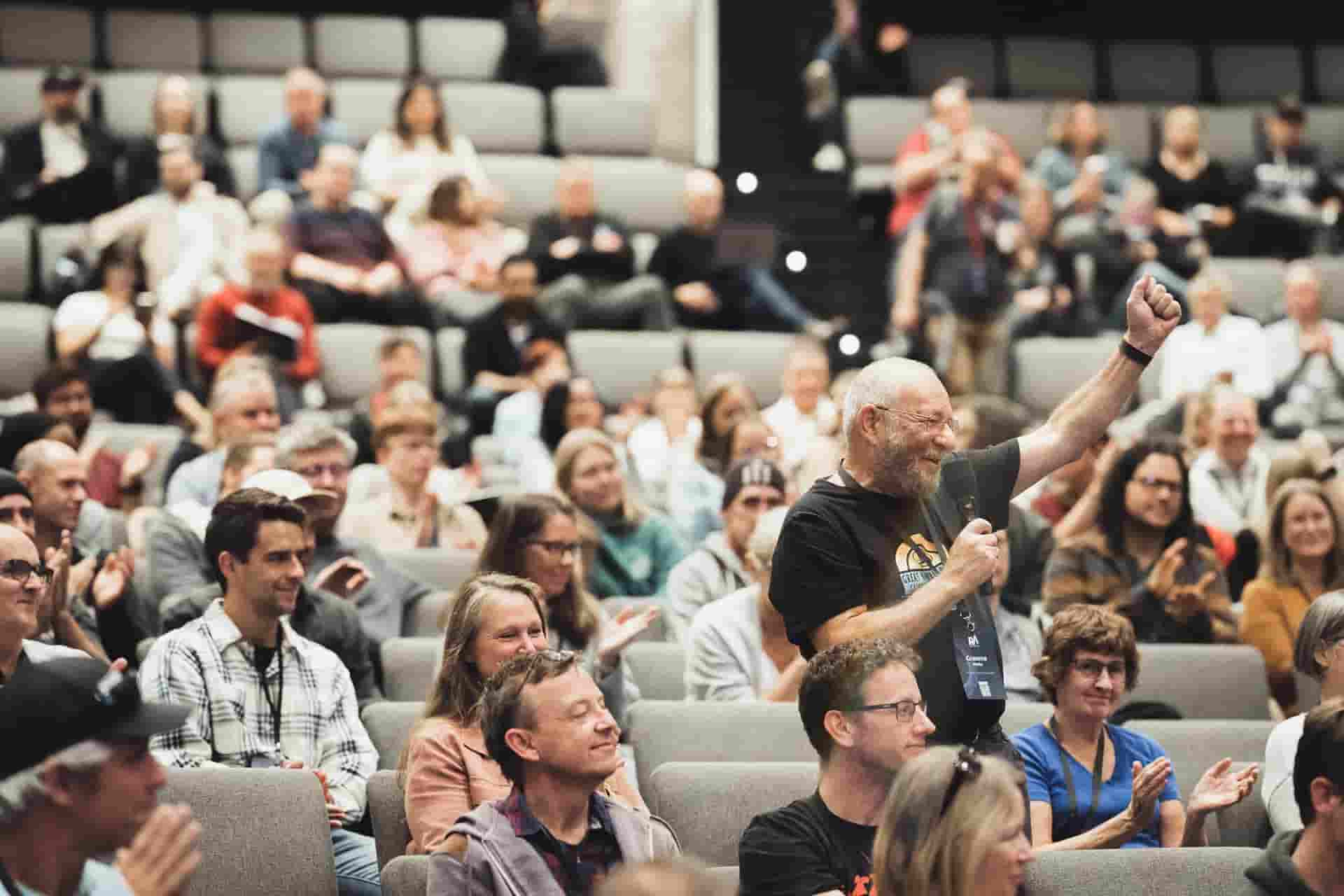

In merger-maths, 1+1=3. Some churches could actually be better together. What are the different ways churches can merge? Are church mergers just an American thing?
If you’d like to talk with Scott and Peter about a church merger consultation, reach out to us at https://reachaustralia.com.au/contact-us/.
Some of the thought in this episode is drawn from Better Together (Tomberlin & Bird).
0:00 Why are we talking about church mergers?
06:50 Good reasons for merging
12:10 Objections to merging
16:30 A merger consultation
17:45 The process of merging
22:10 Possible, feasible, desirable
22:45 Paradigm shifts

Transcript
This transcript has been generated, and can contain errors. Please refer to the original recording for the definitive language used.
Read transcript
[0:00]
G'day, I'm Peter Blanch and welcome to the Reach Australia podcast. Today we're talking about churches and church mergers in particular. Now look, you might be listening in because maybe you're in a church that's going quite well, but you look around your neighbourhood and you see some that are really struggling and your heart bleeds for them and you wonder if a church merger is a good idea. Or perhaps you are that church that's really struggling and you're thinking, gee, merging with a healthy church would be a great idea.
[0:30]
who's just interested in seeing healthy churches exist across the country and you see that church mergers is potentially a key strategy we have to see thousands of healthy evangelistic multiplying churches across Australia. Now, Scott Sanders is with me today. G'day, Pete. It's good to be here. It is excellent that you're here. I'm on the other side of the chair. Normally, I'm asking the questions, but you're asking the questions today. It is excellent. That's a good thing. I'm very happy about that.
[1:00]
Just for everyone, what is a church merger? So a church merger is two churches coming together. We often don't like using the language of merger. You know, we talk about collaboration, partnership, working together. But really a merger is two churches coming together to become one church. Yeah, yeah. Now people would be familiar that, well perhaps familiar that this seems to happen a lot in America. Is this purely an American thing?
[1:32]
Now, this is not a new thing. It's not an Australian thing or an American thing. It's a part of the church landscape and it has been and it will continue to be. I think we're having this conversation because more recently we've seen this happen more and more. And there's been a deliberateness around the place, around this conversation. And so in America, the number of churches is just massive. In Australia, we've only got 12,000 churches. in America, it's something like 300,000 churches. And at any one point in time, 300,000 of a lot closing,
[2:08]
a percentage of 300,000 closing means there's a lot of churches merging. And so in the last few years, with the start of multi-site and with the opportunity to sort of see two churches in two locations, I think as well with the increase in church planting across the states, Mergers have been sort of coming from that front. Church plants often looking for a building, often being a healthy thing and then having lots of dying churches or struggling churches around them. That's been where part of the conversation has been driven by.
[2:39]
The other part of the conversation is the growth of multi-site, one church in two locations. And so mergers have been a real way of actually being the start of a multi-site conversation or maybe the third site. But again, the struggling church has seen this growing, healthy, multi-site church network and said, okay, maybe we can join this. I think the other side of the conversation that might be pushing it as well is denominations. Again, looking at their churches, looking at reaching regions. And unfortunately, a lot of established churches are dying and closing.
[3:15]
Actually, this has been an opportunity. what do we do with sites, places, church locations as well. Sometimes they have lots of property resource but no people and a merger of a church that's got no property, that can be quite helpful. Yeah, so the data that I've got kind of in America just on this sort of, you know, every year about 2% of churches are closing or making decisions to close. Just the reality that at any point in time during the year, senior pastors are moving and often, again,
[3:46]
for this is, oh, well, we've actually lost our senior pastor. We haven't been able to find someone. So the reality that, you know, every year there's sort of 10% to 15% of pastors are on the move and just moving, which is just a natural sort of course of church life. The other stat is if we look at sort of just church generally and where churches are at on the life cycle, there's only 20% of churches probably that are growing and that's similar to what's happening in America. So by growing, I mean, you know, they're adding to their numbers.
[4:17]
They're in that sort of healthy phase of a life cycle. Many of our churches sort of 60% or 80% are in that declining, plateaued sort of maintenance phase of the church life cycle. And so, you know, again, often mergers and merging could be a way to sort of reignite the life cycle and actually, you know, see change or be part of the sort of change process for a church to actually get on the healthy side of the life cycle. That's right. A merge needs to be something that's healthy for both of them.
[4:48]
Two unhealthy things merging can often lead to an unhealthy thing. New thing, yeah? Yeah, and I think that's part of the problem with the conversation around mergers in Australia. Most of our older leaders, their experience of church mergers is actually two struggling churches. You know, this is kind of the last hurrah. We've got to kind of get together. We haven't actually made the hard decisions earlier. and let's merge to eke out the life. And often what happens is it actually leads to a faster death
[5:20]
and actually I think the loss of kingdom resources. So Jim Tomerlane in his book Better Together has sort of four types of mergers and he calls that merger the ICU merger, the intensive care unit merger. And am I right to guess that he's saying when you have ICU mergers, often work well? Yeah, it doesn't often work. So Jim, you know, Jim's been a consultant with multi-site solutions for a number of years. You know, he's really been at the forefront of the multi-site conversation in the States. He wrote a book, Better Together. The first edition
[5:56]
was really helpful just in articulating some of the key things and the key areas to think about in the merger conversation. More recently, they've updated that book with new research. I think his feel, you know, going into COVID and this sort of last two-year stretch that we had is that there'd be a lot more churches closing down and, you know, the conversation would be accelerated. Again, in Australia, that was what I was thinking too, but we've had stimulus, financial stimulus from the government. We've also had denominations, I think, you know, push into this space.
[6:29]
And so we actually haven't seen, I think, as many church closures as anticipated. but I still think that's kind of just around the corner as we see the impact of COVID on our church leaders and on our churches. Absolutely. And, well, that actually pushes, makes me want to take the conversation to say, well, what are some of the good reasons? So people can sometimes think merger and it can actually quite, well, it's a daunting thought really. What can be some of the good reasons why people consider merging?
[7:01]
Yeah, well, I think ultimately we want to be driven by mission. So hopefully the conversations that I've had with church leaders are they see the mission field in front of them and they realise that we're not going to do this just as our church alone. And we're not going to do this just from one site. We actually need to start thinking regionally. And so often it's the bigger field mission saying we can't do this just with one church. a number. So looking around, we've got these sites and these places. As I said, often the
[7:38]
merger conversation has been driven because of church planting. And so church plants often start, so I think about 80% of church plants starts without having a building. They, in those first few years, grow, have health. And I've seen good examples, the church I go to as an example of a merged church where they planted in an area with existing churches and they merged with a dying Anglican church. And that's been a really, I've been able to
[8:12]
be along with that process, be part of the team that went into the merged church and be in that first Sunday with the 12 people from the existing church and the 25 from Vine church. So that's the, I guess, the second one. There's that need for facilities, a need for a space. On the other side of the thing, you've got a healthy growing church. They're actually running out of space as well. So they're looking around, they're thinking, okay, we've maximised our current space. We might have a Saturday night gathering. We might have four gatherings on a Sunday. We actually, we can't do anything more on this site. So we actually need to look,
[8:46]
you know, look for opportunities there. So that often drives it. We've talked briefly about the multi-site. So again, I think as the church grows, one of those growth barriers, facilities causes the issue. But as you start to build a staff team and start moving past some of those growth barriers, particularly the sort of 400, 500, 600, then multi-site becomes part of that conversation. And a really simple, I think effective multi-site strategy can be to look for opportunities to merge in the local area.
[9:21]
The other sort of two are really driven, I think, just by the context, and that could be you've got a succession problem, you know, who's going to be the next minister and you can't find that person or, you know, the pastor's left and, again, you can't find a pastor. So you can be intentional with your succession planning, which I think in a lot of the circles we operate in, you actually can't be that intentional because there are denominational processes that control it. So it's a bit unlike the American situation.
[9:52]
We have a lot more independent churches. But that pastor search, again, often there's a, hey, there's a church down the road, we've built trust with them and there's an opportunity there. So I visited America about three years ago and visited a church in Chicago. and they were a multi-site network of churches in the Chicago region. And mergers kind of came on for them for the first instance. They were looking to reach into a Hispanic area,
[10:24]
so actually looking to reach into a multi-ethnic, a diverse community that they actually hadn't reached. And the leaders of an ethnic church knew this ministry. They had a positive relationship with the senior pastor. up trust. And so I think another kind of driver for it as well is that multi-ethnic driver. So again, often, you know, churches in Australia, the ethnic homogenous church might meet in
[10:57]
your building and they might meet in the afternoon or at lunchtime. They're meeting when the existing church is not actually gathering. What happens often over time is that that ethnic church grows, becomes healthy and then over time it's actually, okay, we ought to merge. We've got this healthy church, we've built trust, we've really valued the ministry, we're loving to see what happens and then there's a real opportunity then for this ethnic church to actually be a real blessing to the existing church that's there, merge and for you to have an ethnic sort of first generation ministry and then hopefully
[11:30]
a second generation and third generation ministry in the church. So that would probably be the final driver. There clearly are a number of good reasons why people would consider merging. Obviously, it's almost not worth articulating. There are some hopeless reasons or some ungodly reasons, aren't there, where it's a hostile takeover and where both churches aren't agreeing to do it and things like that. So we want to avoid all the negative reasons. But sometimes there are great motives and kingdom-driven motives to merge, but yet people, quite understandably, because
[12:04]
they care deeply about their church. We're not talking about merging some sporting clubs here. We're talking about merging churches. Christ loves them. We love them. And people can be quite nervous, have some objections. What are some of the common objections you find with people merging? So I think one of the first big objections is we've already kind of pressed into, you know, it just doesn't work. The only mergers that I've seen, you know, that ICU merger and And the fruit of that was actually two churches that were existing
[12:35]
and now actually none exist. And now they're no longer. So it's that real pragmatic question of it doesn't work, and that's what I've seen. So I think in Australia, I don't think we have seen lots of really positive examples of a church merger working, and we haven't, at least in my experience, I haven't seen that sort of marriage merger where you actually get two healthy, strong, vibrant churches come together and there's a healthy marrying up of we've got this and you've got this be better together. So that merger math of one plus one equals
[13:06]
ten and not just three or five but actually you get a bigger and better opportunity to reach. So the objection there is one plus one equals a half and people are just not confident it's going to work. They go, look, let's just not do this. So that's one objection. What's another one? There's I guess all the wrong, the other one is I've seen the wrong motivations for it. So again, similar to that first objection, the motivations that they've seen or they might have seen is we just want to preserve and maintain the status quo.
[13:38]
We want to maintain what we've got. And so mergers are actually about that. They're actually about preservation and maintaining the status quo. Really what we need to do is shut this thing down, stop it, and then restart this new thing. So it's far better to actually stop it, close it down, and then start a new thing. It's that sort of positive, if I put it positively, it's a lot easier to church plant or to start a new thing than it is to actually merge two traditional things. There's a lot of work involved. It's as far as easy just to shut it down and start again.
[14:10]
Yeah, so that's right. We'll go into that a bit later, just how much effort it takes to do and that can be an objection to scare people off. That shouldn't be a strong objection, but it is there. It's a reality. Can you think of any more? Yeah, I think the biggest objection is just that ownership that we have with our local church. There's just all the feelings that come around. We shouldn't stop this thing or shut this thing down because this is our church.
[14:41]
This has been existing for a number of years and it ought to continue to exist. So I have said, and it's been a conversation that I've heard with people that often doesn't demonstrate feeling or love and concern, but I actually said, well, why do we need to keep going for a number of years, why do we need to have 100 year anniversaries? Why can't a church be really useful for a time to reach a demographic or a population segment? Why is that a sense of failure or a sense of not actually getting the mission of church done? If a church
[15:12]
is there for 15 years and it sees lots of evangelistic growth and it sees people mature and grow in Christ and use their gifts and skills, then that's great. So often objection is, we've just got to keep holding onto this thing and preserving. Look, and I wonder if the identity piece comes into that as well where people are, yes, they should identify who am I, I'm a child of God through Jesus Christ, but I'm also a member of whatever it is at this place and their identity as a Christian can be caught up in the actual physical church they go to
[15:44]
or the gathering they've got. And so they can't see beyond their Christian life without having that identity in place. And so, yeah, that can be an objection. And so hear me saying churches are precious. They're God's plan A. They're how he has decided to work through us to reach the nations. But I don't think there's anywhere in the New Testament says they've got to continue to exist forever. If churches are unhealthy and they need the push of a church closure or a merger or something else to come in to actually see change
[16:16]
and see healthy change, then church mergers should be on the table. So that's another objection that we want to sort of cross off. Absolutely. Any more, Scott? No, I think that's all the ones that I've at least heard. Well, let's go to a quick break. One of the things we do at Reach Australia is offer a church consult. You may well be listening to this podcast and be wondering, gee, our church could really do with a merger consult. If that's you, we'd love to hear from you. We'd love to help you. Go to reachaustralia.com.au.
[16:48]
We'd love to hear from you. But also, you might be listening to this and go, my church doesn't need merging. love some input to help us grow what we're doing. What you need is a general health consult and we'd love to come and help you there as well. If that's you, get again, same website, reachaustralia.com.au. Now Pete, that sounds a lot like an ad. You sound like a salesman there. But we're a network actually. We believe the church is God's plan A and actually as a network we want to get alongside churches, we want to get alongside leadership teams, elderships to actually
[17:21]
help them do that. And we've got a whole bunch of people here at Reach Australia who are keen and willing to get alongside you so that we can see healthy evangelistic multiplying churches. Absolutely. Absolutely. Now Scott, with the merger thing, one of the things you've already just touched on as we've talked about the objections is that people really love their churches and so the whole concept of a merger to them can particularly the one that's potentially struggling in wanting to merge can really feel that deep grief of losing something that's precious to them.
[17:55]
What this means is that you need to tread carefully in the merger space and the merger conversation. Can you give us a feel for just how long does it take to have good, healthy discussions around merging and the processes involved? Yeah, so the data from America, again, they've done extensive research, is that generally the merger process from sort of the starting conversation, is this possible? And often that's between two senior pastors sort of gathering together and saying, okay, are we interested in this? And the formal process of making the decision,
[18:27]
okay, we're going to merge. It's about eight months. Eight months. Eight months. But again, it can be obviously longer and it can be shorter depending on the context and the external drivers and also the internal drivers that are pushing for the change. But it's not a quick conversation. That's a really important thing to notice because there could be churches listening in they're so teetering on the edge of viability, maybe they're teetering on the edge of being insolvent. You can't leave these kind of discussions to the last minute and then hope that they're
[18:58]
going to go really smoothly. Yeah, I think, you know, as leaders of the church, we're called to steward and shepherd and pastor our people. Just realising that, you know, this is a conversation that often involves lots of grief, you know, potentially. You are, you know, leaving behind, you know, closing things down. You know, there's a whole process of integrating with another group of people. As a change process, they're sort of, you know, high.
[19:29]
They're not, you know, high on the sort of scale of, you know, impacting an individual and impacting a family. So the more time you can give to this, the better. From perspective, even just thinking about church planting, church plans generally I think my sense is having an 18 month lead time allows a church to launch and start with greater success. That 12 to 18 months you can find the right person to lead the church, you can spend time
[19:59]
developing a plan, doing evangelistic work, building heat in the church so that then as you start and launch, you're actually in the best place to do that. In the same way, thinking about the merger conversation, you want to give people time to process. You also want to give time to plan the actual change process of people leaving, joining a new congregation or starting a new service or a new gathering as the merged entity. Even just the staff, often the staff changes. So
[20:31]
So the change to a multi-site staffing, the change to thinking as a church, what it's going to look like for us to meet on two locations, there, you know, long, you know, lots of thought needs to go into, well, how do we manage that? What does our teaching look like? Where do our staff sit? Even thinking about just the missional footprint that two churches have and the spaces and places that they're already at, there's a lot of complexity. Yeah, see, that's critical, isn't it? the extra time is needed because we really want churches who are merging to go from a
[21:04]
one plus one equals more than two. We want it to actually, and that takes time. Done poorly, one plus one can equal a half. Yeah, and the other reality is we've got legal, you know, legal constructs as well that we've got to deal with. We've got legal entities and governance processes. Generally, most of the merger conversations that I've been involved in have been with at least in the same denomination. But even in the same denomination, there are ordinances and regulations and processes that need to be gone through.
[21:34]
With independent churches who have their own separate legal structure, there is a closing down that needs to take place and then a restarting. And they all involve time and process and meetings. Or that administrational side. Of course, there's a cultural side. Every church, even if you find to merge it with a church that shares, I don't know, 80, 90% of your culture, there still will be part of the church culture where you are that is different. So there's a lot to, and that's precious often to people. And so it's very, there's a lot of complexities.
[22:05]
Yeah, there are. And so I break it down and the process down just into sort of three simple questions. Is it possible? Is it feasible? Is it desirable? And I think the is it possible question, you know, is really how long is a piece of string? that can be quick or slow depending on the readiness of each of the churches, also depending on the level of trust between often the two senior pastors or the teams that are seeking to merge. So when that trust is high and there's a lot of relational strength there, that can
[22:36]
be done quite quickly. Is it possible you can work out quickly? Yeah, depending on, again, the length of the relational. Is it feasible? Again, I think that can be a two to three month process. We've got a tool, 25 questions that we ask of each churches, the process that we go through with the church is to really push into the non-negotiables. So what are the things that we really want to hold on tightly? Let's have those conversations, let's get the tensions out there, let's really understand what do we actually want in this process.
[23:08]
I think you can do that in three months. Because both churches in Emerge will need to do that, won't they? There's not one side doing what do we really want, how do we think this is going to grow the kingdom. Both And then the last one, is it desirable? In many ways, that's a meeting. And if your governance structure is that, you know, a parish council or, you know, a rector makes a decision or if it's the session or eldership that makes the decision, even if it's a smaller body that's been tasked with making these
[23:40]
sort of significant decisions, I would still encourage every church to have some form of town hall or congregational meeting where we're all in this. So some point in time that actually gives assent to this is something that we are for. And once that is at desirable stages happen, then paying attention to what is the plan for us celebrating the church
[24:11]
that we're stopping and closing down and some sort of paying attention to what is this new thing that we're starting. Often in a merged conversation, we're actually closing down one of the churches, but often we're relaunching a new thing with a new name and it might still have the identity of what's existing, but we need to actually rename it and reshape it because that's part of the new envisaging process that takes place with a merge.
[24:43]
That's right. And look, this is a plug to keep listening to this podcast series. is just the nature of how to make those decisions and who can make those decisions and what is often called decision-making rights. It's such a crucial piece to get right when you're dealing with such highly emotional moments. Yeah, and if you want to get buy-in from people, you need more time and you need to involve them in the communication piece and in the decision-making process as well.
[25:18]
generally. Yeah, now Scott, one of the things we've already picked up on is sometimes a merger happens where they still meet in the one building, it's not multi-site, but there is often enough cases where a merger can happen where all of a sudden a church that was a single site can become a multi-site and we're seeing that happen more and more across the landscape in Australia at the moment. How different is going from going to multi-site like that with a church merge?
[25:49]
How different is that from planting? What are the extra things that need to be considered? Yeah, I think it depends on the size, depends on a number of things. But a couple of key paradigm shifts that are going to need to be made. There's that first one with a multi-site shift of we're now one church in two locations. So we're not two churches. We're now one We're sharing finance, we're sharing governance. We're not making decisions as a standalone church. We're actually making decisions as this larger church.
[26:22]
There's a shift that needs to often take place in the staff team. So often either congregation driven or being site driven to now we've got two sites and two locations that we need to pay attention to. and so the staff of a church of this size often are very wedded to their congregation or their demographic group of people or even their side as well and they need to make that shift. Okay, now I need to think about the whole and I might still be working in a congregation
[26:53]
or working in a ministry area. I've got to make that shift to the two sites and the bigger picture change. There's a shift that's going to need to take place for the senior leader. they're now managing two groups of people in two different locations. They need to think through a whole bunch of stuff. They're preaching often, even the way they talk about church. There's all those sort of decisions that need to be made. All those decisions around if you're preaching. Branding and, you know. That's right. If you're planning something new, you're taking people with you already, but going to multi-site for a church merge,
[27:25]
you've got these people who haven't been sitting underneath your leadership for long periods of time. There's a lot of extra complexities with the merge, isn't there? Yeah, that's right. key shifts. But again, complexities that I think can be used to drive real helpful gospel change in a church, to really challenge the status quo, to also raise up a whole bunch of other leaders as well. So that other big shift is just the complexity often of doing ministry in two sites. It means that you actually need more leaders. There's an efficiency of
[27:58]
meeting in one gathering and in one place but often our buildings are a constraint. So having those two locations means we have the opportunity hopefully to reach more people but the complexity of running two sites and having two leadership teams is there. So you need to work out what are you going to replicate at both sites, what aren't you going to replicate and often that question really needs to think very hard I think into
[28:28]
to reach. That's exactly right. We don't want this conversation for people listening to be going, gee, it's hard, it's complex, you're scaring me off. I really think what we're thinking here is going, gee, the outcomes for evangelistic effectiveness, the outcomes for the healthiness of a church, the ability to have a greater platform of health upon which you can multiply into even further sites if that's where it goes. There is great reasons to be involved in this. And that's where I want to kind of come to the end of our episode.
[28:59]
So if someone is listening to this and they're thinking, gee, I'm interested, we're in a church situation that maybe we need to think merger, but gee, I'm a little edgy, a little nervous about it. What's one thing that you could say to them? I just want to give you some questions just to start asking. Ask the question, can we reach more people together? Can we serve our local community better? And can we, as a church, better grow and disciple our people as an emergency?
[29:36]
So just asking those three questions of yourself as a leadership team, I think, is a really good sort of first step that everyone can do. I think a good second step is also to keep thinking about the fields and not the barns. So keep cultivating that regional focus. Keep having eyes that look out of your own local church to churches in the region and the lost in the region as well. So those two things, asking some hard questions
[30:06]
about whether you can do more with someone else and also asking the question, you know, where's my sort of field of vision? Where are my sites? Are they set just on my barns or are they actually set on the fields that are out there? And yeah, I think very quickly we go, we can't do it by ourselves. We actually need, we need to work with others. What does that look like? What does partnership look like? And so those questions are really helpful in thinking into that. That's right. Mergers are part of that broader conversation about we can do more together than we can apart.
[30:38]
And mergers is part of that. Absolutely. Thanks for listening to this first episode of the Reach Australia podcast on church mergers. just a reminder if you haven't yet registered for the Reach Australia National Conference it's coming up in May we'd love to see you there thanks for listening and we'll see you next time