

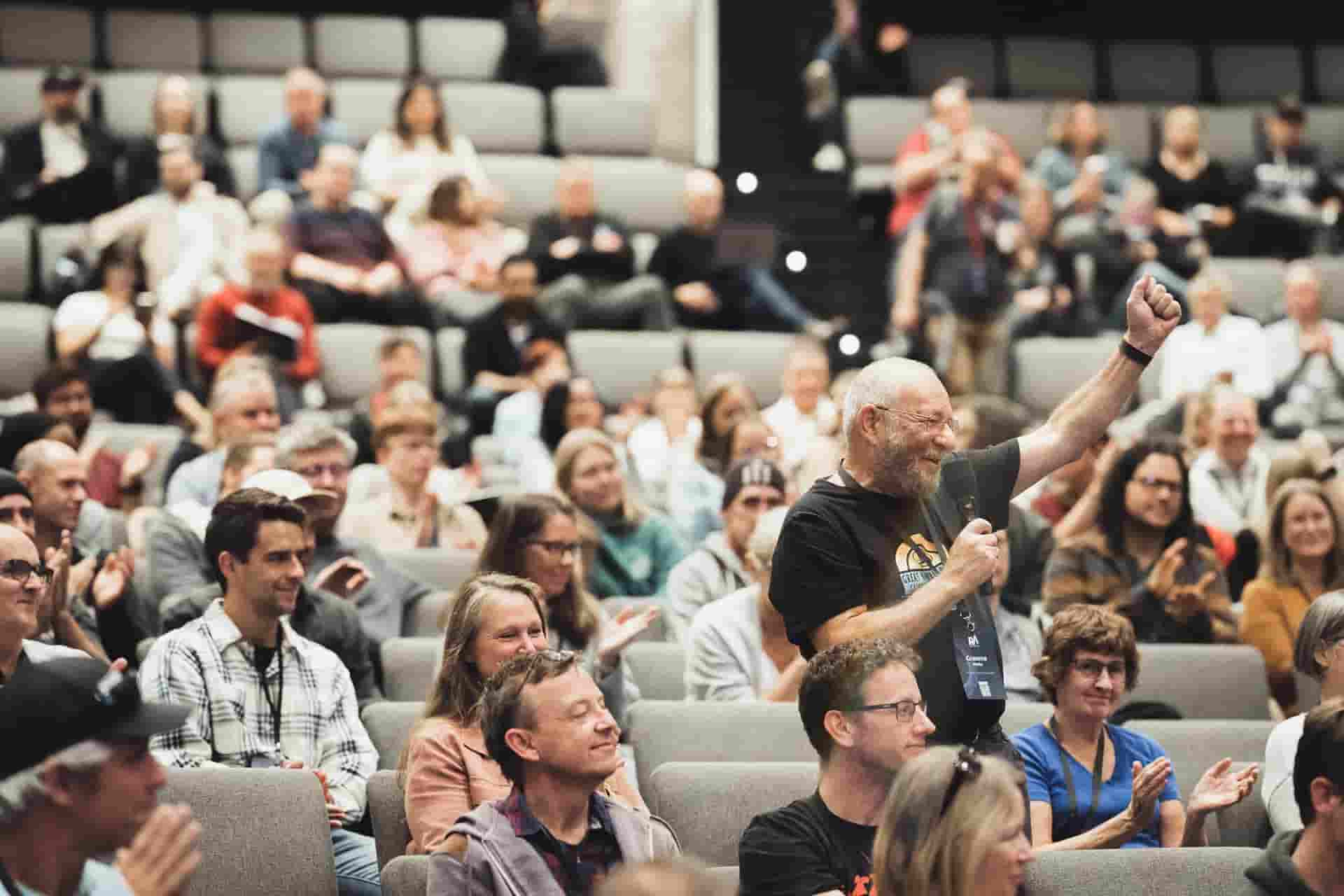

Don Carson opens Multiply ’12 with a consideration of the Christian’ identity before God in Heaven, and all that it implies for our membership of his church.
Special thanks to all the team at EV Church for putting this video together!
Click here for all of the resources from Multiply 12

Transcript
This transcript has been generated, and can contain errors. Please refer to the original recording for the definitive language used.
Read transcript
[0:05]
now in the three expositions primary expositions we will be looking at various passages in Ephesians and then in the – what are you calling them the planks isn't it they used to be called seminars then they became workshops and now their planks as in walk tha so I'm not quite sure why my wife says that sometimes I'm as thick as two short planks and I think of all the connections I know with planks and and I
[0:37]
haven't quite figured out where this one is and those will be more topical dealing with more immediately practical things and running from a range of texts but in these expository sessions will focus on set texts and the first is the Ephesians 1:3 2:14 Ephesians 1:3 2:14 and I will begin by reading it
[1:09]
here then what holy scripture says praise be to the God and father of our Lord Jesus Christ who has blessed us in the heavenly realms with every spiritual blessing in Christ for he chose us in him before the creation of the world to be holy and blameless in his sight in love he predestined us for adoption to sonship through Jesus Christ in accordance with his pleasure and will to
[1:39]
the praise of his glorious grace which he has freely given us in the one he loves in him we have redemption through his blood the forgiveness of sins in accordance with the riches of God's grace that he lavished on us with all wisdom and understanding he made known to us the mystery of his will according to his good pleasure which he purposed in Christ to be put into effect when the times reach their fulfillment to bring unity to all things in heaven and on
[2:10]
earth under Christ in him we were also chosen having been predestined according to the plan of him who works out everything in conformity with the purpose of his will in order that we who were the first to put our hope in Christ might be for the praise of his glory and you also were included in Christ when you heard the message of truth the gospel of your salvation when you believed you were marked in him with a seal the promised Holy Spirit who is a
[2:41]
deposit guaranteeing our inheritance until the redemption of those who are God's possession to the praise of his glory this is the word of the Lord let us pray open our minds and hearts Lord God to see the wonder of this gospel the incalculable privilege it is to be the
[3:11]
Church of the Living God expand our minds and hearts our grasp of the truth and therefore also our adoration our obedience our faithfulness may the words of my mouth and the meditation of all our hearts be acceptable in your sight O Lord our strength and our Redeemer for Jesus sake amen
[3:47]
what is it today that calls forth our most heartfelt and spontaneous praise in private devotions in the family but do we most naturally praise God for oh I'm sure there are a lot of things some of them merely formulaic some might praise
[4:17]
God that the surf is up or that finally you have enough income to secure a mortgage that the buy that the baby is arriving safely and then of course for every small success in the planting of a church you thank God for that but in fact what we thank God the most for is likely to indicate what is God for us
[4:51]
because it's what we most cherish and there is no passage in all of Holy Scripture more central in this one if we are to gain insight into what we should thank God for pre-eminently oh I know there's a sense in which we must be thankful for everything just a all of our cares are to be cast on God because he cares for us according to the Apostle Peter so also our thanks must be as sweeping as all of the gifts of God
[5:23]
and he is the god of grace and whom is no darkness due to shifting shadows the source of all good gifts so our praise must be very wide and yet there is something pulsating ly at the center in these verses which not only open up what the gospel is again but also explain more fully what the church is and where the pulsating heart of our thanks ought to be verse 3 offers a kind of survey of
[5:59]
the whole it's the sweep of praise and then the rest of the verses that I read break it down into several components praise be to the God and father of our Lord Jesus Christ who is blessed us in the heavenly realms with every spiritual blessing in Christ of course some translations that are more direct use blessed or blessing three times blessed be the God and father of our Lord Jesus Christ who has blessed us in the
[6:29]
heavenly realms with every spiritual blessing in Christ and what that means of course is that in some sense rather this blessing going both ways we bless God blessed be the God and father of our Lord Jesus Christ because he has blessed us with every spiritual blessing what is going on when the blessing goes both ways when we bless God we're praising him when he blesses us he's not exactly praising us what's the commonality the heart of it is this
[7:00]
it's the notion of approval when we bless God when we praise God we are approving him not because we stand in judgment of him and have the right to sanction or disapprove what he says but in adoration and worship we approve what he does and who he is and what he says and say and say in effect collectively and individually yes our men let it be so you God and when he blesses us he likewise
[7:30]
is approving us but now not as praised but as condescension grace this is the person that I approve this is the person whom I bless this is what my blessing looks like so there is approval running both ways but one is an act of adoration the other as an act of gracious condescension and the Apostle Paul looks
[8:01]
over the range of things that God has blessed us with and he says blessed be the God and father of our Lord Jesus Christ praise to him because he has blessed us in the heavenly realms with every spiritual blessing in Christ now the specific spiritual blessings that Paul has in mind when he says every spiritual blessing are these election to holiness adoption as the children of God
[8:34]
redemption forgiveness knowledge of God's gracious plan to sum up all things in Christ the gift of the Holy Spirit the hope of glory and we're in perennial danger of being so used to these expressions as theological gob talk that they don't stir us anymore we need to probe them again and say why does Paul use such exuberant laing language when he unpacks these things now before we go through them in order
[9:05]
it's worth observing three more details in verse three those who receive number one these spiritual blessings are us who has blessed us in the heavenly realms and that turns out to be Jews and Gentiles the Church of the Living God we'll come back to that later second the sphere in which these blessings are enjoyed is the heavenly realms blessed be the God and father of our Lord Jesus Christ praise be to the God and father of our Lord Jesus Christ who has blessed us in the heavenly
[9:37]
realms with every spiritual blessing in Christ what precisely does that mean the expression is used only five times in the New Testament all of them in Ephesians what does it mean I think it's worth while looking at all five occurrences before we decide there is this passage then 120 begin halfway through 19 which speaks of God's
[10:08]
incomparably great power that power is the same as the mighty strength he exerted when he raised Christ from the dead and seated him at his right hand in the heavenly realms now that makes sense enough that is in the abode of God at God's right hand one with the father vindication stamped all over him Christ at the Father's right hand in the heavenly realms chapter 2 verse 6 God
[10:39]
raised us up with Christ and seated us with him in the heavenly realms in Christ Jesus now that's a little harder to understand because most of us don't think of ourselves as at God's right hand already in the heavenly realms we'll hold on to that one just a wee bit chapter 3 verse 10 God's intent was that now through the church the manifold wisdom of God should be made known to the rulers and authorities in the heavenly realms
[11:09]
according to his eternal purpose that he accomplished in Christ Jesus our Lord in other words God's wisdom in the gospel manifested through the church is proclaimed to the rulers and authorities in the heavenly realms in the heavenly spheres does this mean angels does this mean good angels are fallen angels from this text you can't say but there's one more passage chapter 6 verse 12 our struggle is not against
[11:40]
flesh and blood but against the rulers against the authorities against the powers of this dark world and against the spiritual forces of evil in the heavenly realms that is not merely what's taking place on this right now but in this cosmic spiritual sphere where God is there's another entire dimension to this struggle in which we are engaged as we are planting churches and evangelizing and preaching the truth there is a counterpoint to the
[12:10]
struggle in the heavenly realms in which the gospel of God that comes upon us in our world is a pro climate or II witness of judgment even to the darkest forces of power in the heavenly realms it's a shatteringly sweeping vision so what does it mean in chapter 1 verse 3 when we're told that God has blessed us in the heavenly realms well if this were a talk in a seminary I would say that in
[12:42]
the heavenly realms means a kind of spiritual equivalent of inaugurated eschatology I'm paid to say stuff like that you know it's my job but I can't think of a better summary it's worth understanding what the expression means a kind of spatial equivalent of inaugurated eschatology eschatology is the Word of God with respect to what takes place in the eschaton at the end it's last things eschatology deals with
[13:15]
the final consummation of things on the other hand the New Testament is full of the reality that what takes place at the end has already started now it's already been inaugurated so we don't have our resurrection bodies yet but we're already adopted as sons of God that's already taking place right now we already have eternal life even if we don't have eternal life in the full consummated glory of the new heaven and the new earth yet to come so eschatology inaugurated eschatology we deal
[13:46]
constantly with the fact that we already have so much because of what Christ is secured but there is more toward which we press because the end is not yet in the consummation is still around the corner still the fruit of Christ's cross work so we're used to living between the already and the not yet that's a common amongst Christians who read their Bibles but to speak of being with Christ in the heavenly realms is a kind of spatial equivalent of that inaugurated
[14:18]
eschatology pictures a kind of timeline the consummation is here but it's already lapped back so that the power that raised Christ from the dead is already power that is bestowed upon us to transform us through the gospel it's lapped back we don't have to wait till the end for life to come upon us we have eternal life already now it's along this timeline that we speak of inaugurated eschatology and the talk
[14:48]
about in the heavenly realms is a kind of spatial equivalent of that one day one day we shall ourselves be in the new heaven and the new earth the home of righteousness we shall see God in his unshielded glory and as far as I can see the angels of God the unfallen angels of God never gaze on the face of God the
[15:19]
highest order of angels in Revelation chapter 4 hide their faces with their wings as they cry holy holy holy is the Lord God Almighty but redeemed human beings on the last day we're told in Revelation 22 they will see his face and we will have resurrected bodies but all of that has already been secured by Christ and his
[15:49]
resurrected body and already in a measure we see him by faith we're not there in resurrection existence around the throne yet but we're so identified with Christ that if he is at the Father's right hand and we are so identified with him that we are there too he identifies with us Saul Saul why are you persecuting me he says not why are you persecuting my church he identifies with us we are identified with him if he is
[16:20]
there then we are so included in him that there's a sense in which that's our Homebase too we are already with Christ in the heavenlies so all these blessings have been poured out upon us because they're all mediated through Christ and Christ is in the heavenlies so praise be to the God and father of our Lord Jesus Christ to us blessed us in the heavenly realms with every spiritual blessing secured by Christ who has gone to the father's
[16:50]
right hand before us and we are identified in him a kind of anticipation of being literally there in physical resurrection existence on the last day there's one more detail all of these blessings are secured in Christ this language of in Christ are in whom or in him occurs 11 times in the verses we read plays be to the Lord to the God and
[17:23]
father of our Lord Jesus Christ who has blessed us in the heavenly realms with every spiritual blessing in Christ in other words the blessings are secured by Christ and then a little farther on we'll see that they're mediated by the Spirit and they have been granted by God the Father so we give praise to him the passage is profoundly Trinitarian we'll come back to that point that's the survey of the sweep of praise in verse 3 now the particular items for which Paul
[17:53]
offers praise can be grouped in several ways I'll group them in four number one we have been chosen and adopted we have been chosen and adopted verse four for he chose us in him before the creation of the world to be holy and blameless in his sight in love he predestined us for adoption to sonship through Jesus Christ in accordance with his pleasure and will to the praise of his glorious grace
[18:25]
which he has freely given us in the one he loves doctrine of election of course makes a lot of people nervous but it's what the deck says he chose us he chose us in Christ and at one level it's not too difficult to understand we can make it difficult by introducing all kinds of philosophical considerations yet at one level it's pretty straightforward when God chose Abraham how did that work was
[18:55]
Abraham having his devotions one day as it were and then he paused and said you know God this world seems to me to be going to hell in a handbasket it's pretty disgusting I know that you sent the flood and wiped just about everybody out but it's just as bad as it always was now we've just come through the Tower of Babel and I don't see a lot of hope but I do have a suggestion I think you should start a kind of new humanity within the old humanity I could be the
[19:27]
great granddaddy let's call them Israelites and you make my seed as numerous as the stars of the heaven as the the strands of cita of sand by the seashore and will endure some sort of Covenant and we'll do what you say and you bless us and we'll show the world what a really good humanity looks like isn't that a great idea God it's not the way weird no God chose Abraham
[20:01]
well what about Moses Moses tried to offer his ideas to God as it were as a young man he believed that the people of God ought to be free that got him into a murder charge and he fled the country and for the next decade spent his life on the backside of the wilderness shepherding sheep so that when God finally did approach him when Moses was 80 years old Moses had not learned much except humility which is
[20:33]
enough now he doesn't even want to go gods ought to off to argue him into it but certainly Moses as the founder of Israel as a nation is not is not a volunteer he's chosen by God picked up and turfed in in fact when you look at all the great turning points in redemptive history what you discover is that God insists on preserving the
[21:06]
initiative so when David for example wants to build a temple God says no I didn't tell you to do that I'll choose the person who builds a temple for me oh there are a lot of other considerations but but there's no way that David is going to get away with as it were doing God a favor by making a suggestion so also in this passage whatever the complex means by which we come to faith the fundamental premise
[21:38]
behind all genuine conversion is the sovereign election of God we have been chosen in Christ and this before the creation of the world which means it is finally completely independent of us and we are dependent upon His grace in the little book I wrote about my dad I mentioned that during those hard years
[22:10]
in Quebec when things were really really difficult and Baptist ministers spent time in jail and we kids would get beaten up because we were Moody just on things like that at one point the Belgian Congo as it was then called erupted in the violence that produced national independence and the Belgian Congo became Zion and then eventually Congo and then the Democratic Republic of Congo and so forth in that violence
[22:42]
in 1959 a lot of American missionaries that had spent years of their lives in the Congo and had learned not only tribal languages but the national language which was French they fled the country and then looked around to find another part of the world where they could use their command to French to serve and so some of them came up to French Canada we weren't Africans but at least we spoke French not one of them stayed more than six months not one and
[23:13]
I was in my mid-teens then when of course I knew just about everything so I asked my father why don't these people stay why are they all chickening out thank you why why are they calling it quits like this and my father who was the mildest of men said well done you've got to understand that in their years of service they have seen many many converts entire denominations formed hospitals built education advanced
[23:46]
schools formed they've seen fruitfulness in their ministry and they come up here and they they see only difficulty and challenge and they stay over six months in haven't seen a single convert and and and they infer from this that maybe they've misread the Lord's guidance they they need to go somewhere else so I said to my father as only a 14 year old can then why don't you stay and go somewhere where you can be more productive why don't you leave and go somewhere where you can be more productive and my father
[24:20]
wheeled on me and said I stay because God has many people in this place which is of course exactly the encouragement that God gave to Paul when he was contemplating corinth assurance that God has many people in this place keeps you pressing on the doctrine of election turned to good use moreover we are called not simply to be
[24:50]
privileged but to be holy and blameless that's what we're called toward that's a pair of words that Paul uses elsewhere Christians are holy blameless and irreproachable in his presence Colossians 1:20 – that's what he's called us toward which brings us so quickly to the way we gain this holy status before God bound up with the gospel of God which is mentioned
[25:21]
explicitly a few verses farther on or to put the whole matter slightly differently verse 5 in love he predestined us for adoption to sonship through Jesus Christ it's the same sort of theme put in a slightly different key now this is an experiment I've done in many many places in the Western world sonship is bound up in the Western world
[25:51]
because we watch CSI programs on television sonship is bound up with DNA it's not bound up with cultural status familial identity your job or the like it's it's it's bound up with with your DNA just ask any CSI but in part in the ancient world it was really different because most sons ended up doing what their fathers did and most daughters ended up doing what their mothers did if your father is a baker you become a
[26:24]
baker your father's a farmer you become a farmer if your father's name is thought of odious you make violence that's the way it works dude you see it's part of the heritage but how many of you meant just you men now how many of you men are now doing vocationally what your fathers did at the same age let me see your hands impressive isn't it how many of you women are now doing at this a at your age exactly what your mothers did at the same age yes I see that hand-to-hands is
[26:56]
that remarkable whereas 95 97 98 percent in the ancient world were identified with what their fathers did Jesus was known as the son of the carpenter and then in one passage in mark he's got he becomes known as the carpenter himself presumably his father's died he takes over the business could you see that's your identity that's your social status that's where you get your education if your father's a farmer you don't go to Agricultural College to learn how to farm your father teaches you how to put in fence posts and when to irrigate and when the seed goes in and how to weed all the rest he teaches everything your identity is
[27:27]
there in the family and that's the background that stands behind many biblical metaphors sons of Belial sons of worthlessness is not saying that your father is worthless is saying that you're such a disgustingly worthless person that the only explanation is that you belong to the worthless family who are the real sons of Abraham we love those with Abraham's genes those with Abraham's faith who act like Abraham who talk like Abraham who respond like Abraham and when some people in Jesus
[27:58]
day try to claim that they really are sons of God Jesus says to them in John chapter 8 no not really he says you're the sons of the devil himself because after all he was a murderer from the beginning and you're trying to bump me off and he was alive from the beginning and you can't say the truth about me your your sons of the devil themselves do did you say so now if we are to be adopted as sons sons of God it's not just a status it's saying we must be
[28:29]
like God show ourselves to belong to the god family oh I know you've got to put surrounding warnings against that but Jesus himself says as much blessed he says blessed are the peacemakers for they shall be called the sons of God the presupposition is that God is the supreme peacemaker so if we make peace we're acting like God which shows that respect at least we've we belong to the
[28:59]
God family do you see that's why the King in Israel could be called son of God in a special sense God reigns and insofar as the human King reigns like God with justice and integrity then he shows himself to belong to the God families a son of God do you see now transparently we're not sons of God in every domain the Bible does not say to us beyond Nishant for I am omniscient there are in communicable attributes of God but on front after front we are to act like God in every way that it is
[29:30]
appropriate for image bearers to act like God which means that the final description of those who are triumphant in Revelation 21 and 22 is this he shall be my son in other words in one sense or another we're sons of God now both men and women are sons of God but but ultimately we will be sons of God so perfectly will we reflect our Heavenly Father that that in every domain where it is appropriate for His image bearers
[30:01]
to be like God in all of those domains we show ourselves to belong to the God family and that's what God has chosen us to in love he predestined us to be adopted as sons for adoption of sonship through Jesus Christ in accordance with his pleasure and will to the praise of his glorious grace which he has freely given us in the one he loves so praise
[30:34]
be to God the Father of our Lord Jesus Christ because we have been chosen that adopted number two we have been redeemed and forgiven verses 7 and 8 in Christ in him we have redemption through his blood the forgiveness of sins in accordance with the riches of God's grace that he lavished on us now fifty to a hundred years ago in the Western world Redemption was common economic language
[31:08]
it's just about gone now in some technical papers you can still speak of the redemption of a mortgage but it's not common talk anymore Redemption has become God talk it used to be that you could go to a pawn shop and hock a watch and then go back later and redeem it but we just don't have a lot of pawn shops anymore and we don't use that language now we we buy it back in the first century Redemption was common economic talk it was not theological God talk it was economic
[31:41]
talk and nowhere was it more tellingly used than in the redemption of slaves many people became slaves in the ancient world not from raiding parties or because they lost in a war or skirmishes or the like you could become a slave that way but that wasn't the only way in many cases people became slaves in the ancient world because there were no bankruptcy protection laws you borrowed some money and then the economy went belly-up or you made a mess of the business and and as a result you lost
[32:12]
everything and so you owed the money couldn't pay it and had no other recourse legally in the Roman Empire but to sell yourself and perhaps your family into slavery so you're an economic slave an economically caused slave but if then you had a well-to-do cousin thirty kilometres away don't forget thirty kilometers in those days was a day's journey and there were no cell phones to tip him off about what had happened to you eventually he might hear what had happened to you and he might come and decide to redeem you that meant to free
[32:47]
you from slavery by the payment of a price so also in the New Testament we are freed from a certain kind of slavery by the payment of a price so we have been bought not with corruptible things but with the blood of Christ Jesus that was the price paid to free us from slavery to sin not only slavery's purse which dammed us but this slavery's power
[33:17]
which in Chains us and Christ's cross work by the price that he paid freed us it liberated us by redeeming us because he paid the price we become free both from the curse and from the chain of sin or to put this another way we have forgiveness in love he predestined us for adoption verse 5 verse 7 in him we have redemption through his blood through his death on
[33:49]
our behalf the forgiveness of sins in accordance with the riches of God's grace the worst factor in our enslavement is that we stand under the curse and are utterly and totally unable to free ourselves we sin by our nature we sin by our choice we sin persistently we sin rebellious ly and we are damned for it justly and Christ by his blood frees us from such slavery he redeems us by the price of his own blood all of
[34:24]
this this immeasurable benefit has been secured to us by Christ Jesus and so praise be to God because we have been redeemed and forgiven number three we have been shown God's high mystery we have been shown God's high mystery that expression with all wisdom and understanding some translations linked with a proceeding line the 2011 NIV
[34:55]
rightly in my judgment links it with the following line but even if you take it the other way it won't make any difference to the understanding of verses 9 and 10 with all wisdom and understanding he made known to us the mystery of his will according to his good pleasure which he purposed in Christ to be put into effect when the times reach their fulfillment to bring unity to all things in heaven and on earth under Christ if I had to put this in non technical terms in one simple
[35:25]
Clause it's this God wants us to understand his saving purposes that is he could have saved us without explaining much that he should explain so much is in fact a mark of incredible grace now let me unpack that a bit the term mystery as you well know does
[35:56]
not refer to that which is mysterious nor does it refer to a whodunit some of our translations use the word secret but that's not quite right either the word is used 27 or 28 times in the New Testament and either most of them in my view all of them refer to that which has been hidden in time past but which is now disclosed in the coming of Christ it's hidden in time past but now disclosed but that does not mean that it was not actually there in time past it
[36:29]
was there in the text but hidden people didn't see it even though it was there and now in the fullness of time it is unpacked it is made clear so for example to take the easiest of all examples does the Old Testament promised us a suffering servant King well if you're a Christian you will say yes a promised
[37:02]
Davidic Messiah who must suffer and die on our behalf and we think therefore not only of texts like 2 Samuel 7 which sets up the Davidic dynasty but Isaiah 53 which promises a suffering servant moreover there are some Davidic texts like Psalm 69 often quoted in the passion narrative three times where David himself the king is the one who is despised and rejected by his friends Psalm 22 my God my God why have you
[37:34]
forsaken me as on David's lips before it's on Jesus lips David himself becomes the paradigm of the Davidic King who suffers and dies and feels rejected by his father what Christiane's we know these things did the apostles know them before the cross in the famous scene in scissor II of Philippi where Jesus asks the question who do people say that I am in Matthew's
[38:08]
Gospel Peter eventually pipes up and says you are the Christ the Son of the Living God and of course Jesus says you are blessed because you know this Simon son of John for flesh and blood has not revealed this to you but my father who is in heaven on the other hand what Peter means by confessing Jesus is the Christ is not exactly what you mean when you and I confessed that Jesus is the Christ the Son of the Living God we cannot unthink the fact that he is
[38:40]
the messianic hero and the suffering servant we cannot unthink the cross and the resurrection for us Christ means Christ crucified and resurrected and vindicated we cannot manage to separate those notions but clearly at this juncture Peter didn't have those pieces together for when Jesus goes on to talk about his impending death Peter having scored once theologically thinks he will do so again and says never lord this
[39:11]
shall not happen to you prompting Jesus to turn on him and say get behind me Satan you do not understand the things of God and when Jesus is hanging on the cross and then buried are the Apostles in an upstairs room saying yes I can hardly wait till Sunday or are they hiding for fear of the Jews they still don't have it together
[39:41]
prompting Jesus according to Luke's Gospel in Luke 28 to say to his followers after the resurrection Oh fools and slow of heart to believe all that the Scriptures have written and he turns to the scriptures and explains things in the scripture concerning himself showing that the Christ had to suffer which means that he pointed not only to the passages that I've just alluded to but things like the significance of the Passover land the
[40:13]
significance of Yom Kippur in the entire sacrificial system he points to all things in scripture concerning himself showing that the Christ had to suffer so these truths are there in the scripture even though they were not perceived to be in the scripture they remained mystery to take another example most conservative Jews in Palestine in the first century believed that when the Messiah came he would come with a bang
[40:47]
that is the big bang was not a creation the big bang came when the Messiah came and cleaned it all up at the end but a lot of the parables that Jesus tells in the Gospels are designed to show that that's not the way the kingdom comes the kingdom comes like yeast in dough it comes like seed that is sown in the ground and produces various percentage increases it it it comes slowly along
[41:19]
the parables that Jesus tells our parables of the kingdom to show that the kingdom is coming in an unexpected way and Jesus calls these things the mysteries of the kingdom the same word is here the mysteries of the kingdom what does he mean by that not that the kingdom is secretive or sinister or mysterious what he means is the kingdom as I'm unpacking it to you has been taught in the Old Testament that way but you didn't see it and now
[41:51]
you will see it at this juncture and when you ask well in what Old Testament passages do you find that kind of tension between the kingdom coming with a bang and and and and and the kingdom coming slowly well you could turn to Daniel for example and and observe that on occasion the coming kingdom is presented as a great Rock coming down a mountain that smash all the kingdoms of this world there's the big bang approach but it can also be seen as a little thing in the east that
[42:22]
grows and grows and grows until it it swallows up the whole earth did you see both notions of the kingdom are presented in daniel alone but that doesn't mean people saw it so the gospel is regularly presented and many of its phases as that which has been hidden in some measure in the old testament and is now disclosed and that's why the gospel can be presented in two very surprising ways look at the last three verses of
[42:53]
Paul's letter to the Romans Romans chapter 16 verses 25 to 27 there we read now to him who is able to establish you in accordance with my gospel so we're talking about the gospel the message I proclaim about Jesus Christ in keeping with the revelation of the mystery hidden for long ages past but now revealed a mystery theme it was there it was in the text but hidden for long ages
[43:24]
past but now revealed revealed and made known through the prophetic writings by the command of God in other words it was not made known as brand-new revelation that had to be thought up from scratch it was there in the prophetic writings and is now made known in other words the gospel is presented in the New Testament as simultaneously that which God has predicted in the Old Testament and which has now been fulfilled and as that which has been hidden in the Old Testament and is now revealed and it's always both and
[43:58]
because it's been hidden we have to ask ourselves and when was it unpacked when was it disclosed for what it was what gave us the insight that showed us what the Old Testament was really dealing with and that came with Christ and Paul writes with all wisdom and understanding he made known to us the mystery of his will according to his good pleasure which he
[44:30]
purposed in Christ to be put into effect when the times reached their fulfillment and that's why Peter reminds us elsewhere in 1st Peter chapter 1 that Old Testament writers they longed to look into these things even angels wanted to understand how they were put together but it has come to us in the fulfillment of times and the particular element here that is so central as this
[45:00]
to bring unity to all things in heaven and on earth under Christ for the fact of the matter is there was a tendency in so many Jewish circles to think of the big bang as introducing a time when Israel would be supreme on the earth and there would be some trickle down blessings for some Gentiles here and there but Paul looks at the Old Testament Scriptures afresh and he says no don't you understand there's that blessing to Abraham in him all the nations of the earth will be blessed
[45:32]
there's the protei fan Gilliam the first announcement of the gospel all the way back in Genesis 3 the seed of the woman will crush the Serpent's heel not to see that all of these movements end up in a fulfillment in which Christ is not only king of Israel but king of the cosmos king of all oh the ribs of it are already there in the Old Testament don't you see but now in the fulfillment of time he has made known this mystery to
[46:05]
us so that we may better see Christ for who he is that's why these themes keep coming up in Paul again and again and again thus Christ is one with a heavenly Father in in in creation all things were made by him Colossians 1 says and for him he is the goal of creation as he is also its creator and its source and in God's great mercy he has enabled us who live at the end of the ages to see the
[46:37]
things and understand the mind of God and peer into this great mercy in adoration and reverence that previous ages had never put together so praise be to God because we have been shown God's high mystery and finally we have been claimed as God's portion for God's glory
[47:08]
verses 11 to 14 in him we were also chosen most of our translations say but the verb render chosen is not the usual one it's normally bound up with appointing someone by lot and when it's used in the construction it is found in here it means something like this we have been chosen as God's portion the root of the idea comes from the song of Moses in Deuteronomy chapter 32 for the
[47:41]
Lord's portion is his people Jacob his allotted inheritance so all the nations of the earth are the Lord's but the Lord's portion is his people Jacob his allotted inheritance and now we're told the people of God the church is God's portion we have been chosen as God's portion having been predestined according to the plan of him who works out everything in conformity with the
[48:11]
purpose of his will who then are the we in order that we might be for the praise of his glory in verses 11 and 12 the we it seems to me are Jews that is that we who were the first to put our hope in Christ might be for the praise of his glory and then in verses 13 and 14 it turns to you you Gentiles and you also were included in Christ when you heard the message of truth the gospel of your salvation and when you will believed you
[48:42]
are marked in him with the seal the promised Holy Spirit who is the deposit guaranteeing our inheritance until the redemption of those who are God's possession today we mark possession with a signature or with impossible to remember passwords the more complicated the better and we're being warned all the time not to use anything with sequence or with our name in it or with a username in it or anything that you use anywhere else or or whatever and that's one of the ways we mark possession of something in the ancient world it was
[49:13]
very common to have a roller seal that you'd carry on a string it would be hard baked clay with some symbols on it and you could run it over a piece of soft clay and that would be your seal the document then you had approved or you could run it on some ink and run it over a sheet of papyrus so what stamps us out as God's possession us Gentiles well what stamps us out as God's possession God's portion is the Holy Spirit when you believed you were marked
[49:47]
in him with a seal the promised Holy Spirit who is a deposit guaranteeing our inheritance now that changes the metaphor he's not only the seal that stamps us out as his but he's the downpayment he himself is the downpayment of all the inheritance that will be ours on the last day resurrection existence the the the new heaven and the new earth the home of righteousness what one with Christ in in glory and already the seal of all of that is the Spirit Himself given as the downpayment of the promised inheritance
[50:20]
in other words what we have here is Trinitarian thinking it shows up again explicitly in verse 17 I keep asking that the god of our Lord Jesus Christ the glorious father may give you the spirit of wisdom and revelation so that you may know him better and all of this were told again and again and again I've skipped over the clauses every time all of this were told again and again is to the praise of his glory or to the praise
[50:51]
of his glorious grace I've been doing university missions now for about 35 years in the last 15 years I've started listening to a question that I never heard before 15 years ago now it's very rare for me to do any sort of extended University mission without hearing the question the question is this why is your God so keen on getting praised he
[51:25]
always wants to be praised and you Christians are rabbiting on all the time of a praise God for this and praise God for this and we owe em our praise I mean in our world if somebody wants to be praised all the time they're monomaniacal they're stuck on themselves they're selfish they're ridiculous but your God all the time wants to be traced right through here all of these good things that he's done all these
[51:55]
blessings that he's given us in Christ are for the praise of his glorious grace what kind of a God is that well it's possible of course to start saying God alone deserves that kind of praise we don't like that sort of self focus amongst ourselves because we're peers God has no peer to praise god is is to acknowledge that God is God not to
[52:26]
praise God is to deny his godness all of those things are true but there's something more glorious yet about this insistence of the Scriptures that we praise God the praise of God that God insists upon is for our good
[52:56]
it is a mark of his love that he insists on it if we do not come to praise God it's because for us God is not God that's idolatry God insists that we praise Him not because he needs to be praised he needs to be stroked who it's Thursday afternoon I can hardly wait til Sunday comes and they break about those guitars and drums again I can hardly wait he doesn't need our praise but he commands
[53:32]
it and it demands it not only because it's his do it is he's God but because this is part of the very means by which all of our orientation is turned away from self and from a passing world to eternal things to the blessings we receive in Christ hidden in time past now disclosed the forgiveness of sins the adoption of sons to be God's portion
[54:06]
and in great mercy he turns toward us and he says as it were don't you see you can't be fully human you can't be whom you're called to be you can't be reconciled to me unless with your whole heart you love me with heart and soul and mind and strength unless you praise me and then in His mercy he provides the
[54:39]
means by which we may be reconciled to him and we have redemption and forgiveness through the blood of his son now in a conference on the church why have I expounded this passage because in all of our church planting in all of our thinking through new responsibilities and you forms of outreach and establishing the elementary structures
[55:10]
and then changing the structures as the church gets a little bigger and teaching and disciplining and catechizing and preaching some more in all of this we must have before us constantly a single-minded rich thick view of what the church is we speak of church planting and because we're practitioners we we immediately think of how to go
[55:42]
about it how to do evangelism how how to reach out to neighbors who are not interested how how to get Bible studies going what what kind of tools can be used and all of those questions have to be raised but you must constantly hold at the forefront forefront of your thinking that what we're doing what we're attempting is to stretch out the kingdom of God and plant new outcrops of
[56:14]
the Church of the Living God Christ's blood-bought community chosen chosen before the foundation of the world to be wholly adopted as sons forgiven free from sin redeemed instructed in the mind of God God's own portion God's peculiar people crossing all ethnic and other barriers God's community the Church of the Living God
[56:45]
small wonder Paul writes later on in this epistle Christ loved the church what astonishing mercy and power in accord with his pleasure and will he created each planet each flower every galaxy microbe and he'll he suspended
[57:16]
this planet in space to the praise of his glorious grace with despicable self-love and rage we rebelled and fell under the curse yet God did not rip out the page and destroy all who loved the perverse no he chose us to make a new race to the praise of his glorious grace providentially ruling all things to conform to the end he designed he mysteriously governs and brings his eternal wise plans into time he works
[57:47]
out every step every trace to the praise of his glorious grace long before the creation began he foreknew those he'd ransom in Christ long before times cold hourglass ran he ordained the supreme sacrifice in the cross he removed our disgrace to the praise of his glorious grace we were blessed in the heavenly realms long before our being included in Christ since we heard the good news overwhelmed really we reach forward to
[58:19]
seize paradise we shall see him ourselves face to face to the praise of his glorious grace let us pray so grant Heavenly Father we beseech you enlarged a vision of what it means to be blood-bought children of God the Church
[58:52]
of the Living God in a wicked and perverse generation in Jesus name Amen