
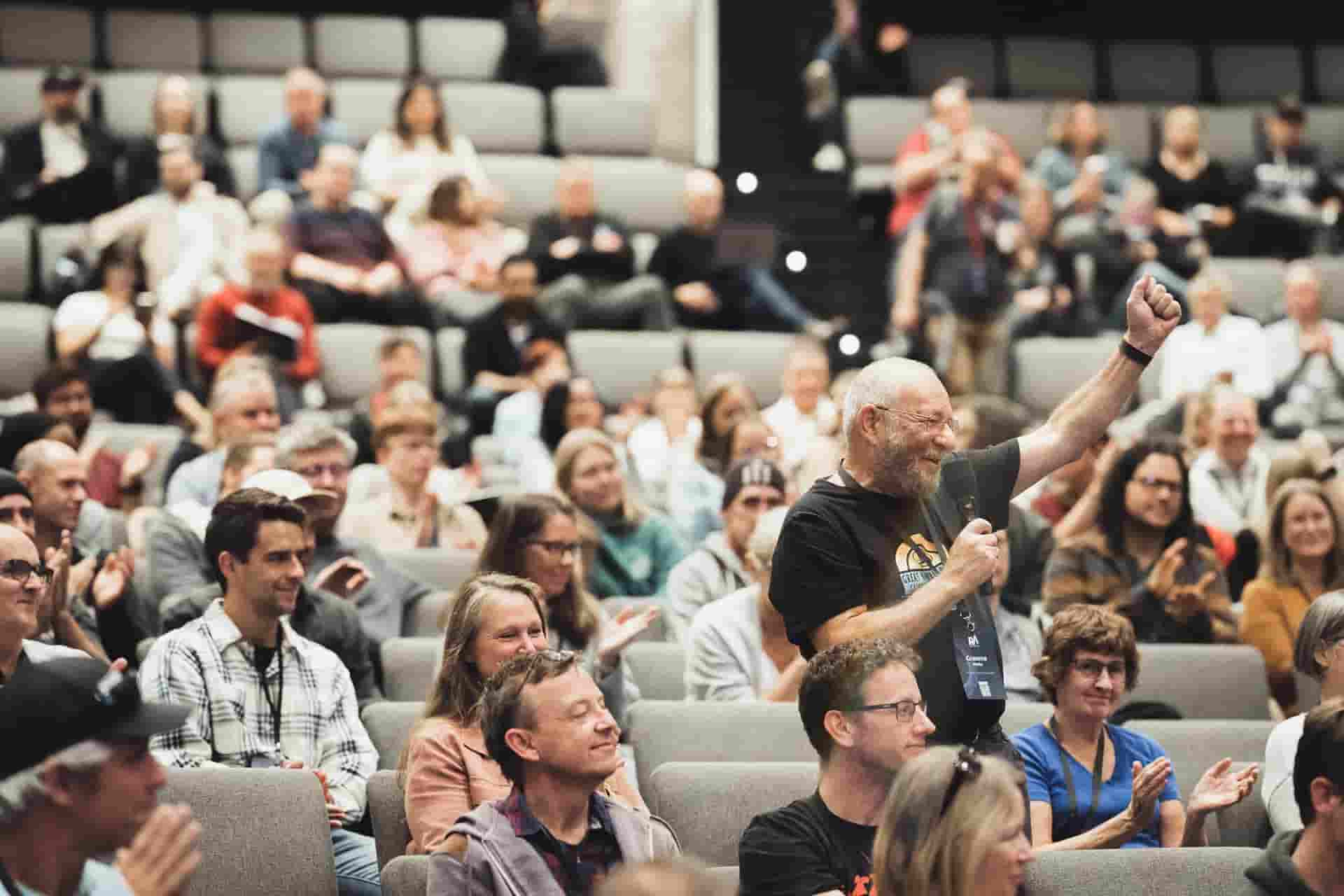
Scott Curtis and Greg Lee discuss the development of effective leadership development systems through Hunter Bible Church, and how to apply them to even the smallest church context.

Transcript
This transcript has been generated, and can contain errors. Please refer to the original recording for the definitive language used.
Read transcript
[0:00]
All righty guys, welcome. Come grab a seat if you're here for this workshop. For the next hour and a half we've got a workshop looking at the very sexy topic of leadership development systems and I hope my goal is by the end of yeah you should leave Dan. My goal is by the end of the workshop you will find this very exciting thing to do. A little bit about myself. My name's Scott.
[0:33]
This is my family. Marin and Mackenzie are around at the conference these few days. It's taken at Mother's Day Mackenzie six month old on the weekends. She's still kind of in the pot plant phase of parenting which is really easy at the moment. I'm the ministry pastor at Hanna Bible Church up in Newcastle. We have a 40 kilo dog named Denzel after my favorite actor Denzel Washington. I grew up on the central coast in a little town called Water Nobby. That's Water Nobby. It made a current affair twice after
[1:10]
they found out it wasn't an indigenous name but it was actually named after me. I went to uni as a non-Christian. I studied physiotherapy and actually became a Christian through the ministry of Hanna Bible Church and I've been there ever since. We're partnering by partnering Greg has done a great job of his development systems and delegated this workshop predominantly to me. A little bit that you should share a fair bit last night. I'll share a bit more about him on his behalf. He's a father of four.
[1:44]
He's far too comfortable in budgie smugglers. He swims every most mornings. His whole wardrobe is actually sourced from op shops and he has this unusual hobby of trimming and collecting bonsais and he likes to dress up as he trims them apparently. He is a fantastic senior pastor to work under and I've been very blessed to be part of Hanna Bible Church and develop myself as part of all of the
[2:14]
pastors that are there. Today this workshop is mostly stolen from everything that I've observed them do as well as a bunch of reading. I think the one helpful thing that I've brought to the team is just bringing a bit more clarity into what they've been doing intuitively in developing leaders. So the workshop, what we'll do today, I'll tell you a little bit about Hanna Bible Church, just give you a bit of context. We're going to chat a little bit about some of the problems and challenges with leadership development. I want to give some principles and foundations and then we're
[2:49]
going to look at some systems to that. So that's how it's going to work. Happy for it to be interactive and but I will try and work through it so we can have about a half hour at the end of just bouncing around questions and trying to think through your particular ministry context. Now Hanna Bible Church, we have four congregations. We started our fourth congregation about seven or eight months ago down towards Lake Macquarie. I was brought on to the team as the focus pastor to help
[3:24]
set that up and I've just flicked forward heaps. We've got about a thousand people, just over a thousand people who would call HVC their church. In growth groups, that means we have about 650 years part of our members in growth groups. We have 70% of people in groups, formally in a ministry team. So that's about 460 people and we run the M model as a church and so our ministry teams work
[3:56]
heavily down through the M's and so in our magnification team which is kind of Sundays and musics. Their purpose is about helping the whole congregation bring glory to God. There's 133 people in that team. Mission has 50. Membership has 105. Maturity has 152. The ministry team which I've just kind of started has 12 but is building kids has about 100 people who serve in kids as well. Now we've we've believed heavily in the value of MTS as a church and its kingdom value as an
[4:31]
evangelism strategy to raise up and multiply gospel workers and so as a church we've trained 56 MTSs since 2000, 74% of which have gone into vocational ministry and so currently at church we have 9 MTS trainees that we're training at the moment. Now I want you guys just to chat to the person next to you and I want you to ask the person and throw this around for a couple of minutes. What are some of the the challenges or the struggles that we face in raising up leaders? So what are some of
[5:06]
the challenges or struggles that we may have in raising up leaders? Have a chat with the person next year and we'll bring it back in a couple of minutes. All right, he bring it back in. Just throw some around. What were some of the things you were discussing? What are some of the problems or challenges you might face or we face in raising up leaders? I will look at what's been from any SB very different backgrounds from church, Western. So ability to kind of contextualise for those
[5:42]
groups, things like that. Yeah. How do we assimilate them to becoming that? Yeah. No, it's good. Others? Business. Yeah. Time pool. Yeah, shifting demographics. That's hard. Yeah, I know it's that time thing. Why don't they just rock up and know what to do? It's frustrating.
[6:17]
I was at a conference just as a fly on the wall last year in Sydney in the Sydney context where the same question was thrown around. And the pastor's name three big things off the bat that were thrown around, these three big things for the first 10 minutes. They were generation Y are dumb. We have an idolatry of work basically because of Tim Keller's book, Every Good In Deva.
[6:49]
And the busyness of life has just, we're in a busy culture. Now what do you notice about all those three things? They're all nothing to do with me as a leader. And I want to suggest today that even if those external factors are true, it is still our responsibility to pass them through those external factors, as well as taking good hard look at ourselves in terms of how we are going in developing leaders and things like that. At the FIC conference, Hunter Boyle Church, part of FIC,
[7:25]
a guy called Tim Sims, who's done a lot of work with MTS and investing in leadership and thinking through that stuff, showed a stats on passes on some surveys that he'd done. I've got no idea about it, but the whole point that came out of these stats was that we're great as leaders as casting vision, but we're really poor at being able to execute strategy. And that is what we're looking at today, the leadership development systems. A few other challenges, I think, that we
[7:59]
face as passes internally. We feel too busy, so we're not prioritising or managing our time. Now I don't know if many of you have seen this kind of grid. I think this is a helpful tool on top of what Toby shared last night in analysing what we are doing with our time. But you've got on one axis up the top, you've got urgent and non-urgent, and then you have important things and non-important things. And as pastors, I think we're often in crisis mode, we've got a sermon prep or something's
[8:31]
happened, we've got a pastoral conversation to have, there's lots of things going on here, and then we get so tired that we have to just binge on Netflix or crush out on the couch or those kind of things to recharge. And we jump back in a quadrant one, we go, we go, we go, we go, we go. And I want to suggest that our leadership development systems and our systems as passes in general actually help us and our convictions, which they are driven from, help us move into this quadrant of the important non-urgent things, which is where we're doing our planning and our strategies
[9:06]
to try and move forward. So that's one of the things we feel a bit too busy, and our time management can get better. Another thing is I think we lack identifiable pathways. Now I'm going to talk about that a bit later, but we find the people who are eager, the humble and hungry guys, they're eager to get into ministry, but the ones who don't approach this or the ones who aren't super keen, we kind of don't know what to do with, or we might have a bunch of people who are keen to serve, but we don't really have a clear plan for what we're going to do with them or how we're
[9:38]
going to develop them. And we want to invest and equip people, but we don't exactly know, do we do that on a one to one basis, how do you kind of do that at a group level and those kind of things. And I think that comes back to a lack of a pathway. A lot of people would say, and Greg's encouraged me to say this one, that people will often say, our situation is unique. So it's really hard in our context to do this. I want to suggest that the systems that we're going to look at actually apply to all of our context. They'll look different, but the principles will still be
[10:11]
there and we can apply them to all of our situations. And we're not equipped at this. There's another problem where we are big on getting theologically equipped, which is good and important, but we're not so big on getting equipped in thinking through systems and strategies and those kind of things, which are really important. When we did this at staff meeting a couple of XGO, someone, I think this was really pointed, I didn't have it, but it's helpful to have, is what
[10:43]
are we modeling about leadership? So are we modeling that leadership is a privilege? That it is awesome, that is exciting to be serving God's people. Or are we busy, tired, grumpy in our own leadership? That's a good one to ask ourselves. And another one is that we can sometimes think that structure is the enemy and is against what we're trying to do spiritually. Now I think there is a warning that we can wrongly think, and when we talk about leadership development, we talk about the
[11:17]
pragmatics too much. My heart can get focused on the trellis, and it needs reminding to come back to the vine and to people and the proclamation of the word and prayer, but structure is still a helpful thing that builds out of those foundations. And so systems help us, be good stewards of God's plan, his mission to grow his kingdom. So let's look at some of the principles and foundations of leadership. The first one is character. So the character of a leader is of utmost importance.
[11:53]
We have a saying at church that characters should come before competency, and I think it's a really helpful thing that we want, when we're raising up people into leadership, we want people who are godly examples of Jesus that they love him to bits, they're keen to pray, they dig into their word, and their lives reflect who he is. And this pushes against sometimes a way we can view ministry of just filling gaps, or we need a job done, so we'll throw anyone in there. We need to think long and hard about the people we put into different positions based on their character.
[12:28]
Another principle that drives us is the conviction. So without this, leadership development won't be motivating. It won't be something that drives us. And so convictions are passionate and the truth is that fuel us to develop leaders. Now I think Greg shared last night about his conviction driven. I think that he has done a great job of our staff in really driving home some of our convictions. So when I started MTS, I came on a staff team and the first thing he takes his MTS
[12:58]
is through is theological convictions about ministry. So he wants us to get before we get into the pragmatics and systems. That ministry is about people, proclamation and prayer. That's the heart of ministry. It's simple. And that's the first thing that we need to keep first. Jesus is the center of all of that. And then he goes through five other big theological convictions. That everything is about God's glory. That he is sovereign and so we pray to him. And we rely on him in prayer for everything we do. He is relational. And so to discipleship, leadership development happens
[13:32]
in the context of those relationships. That God transforms people by his word. He's a speaking God. And so that's got about the foundation of anything that we're doing. And that he is growing his kingdom. And so we should pray. Big prayers expecting God to answer them because he is saving souls and he's doing that for his glory. And those theological convictions then drive into different ministry convictions and habits in ministry in terms of prayer, building teams,
[14:03]
a bunch of different stuff that we then work through. And what's happened on a staff team is that out of that conviction then grows a culture of leadership development. That's kind of the pattern, behavior of sayings and things like that that happen, a culture on our team. And so our team will often quote things like character over competency. We've got to keep working on the ministry and trying to work out how you can work less in the ministry. So continuing to raise people
[14:33]
up. We're trying to, one of the things we'll often say is how can we keep giving over people more and more responsibility? How can we give over some of the control and take risks in some people? One of the things we say is keep trying to do yourself out of a job. So continually raising people up, let young eagles fly still with character over competency though. One of the other things that I'm trying to bring in is let people say no. I got this out of Craig Hamilton's book, Wisdom and
[15:07]
Leadership. And I think one of the things we often do, particularly in a larger church, is we often assume people are in a situation where they can't do a ministry or they can't do this particular ministry. And so we never actually even asked the question and invite them into ministry. And delegate what you can do to train people up in the things that you are doing. Greg keeps encouraging us to invest in our teams and our leaders. And we're always with an M
[15:37]
model. I don't know if you know much about the M models. There's a risk of siloing in your different ministry teams. And so one of the cultural convictions that Greg keeps pushing us is that we've got to put the big team first. And that's really important to leadership development. Because if I, it means I'm not going to necessarily hold on to my person in my team for the sake of God's kingdom. And so leadership development has become part of the culture of our team. And in that trip down to our ministry teams in terms of the way we communicate about leadership development.
[16:11]
And raising people up. And that trip down into the church and into our preaching, into our growth group material, all those kinds of things. So big principles, character first, conviction, culture. Eric Goyer, who's a guy in America with life-weight church resources, says if you have systems, the things we're about to look at, but you lack any conviction. You're going to have a church that's full of apathy. So if you have the systems but you don't have conviction, you're going to have a church that's full of apathy. Because I don't have that drive.
[16:44]
If you have the systems without that culture happening, you're going to have a church of exhaustion and you're going to feel exhausted. And if you have conviction, but you don't have the systems in place, then you're going to have frustration. If you don't have a clear plan of how to get people from A to B. And then I think that leads us to some shifts in leadership development that I've kind of noticed around our networks a little bit. And these kind of lead into the way
[17:15]
we go about developing our systems. So leadership development is not only one to one ministry, but we need to think about it in the complexity of multi-layers of our churches on Sunday, of our teams, our tasks in ministry, in our growth groups, as well as one to one ministry. And so I think we need to make a shift in seeing there's a complexity of discipleship and leadership development within multiple layers. Another thing that we can fall in the trap of doing is seeing ministry as rosters, events and tasks and jobs. And we need to make a shift from seeing
[17:55]
how ministry should work as an ongoing pathway, as part of our discipleship. And we work that out through teams, that pathway, which we'll talk about in a bit. And that shapes the way ministry becomes. So it's less about being a transactional ministry where they're just there to do a job, to fill a spot, and it becomes transformational. So let me illustrate this. A transactional ministry, I'm going to use the same team, a welcome team. This is what a transactional welcome team looks like.
[18:28]
It assumes that all that a discipleship has been happening through growth groups and Sunday gatherings, and maybe in a couple of one to ones here and there. They rock up an hour early for church for setup and welcoming. And they've actually been, it's their growth group really, it's just they've been rusted on for that Sunday. They rock up about an hour earlier, they set up the room, they fold some outlines, they check the toilets are clean, they set up the tea and coffee, bring the supper out, and then they move to their posts and smile as people come in. That's a
[18:59]
transactional kind of view of ministry. Let me give you a picture of what we try and do with our welcome team in a transformational way. On the Sunday they rock up an hour earlier. A growth group is rusted on, but in coordination with the team that is always there, because we want to, our growth groups come through, because we want to communicate that everyone's job is welcoming, not just the welcome teams. The team, in particular, Mingle for a bit, talk about what's been happening in their lives. One of the team might share of how something hard's been going on at work.
[19:31]
The leader then shares a devotional from God's word that he's taken the time to prepare. He teaches it with insight and applies it to his team and what it means for them. Then he gives them the big picture of vision again of why they are there that Sunday. They are there as part of a whole body of Christ, serving the whole body of Christ in what they're doing, and they're there to help people get connected with God's family, get connected with Jesus with his gospel, and hopefully,
[20:02]
through their ministry, it will be effective in saving souls and bringing Jesus glory. He gives that big picture of the vision. He reminds the team of the privilege it is to serve God and to serve his team. Then he chuts about the new people that they know about, where there are, how they've been going and follow up, maybe some things that we can help them or ways that we can love them more. There's a process of training behind the scenes that's been ongoing every term,
[20:34]
where they're thinking through things like how it feels to be a new person at church. You know, we don't only want to welcome them, but we want to love them. They've been trained not to assume the new person is a Christian, which we can fall in the habit of doing. Here's how a conversation might look like with them. Let's do a bit of role-playing. Because they've caught the vision, where our prayer is they're not just going to stop and say, hey, this is how you get connected with church. You go to this thing and then they'll tell you about it. It's great. We hope that they'll go the extra mile and actually connect them with people, follow them up
[21:08]
outside of Sunday and things like that. Now, it doesn't always happen that way, but that's our goal. That's what we're trying to accomplish. Then they get on with the ministry of welcoming. Then that leader strategically places himself next to the person who shared about the tough stuff that's been going on at work. In the process of welcoming, he actually has a pastoral conversation with that person to love them. He's thinking of his team as well as their role. Then they welcome and hopefully hopefully do whatever it takes to make people feel welcomed,
[21:39]
encouraged and connected to church. Then after the service, the team gathers again. They debrief on how they've gone. Then they'll pray. That's a picture of a transformational team for welcoming. Very different to a transactional view of ministry. It's just a job you're there to do. We want to build discipleship and all those kind of things into our teams. Let me get onto some of the systems then. If it clicks, there we go. Well, hey.
[22:13]
You get to see ahead of where we're going. Structuring for Keen and grow. Four big systems that we're just going to talk about a few things through it. Structuring for Keen and growth. Identifying leaders. We'll look at a leadership pathway that we use. Then equipping and investing leaders. I might give you this Greg to. Yeah. It should have the floor up for those four things.
[22:43]
Structuring for Keen and growth. Identifying leaders. A leadership pathway. An equip and invest. You might have to sit behind the computer or get, I don't know. All right. Structuring for Keen and growth. Now this is a strategic focus and it's kind of a pathway of how you go about strategic thinking. You've got to assess now where we're at now. Now you can do this for your whole church. We do that as a whole church but you can do that
[23:14]
within ministry teams as well. You can do this at an individual level as well, one to one, this whole process. You assess where the situation is at now. You have the vision and the future of where you want to go. Then you've got to work out, make a plan and execute how you're going to do that. As I said before, I think the thing that we're strong on is the future, the vision of where we want to go. Sometimes we don't like to define where we are now or where our reality is because it can be a bit discouraging or where we don't want to look at exactly assess where
[23:51]
things are at the moment. That can be a hard thing to do. It's really important to us in our humility that we know we need to have an accurate assessment of where the flock is at so that we can do a better job of pastoring them, even if that's the hard inward look of what we're not doing well. That's how we've got to grow in that in passes and sort of being proud about that. You cast the vision, the future, thinking through, I'm going to give you a picture of what this looks like practically. Make a plan and then you execute it and then you've got to reassess it. So that's the bottom one, reassessment. They're the kind of steps.
[24:25]
Now let me give you an example of this in our maturity. How are these looks like for our maturity pastor, Richard Sweatman? We make an assessment of our adults in growth groups. We have 600 people in growth groups. We currently have 120 growth group leaders for that 600. Now we forecast. We was challenged after yesterday that we need to actually forecast 10 years ahead. We've kind of forecast through I know sweaters does three years one year. Forecast ahead and we have a rough growth rate. We know we're growing at 10% roughly.
[25:00]
That's kind of where we've been tracking. Then we set goals that in three years. We know if we keep growing at that rate, then we need a minimum of 160 leaders. That's a gap to the mass. That's a gap of 40 leaders. We need to move into growth group leading over the next 40 years. But we want to build extra margin into that. We're not just wanting to survive a growth rate. We're actually wanting to exceed it because we're not just thinking about growing the church. We're thinking about the kingdom. We're thinking about church planning. We're thinking about congregation
[25:33]
planning. All those kind of things so that we're not just looking after us, but that we can send people as well. That means we want to go above those figures. We set a figure of trying to have 40 for 2018. In this year, we want to raise up 40 growth group leaders. That's we go over to building extra margin into that. Then, Sweater sits down and goes, how are we going to do this? What's my plan? I'm not just going to pray and hope that it happens. We do do that. That's more
[26:08]
important. We want to have a plan in pencil as well. He develops a thing called our leaders in training program. They meet once a term where he gives the big five things that he wants his growth groups leaders to get. I'm not going to remember all five. You might have to help me here, Greg, but character, knowledge of God, team leadership, two more really important things for our growth group leaders. Jeff, where is Jeff here? You don't know what he's, you've got your
[26:43]
own though? Yeah, good. He takes them through that, but not only is it just these ones the term training nights. He then has coaches for his leaders in training that then do a series of one to one things to develop them. He then makes their growth group leaders of the growth group that they're involved aware of it. They're developing them as well. Currently, we know that we've got 60 people in three of our congregations in that leaders in training thing. We're after 40.
[27:16]
If we end up with that 60, it means we'll have some extra growth group leaders, all will move them into other ministries for that year. That's how we're going to execute that plan under God. Then we're thinking, okay, what do I need to do to equip them that year, which was those five things, and then you've got to execute it. You've got to go ahead and carry that out through a team, because he can't do that himself. Then he reassesses each year how are we going at doing that? That's, I'll talk about that in a second. I think that process is something you can do for your
[27:50]
whole church. I think that process is something you can do for ministry teams and something you can do one to one with someone, that whole kind of process. I ask questions as you're going through that and retroengineering. If so, thinking things like, if that's how big the ministry has to be, that's how big church is going to be. What are things that are going to need to change in the way that we're doing things now? That's a really hard question to answer, I think. That's where we
[28:21]
need things like this, or reading podcasts to help us think ahead and work out what are the future barriers that we're going to have down the track that's going to require me to change as a leader and also our systems to potentially change in the way we're doing things. Then the reassessment requires us to measure goals and outputs. Now we have spiritual goals. We're not just focused on the numbers, but the spiritual goals are hard for us to measure, but we need to do that through
[28:52]
cultural things and listening to what people are saying. But we want to create a series of feedback loops that help us keep assessing what we're doing. The metrics and numbers are important to that. Then what the M-passes of we encourage us all to do as part of this reassessment thing is we present our plans at the start of every year to the whole staff team. Now one of the big reasons we do that is because we have MTS, a lot of MTSs come onto our staff team and we want them to
[29:23]
catch the whole vision of what all the M's are doing at church and what the whole big team's doing. But I think the greater value of us having to assess where we're at each year and carry out this plan is that it actually forces us to carve out the time. It's actually think about this and then it increases our ownership. I'll actually, okay, this is what we've got to do and it helps Greg hold us accountable to our plan. Then we ask hard questions when things don't
[29:55]
go the way we plan. Why is that? Greg doesn't do that in a way that you're an idiot, why didn't this happen? He does that in an encouraging way to help us then work out how we can get better in our strategy and things like that. Cool. Next one, identifying leaders. Now if you've done what sweaters has done and you know you're planning for 40 growth group leaders this year, all of a sudden what happens to you internally is that this intuitive feeling
[30:28]
and conviction of us wanting to make disciples, he then it just increases his antennas even further as he's trying to look for leaders. Now he can't do that with 600 adults that are already in growth group leaders at church and so then those antennas extend out to the staff team and going, who should we invite to these leaders in training program? Who are the people and so questions like who is humble and hungry at the moment? Who have you been encouraged by? Who's got the godly character? Who's been faithful and they're available and they're teachable so that we can
[31:00]
bring them into the program? And we actually do this at another layer for kind of higher level leadership. We make time to do this as a staff team as well. So explain that. So we kind of four layers of identifying leaders. We do it individually. So I'm constantly in my DNA is going on how can we move that person up, give them more responsibility and as I have a chat to someone I go, that's really encouraging. Have you thought about doing MTS and they'll just plant that seed and I'll come back to it a little bit later? So we do that intuitively and individually.
[31:32]
But then we also try and do it within our ministry teams. So thinking who are the people I've got in front of me that I'm trying to lead and develop, particularly for this team? And how can I give that person more responsibility and who can I raise up more? We then have monthly congregation meetings where we have a focus pastor who will say okay of this congregation who's really stood out to you guys lately? Who are we call them BWW, blocs and
[32:03]
babes worth watching? Who are the people that we can you can take that please? Who are these guys and girls that we want to keep developing or encourage or give more responsibility to? Or why don't we move them out of that ministry and I think there might be more gifted in there? So we'll do that once or twice a year within those monthly congregation meetings. And then our whole staff meeting is given to two of the higher layers of leadership and that's identifying our MTSs.
[32:36]
So who we want to encourage in TMS and also our M champions which are ministry leaders which I'll talk about in a bit. And those conversations and staff meeting again will happen probably once a term, each will flag it. Sometimes it's a whole hour, sometimes it's just you know 15, 20 minutes. And then once we identify those people the next step we always have to take is then have action steps and who is responsible for encouraging this person to take the step or the pathway we want
[33:09]
them to take. So we're identifying leaders consistently. Let me just talk about how we do that with MTS in particularly because I think it is a strategy that we see churches not always do a great job of and we need to get better at it as well. But we'll somewhat moving someone towards MTS takes a series some some people can take years. And so we use MTS mission-minded as a key strategy and invitation for moving a broad range of people who we think should consider it and
[33:45]
sometimes maybe people who are not sure about will still invite to that because we want them to either way to catch the vision of the kingdom. It's not just HBC that we want to be developing leaders and raising people up for gospel ministry. We have those we start flagging those conversations now and MTS mission-minded is in October. So we're identifying we have a Google drive and we list out the you know over a hundred people at church who we want to invite to that and then
[34:17]
someone's name is put next to them who's responsible for inviting them and encouraging them to go along. Then as we start to kind of you know identify people who we we do want to move towards MTS. Again about this time of the year we start having those conversations with them encouraging them to apply and now that that's a process of you know a few years to move to the but now we have I think we've got 35 people in our Google drive doc at the moment who
[34:48]
different staff members are responsible for for identifying them and inviting them to apply for MTS. Now our goal is that 10 people will have the interview and that about well our goal is to have 10 people apply and we'll do it. The thing that's limited us unfortunately in the last few years is finances. So we've had to say no to people doing MTS because of money at church. But that's kind of that's and I think that's something we as a network need to jump on board whether
[35:21]
you're a small church whether you're just planting or whether you're a large church you need to create a system for how you're identifying leaders not just through MTS though but through other pathways in your church as well. Now let me talk about this leadership pathway a little bit. As you grow as a church one of the things you need to think through is how you call people in a ministry more formally so you can no longer rely on small church kind of just you know you bump
[35:53]
up to someone organically and invite them into ministry and those kind of things you have to develop a system for or you don't have to but it's good to develop a system to move people into ministry teams and so we kind of have two ways that people are moved into ministry teams at church. Most of the way and previously we worked on a kind of free agent philosophy so that if you were running a ministry team you're and you're just wanting to survive then you're just calling
[36:23]
people in a ministry and you're recruiting and doing those things and that's important to have it's good to have because it means the DNA of our ministry teams is calling people into ministry discipleship happens through relationships and so if I get along side someone I start to develop a good relationship with them then I would love them to come into my team so we can continue to do ministry together but the problem is as you grow people a groupology kind of thing happens
[36:55]
where people are less likely to approach you to serve they it's harder to see the needs of the church they don't know where to serve and now I reckon sometimes we automatically assume that it's their sin they're not eager they're not keen but it's actually just more a growth dynamic kind of thing that happens and we just need to have a clear pathway for them and have an intentional conversation in terms of calling them into ministry and so we've developed part of my role as a ministry pastor is a formal process that out of our membership series within a month we have a team
[37:30]
in each congregation who has ministry conversations that's their big ministry role is me equipping them and what that looks like and inviting people to join different ministries based on their character based on you know their life stage and different capacities and all their gifts and all those kind of things and we try and then move them towards a ministry team we never promise the ministry they're going to go in we leave that up to the ministry team we go okay we think this might be worth a trial we'll contact the person in that ministry team and then it's their job to be responsible
[38:05]
for calling them into their ministry team and assessing them further and and and then equipping them from there so and we we try and do both so I don't want the problem is if we move to just that formal thing then the whole church becomes reliant on my team and I don't want all that responsibility but I become a bottleneck and I become ineffective and we move ministry out of that disciple ship relational kind of thing too much and so I want both we we aim for both to be working
[38:39]
together and that creates messiness and attention that we just have to manage and and keep communicating about so I think you need to think of a formal process and how you're going to do that you may not have as the church grows too big you may not have those kind of resources to have ministry connection teams in each congregation but you still need to think of how you're going to formally invite people into ministry as your church grows now can you bring the dots up Greg this is um so this
[39:10]
is one of the things we use to help show people what ministries are at church we run them kind of through their M's that we we run at church and we have you can see within this kind of our layers that we some of our layers and how we think about ministry um this is really helpful it shows people where there's lots going on at church I think one of the things we've identified though is that one of its weaknesses that there is no conviction it's not tied to any vision it's
[39:40]
really just an org chart um that looks pretty um and it's helpful um but we've now developed on top of this the next slide um you know a picture of so that says serving Jesus um together up the top and we have our logo is a lighthouse and so as we sit down and have a ministry conversation with people we don't want to say come and join the welcome team you know it's to an hour or three out you know this is the kind of time commitments this is what it looks like we want to start with the
[40:14]
why the conviction um God's word in terms of why we want to encourage everyone to come in a ministry and then we'll say if you're new with us at church you've just come through our connect series we'd love for you to start serving kind of in these these top layers so we can continue to get to know you and we'll say here's kind of what it looks like but we're always wanting to encourage to develop you and equip you and we want to keep giving you more responsibility um as we're able to so we can rate you know raise raise more people up um and so we we have a I've broken down I think
[40:50]
I've got a picture of it at the end which we don't need to show now but I've broken down what that ministry conversation could look like the ideal and we've equipped staff equipped our ministry connection team with how that goes about um another thing in our leadership pathway before we get on to the actual pathway itself is that our database this is a system um we need to we need to survive using the database um because church is at such a level now where I can't know everyone
[41:20]
at church I can't know what they're doing I can't I can't even remember everyone's name anymore which pains me a little bit but that's okay we don't have to we're um we're not God um and so the database we use it to identify people who aren't in a ministry team so I'm consistently running reports of working out okay who are the people who we haven't been inviting into teams who are the people we need to have conversations with um and it's really helpful because when someone moves into a ministry team it helps us as a staff and ministry team love them
[41:56]
by not having multiple conversations with them about why aren't they serving or can they serve more and things like that so it helps us identify then when they are in a team as well the other thing the database does is help us run numbers and give us a helicopter view over church um and kind of over each congregation um where we can see our certain ministry team struggling and then we can ask questions into that or the certain patterns forming um so one of the patterns at the moment in our PM congregation is um that young moms um disproportionately compared to our other
[42:34]
services um aren't in a formal ministry team as much um now that doesn't that not necessarily mean they should be but it just means that's identifying something that we need to think through and whether we we need to have more ministries that help them kind of engage or ways that we can you know work work around that or is there a senior issue happening there or you know all those kind of questions um I then am able to run reports for each ministry team um so we'll run a report
[43:07]
and say okay there's three things that I want you to know ministry team later um here's who's in your team is this accurate um good how you're going at developing and equipping them um and moving and handing over responsibility and doing all those things who are the we have a potential member thing so I flagged on I want to invite that person into my ministry team how have you gone and inviting them into your ministry team um get on to that or okay they're back to us then um because they've said no uh and then hey here is the people at church who aren't formally serving
[43:41]
is there anyone here that you think would be great to come into ministry team that you know or you you know you're excited by them coming into ministry can you invite them or we can have the conversation that kind of thing that's database and then we have um this is a pathway that we've just kind of started um getting clarity on now there's something we've done probably intuitively and now we're just starting to get clarity so next that's the reports next that's the one
[44:14]
um so this is how we think about our kind of leadership pathway at church um now a lot of this clarity has come um this stolen um so EV have something similar to this um there's a life way resource that Geneva push have that um I'm pretty sure it's it's leadership development pipeline that's called um and this has just helped us really clarify about how we were kind of already running our teams but the clarification you'll I'll talk about in a second how it's
[44:46]
actually really helped so the first lay you've got a team member who kind of is your worker um and that's where we want most people to start serving at church and their role is really to love people as they serve as part of a team um and so examples of that would be a welcome welcome someone who does the computer week in week out a sandy admin you know training levels for kids church or for our evangelistic series those kind of things um they start off there and I want to
[45:17]
stay safe say from the get go that people um at that team member worker level they can stay there okay um I think we need people who can faithfully stay there and those kind of things but we're still because leadership and certain competencies are a gift um but we're still looking for those guys to drag and give more responsibility to um the next layer is a people leader now their role is to love and have a shepherding responsibility over someone um so we have welcome passes um who
[45:50]
basically pasturing people into building relationships and connecting with church um the welcome team leader who looks over looks after the the welcome team um a life table leader or a growth group leader are kind of in that in that category where their role is to love and shepherd um people underneath them then we have a team leader um and their role is to love and shepherd people but starting to do that through systems and that's kind of really a leader of
[46:21]
leader level um so our growth group leaders will have someone which we call an L2 who meets with them to coach them and pass to them um we have things like a whole life team leader so the person who's responsible for looking after our life series our evangelistic series um and their role is to do a whole bunch of complex complex things and delegation kind of things so they need to be able to work through systems to be able to hand over responsibility through their teams that's kind
[46:53]
of the team leader also a love and shepherd people through systems and we have a ministry leader who is to love and shepherd people through purposes um and that's where our staff would sit but we also want to raise up laity and lay members into those roles who we call M champions and so their role is within a congregation um to work out um how we can keep helping that congregation glorify God if it's magnification or encourage us to be seeing ourselves as saved
[47:25]
and sent if it's mission and so they're championing that purpose they're really good at we want them to be getting the vision and communicating the vision um and then they lead down through those other other systems and teams um and so it's some of our congregations that would be a staff um but now we're at a stage with four congregations where we really need to keep raising lay people up into those roles so that the staff can kind of sit over the top even more but the
[47:56]
staff will kind of still be defined in that ministry leader role just over the whole of church um now before we clarified this one of the problems that we were having um or not a maybe attention not a problem um was that you know our growth group was such a growth group leaders was such a thirsty um ministry and we need to keep kind of moving people into their and so people would just feel like Richard Sweatman and our Trudy pastor you know they get angry and not not fully like kind of Joe Kangry but he just come and plundered everyone towards the end of the year
[48:30]
and we kind of have to restart our teams and things like that and to a degree that still we still want that to happen um but then people would kind of stall as growth group leaders um because it was such an important ministry to our church it still is but then we weren't really clear on okay what once someone's a growth group leader like that they kind of went there and just sat there as growth group leaders this now helps us the eye okay we can now move people to growth group
[49:00]
leaders we still want to keep feeding um growth group leaders to church but they may not go to maturity they might stay within a team or go to another team as we hand over leadership responsibilities or okay really we really need this key kind of person and I think that growth group leader is fantastic to be a team leader so now we're tapping sweaters on the shoulder now saying actually can I take him out of your growth group leading or her to move into this role and that's that's
[49:33]
really helped us as a church get clarity over that and that means it makes sweaters job but even harder which is good for him because he's so good at it um and he makes us feel bad um so now we get to strip him a little bit get a bit of payback but then actually the pressure comes back to me as a ministry pastor in ensuring that we're feeding people and and calling people into ministry um the other thing that this pathway has really helped us do is work out what are those roles
[50:04]
within each layer what are what are what are kind of similarities across each of the ministry teams and that kind of helps us get clarity on the ministry role descriptions that we want people to be doing within each kind of thing um and one of our pastors who's probably ahead of the game compared to the other guys at the moment is our kids pastor who's developed a handbook for serving in kids in ministry our few of our pastors have this written down but they just haven't had been as clear in presenting it to their team like um the kids pastor has horse um and within
[50:40]
this you'll see ministry role descriptions he starts with the purpose and the vision of why kids ministry is so fantastic and why it exists he gives people a minimum time commitment to it but he wants to show them how that they can grow in their responsibilities and ways that we can keep equipping and training them and those kind of things and so he has well-defined kind of roles within his team that it brings a lot of clarity um and actually helps us in setting clear expectations and raising people up in a different ministries yeah
[51:17]
yeah yeah yeah um so can you ask Christian again sorry yeah yeah oh so one we're not an anti-one one to one yeah yeah no I understand that but I guess yeah yeah yeah okay so our growth group leaders are in the people leader category
[51:53]
um because they're responsibility for um so you can another way you can break up these categories and it's probably more helpful language and maybe we'll change it but um you got your work or your team member a leader a leader um so leading others leader of leaders and then ministry leaders leading ministries um and so our growth group leaders are leaders but we have L2s that are designated to do one-to-one ministry as team their team leaders um who will meet up with their growth group
[52:26]
leaders to coach and train them on top of though um we do growth group leader training once a term um with a whole maturity team gather um for training um and sweaters who as our maturity pastor with some of his ministry leaders so he has people kind of in each congregation that are ministry leaders will then work on training um so my wife's and L2 last Thursday she went to an L2 training night um and those kind of things does that help clarify question
[53:02]
yeah yeah yeah sweaters that have a better handle on exactly but they're not it's not limited to the one-to-one thing they're they're thinking about um they do the leaders in training stuff as well so they do some of raising growth group leaders up as well um and then they're also thinking about kind of more um assessment and critique of the culture of maturity at church how can we do a better job of that purpose so they're they're shifting from just thinking about um the ministry's
[53:36]
specific tasks and things like that and starting to think strategic think about the purposes the vision and so they're making that shift in that kind of level if that makes sense but in terms of hands-on their minimum kind of level of ministry it is just the one-to-one with growth group leaders but there's expansion in that role if that makes sense yep um great question let me let me give you a few examples of people um that will help us get a handle on this so just um just flick locky up
[54:09]
not too long because he's good looking um says locklin he's a good egg he joined church with us in 2014 he started as a team member in out one of our kids ministries called little buds um he would then moved horizontally as well as doing little buds to doing a life trainee table leader as a team member after he was equipped and trained he then moved to being a people leader at the life series so there's a life table leader sweaters came and approached um the ministry leader to say
[54:41]
can I take him for a growth group leading the ministry leader saw potential in him and said no I want to keep him here I've got plans for him I want to develop him he stayed in the life um team and now he runs the life series as a team leader and now we're going you should do MTS um you should become a ministry leader and so he's thinking about he's on our list for this year that we're hoping and praying might move towards doing MTS uh next photo this is um because some people then go you're
[55:13]
on the uni church kind of doorstep you know you've got lots of people this is John and our star they're 40 and 36 uh John John church 2013 started as a sound team member then he was a museo so still team member um and then he actually jumped to being a team leader um as an MC uh he again was approached for growth group leading which would have actually meant he went down um to being a people leader and the mag pass said no I've got plans for him and now we're moving him either into
[55:46]
doing for him he's got tricky life circumstances um we're thinking about whether MTS might be something worthwhile for him or whether we make him a mag champion he decides to give us a few days a week to church as a volunteer um so we're thinking through that our his wife similar kind of thing her passions kind of in evangelism so she's kind of moved into mission stuff she was they've got three kids their eldest is going to school in 2019 uh the younger sorry well so then all
[56:18]
kids have been school 29 years she's working two days a week as an OT they could have done more but she's decided I'm only going to do two days so I can give church these many days and we're great grasping on that and we're probably going to make her a mission champion at one of our congregations alongside another guy and then you got guys like Robin Jill Bennett uh so they're Jill would Jill would um kill me if I told you her age but Rob 67 um they've been growth group leading for ages so that people lead a level um and now I don't I'm not sure that they have the
[56:53]
the gifts to do the kind of the systems and the purposes that kind of thing they're huge encouragement though and so they've moved horizontally to doing life table leading as well so they're they're basically they see themselves in full-time ministry now in retirement so they're like what what else can we do um so we move them to life table leading um and now they're kind of in a team leader position where they run help run follow up um through our Christianity Explore that we do after life um we don't we used to call it after life and then um uh and they're involved in training
[57:30]
people in how to run Christianity Explore as well um so there's some examples of people of how we're trying to intentionally move them and increase their responsibility just go back to the layers again I'll just make one point um so you got your team member one of the big things you need to move from being a team member to a people leader um is character so you're moving into leadership so one Timothy three tightest one those kind of things um but it's also competency
[58:00]
and then we want character to be found at work we're always developing everyone's character we want character to be foundational from then on but the big things that move kind of people in a more responsibility than their gifts as leaders that's how we kind of view it if that makes sense um oh what's 12 o'clock so we've got about half an hour I can give you an example of how that looks like how I think through that in the ministry and just to give more time if you want but you can come back and ask for that um let me go into the last thing which is equipping others and
[58:35]
investing um now this pathway actually helps us in think through what we need to be equipping people so as I said the kind of four layers that we use um we're thinking of that team member oil how do we encourage them to lead themselves and what do we need to be growing them in in those kind of things to lead themselves they're prayer they're Bible reading their character growing in their knowledge of God evangelism all those kind of things and again I want to reiterate it's great if people can stay there um and then um in the people leader role we want to equip them to lead others
[59:10]
so we want to think through okay to lead others to be a growth group leader to be a welcome pastor what are then their skills and gifts um that we want to develop them as well as continuing to develop their character then you move to the team leader role and now they're lead leading leaders what do we need to equip them with then to carry out those kind of things so they've got to start communicating vision thinking about systems handing over responsibility delegation those kind of things and then you move up to the ministry leader they're leading ministries what do we need to
[59:40]
equip them with so we really need them to catch the vision of our church to be able to contextualise the vision to their congregations to be strategic thinkers developing and implementing systems in being innovative and creative all those kind of things are things we want to kind of build into their culture and their DNA's leaders as well as all the other stuff that's come underneath for them to move into that level um how do we go about then the equipping um but a few things that we do so our ministry teams then kind of think about their directs um so who are if I'm a ministry leader
[1:00:17]
who are my direct team leaders that I do one to one with to try and help equip those guys but then as a ministry team we want to equip it as a whole ministry team in developing them and then I've come in as the ministry pastor and gone okay this layer we're going to gather all the people all the M champions all the ministry leaders and we're going to do once a term a building leaders thing where Greg is going to come and we want to invest in these guys and Greg is our senior pastor coming
[1:00:48]
communicates that he's going to preach and convict them of the importance of growing God's kingdom an hour role that God uses us um our sinful people to do that um and then I'm going to come and we're going to do competency and so that's two hours um EV I know we're developing online video casts and podcasts to help kind of facilitate that as well so we're thinking okay um if they can't make that once a term or we want to do more equipping how can we do that through those
[1:01:20]
kind of systems as well um and then basically all of those complexities can be brought down to how are we identifying people who are godly in character who we can just keep handing over responsibility to and growing um in their leadership gifts as well to multiply others and so we want in their DNA um all throughout that kind of layer um of a disciple making culture of handing over responsibility um and equipping others um now I think that's something we struggle
[1:01:55]
with in knowing exactly how to do so I've just got one kind of thing for us as a system that we use as a staff team individually to help do that um yep that's it um and this basically um so this is how we help help us get clarity on how we hand over responsibilities so on the bottom axis you've got a lead at a site or the um so that's a person kind of above
[1:02:26]
them decides who's coaching them or who's responsible for them or they decide the member decides and then on the horizontal axis you have not much discussion or kind of reflection or training input um and then up the top you have lots of those things and so in the bottom corner you've got S1 so that's me going okay did look this is a process we have and it's okay to have S1 things this is a process that we have um that we just we need to do it this way whatever it is um and
[1:02:59]
so this is exactly how you have to do it go and do that um that's an S1 kind of thing and that that doesn't really give people the opportunity to grow in their responsibility or to you know to be innovative or those kind of things but there are some non-negotiables in church where we would want to do that um and then you move to kind of S what we call S2 and that's where we have lots of discussion lots of training lots of thinking but then um me as the leader I will still decide
[1:03:32]
how that's going to be worked out um and I'll give it I'll give her some clear explanations of this in a second with an example um S3 um is then we still have lots of input and investing and equipping and discussion about this um but then you decide it's up to you and then S4 is okay go with it you know touch base a little bit but just roll with it um so an example of this is we've got a weekend away for our lake mac congregation coming up um and so I gather four members of our
[1:04:06]
lake mac congregation to help me run that weekend away um and I get them to be responsible for one of the m's at the weekend so we've got someone who's doing magnification which means under him will come the music that we're doing at the weekend you know thinking through the preaching the m saying that kind of thing um we've got guy doing mission it's not heaps of stuff on the weekend that he'll have to do but he's thinking through into the weekend and out of the weekend how can we leverage this to encourage us in being evangelistic uh guy who's running membership um so he's
[1:04:41]
thinking his purpose is to think through how can we uh love people be belonging and fellowship those kind of things and so some of his tasks will be like a welcome team um organising where people are staying uh those kind of things um and then a guy for maturity as well um who's thinking through so particularly a seminar the bookstore those kind of things on how we can grow as well as having input into the um sermon or the the series um and then I gather them right and
[1:05:13]
I give them a vision this is why we're doing this weekend um we we want this weekend to help people drag Jesus back to the center of their lives that's our vision for the weekend um how are we going into accomplish that so that's a why how are we going to accomplish that this is after of we've read the Bible um and unpack that transformationally hopefully through the spirit um how are we going to do that big Bible talks um that help us realise that life is not about us it's about God um now
[1:05:45]
that that's an s1 kind of thing that I've already decided is Greg as a senior pastor needs to do for that congregation at the moment um and then he decides I'm going to do the session of Christ uh the doctrine of the session five big talks on that um other things how the meetings going to work up who we're going to have to the bend the songs that we're going to play all those things I delegate to responsibility of the mag champion for that weekend and I say look who mc's that's an s2 thing I want your input on that um but ultimately we're going to decide who mc's that weekend but
[1:06:20]
I want you to think through what would be helpful for the congregation those kind of things um the band the songs that kind of thing I've got no clue about music that's s4 you roll with it I trust you go for it um other things we go okay let's do that s3 membership guy I say look if I were you um this is this is all s3 you go gather a team I know you need a bit of development that kind of thing you need a bit of encouragement so we'll talk about it lots but I want you to be responsible
[1:06:50]
he comes back to me and I thought I was like right delegated responsibility done I don't have to think about it he comes back to me he goes all right I've gathered a team um and I want to now meet with them and do what you've done I want to give them the vision um I want to help them see why this is important but I need help in being able to do that can you help me and I'm like on one hand I'm like oh I don't know if I've got the time I'm living in that kind of urgent
[1:07:20]
um important category and then we go but hang on a second this is a way we get to develop this guy and encourage him and his leadership and so I take him aside and spend an hour with him and what he's probably two hour meetings going to look like because I know that he's going to then be able to reproduce that down the track um and do that with he works in membership um does ministry in that kind of thing that's going to help him do those kind of things so that's a picture of kind of how we use that s1 to s4 in handing over responsibility um and if we're unsure about something
[1:07:53]
we'll keep it in our kind of authority and decision making um but I think we need to get better at taking risks and moving more responsibility and decision making um to our flock pending who they are their character and their competencies and those kind of things um cool all right this is just another this is another way of thinking through handing over responsibility from a skill level um so you can go through I do you watch we'll chat about that I do you help
[1:08:27]
then you do I help and then you do I watch critique that's just another way of um thinking of more of a practical kind of skill base level all right any questions um and Greg I might get you to come towards the front now go for it yeah
[1:09:02]
yeah yeah yeah yeah and it gets messier when someone's doing two ministries or in two ministry teams and oh sorry yeah yeah so the question is um like we've got these different ministry teams it's complex we're doing all this training um how does that not get messy as a as a staff team how
[1:09:33]
does that not get messy for the people in those ministry teams that they're not out five night to week um those kind of things and my first statement to affirm that was um and if they're in multiple ministries that increases the complexity and things like that um I don't think we're at a stage where we're doing this well I think where um that's part of my role I think is next year that I don't have time to do it this year I reckon but we need to unify that more and so we need to filter that through so people don't get structural fatigue um at the moment though it doesn't work too bad
[1:10:07]
where's the pastors feel it and feel fatigued to it a great because we see all this stuff going on but my wife right um she's doing L2 that's one one night a term or two nights a term because she does that she goes to the maturity the growth group leader training as well um that's the training that she does and then she'll have a series of one to ones as an extra layer um as part of that and that's really in terms of investing into her um she wouldn't feel stressed or busy
[1:10:38]
from her ministry role in that um you increase that to um two ministries and we use a language of um okay that's the one that you that's a non-negotiable ministry kind of thing um this is your secondary one um not that you want to treat it as a secondary ministry but if life changes or your capacity decreases you opt out of that one um and if that means you can't make the training for that one and think we want you to invest in this one yep but if that but we have people who can do all to all of it as well and so yeah so it's messy it's attention and we've got to manage
[1:11:15]
it and I think we've got to do a better job of managing it but yeah great question so how do you um oh right all right thirsty teams is in there they're kind of being they're being
[1:11:53]
sucked and things like that um yeah I think if there's a high turnover in a team um we want to measure that and work out one question we a hard question we need to ask is why is there a high turnover um so um is it because people are leaving church because they've got gel cell cell is there external things going on um is it because though we're not investing in them so we want to ask hard questions of our leaders um are we not supporting them well enough
[1:12:24]
um are they not equipped well enough those kind of things um and so more thirsty ministries can that can be a sign that we've got a a creeping problem happening but another thing is we want some of our ministries to have high turnover um so our welcome team at some levels um is where we want people to start serving and then we're moving people out of out of that responsibility as they show leadership gifts and character and so um the hard reality for the person who leads the
[1:12:57]
welcome team we want to keep saying you sending people is actually a good thing for the kingdom now our temptation and this happens even within our team is we get grumpy and we say they're stripping us of my team and we we want to bash that gently lovingly um bash that way of thinking out of it and go no no here's where it fits into the kingdom and so yeah I think there's two there'd be the two answers did you want to add anything to that Greg?
[1:13:32]
I wonder if uh one of the things that we identified a few years back is you've got to have a lot of people coming in at the beginning of your pipeline uh your pipeline uh for people to be there at the end and so one of the problems of people have with thirsty teams is that they're drawing from um people who have already been developed by other teams um and that's okay as long as loads of people are starting ministry at the beginning um so I wonder if one of the scott was talking about
[1:14:04]
shifts that we need to make one of the shifts that we need to make is we stop looking for the person who is ready and mature and we start moving people into ministry right at the very beginning so that we've got loads of people in those team member jobs and that way we found that the thirsty ministries are actually they get fed because there's so many people coming in and that's not a product of size you could do that in a church of 20 it's it's a way of thinking about it I'm not just looking for the person who's developed I'm looking for the person to develop yeah yeah
[1:14:46]
well you can't do it but that comes back to our responsibility of giving them the tools they need to do job so
[1:15:16]
My Ministry Connection team needs access to the database. They don't have it at the moment. And so I've created a, because that database training is going to take an investment time that needs to happen soon, I've created an easier system that requires more work for me at the moment that I need to just snap out of eventually and actually just bite the bullet, spend time investing in them. Yeah. So I think it comes back to then, but that's still my responsibility to equip them.
[1:15:47]
Yeah. But yeah, it is messy. We're not doing it perfectly. We need lots of improvements as well. Yeah. You mentioned a congregational meeting, something for a data file. Yeah. So the way we are, our church's structure, Greg's our senior pastor, then we have five and pastors, magnification mission membership, maturity ministry. And their job is to pastor a purpose. So as a ministry pastor, my big prayer is that we would be a people joyfully serving Jesus
[1:16:21]
with our whole lives and expressing that in the local church. That's my big prayer. That's the vision. That's why I'm asking God for every day. And then I oversee that in all our four congregations. And so I'm over the whole church trying to equip those things. But then horizontally we have four focus pastors who oversee each congregation. And their job is to analyse and keep thinking in particularly about that flock there in
[1:16:54]
that congregation and assess how we are going at carrying out those purposes in part of the pastoring the flock at that particular congregation. And their job is then to agitate us, they have permission from Greg, to agitate us and have hard conversations with us when we're dropping balls or to help innovate us in ways, but they're kind of influences. They don't have pastoral responsibility in those kind of things.
[1:17:25]
And so they get good at then helping us see the things we can be doing better. And they encourage us. And then if we are to define with them, we think they're silly, then they can pull the Greg card. And say, look, this is an idea I've had. Do you think it's worth? We actually sit down again and chat about that. And Greg helps on work through that. So that means that we took those points and they… What is that? What is that exactly that? Yeah. So at a congregational level, we'll sit in a meeting in for half an hour, 20 minutes.
[1:18:00]
And the focus past leads those meetings. And he'll say, OK, we're going to spend some time thinking about in this congregation, who are the humble, the hungry people that were being encouraged by our godly character that we really want to invest in and develop. And then out of that meeting, there's an action plan for one of the… usually one of the MGuys or Ministry leaders, might be a lay person, to follow them up and work out how we can encourage them. That's in terms of your question. I wonder if… as any group of people get bigger, meetings become your friend, meetings
[1:18:37]
become how you get things done. Every fortnight, our leaders will meet according to those M purposes. And on the other weeks, the congregation leaders will meet. And so in terms of that congregation meeting that you're talking about, each fortnight or so, I think it might even be each month, the AM leaders will meet. And that focus agitated or sit down and you'll say, all right, well, how are we going as this congregation? And they'll each bring a report according to how their AM is functioning in that congregation.
[1:19:08]
The other weeks, the AMGuys gets the people together across the congregation and says, how is this purpose going in church? Which means that you end up looking at the congregation from two directions. What are our purposes about getting things done? Across church? And how is each congregation going according to the things we want to achieve in it? And so the meetings run very differently and then I'm talking about different things. And the congregation ends up being faster, better through it. Is that helpful?
[1:19:55]
Yeah. All of it. It's a very interesting thing to do with the other. Yeah, yeah. I mean, our welcome teams are fortnightly, so you're two weeks on, two weeks off. But at the same time, it's an hour extra, two hours a month, with Ministry team training once a term, and then the occasional catch up with their team leader. So I think I want to keep saying here's the Ministry the minimum requirements.
[1:20:32]
So two hours a month, you come one hour to church early the weeks you're on, and we run through that. And then once a term training, that's our minimum requirements. I would want to say that that's still pretty low. I think most people can achieve that. I mean, you've got mums and things like that who rocking up to church is hard enough and those kind of things. So I think when we talk about everything we do, it sounds fatiguing, but from the view
[1:21:04]
of the average panta, that's not always the case. Yeah. I guess that's, I guess that's, yeah, it's, yeah. Yeah. Yeah. Yeah. Yeah. Yeah. Yeah. Yeah. Maybe church where, well, you know, once a year, once a year, once a year, there's no up to nine, since it's not much, but it's not much. Yeah. But, you can learn out of the one way, the multiple things of the month. Hmm. I think the university, and it's in small industry, that the well, things, they've got for,
[1:21:41]
so I'm not that, not that, yeah. Yeah. One of the shifts that Scott talked about was a shift away from rosters and towards teams and ministries. So I think, and the welcoming one is a good one. If, if I'm on a roster once every couple of months to come and welcome, I see myself really as doing a job that I don't need to necessarily get better at, and it doesn't really tie me with people. I'm just getting this job done once every couple of months.
[1:22:11]
Whereas if I join a team with a leader who I see investing in me, having conversations with me, and the team has goals, it changes my approach to it. So one, I start wanting to get better at it. I start having ideas and I bounce them up to the team leader. I start feeling a lot more connected. And so I wonder if the flip side of that sense of intensity is actually a sense of involvement, of I'm being cared for and loved. I think the roster system, you end up with worker bees, is what we found.
[1:22:47]
We also have our ministry leaders who will often gather their teams just for social things as well that happens as well. So as they're almost being freed up in a sense at a higher level, they're actually getting time to just hang out with the people in their teams and do team building stuff as well. It's not just our growth groups and small groups where the belonging happens, but it's also within our ministry teams. Yeah. So very interesting. You say, I think I've seen you do. Now, it was a wonderful sound. Yeah, yeah.
[1:23:17]
Yeah. How was it? I think it was a great. It just brings so much clarity into what we're doing. So the passes were doing this intuitively. And I think the thing that gives the energy is the conviction. It's not the system, but the system harnesses the conviction. And so as our M passes oversee this and as our ministry leaders oversee this happening,
[1:23:55]
I think it just helps MB clear of what they're already doing and then it enables us to actually reproduce this in a number of different ways. I wonder if one of the difficulties is if this is entirely new thing, you can look at the whole edificent thing. I've got no idea where I'd start. It's a bit like I have no idea how I would start building this place because I didn't come in on the ground plan. I didn't come in on the building. If this is entirely new, I wonder if just a couple of the shifts would make sense. So a shift from, we run a series of events and we try and put people in them too.
[1:24:29]
We run on going ministries. A shift from, we've got a bunch of rosters to we're trying to build teams. A shift from, we're in teams where people just have jobs to do to teams where we're trying to help people to grow. And a shift from, we just gather people into our teams randomly too. We're going to try and intentionally target people and move them. They're four shifts that I think you can start within your head. And then the systems that Scott's talking about, which I think you want to show the development of where it can end up.
[1:25:00]
And those four shifts, I think are helpful places to start if you've got none of this in place. Scott can run my drill, don't forget if you want. Yeah, and as well as the headings. So that's strategic thinking. That's something we can do in our ministry teams, no matter how big or small they are. Identifying leaders. That's something our system we can build into our teams. So I think just thinking, not necessarily thinking all the ins and outs that we're doing,
[1:25:32]
because we're at a church of where we're trying to get a thousand people who call HVC, their church. But thinking at your level then of those broader things, then how does that outworking then work for me? Yeah. It's kind of like civic video.
[1:26:13]
Yeah. Box collection. So for devs, they've made the shift to teams, and particularly about money collection and things like that. How do you build that team of those five old fellows who are really on that? How do you do those kind of things? We're still on rosters for that. Yeah. So we haven't made the shift for that.
[1:26:44]
And I mean our growth group, so we have our growth groups rusted on for our setup, as well as in hosting, as well as pack up. And they're rubbing shoulders with the welcome team who are there all the time. And then we kind of, those tasks get delegated out to them. Yeah. So we're one step behind you in that. So I can't answer your question. Yeah. I wonder if it's maybe because that's something, I mean one of the shifts I would think through
[1:27:20]
is maybe incorporating that into a larger team as a task in the welcome team. So it's not just that very one task and you build a team around one thing. That would make it a bit hard. I can imagine a really inspiring team leading before that, where you talk about this seems as if it's just we're performing a function that nobody's ever going to say and it doesn't affect anyone except that what's this money going to be used for? Where is this money going?
[1:27:52]
And so therefore how important it is that we tread it with integrity, that we do it properly, that we love and serve our people because this is actually the kingdom. And so I can imagine actually being pretty inspiring. Maybe I'm just that kind of guy. That's right. Training. Yeah, the training of how to do it. This is what you do with your wrist and yeah. Yeah. Yeah.
[1:28:23]
Yeah. Yeah. Yeah. Yeah. Yeah. So our process which I didn't talk about or dig into for the people that you've got to move into ministry, people in growth groups who are in a ministry team. And so if they're not yet in a growth group, the way our purposes work, then our membership
[1:28:54]
teams encouraging them to join church, our maturity teams and encouraging them to join in growth group. But I would want to say that it's not a strict rule. So there are some people that we would look at and say actually we might ask them to join a ministry team even though they're not in a growth group. But as a general rule of thumb, the statue around the main group of people that I'm looking at as a way our team's looking at to move into ministry are people who are in growth groups already. And already serving. That's the other thing I want to ever communicate that you have to join a ministry
[1:29:25]
team to serve God. We want people to be serving him in their growth groups, their small groups coming to church on Sunday, lots of other ways that we can serve. But here's the way that we try and really equip and develop leaders through our ministry teams as well as those growth groups, Sundays, that kind of thing. So you've got to join a ministry team.
[1:30:01]
We've got a central hub where we have our offices and things like that. So we have that full time. And we can fit on 150 people in that at one gathering. But then like other meetings where it's key leadership, we encourage the past to do that within their home if they're able to more personal those kind of things. Yep. All right, well I'll finish it there. I'm happy to stick around at lunch if you have any questions. If you want that power point, let me know.
[1:30:34]
I'm happy to pass that on as well. And I'll say grace. I don't know what the plan is, but I'll say grace and we'll head to lunch I assume. Heavenly Father, Lord we thank you for the privilege it is to pass to your precious possession. Lord we pray that you would grow us in our love of ministry, that you would grow us in servanthood and in humility. But you also grow us in wisdom. Because we have deepening convictions to reach the lost and glorify you, that you would
[1:31:07]
help us to think intentionally about how we can better develop and equip people for your works of service. Lord we ask that through this network and through our churches that you would raise up a number of Godly men and women who are able to lead your people and that we can entrust the gospel with, that you would raise up a number of and multiply a number of gospel workers who can take this great news of Jesus' death and resurrection to all nations.
[1:31:40]
Lord help us to have the humility to look within ourselves and areas that we are weak help us then to develop ourselves as leaders, to change our leadership styles as needed, but all for the sake of your glory and your kingdom. And we thank you for this conference and for the food that we are about to eat and we thank you for the hands that have prepared it. In Jesus' name, Amen.