
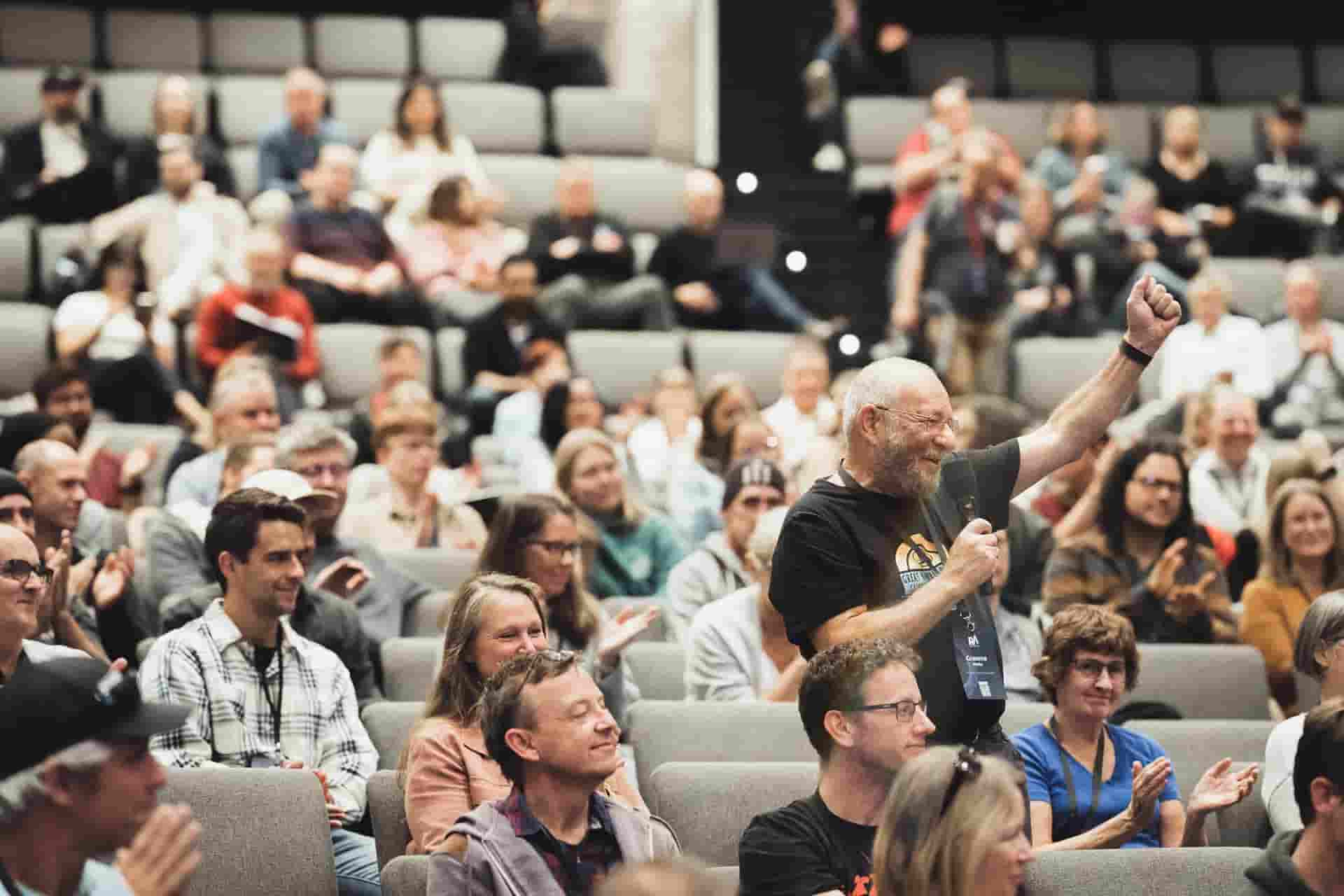
Speaking at the Leading a Mission-Driven Church conference, Andrew Heard delivers a practical talk on how pastors can begin to confront the barriers to church growth.

Transcript
This transcript has been generated, and can contain errors. Please refer to the original recording for the definitive language used.
Read transcript
[0:00]
I go to the thing that drew me into gospel ministry 25 years ago to lead my job and lead my career and so I'm was to see Ephesians 1 achieved to see all things brought under the name of Christ, to see every new bow prior to the consummation. Actually see people 1 now and see the kingdom grow and so that's been my passion. People talk about are you an evangelist and so on. I'm happy to say I think I am. I have a heart and a passion for an
[0:34]
evangelism and I think I have some gifts in that area without wanting to suggest of course that I'm you know the Billy Graham or whatever but I'm you know Billy Graham said he wasn't a gifted evangelist. Did you ever heard that long? He said he had the gift of the appeal. He wasn't a gifted evangelist. Isn't that interesting? But no one really wants to admit look I do like evangelism. I enjoy evangelism. I've got a heart and passion for it and they're very sensitive. The fragility of the last days, urgency, we need to reach more people but for 25 years I've been asking the question
[1:07]
a couple of actually why aren't we seeing more people convert? I keep why are our churches not growing? Why in the last 15 years I've been asking every month really? Why aren't we seeing our church but our church grow faster? It's growing but why aren't we seeing it grow faster? Why aren't we seeing I think we had 150 people convert it in the last six eight seven months or so about this? 60 or so last year. That's not many. Why not 200 300 400? So I've been asking that question all
[1:42]
the time and the second question I keep asking then is do we as leaders contribute to that? We as pastors and leaders part of the problem and there's no doubt we are not the problem. There are spiritual issues, there's all kinds of other forces at work and so on. There's no doubt but do we contribute? And the answer has got to be absolutely yes. We are key contributors to the
[2:15]
problem of why the church is not growing while we're not reaching more people and I think actually until we own that there is little hope apart from the miraculous intervention of God that will much will change. We are major contributors to the problem as leaders. Now I know it's touchy because we pour our lives into the work and we're into million twine in our ministries as we order be and when some bloke comes along suggesting that lack of growth your frustrated bias partly your fault you kind of want to go well you don't know what it's like in Canberra. Isn't that right?
[2:47]
Now I know that feeling because I get Americans coming over and saying you've got that and I go well you don't know what it's like in Australia and so I know that but the fact is there are different circumstances yes in all kinds of different places and Canberra is different to the central coast and there are circumstances in the central coast all that kind of stuff I get but on the central coast there are thoroughly reformed evangelical churches not growing
[3:19]
or they hadn't been I think we're seeing some significant growth again now quite a so there's no doubt we are a contributing factor it is possible to make a bigger impact than we're doing and it means we have to take a good hard look at ourselves there's a book by Jim Collins called Good to Great some of you guys have seen it yeah it's actually a helpful book although it needs to be reviewed against the fact that I don't think he's done the thorough research he's done the research on the the businesses gone good to great but he's not seen whether the principles
[3:49]
he's identified were present in in businesses that didn't suddenly transition into great he's identified principles that are there when the transition happens and something they far but he's not then gone back and gone are these principles always the key to making it happen or in some cases don't they even make the difference do you see the thing but nonetheless one of the one of the factors that he identifies is the stock dial principle which is the ability to honestly
[4:20]
and ruthlessly ask hard questions about where you're at and what's happening but do it in the context of optimism and confidence about the future and he calls that the stock dial principle where it's kind of the paradox of we're going to actually ask the hard questions we're going to see what the real problems are how bad it really is but we're not going to be driven to despair by that we're going to do in the context of optimism enthusiasm confidence for the future now if Christians can't do that who can you know if we can't be the ones that honestly look at our ministries what
[4:56]
I'm doing what we're doing what's happening in our churches and really owning the problems and yet doing to the confidence that we do it all under God and His glory is grace He's softened power He will build His church and so have confidence that even with our problems we will win who can so I think the stock dial principle is very clearly our one and I want to encourage us to keep doing that and then and truly own the problems identify where they might be get others in to actually help you do that process if you need be I think consultative help is a good
[5:29]
thing to have a friend come from a neighbouring or from somewhere and sit with you and go let's look at what's going on what's happening with you there's a number of things that in my mind are stopping our churches growing now there's a there's a number of ways of running this let me give you the five ones and four ones four things we need five things problems that that I think one of the problems we've got is a spiritual problem there's a spiritual problem in our leadership and in the congregations so the reason we don't have a an energy for mission and an effective
[6:00]
activity for mission is because spiritually many of our leaders don't have an urgency for the gospel we haven't got the gospel we don't get the sense of heaven and hell life and death and so we're happy to drift our congregations very often don't get it and so of course there's no heat and energy for them to mission because they don't actually think anyone's going to hell or if they do it's just a national theory there's a spiritual problem now how do you deal with that pray preach model live all that kind of stuff some of the stuff we've talked about there's
[6:32]
spiritual there's leadership problems we've got lots of people in leadership who aren't gifted as leaders now what do you do with that some guys need to step aside other guys need to say there's no one else to do this and I'm just going to keep doing it and I'm going to skill up as best I can given who I am to do as best a job I can do that's a bit where I'm at I kind of figure there's probably someone who could do this much better than I'm doing it I can't see where they are
[7:07]
and this lifeboat needs to be skippered all right I'll do it because no one else is do you know that's a bit where I'm at so I'm going to skill up I'm going to find out who I can go to and get that kind of deal there's leadership gifting issues there's management issues I want to talk to you a bit about that in a moment there's management we just have simple problems with management and it's along the lines of the thing that kovie identifies is that one of the keys for the good to great transition was discipline thought discipline action the discipline thought to think
[7:38]
into what actually the problems are discipline thought to then think right through to what the solutions need to be and then the discipline action to work out what steps to move to be taken and the discipline to keep on those steps and not be so intrigued that's something we keep filing at because the urgency keeps taking over I'll come to that in a second so there's there's management issues delegation how do we all I can stuff there's sociological issues we haven't we haven't skilled ourselves up on just the sociology of groups leading a group of 20 is different
[8:14]
to leading a group of 200 is different leading different to a leading group of 2000 and if you're not aware of the dynamic sociologically of a group of 50 and what will be hindering that group getting to 100 you won't know actually how to tackle the problems and transition the problems and fix the problems just sociology of groups so one of the things we worked out and not not on our own we got help in thinking this through but one of the things we realized was that if we were going to go from sort of the 700 to over a thousand kind of size there are a couple things we
[8:49]
needed to deal with that you don't normally need to deal with when you're 200 we identify what they were and we discipline lead determined lead pursued them and fix them at some cost personally towards the source but if we hadn't tackled that sociological issue and just kept saying preach the gospel live the gospel you know community and just we would never have gotten any bigger we wouldn't have reached more people so this is sociological and the last thing I think is architecture I think we underestimate the impact that architecture building building size building dynamics
[9:25]
the nature of all that kind of stuff impacts heribody to grow so identifying this five problems you actually then immediately go well there's five things I can start to look into tackle to actually fix you see you start to scale up on a work out I want to take you in another direction though do you want to ask any questions about that first I'm going to elaborate on that issue just mentioned about going over 700 to over a thousand about identifying the barriers that are issues that they deliberately addressing
[9:58]
and do that a lot of things oh yeah look if you're 700 yeah yeah we can talk about it it's um look they are unique to the kind of 700 size actually I would touch on a few more of them in a moment because they do relate to all of us but there's the one little one one big one is the nature of your eldership structure your leadership structure if you continue to operate with a leadership structure that was in place when you were 100 200 300 you won't get past 500 600 because
[10:32]
typically what happens in a church of 100 the leadership structure is a group of volunteers who meet monthly to manage the church and the staff if you have any staff one of the two whatever they are are employed to kind of operate as chaplains and do the work of the ministries and so on and these guys meet monthly that becomes a massive constrictor to your ability to grow beyond 500 600 700 if you keep operating with that leadership management structure it's just a simple fact and so we shift it quite we anticipate that we begin to work towards shifting towards a
[11:06]
staff-led leadership structure where the vision and the mission direction and running of church was all embedded into the staff meeting weekly who are full-time and the volunteer monthly leadership group were simply property finance policy and we drove them away from micro management and it freed us up to be able to there's one area now most of our churches you will point someone
[11:37]
to that monthly leadership structure whether it's your eldership your deaconate your parish council whatever it is when you appoint someone to that they typically think of themselves as an empowered leader finally I'm now in the place where I can pull the reins of this church and make a work or not you know I can take leadership in this church in an empowered way that's killing a church it's killing a church it will hold you back now you might decide the cost of restructuring
[12:07]
and rebuilding that is too great so we'll just plant churches of 500 you can do that I think it's a tragic waste of resource and I can't bear to have that happen I just find myself I just can't let us choose a ceiling and let it be there if there's some way to stop it being a ceiling I'll make it stop doing a ceiling yeah which thing oh there's other reasons might you
[12:38]
might be driven to that oh yeah thank you yeah yeah good yeah look we transit on the central coast we my initial vision 15 years ago was to plant 50 churches on the central coast and you know just swamp the place with churches and after a couple of years we worked out pretty quickly there weren't enough school halls to do that in and secondly the resource required to set up a church of it set up a church and for it to eventually buy and build was so massive
[13:11]
there's efficiencies of scarlet come from actually building bigger with what you've already got going so there was some of those things that drove us to let's not go let's not aim in the first instance to 50 lots of small churches let's go let's go keep building the center bigger and bigger and hiving off every five years at church plant do you see and so we have deliberately pursued maximizing the impact of this plant if you like this thing that God's given us
[13:44]
whilst sending off others as well yeah that was a deliberate shift in decision and so then we determined we actually sat down a couple of years ago now and said what are we going to be and our staff held the ship so the guys the full-time pastoral staff held the ship team have the senior stuff we met over a few months and decided are we going to go for this or what we're really going to make a fist off this becoming allowing it to be whatever God might
[14:17]
grow up to be okay yes we are even if it costs us yes even if it costs us personally yes okay let's work out exactly what are the blockages we looked at the blockages and we found out that some of the shifts need to be made in the senior staff and we we've been doing all of that yeah God's been growing yeah all right I keep pressing on let me um I'm going to head towards teams and then get Craig to talk up come and talk a little bit about teams as well the in all of this if we're going
[14:52]
to if we're going to think bigger and part of what I want to talk to us about is that towards the end is is we've got to put to death a day of small church we cannot keep thinking churches about 30 40 50 100 people having scones on a sunday afternoon in the car park just enjoying themselves churches that size have no cause they exist for themselves and they don't go anywhere we've got to think bigger if you are going to if you're going to reach Canberra and get to 15 20
[15:29]
percent of Canberra you're going to have to have either this is why I wanted to figure this earlier but three times as many churches you have a prison at least or three times as many people in each church just to get to 10 to 15 percent you've got to think many times bigger how are we going to get there well the gospel we've got to actually keep digging into the gospel because the gospel calls us to think bigger which is where the 10 percent vision I found very helpful just to give
[16:01]
some substance to that but the gospel get into the gospel because it helps us think bigger it's the key to reaching Australia when you get the gospel when lives are transformed by grace alone it's the key to getting the gospel and it's the ability to create security where we as leaders can look harder ourselves and not die by it so when you get the gospel yourself you have the security emotionally to better actually face the fact that you're not what you should be own the problems really and get the help you need the gospels the key in all of this all right here we go I got
[16:36]
I got four leadership principles and we can dig into anyone you want to pursue a little bit further the first one is in terms of leadership we need to learn to lead ourselves now who is not busy here already there's been some research done in Sydney and the burnout statistics if I remember correctly it's 21 percent of ministers in Sydney who are not in burnout
[17:09]
yeah there's so the figures might be better here in camera it's something like 35 40 percent are in burnout and 35 whatever it is on the verge of and you look at their diaries and you can understand it and I'd say your diaries wouldn't be much different ministry has all kinds of demands and so when you get someone talking to you about you've got to grow the church
[17:41]
five times bigger you kind of go oh man that's a lot more doorky I haven't got time to do it on how am I going to and so the key here is our personal management and our personal management is about taking control being proactive not reactive learning to say no you are not the Messiah and it's worth realizing the Messiah I even said no do you remember march after one all the sick were coming to him and the apostles were coming to him all his key leaders were coming to him
[18:15]
and saying do this do more and he said no I'm going to go and preach the gospel elsewhere that's why I've come he said no to one need to reach another need and it's actually just worth bear with me I'm if sorry if this is very basic stuff for you but it's the yes no principle you need to get a hold off every time you say yes to something you are saying no to something else and when you own that you're better able to assess your yeses properly so if someone comes to me and
[18:46]
says can you meet with me on Wednesday from 9 to 11 and I say yes to that I've said no to something else I could have spent 9 to 11 doing you got to get that in your heads when I say yes to answer in the email to getting involved with the pastoral problem to running the ladies auxiliary I'm saying no to doing something else just got to own that and you've only got so many hours in your week and how you use those hours will contribute to the outcome that your church has in
[19:20]
reaching the world around us how you use the fixed amount of time that you've got will contribute to how you reach the community around you so you've got to learn to use those hours in the most strategic effective way which means you've got to learn to say no you've got to learn to say no now that of course begs the question what is the most strategic way to use my time where should I be investing my time and that's where we all need a lot of help and I hope to get to there in a
[19:50]
little bit not that we have all the answers but we have been pursuing some of them so we've got to first learn to learn out loud ourselves so you've got to learn the disciplines of saying no saying yes you are the most important human resource the church has and if you get stuffed up and choked up and we're gone when we went up the central coast after a couple of years of being there one of the ministers nearby a great reformed evangelical guy said to me he said I got to tell you actually helped transform my ministry your presence and your drive to get ahead force me to
[20:23]
realise I can't waste my time having cups of tea with old ladies all the time because that's how he'd been spending his mysteries do you say a friend of mine was visiting a church in Sydney that evil Sydney's place so we can talk about we're all together on this one he was visiting a minister in Sydney and he said one of the guys on our ministry team and he said it was quite an eye opener to the ministry life in other churches he said this guy's a minister and he was there for half a day and he said it was such a relaxed environment he said he kind of he wandered in he wandered out did a bit of a blog
[20:57]
wandered out did a bit more reading had a bit of a lunch and he said that's not how life is running from this discipleship that needing that bowel talk that you know he said it was a very attractive life now we're not advocating workaholism because that won't further the cause of the gospel but are you effective in what you're doing and how you're doing it what's the most strategic things to be doing so learn to watch your life and doctrine closely persevere in
[21:32]
and get some tools to do that now that's the platform for the next three things learn to lead yourself once you once you've got to keep lurking the disciplines of how I run my life how I think about my life what are the priorities for my life what's the big strategic things I've got to invest in for my life and be disciplined to keep them and keep the order and structures that you need to have this and learn to deal with the conflict that comes when you say no so learn to be gracious learn to be tactful second thing learn to lead others
[22:03]
now this is obvious I guess because it's all it's why we've all gone into the work to pass to people to lead people but the leader the lead other thing lead others thing is a skill the lead others thing is a skill which we need to keep developing and growing in and I think there are two other two leading others skills that are quite different that we need to develop the first one is to lead others spiritually if you lead others spiritually you're talking about leading others to get
[22:35]
the gospel and grow spiritually that's your preaching ministries your discipling ministries your gospel rub work getting alongside someone it's the it's the vine work out of trellis and vina who you've not read trellis and vina is a very good book you would have read it it's the leading other spiritual that's critical churches arise and fall in our ability to make a difference and change people's lives yeah and actually just it's worth reflecting how are you going on that do you have have you had any success in seeing people's growth spiritually happen through your ministries
[23:08]
have you seen people change and I don't mean say what a nice sermon I mean my life has to go in different directions because of the ministries I'm experiencing you're having that happening because if that's not happening it might be one of those stocked-out things to take a good hard see some skills you need to pick up on and in a small church or a dead and dying church the key here is you you're going to have to do the work to get people into people's lives and be intentional
[23:44]
but there's another leading other skill that's critical and it's leading others into ministry and this is a different skill it needs the first to fuel it but this is where you begin to build multiplies it's a different skill leading spiritual leading people spiritually preaching skills relational skills handling Bible well inside skill leading others into ministry that's about recruiting people it's about inspiring and training and delegating and by delegating I mean
[24:24]
delegating not abdicating and we are shooting ourselves seriously in the foot with delegation failures we give a ministry to someone and we either undermine it or we give up we let them go and dump and run we don't actually delegate properly and so we breed badly under performing congregations that never free you up how many of you are still putting out the chairs in church
[24:55]
locking up opening up doing the admin facility stuff how many of you still doing it now how big the church got a baby before you shouldn't have to do that anymore and if you can't lead people to at least do that kind of stuff you need some help you need to get someone to give you some help in how to do it
[25:26]
we haven't set the context of people wanting to step up and so my view is the platform ministries the popup and so on we set the context to change spiritual spiritual so they said they need to step up into ministry and then we need to learn the skills to actually facilitate delegating and manage them in the ministry so they actually do the ministries and own the ministries and get good at the ministries better than we are so we can get onto other things that's all skill stuff we need to pick up on um sometimes we haven't asked people to do ministry because we feel that they should be just volunteering but how often have we had people
[26:04]
just volunteer you got to eyeball people and say here's the gospel here's life and death here's heaven and hell what are you doing with your life if you heard the American statistic of this 10% they're saying in churches are doing ministry 50% don't want to do ministries in the church but 40% of a church want to do ministries they just don't know how is that extraordinary and I found it to be fairly true in our context there's a group that have
[26:38]
just got that they do kind of respond fairly quickly there's a group you'll never get there's a massive group who would if they could and you have but they don't know and you've not helped them and so they just sit there it's a skill we keep rescuing people or going around people we ask someone to organize a lunch we're not sure they've done it so we ring the place ourselves instead of what should you do you've asked someone to organize a lunch you're not sure if they've done it instead of bringing the place to see if they've done it what do you do you ring them
[27:12]
and what do you do with them when you ring them well you should have already had in place the thing that you'd expect them to do you can go through that to train them in it and show that you actually expect them to have done it and if they don't do it you will fail you're not going to do it it's just all delegation now I don't know whether you see yourself in any of this but let me tell you one of the problems is it's it's manages lead yourself lead others requires not only different skills but a different set of values you need to value seeing ministry done by others and
[27:49]
not just seeing ministry done that's a different value and when you have that passionate value to see ministry done by others you'll be prepared to give up the ministries to have others do it and you won't see them doing it simply because they're helping you but because they're participating in the cause of Christ you see how that's working one way to skill up here is to take a ministry
[28:19]
area do the full recruitment process yourself tasking someone and talk through exactly with someone the vision that you have for the task what part it plays in the whole ministry the outcome you dream of for it the measures by which they can tell it's working and then set up coaching times that's how you do it best let's say you do it best and just a little thing don't say thank you to people I want a little crusade on this one stop thanking people for doing ministries
[28:54]
thank you and never never thank people for coming to church oh man when you say thank you to someone for doing ministry what are you saying to them they're doing it to help you man you want them to do it to help well not to help out of honor and pleasure for Jesus and so you're the captain of the football team has just had someone scour a try for
[29:27]
you thanks for scour on the try what are you talking about in scour for you did you know it's just a bizarre thing there's a million ways yeah there's a million ways so you are the captain of the football team where one of the bloke scores are trying what do you say fantastic that was so encouraging for everyone
[29:59]
the way you stood up was awesome keep doing it you know I find it inspiring I think the football gods every time you do it you know I don't know what it is it's just don't say thank you because it's just a bizarre thing now we don't think it's bizarre because I think we have bought into some sense in which we're the leader and they're helping us do ministries oh that's a danger now there are sometimes where you should thank people because they are actually helping you so for some of baby city kids thank you now lead others lead yourself lead others I'll give you the third one
[30:35]
lead leaders and I'm gonna get Craig up and get him because I want to go lead leaders and lead strategy we're talking about strategy the last one but lead leaders which is where your boot teams and I want to talk about teams very briefly and get Craig to give some input on this as well as someone who leads teams and is on a team that's what you were thinking about doing I wasn't see how delicate it so well it's um this is where you crank up your ministry so so the first step is to learn to lead yourself sex step is to learn to lead others in spiritually and doing the
[31:07]
ministries and the value there you need to embrace is the value of actually having ministries done by others there's a third step which is leading those who lead others so the difference leading others who lead others this is where you start to multiply people who don't just do a task but who themselves become multipliers so the difference you're now inviting someone to become a multiplier with you and that's when exponential growth can grow happen it's the person now it is
[31:45]
the person you give any major responsibility to which requires more resources than just them doing it on their own that's the person we're talking about so it's it's the person you ask to lead the team of Sunday school teachers it's the person you ask to lead the ministry of following up new people in the church the person who themselves will have to get others to do that ministry so you're
[32:16]
now in a different ball game you got it you're not just asking someone to do a job you're asking someone to be a leader of others now the reason I'm I'm laboring this is because we have traditionally left this kind of level of leadership to staff because we don't know how to do it well I think and so if we need someone to lead a team of people we get someone employed to do it we can't afford to do that and we're failing to bring people as volunteers to be all that they
[32:52]
could be undercrest you need a different set of skills to pull this one off and you need to deal with different blockages personally to pull this one off because there's more at stake with these kind of leaders there's more dangers with this kind of leadership structure in your church and the challenge will then become one for you as the leader of leaders who have team members to maintain a unified vision together now this is the this is the shift that's classically been called
[33:26]
and I found most healthily in my early years called the shift from Shepherd to Rancher is anyone you've heard who's heard Shepherd to Rancher I'm sorry if I'm talking same stuff but the shepherd is the guy who looks after 20 sheep the ranch is the guy who looks after 20 shepherds who have each got 20 sheep got it now there's a value shift from being a shepherd to a rancher and a personal shift which brings grief and challenges and at this stage you've got a shift
[34:00]
from loving to do the ministry yourself through to loving to seeing ministry done by others through to loving to multiply the ministries that others are now doing that's hard because we're all trained to be shepherds to care for the sheep and when they're in need we answer we help them we walk with them we lead them but you will hit the ceiling of influence you won't better grow your ministry beyond 100 people the rancher his priority was to ensure that the sheep are cared for
[34:35]
and he takes responsibility that they are cared for rather than being the one who cares for them that person is very difficult for most of us if you've got a heart it's hard because it feels impersonal and corporate and people don't want us to do it they want to be with the minister they want to be able to call the head guy with their problem which taps into our need to be needed
[35:06]
to be valued I said a person up many years ago to do the connecting work and Craig will remember this guy he was a very good at and and and you know I'd poured a lot of energy into getting the money for him and carving out of work and getting him going and I had a number of people come to me over various times and say this they said he is very good he really cares for us
[35:37]
when we're in need he's always there what's the message he's the one who loves you don't and for the first couple of times people did that I I bristle and I said you do realize it was my care for you that meant I found the money to get that guy to do what he's doing because I couldn't do what you needed to have done I care for you that much and I did that little speech but after a few years I just stopped he's great guy so glad he's better than I could ever be so but that's
[36:11]
hard yeah and I'm interested do you want to come up now Craig because I'm keen to get your thoughts just a couple of things now just remember in this every time you say yes you're saying no every time you say every time you say yes to filling up your diary such that you're busy here you are saying no to spending time in building up leaders of leaders so you've got to say no to
[36:44]
some things to give time to find the time to build up leaders of leaders now you've gone through transitions in leadership over the last 14 years can you reflect on I don't think you prepared this but can you reflect on the transitions you've gone through from being the guy who kind of ran all the growth groups to the guy who had to step back from that and then set up other staff around you and so yeah what's been your I remembered intimately so I don't need to prepare it but to give you a bit of background my route to full-time ministry has been unusual it hasn't
[37:19]
been the typical one I didn't I didn't pursue or don't ministry at more college and I did that there were various reasons in my background that led me that way part of it was my navigators background as a matter of fact but my modeling ministry was Andrew and he was we'd known each other since we were you heard pretty young he was a pretty lass affair kind of guy and I picked up lots from that and so our early experience of ministry was meetings were kind of lass affair we we arrived around about the time we needed to be there and and we got into work eventually and it was pretty
[37:57]
laid back for the early part of the time I was at at EV I really did feel I was down in the I was down in the mind doing lots of work so I was writing the Bible reading material I was recruiting and finding the Bible study leaders I was writing the Bible studies they would lead or helping them to learn how to lead it I was discipling those guys I was working out the material in a vanceless and that we didn't have and writing it I was writing the talks that they'd be given I was writing the training material that they'd be given so I was doing lots of that I was doing lots of the
[38:32]
operational work but I and I was discipling people but I wasn't there's a whole level of ministry that I actually hadn't I really hadn't got into and in fact my experience of working at that level mid though I was though I actually had been in my prior life highly organised managerially I trained myself out of that so I wasn't particularly organised so I've had to this is what you're asking I've really had to I've had to reinvent myself I think as we've had
[39:06]
to reinvent ourselves as a team we had a flat level of lead a flat kind of structural for our structural level of leadership there was no hierarchy in it there were some teams there was a bunch of growth group leaders who I'd recruited and trained I had attempted to set up an intermediate level of leadership but I hadn't gotten far with that and I actually wasn't particularly good at doing it anymore if I ever was good at doing it there's a there's a starting point so
[39:41]
so tell me about why we move from as I fear well I think the reality is and I've been interested in your perspective but um two ministry can't be less a fair just cannot be because you're working with so many people whom you need to mesh with whom for whom what you do is important that is what I do is going to matter to them what they do is going to matter to me there's an interrelatedness about that which means you just can't arrive at meetings late so I've now got a I've got a small
[40:11]
team of say four guys that work with me on mission some of volunteers one is paid but we can't arrive at meetings late we just waste time and so I've got to say I need you there at such and such a time and at that and past that time you can go and Adrian and I'll carry on together but we need you there on time so there are some things like that that um I think Andrew mentioned personal management just became critical and I saw Andrew I mean he perhaps won't say this and I think
[40:41]
my reading of it's accurate um he was by nature a laissez-fé guy we lived together for a period of time which was which was almost more than either of us could take um but um and it was a great experience but uh it was fantastic um but um but he obviously in him re-invent himself and it's been passion conviction driven by the gospel that I think is causing to do it actually to take on attributes that I don't think it's been his natural and I think the reality is in team ministry
[41:13]
you have to do that irrespective of whether you think this is my natural this is my typical bent is can't do that yeah you cannot go past the flat I work with a few people and we're all friends together and it's this kind of family thing you won't get past that unless you you become sharper tighter clearer more managerial um you've got to move from family to organisation and keep the family values but with organisation that's tight and clear yeah yeah that's right especially
[41:47]
as you go deeper as you get um so now we we both move particularly I mean I lead four or five layers down and and you just you you can't operate laissez-fé anymore like that by anything too and I remember when it began to happen I remember I observed that happening it was like is this is Simpson's skit what kind of an episode from one of the Simpson shows where um bar demonstrates that is smarter than a hamster you know how that you know those hamsters they touch the they get the
[42:18]
electric shock and they stop doing something but but go oh oh continually like you get what I'm saying there um but I remember when Andrew began to change is uh you're all nervous about where this is going to yeah I remember we we'd arrived at staff many's late and Andrew began to insist that we arrived on time and then you began to be in strife if you didn't arrive on time and it was consistent it was and it was like oh oh but you learned you know and uh and I realized
[42:51]
something had shifted and how away we're operating and and just needed to yeah yeah I'd bought into the model of ministry which was um it's relational and so because it's relational you know the meetings at four this was stuff I used to be on meetings at four but it's relational so you get there around five past ten past four and you relate together and then you drift into your meeting but it's relational and as I worked it out as he went on with the V it it it was killing us it meant people were wasting time
[43:25]
inefficient we had all this money locked up in this resource that got a given us and we weren't using it as effective as we should and it was breeding a culture that was inefficient and ineffective it was just dreadful so we shot it and yeah it was a very painful process but we got there yeah um in terms of uh what have been the challenges for you as you've sought to shift from shepherd to rancher so you mentioned I think some of them but um we've got any other things that have helped you be able to do that um you've since the challenge in yourself yeah yeah yeah I had
[44:01]
to reinvent I had to go back to something that had once upon a time been more natural to me that is just in terms of personal attributes um but um some of it's an extension of what I've been doing so that I'd been discipling since the time I was there uh and I've always discipled but there was a need to look for people who were high level capable people some of those actually have been people I discipled years ago I discipled them when they first arrived you know 1314 years ago when we were on the central coast and they had grown deeply but that discipling
[44:37]
indicated attributes in them which meant they could accept higher levels of leadership and that wasn't an easy thing it's not an easy transition for anyone to make that is I noticed at first most immediately when we had a whole bunch of we probably had 50 Bible study groups by the time I stopped leading the maturing ministries at church but among those there weren't people who thought of themselves as leaders who were there weren't many people who thought themselves as leaders who could
[45:08]
lead other leaders I'd recruited about three and they've stuck with me and followed me as I've moved from maturing ministry to evangelism um and and adopted that but to actually to actually raise up more of those people required a whole process by which I needed to envision them for the necessity of the work they simply didn't see it so many of them said oh look I'm just happy being above a study leader that's what I think I do the best and didn't actually see a need to care for many leaders didn't have any concept of how that might ever work and I realized as I began to
[45:42]
try to recruit some of those guys I needed to help I needed to help them see the practical necessity of that level of leadership that was a key thing yeah that's awful and how that necessity plays into reaching the central coast and beyond and so if we're going to reach the central customer we've got to multiply this thing we can't do it with you just doing this you know to step up otherwise we're stuck and in part that's because people have in their minds from whatever background they've come from a particular perception of what is possible yeah I've been in a church before and it was
[46:15]
this big and so what is possible easier we've got a bunch of Bible study leaders but they're not thinking of anything particularly bigger than that and they're not thinking of reaching the central coast and as much as we say it the congregation have needed over the years continual reminding at key levels and perhaps you can speak to this Andrew they need to keep being reminded this is not sufficient this is not even very big this is not even what we're searching for now you've done it at numbers of times constantly everywhere yeah yeah yeah yeah constantly and I'm
[46:47]
amazed how many people I'm amazed how many people keep coming and saying oh it was good to hear it again you've been here for 10 years but hearing this every oh it's good to hear again because people vision leaks that kind of thing yeah and so there's a perhaps an expression to pick up on as well that vision leaks means that now that as you're leading a team of volunteers you can't assume that they understand the bigger picture of what's going on you can't you've got to continually remind them
[47:18]
through the scriptures every time you meet together what's the bigger picture of what we're on about not the small thing about where a car parking crew who is setting up for whatever it might be what's the bigger vision behind the car parking crew is the bigger vision behind the team that are making lunches for so to keep sketching out and leading from from the Bible the gospel picture of what's going on has been critical to begin to lead teams that own the work for themselves
[47:53]
for every area of work yeah yeah it's good I'm going to move on to leading strategy and then throw back to Crake for Tim but do you want to ask anything else about that