
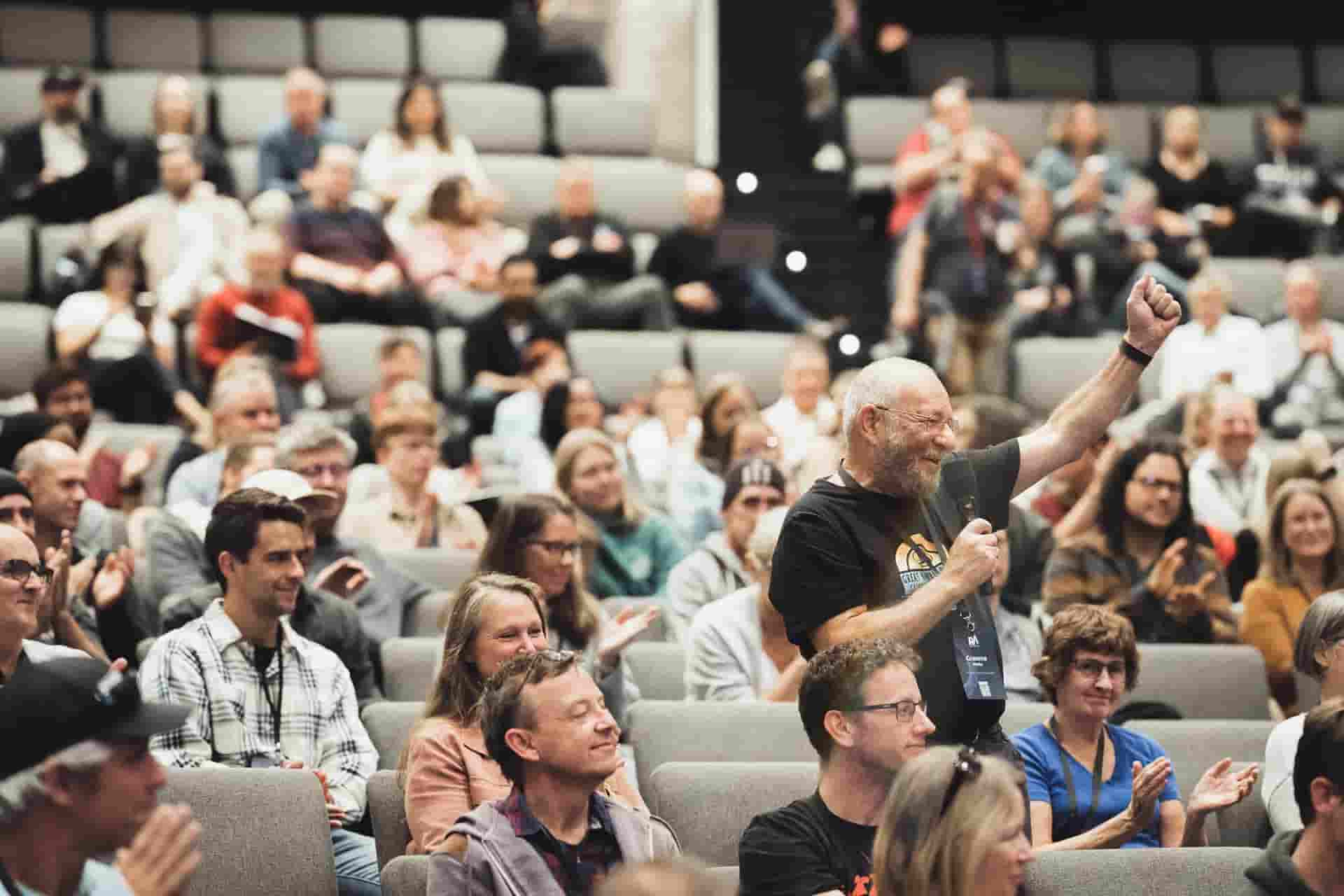
As part of the Reach Australia conference, Alana Glover and Phillip Percival from Emu Music run through the most important factors to consider when establishing a music ministry that will assist evangelistic efforts.


Transcript

This transcript has been generated, and can contain errors. Please refer to the original recording for the definitive language used.

Read transcript

[0:01]
Well, good afternoon everybody. I'm Tony Payne and I've got a really difficult job which is just to chair this seminar on leading music ministry and all that basically involves is introducing Philip and Alana and handing over to them, which is my idea of a difficult gig. Philip, you want to admit briefly these two as they were interviewed last night about their role in EMU Music. I was on the board of EMU Music way back when and always been a huge supporter of a ministry approach and they've blessed us, they've blessed our churches in so many ways.

[0:38]
Essentially, I'll hand over to them, they'll run it from here. We'll break for afternoon two rather at 3.30 and then are you running it again after? So it's just this, okay, it's only a 90 minute one. I'll just wander around and make sure you have one of these if you don't already and I guess that's probably also on your phone app as well if you'd like to grab it. How about I pray and then we'll kick off. Father, we thank you for the time to be together this week to think about what it means to build and grow healthy churches, to reach out from our churches.

[1:08]
And as we think now about the place of music in all of that in our whole ecosystem and how music functions in our gatherings and how we can build a music ministry, we're just really grateful for Philip and Alana and their enormous experience and expertise in all aspects of this. We thank you for the chance to work with them now over the next little while and we pray you'd be with us in all of this in the name of Jesus. Amen. Please come closer. Amen.

[2:02]
So, as Tony said, my name's Philip Percival. This is Alana Glover. And a little bit of a background about us. So we are from a ministry called EMU Music, which along with doing songwriting is all about teaching and training church musicians, church pastors and other people involved in music ministry about what biblical music ministry can look like in different contexts. We're also just very regular church musicians.

[2:33]
And for the past couple of years, we've been working for a church in Oxford in the UK, even though we're Aussies still. But week in, week out, we're just doing the normal stuff of music ministry from planning services, organizing people, fixing drum kits. No matter what it is you're probably doing in your church, we have exactly the same issues. And if there's anything that we'd really like you to walk away from today is just this idea that no matter what your context or what resources you have in your church, you can do excellent, heartfelt, biblically rich, Christ-exalting music in your church.

[3:17]
I'm going to start by handing over to Alana. All right, I have a question for you guys. Do you know that Lionel Richie song, Easy Like Sunday Morning? Yeah? Yeah. Philip wants to have a little solo? Easy like Sunday morning. We will do a little bit of singing. We won't sing that song together. This is not our model for church. Now, my theory is that Lionel Richie was clearly not involved in running a Sunday morning church service. Because if you've been in ministry for any time at all, we're sure you've experienced your fair share of Sunday morning disasters.

[3:54]
They're not easy. And it's not surprising. This is a weekly event involving fallible people. And if you do it for enough years with enough people, you're bound to rack up a bunch of these moments. But it does seem as if there's a disproportionate number of these disaster moments that have something to do with the music. If you go to YouTube, you can find some glorious titles, including Drum Shield Attacks Worship Leader or Church Keyboard Horror Moment.

[4:25]
And just imagine what kind of titles you might come up with if there was a camera left rolling in your church. And those moments were put up on YouTube. In ours, it would be Screeching Feedback Deafens Congregation or Service Leader Trips on Guitar Cable. Yeah. I mean, we could spend our time today talking about these relatively harmless disasters. But maybe your problems with church music or thinking about planting church music is actually more serious than that.

[4:57]
Maybe you have a congregation that shows no passion or enthusiasm for singing. Maybe you have a music team that's gone rogue and is driving the singing in a very different direction to the preaching ministry. Maybe there's deep discontentment in the congregation about the songs that you're singing or the style of music that you're singing. All of those issues require us to dig deeper into God's purposes for our singing. And so our primary aim is not about how to make our music look or sound impressive,

[5:31]
but to use it to grow those in our congregation to love Jesus more, to trust him more, and to become imitators of him. Our music ministry is to facilitate the powerful word of God dwelling in us as we teach and admonish one another in song. So to figure out how that's going in our churches at the moment, we kind of have to do a spiritual health check. And our health check involves two questions. Firstly, is the congregation singing?

[6:04]
Can you actually hear them? Are they opening their mouths and singing? And the second question, are they engaging with what they're singing? So do they even understand what is going on when they're singing? Are they teaching and admonishing one another? So we'll spend some time throughout this seminar thinking about both of those questions, talking about the structure of music ministry and the priorities that we should have in place, both in how we run things, but also what's going on in the hearts of those in our music teams and those in our congregation.

[6:39]
And unlike the unavoidable mishaps, those examples at the beginning, unlike those that will continue to happen, we can avoid the bigger problems, bigger things from going wrong in our congregations. So we'll look at principles that are effective in helping our church to teach and admonish one another and the practical things that we need to implement those principles. But first, we have to start with the Bible. So Philip is going to talk to us about some passages foundational to Christian singing. Yeah. So let's start by thinking about how singing reflects the shape of God's purposes for the church.

[7:16]
Now, there are three key ideas in the New Testament about the church that are particularly relevant to our singing. And this diagram helps us to see what they are. So first and fundamentally, the church gathers around Christ as we meet him in his word and by his spirit. Secondly, the church is called to serve one another by building each other up in love and service. Thirdly, the church exists to offer God its prayer, praise and thanksgiving.

[7:50]
And if we look at a verse like Colossians 3.16, we see something very similar going on. So as I read this out, see if you can see those three things. Paul says, let the word of Christ dwell in you richly, teaching and admonishing one another in all wisdom, singing psalms and hymns and spiritual songs with thankfulness in your hearts to God. Now, if I were to map out Colossians 3 in that same kind of shape, we can see a couple of things happening.

[8:22]
So the downward arrow shows how God ministers his word to us, how he dwells in us richly in the word of Christ. The horizontal arrow is showing that we administer that word to one another as we teach and admonish. The upward arrow then is showing how the word fuels our thanksgiving and praise. So at the very heart of our singing is this desire of God, his longing for his son to live within the hearts of his people

[8:54]
in a way that would transform us, to transform our words, our actions and our emotions. And therefore, it's not by any of our own formulas or strategies or wishful thinking that these things will happen. As you probably know, the Bible doesn't tell us a lot about the practicalities of church gatherings. And it definitely doesn't tell us things like what style of music we should play or the number of hymns to sing, whether we should use a band or an organ or a choir.

[9:26]
But we can be confident that when we let the word and the spirit drive our singing, that God will use it to grow his church in love and faith and obedience. We want all of our songs to be rich with the word of God. So emphasizing that downward arrow, we want that to be the thing that we are singing about. But it also doesn't hurt to sing specifically about the word. And we found it really helpful to have some songs in our repertoire that talk directly about God's word dwelling in us,

[10:02]
especially as preparation to read God's word in a service or lead into the preached word. And I'm just going to sing you a little snippet of a song we've written called Your Word. Does anyone know it? Anyway, it's one just by way of example, one that helps us to think specifically about God's word.

[10:33]
Your word is good. It's ever faithful. Worth more than gold. The heart's delight. Your word gives life To all who hear and obey Your word endures forever Your word is a lamp unto my feet

[11:05]
Your word is a light unto my heart For your word is my hope It's my joy and my song Your word endures forever Your word is more than just letters on pages It's life and it's love And it's love and it's freedom for us

[11:36]
Your word is more than just wisdom of ages It's treasures are endless It's always enough Your word is more than just stories of old It's the truth and the way And the story of love Your word is love Your word is more than just breath into dust

[12:07]
It's your son Has a man Come to dwell Here with us We could do more than that but we don't have quite enough time but great example of singing about the word so the congregation understands what it is they are doing when they are singing So let's think a little more about the practical aspects of this idea that singing is a ministry of the word

[12:39]
Now in a healthy church we expect that the preached word will be at the heart of our gatherings and that's because we see that the proclamation of the word is the normal means of making and growing disciples in the New Testament But what's the connection between that sort of gospel proclamation and our singing? Well in Colossians 1.28 Paul describes his public preaching ministry in these terms He says Him we proclaim

[13:09]
warning everyone and teaching everyone with all wisdom that we may present everyone mature in Christ But then as we jump into chapter 3 verse 16 which we just had read he uses nearly the same language to describe what happens when Christians sing to one another I don't need to read it again but we can see here that Paul sees the word preached and the word sung as being the same in its purpose and outcome That is we make and grow disciples of Christ

[13:40]
when the gospel is proclaimed whether it be taught or sung and if we want to understand the place of singing in church then it begins with us seeing it as fundamentally a ministry of the word Now of course there are real differences between preaching and singing the word Paul's preaching ministry obviously had strong a strong evangelistic emphasis but when he talks about singing the focus is much more on edification

[14:10]
So singing is the gift of teaching which the whole church possesses and as a result in our singing we are building up the body of Christ in a whole way of a whole realm of different ways So we encourage thankfulness with one another we teach and guard true doctrine Singing the word gives voice to our praise Singing the word helps us to encourage godliness and obedience Our singing helps us to express our unity in Christ

[14:41]
But in short singing the word of Christ is helping to grow disciples of Christ What we don't want to do is to drive a wedge between the preaching of the word and the singing of the word In a healthy church we will see preaching and singing as complementary of one another And we've got a table here Not that That one In our table we show some of the natural complementary differences

[15:12]
between singing and preaching the word Now just to warn you I'm making some huge massive generalisations here just to get some big points across So for example preaching tends to be longer than a song which is quite short Preaching tends to be exegetically specific So in preaching we tend to explain a specific text and we're applying it to the pastoral needs and the local congregation that we have in mind

[15:42]
whereas in singing we tend to be a lot more general in our doctrine trying to teach broader truths with broader application With our preaching we tend to speak to the head in order to reach the heart With singing we tend to speak to the heart in order to reach the head In preaching the congregation is passive In singing the congregation is active as we both teach and listen to the word

[16:12]
and allow it to fuel our praise and thanksgiving and obedience Like I said none of those differences are black and white They're just general characteristics of preaching and singing But when we're aware of the differences between the two that actually helps us then to shape beautiful gatherings where the word and the word sung are complementary aspects of that same ministry So you can see just from this very brief glance

[16:43]
of what the New Testament says about our singing that our singing is not designed to be a leg stretching exercise in our meetings No, instead there are huge expectations put onto our singing And I thought maybe we should just take a moment to illustrate how maybe we can see the word of Christ at work in our singing Now, I think if you could take any good song you'd be able to do this with it I'm going to choose a hymn

[17:13]
that I love when I survey the wondrous cross and what I'm going to do is play through the hymn get Alana to sing it and I'm just going to quickly yell out some of the gospel truth that it contains just so you can see how we should see the word of Christ at work in our singing so let me remember the key

[17:51]
when I survey the wondrous cross so my life is framed by the cross of Christ on which the praise of glory dies which is the message of the gospel my richest gain I count the love and that gospel changes my life and pour and pour

[18:22]
on all my pride forbid it Lord that I should burn this is our response of humility save him the dead oh Christ my God this is the turning work of Christ all the vain things that show me most everything

[18:52]
I treasure people I sacrifice them to his blood and we're taken to meditate on the cross see from his hand his hands his feet suffering of Jesus sorrow and love flow mingled down the great contrast of love and sorrow did

[19:23]
e'er such love and sorrow meet and the great contradiction of the cross all thorns compose so rich a crowd which leads us to the big response with a key change of the whole realm of nature mine so everything that I possess that were and all

[19:54]
bring far too small love so amazing so divine we offer our bodies as living sacrifices demands demands my soul my life my own why don't we just sing that last verse together for the whole of nature

[20:25]
of nature of nature that we're and all that we're that we're and all and all and all that we're that we're and all that we're that we're what's meters so meters My life, my all, demands my soul.

[20:58]
My life, my all. Cool. Thanks for joining in. All right. We're going to think about now some principles for a healthy music ministry. Building on this theological foundation, it's important to establish principles and structures that will help facilitate gospel-shaped singing. So we've got five principles for a healthy music ministry. The first one is a healthy music ministry uses the gifts that God has given it.

[21:34]
We must be confident that God always gives us exactly what we need to be able to praise him. That may simply be our voices, or it might be a really large talented band, or a hodgepodge of random instruments, or even a cassette backing track. Whatever it is, we mustn't feel dissatisfied by what is happening at other bigger, flashier churches, or conferences, or what we see on YouTube.

[22:04]
Whatever musical abilities God has gifted our congregations is exactly enough in order to perfectly praise him in song. And think of Paul and Silas singing hymns in jail, beaten and chained, nothing but their voices, singing with genuine joy and passion, and they presumably attracted the attention of all in the jail. And what to us might look like a picture of real despair is actually such a beautiful picture of singing in the Bible.

[22:35]
And while it is a great blessing to have a skilled music team, and it's right for us to aim for the highest quality we can, what is most important is the voice of the congregation. If we find that our congregation aren't singing well, the answer is almost never recruiting more musicians or more talented musicians. More often, the problem lies with the congregation's understanding of what is happening while they're singing.

[23:05]
If a congregation doesn't value singing, then they won't sing, because good singing takes effort and commitment from the congregation. So this biblical picture of singing needs to be preached from the pulpit and taught in our Bible study groups and intentionally built into the DNA of our churches. And that often starts with the minister relying on him and the staff team to be modelling engaged singing, but also to keep it on the teaching agenda,

[23:38]
because a congregation that gets this singing of the word of Christ, that understands it, they'll do it wholeheartedly, whether they are supported by abundant or limited musicians. So second principle, a healthy music ministry has spiritually mature musicians. So having said all that, it doesn't mean that we just allow anyone to play in our music teams. Even the smallest of music ministries

[24:08]
needs to have established standards for who can play and what is expected of them. In a new church plant or a small church, it can be very tempting to drop that bar when you're desperate to fill a gap in your band on a Sunday. We totally understand that feeling of desperation, but desperation should never lead us to compromise, especially on spiritual standards. So set a bar for the musicians from the very beginning,

[24:38]
even for the smallest of ensembles. Now we assume that you have these standards already for your staff. What is it that you currently expect of someone serving in a word ministry in your church? Do you assume that they are mature, ministry-minded, committed Christians? Do you require formal membership or signing a statement of faith? Do you require people to make a time commitment to the ministry they're involved in? Do you require them to be part of weekly Bible studies?

[25:08]
Now whatever that criteria is that you come up with for what you expect of them, we would argue that the same sort of standards that you hold your preachers to or anyone else that is involved in word ministry, that you would expect that also of your musicians. So I'll unpack that a little bit. 1 Timothy 3 describes the qualifications that Paul lays down for overseers and deacons in the church. Now we're not saying that these roles are synonymous with modern day church musicians, but what we can do is extrapolate some helpful criteria

[25:41]
for anyone who holds positions of leadership in the church, which we would argue church musicians do. So from the passage we see two things. Firstly, that all church leaders are held to a spiritual standard, that they are firmly Christians, that they show evidence of that in their lives, of not being proud or idolatrous in its various forms. And secondly, that all church leaders are held to a high moral standard, personally, within their relationships at home and what's evident to the world. So again, not saying that preachers and musicians are the same

[26:13]
or that they have the same skill set, but only that they should be held to a similar spiritual standard in order to guard and honour the importance of singing as a word ministry. If we aren't holding our musicians to a high spiritual standard, then we are undervaluing the powerful ministry of singing the word of God in our gatherings. Okay, third principle. A healthy music ministry has skilled musicians.

[26:44]
Now, whatever skill level your musicians are at, encourage them to be the best that they can be. In 1 Chronicles 15, we see David choosing someone to lead the singing, and he chooses musicians who are skillful. And now, the definition of what constitutes skill is relative, but we do want to encourage our musicians to invest in their musical craft as they use it to serve Christ. Encourage them to take music lessons.

[27:14]
Encourage them to practice diligently during the week to hone their craft. Encourage them to turn up prepared and confident to play. Because if they also don't see value in doing that, then they're probably not the right people to be leading this ministry. Fourth principle. A healthy music ministry serves the needs of the congregation. So as we said, our focus should always be the congregation and not the band who are standing up the front. So we need to make sure

[27:45]
that we're teaching our musicians that practicing deference is a huge part of their ministry. They must be willing to sacrifice their personal preferences for the sake of the congregation, to facilitate the congregation singing. And that has huge implications for the way that they play their instruments. Because no longer is music about their ability to perform or display their wide range of skills. Instead, what they're doing is always to play

[28:15]
to serve the needs of the congregation. So humility and an attitude of service is absolutely key. And serving the needs of our congregation will affect the type of music we choose, that dominant Christian music sound that you know so well. More often than not, that isn't actually the best sound for your congregation, especially if you're in a small church or a new church. It's just all too easy for us to create this ideal image of what our music should sound like

[28:46]
or what we want it to sound like. But unless our music is reflecting and responding to the needs and the tastes of those in our congregation, then it's not going to serve them best. And last principle, a healthy music ministry plans for growth. Now there are lots of practical differences between a small church music team and a large one. And if we get too comfortable with a small church setup, it's informality, it's laugh minute practices,

[29:16]
choosing songs on the fly, there is a chance that our music will hold back the physical growth of our church. And so if we want to grow our churches both spiritually and physically, then we have to plan for that growth. Because the bigger our churches and leadership teams become, the more work they are to manage. There are more personalities to struggle, more musicians of varying skill and style to direct, more planning and administration. But ideally we want to set a structure in place to plan for that growth rather than kind of stumbling into it

[29:48]
as that happens. So those are the five principles. And then once we have those principles in place, then comes the hard work of actually making the music happen. Now perhaps you've already got healthy people and practices in place in the music in your church, and that's great. For others here, you're probably hearing everything that we've said about a healthy word-driven singing ministry and the sorts of people and the gifts that are required. But you're thinking, oh my goodness, we need to start from the beginning again.

[30:19]
Well, if you're at that point, that's actually an okay place to be. Because if unhelpful music practices are entrenched into your church, then sometimes you need to consider whether a reboot is actually required, even if it means there's going to be pain involved. Here's a few scenarios. Perhaps your music has been controlled by the same autocratic organist who's been in their position since 1974, and they're determined to outlive

[30:50]
every new pastor and their fresh ideas. Or perhaps you've got a song leader who's faithful in their service, who stepped up when the church was first planted, but they can't actually sing anything in tune. And you know that they will be heartbroken if you ask them to step down. Or what if the song choices are being made completely independently by the band, going in a completely different direction to the preached ministry of the word?

[31:20]
These are all things that we need to consider in order to get right from the very start. Or if not, we need to look at making some radical changes when things aren't working along these kind of lines. So we have four suggestions of things to get in place, whether you're planting a church or rebooting your music ministry. These four things are getting the right priority, which is the word and the spirit, the right leaders, the right songs, and the right systems.

[31:51]
Now, we don't have time to go into the details of all these right now, although we're very happy to take questions on any of them at the end. And really, I'm just going to be applying a lot of the principles that Alana has just spoken about. But firstly, we need the right priority, which is teaching, is making the centrality of the word and spirit. Now, as a pastor, if you're the pastor, it's not your job to practically implement all the aspects

[32:22]
of the music ministry. But it is your job to teach the church and your music leaders about God's purposes for singing, as we said earlier. So, how regularly do you teach about singing? Whether that be in the preaching program or at prayer meetings or youth groups or wherever. not just with music, but too often we expect our congregations to absorb good theology about things by osmosis, which is often what happens when it comes to singing.

[32:54]
But when we do that, we're in danger of letting bad theology creep in by accident. Just like we don't want our children to learn about love from watching Roncoms, neither do we want our church to learn about what is good music from looking at YouTube. Secondly, we need the right people. And there are three people and roles that are essential to a healthy music ministry. Alana. Okay, so we've come up with three roles. The first one is

[33:25]
a music minister or a music director. So, the role of a music minister is primarily pastoral and big picture. They're responsible for thinking about that overarching direction of the music ministry, particularly with how the music is serving and growing the congregation in the long term. And ideally, this is a person who's a member of staff, meeting regularly with the senior minister, conscious of the direction of the music ministry and how that fits into the greater ministry of church and services.

[33:57]
And that person might not even be a competent musician or a musician at all, but their role is primarily pastoral and I guess kind of administrative. But thinking about that big picture. And then the next role is a band leader. So, band leaders operate underneath the leadership of a music minister and are being pastorally cared for by that music minister. And you may just have one person doing this role or you may have several band leaders

[34:27]
who alternate between weeks or maybe they're responsible for a specific band or service. Now, these people need to be spiritually mature because they'll be guiding the musicians under them to play the songs in a way that supports the word and helps the congregation engage with Christ. But they'll also need musical skill and musical intuition which enables them to then make good decisions about things like congregational key and tempo and think about arrangements and run the rehearsals.

[34:58]
And then the third person there, the third role is a song leader. We believe that strong leadership of congregational singing is essential because no group large or small will sing if they don't have confidence in what is happening. So when a group of people feel unsure about what they're doing, they'll look for the strongest power source in the room. And if there isn't a clear song leader standing there, then they'll just lock in with whoever most looks like they know what they're doing.

[35:29]
That might be the minister or the service leader who got stuck on stage by accident or one of the musicians. But if that person isn't actually aware that they're leading the congregation, then they're probably not going to do as good a job as if they'd actually put some thought and training into it. So having a designated song leader to lead the congregation is ideal. They will lead them logistically, so showing them where to start singing, where to stop singing, when to sit and stand,

[36:00]
that kind of thing. they'll also lead the congregation emotionally, so modelling how we should be feeling about the truths that we're singing. And this song leader leads the congregation spiritually by pointing them to Christ and demonstrating in and of themselves what it looks like to be doing Christ-centred singing. So those three crucial roles there, I mean, this is in no way comprehensive. There are much more things that you could add to it.

[36:30]
You could be mentally adding things that you know are in your context. And how you allocate those roles totally depends on your church set up and the people that you have. So in lots of cases, all three roles are done by the one person because you may have a person that is gifted in that way. And if that is one person, then you often fail to identify that there are actually three, you can break it into three roles there. But it is really important to make sure that you're covering all three of those roles

[37:00]
because they do require separate skills and commitments. You could have someone doing two of them and not the other one. So maybe you have a music minister who's theologically trained and can play guitar and so they can band lead as well as be on the staff team, but they might not be a great singer so then they'd appoint a song leader or you might have a song leader, guitarist, or piano player who's great, but they don't have any theological training and they're not around for staff teams. So then you just appoint them,

[37:31]
you can see how those roles combine. In any case, it's important that we're thinking about who we've got covering these various roles so that they are being covered. The next thing to get right are the songs. Because this is a ministry of the word then it goes without saying that our songs should teach the word faithfully. But equally, we need songs

[38:02]
that musically will speak to our context. So I'm just going to throw out a few quick ideas on both theological depth and musical style. Firstly, theology. It might seem unquestionable that we want to sing songs which are packed full of great theology. But how many churches are actually serious about that in practice? It can be so easy to get caught up with a song's captivating melody or its popularity that we easily

[38:32]
forget about examining the theology of the lyrics of our songs. To ensure that a song will be truly edifying for our church, we need to be constantly thorough in our critique of every song that we sing. Because the lyrics of our songs play a huge role in informing the theology of our congregations. You might have heard it said that people don't tend to leave church singing the sermon, but they will have the last song

[39:02]
rolling around in their head. So it's imperative that we hold our songs to that same biblical standard and expectation that we do with our other Bible teaching. because without singing, we are equally helping to equip our church members to live lives of faith, obedience and service. And that will happen in a range of contexts that we won't even be able to imagine when we're actually sitting down making our song choices. So consider a few

[39:33]
of these examples. Are we letting songs into our playlists that talk too much about what I'm going to do for God? Or rather, should we be singing more songs about what God has done for me, which is much more the biblical model of song? Are we letting in songs that aren't really pointing people to Jesus? Or are we singing songs that we might think, yeah, that's got a bit of scripture in it, but is the context correct?

[40:03]
Are songs using scripture in a way that is saying something different to what God has intended it to say? And then balancing theological accuracy, we need to remember that good lyrics are also poetic, as they allow us to express biblical truths in a way that engages our hearts. So while we never, never want the truth to be clouded or compromised, we do still want to sing songs that are beautiful and are creative in the way that they engage with God's word.

[40:35]
So in your pursuit of great lyrics, allow room for beauty and creative expression, but never allow these to compromise or cloud the truth. And then there's the issue of musical style. If we want our congregations to engage with God at the level of the heart, then musical style must also come into our song choices. Now, we could talk for an hour just on that topic, but there's a couple of points that we could

[41:05]
consider. We need different styles of music to give voice to the different array of biblical themes and ideas. So we need songs that can fuel praise, we need songs that allow for confession and lament. But we also need different styles of music to cater for the different tastes in your congregation. conversation. We don't ever want a style that is just completely skewed to one particular

[41:36]
direction. Normally when that happens, it's because you or whoever is choosing the songs is just always choosing the kind of songs that they like the most. And of course in some churches you'll know that the music will sound stylistically very monochrome, whether everything is in a hymn style or loud rock style. The beauty of modern church music is that we can bring in a whole range of musical genres from rock, pop, acoustic, folk, traditional hymns, modern hymns, etc.

[42:07]
Of course we only bring those in, we only go for musical styles that are going to be appropriate for your demographic and context. Considering the needs and the likes of your congregation and styles that they will find encouraging to sing. I also need to make my song choices based on the ability of my congregation and the ability of my musicians. And these will change as I move from a small, less resourced

[42:38]
church to one which is larger, which has greater musical resources. So I could demonstrate musically. So some songs work for every church, small or large, or inexperienced or experienced. songs that have a simple melody and a simple rhythm, like traditional hymns, like praise my soul, the king of heaven.

[43:08]
It's very simple as I move from chord to chord with very little rhythmic change. But there are modern songs that are the same. So, Christ alone is very simple in its melody and rhythm. That was not a very good example. Or no other name. No other name.

[43:49]
And then there are other songs which you actually do need a larger band or more competent musicians to sing. Now, we could demonstrate that, except we're not going to demonstrate that because we don't have a large band to do that well. But there are some great songs like Rejoice by Stuart Town that do kind of need that bigger band and energy to pull them off. Equally, we need to choose songs that are based, that will change on the skill set of the musicians that you have.

[44:19]
Just imagine for a second that I'm like a grade two piano player. Actually, I am a grade two piano player. No. If I… I'm going to pretend that I'm not a very good piano player. And I'm going to choose a hymn, Praise to the Lord. So what you're demonstrating at the moment is the one song being played by someone who is less skilled and how that differs in the way that you would play it to

[44:50]
if you had then more competent musicians. Thank you for interpreting. So you're playing simply now. Yeah. Yeah. Here's my simple playing. Praise to the Lord, the Almighty, the King of creation. I could play it worse. We don't need it. If we had more skill and competent musicians, we can actually do more

[45:21]
with the song. Yeah, it gives us much more variety. So it's still the same song and it's the same singing experience in terms of the congregation are still singing the exact same thing, but you suddenly have much more range and scope for how you interpret that song. So like we did praise to the Lord last night.

[45:51]
Praise to the Lord, the Almighty, the King of creation. Oh, my soul, praise him for he is my health and salvation. Oh, you who he not to his temple draw near. Praise him in glad adoration. Yeah.

[46:22]
It's the same song, just totally different interpretations based on the skill set of musicians that we have. Yeah. And then just the third idea with choosing the right songs. goes into the idea of establishing a good playlist and being very intentional about the songs that we gather together for our church to sing. That will include thinking about how many songs you want your congregation to be able to know and know well.

[46:52]
How regularly are you thinking about introducing new songs? How regularly do you rotate through the songs? If you're in a church plant, there are special factors that you need to consider about your playlist there. For all of us, are we covering our thematic and liturgical and stylistic bases in the songs that we have in our playlist? Again, that's a big topic on its own, but we're very happy to answer questions about it in a moment. And then we have

[47:23]
our fourth, So even if you're at the very start of your church as a plant, be thinking about growth. Many of us may have experienced kind of the warmth of that really small home church setting where you have lots of people crammed into a cosy living room, sitting wherever they can with their Bibles open on their laps. There's just one guy playing the guitar and

[47:54]
he can just play whatever song people are requesting. No one quite knows how many times you're going to repeat the chorus, but it doesn't really matter because everyone is just going with the flow and the congregational voice swells and fades as feels appropriate. Now, that scenario is fine for what it is, but that can never be the model that will allow you to grow into a larger church. church because once you move out of the living room into a hall or into a church building, you need structures for more

[48:24]
musicians to join or for thoughtful song choices and for musical rehearsals. So you need to think about finding systems that work for your church, even if you're in the small stage. And there are some great online planning tools that are out there that can really help, like Planning Center or Elvanto or even Google Docs. But just use these to have your services and songs available to the whole team, the ministry team and the musicians to help everyone in their

[48:55]
preparation. A different practical thing to consider is having time off for your musicians. Again, this may seem an odd thing where you've got very few people and struggling to fill your spaces. services. But we're big on thinking about scheduling time off for a number of reasons. We need to prevent burnout. If everyone on your music team is on every single week, then your chances of burnout of

[49:26]
some or all of your musicians is going to be 100%. You might make it a few months, you might make it a few years before people feel burnt out. But it will eventually happen. And you can actually guard against that by protecting your musicians before it becomes into a big problem. We also want to be guarding humility and against pride. We want to protect our

[49:57]
churches against what we call musicians' entitlement syndrome, where your team is relied on week in, week out. And they start to believe that they are the ones that are essential for your churches to praise God. We need our musicians to know that their identity is in Christ, not being a part of the music team. We also want musicians to have time off because it's good for them to attend church as part of

[50:28]
the congregation. Being on music often means that you have less brain space for other stuff that is going on in church. You can't always fully relax during a sermon when you're trying to get the tempo right for the song that's going to come straight afterwards. You'll often be very busy before and after church to be building good relationships with other non-musicians. So allowing your musicians the opportunity just to turn up and attend church will actually help them

[50:58]
spiritually and help your church spiritually in the long run. It gives them a chance to experience music from the pews and to help keep the music relevant. So getting the priority right, word and spirit, the right leaders in place, the right songs and the right systems are kind of the fundamentals of getting the practicalities of music right in every church whether it's small or large. Now there are so many things that we could fill in in those spaces

[51:28]
there. We thought that we'd just pause for a little bit and just see if you got questions particularly related to your context that we might be able to address. So please throw at us any question, large or small. Yes.

[52:05]
Yes, Alana. I mean, it's tricky, right? And it becomes a pastoral issue. And I think if we're teaching our musicians from the very beginning that we're always doing this to best serve the needs of the congregation, then hopefully their hearts in the right place to be able to hear you saying lovingly to them, you know, maybe now that we've got lots more

[52:36]
skilled musicians that have joined us, you could best serve us elsewhere, you know. Yeah. But it's always a tough conversation. And this doesn't help that, but if you take the policy that you always protect who you let into the team in the first place, it might seem painful at the time, but you'll avoid more pain later on. So guard who you let in at all costs. Yes. Yeah.

[53:07]
Totally. We understand that. Yeah. Yeah. We have that ourselves. Yeah. Oh, see, it's a Yeah. Yeah. Yeah. Yeah. Yeah.

[53:38]
Yeah. So we do audition, which might seem over the top, even particularly if you're in a small church. But again, as I said, guarding who you let in actually will help the ministry to grow and flourish in the long term. When people put up their hand and say, I'd like to join the music team, and we say, great, can you come and meet up with us so we can talk through stuff and hear you play, immediately they hear that we take this seriously.

[54:11]
And it might be that we scare people off just at that very point of hearing that there might be an audition involved. And if that does scare them off, then that actually could be a good thing. Because when they know that we need our musicians to be serious about serving, that's going to help us. We, I think as we maybe said earlier, one of the biggest things we need to say to our musicians is what musicians have already heard for most of their life.

[54:43]
You need to get a teacher and you need to practice. You don't, we don't ever grow as musicians without practicing, and we won't ever grow as church musicians without practicing. A lot of that will be the skills that we learn through our formal lessons, and then there are other kind of very specific church skills that you can learn by specific kind of church music conferences and training. But we want to put out the message

[55:14]
that we have a high bar for our musicians, even when things are small. Now that maybe answered one tiny bit of the question. Do you want to add? So I think I went through a list of criteria that you could have for someone who's involved in a word ministry. And so for our church, we require them to have been a part of the church for a certain number of months. So we're not taking brand new people that we don't have a relationship with yet.

[55:44]
And we also want people to experience church life and get to know the church before they're straight onto a roster. And then we often ask for references. So what is their past experience in that ministry? And require them to be part of a Bible study so that they have pastoral accountability. They'll have that within the music team anyway, but also so that's happening elsewhere in church life. But, you know, I've been in previous churches that have made me sign a contract for a year

[56:17]
where I'm committing to serving a number of times a month. For this year and I have to sign a spiritual, this is my statement of belief. Yeah. So what you decide will depend on the context of your church. Yeah. Yeah. Yes.

[56:51]
Yeah. Yeah. That's a very good question. because this is not just a music thing. We always need to be thinking about how to make ourselves redundant in ministry. So every time I come and speak at a conference like this,

[57:21]
I'm actually faced with the question of who I'm leaving behind at church to run the music on Sunday. And, yeah, I've had to confront this, like, head on in kind of the last couple of years or so because often I do end up putting the B or the C team on if I'm not there. And I come back the next week and people are, and the other ministry teams are saying, oh, it just wasn't really very good when you weren't here.

[57:53]
Yeah. Yeah. And that actually means that I've failed in my job because I haven't been helping to raise up those people. And so what I've been doing is trying to particularly identify what we call the music leader or the band leader. So people that can actually run a team. So people with musical skills and leadership skills. And this is like in other areas of ministry in the church. You need to search them out.

[58:24]
Maybe that they're not there yet, but you think, actually, if I invest time into that person, that will be worth it in the long run. Now, for me, that will mean sometimes I just have to invest time into that person. So if it's a piano player, I just need to play through songs with them. I need to teach them what makes leading on a piano different to just playing the dots on the page,

[58:55]
which is a very different thing, like showing how to be a leader in the way that I stand, in the way that I sing, in the way that I play rhythm, etc. So, yeah, Alana might want to add, but identify people and then you have to invest time in them. And for me, so what I've been doing recently is very hard for me, but I have to actually not play. So I have to step out or playing on a Sunday and let them have the go

[59:26]
with me being there so I can actually hear what's going on so that I can then give them feedback on how it's going. When I left my Sydney church, I'd been the music director for about seven years and the year leading up to leaving, I was thinking, oh my goodness, I want to leave them in the best possible situation, not set them up to fail without me. And so I intentionally stepped back a lot more,

[59:56]
identified people that could step into these roles and really encouraged them and came alongside them to help them step into that. And it was the best thing that I ever did. And I really wish that I'd done it years beforehand because I could have just been doing so much more training. But, you know, it's easier if you can do all three to just do all three and make it happen each week requires a lot less effort. But actually training people and working through this with other people is harder work, but it's much more fruitful

[1:00:28]
for the ministry, both in your church and in thinking about sending those people out as they move on to other churches and they might become the only person in that next church who knows any of these roles. So, yeah, it's hard work though. Yeah. Do you have any tips on training and encouraging teams to do the numbers and stuff looking like directions? Yeah.

[1:00:58]
Yes. That's you. Cool. She has to train me to look happy to be there. I mean, it's a balance between being who you are and who God made you to be and how you naturally express yourselves as well as, yeah, balancing that with good communication techniques. So, I encourage people to amplify everything just slightly. Not that we're putting on a show and becoming someone else, but just that we're acknowledging

[1:01:29]
that to communicate to the person in the back of the room, we have to kind of amplify everything. So, I have a list of things, of physical things that we need to be thinking about in order, do you want me to run through that list? Yeah. All right. Well, you can help me come up with some unhelpful body language. Let's start with the bad stuff first. What's unhelpful? Yeah. Yeah. So, anything that's closing you off,

[1:01:59]
making you look unapproachable and unfriendly, yeah. Looking down. I put an asterisk next to closing eyes and come back to that one. But there's more. Yep. Standing super still. Okay. Yep. Yep. So, being being overdramatic,

[1:02:30]
yeah, that can be really distracting. Yeah. Yeah. Oh, yeah. Totally. Yeah. The wrong emotion. Yeah. Or no emotion. Yeah. There was a guy in my previous church who would sing like this. A real lean on the music stand.

[1:03:01]
I'm like, you're creeping everyone out. So, to remove, yeah. So, any kind of leaning on something or hands in pockets or that's generally bad. Yeah. So, I think that's most of the stuff on the bad list. So, then flip that. What is helpful? So, we want to be showing the right emotion. Smiling is a good start because a lot of the songs that we're singing are joyful, thankful songs. But, we want to be showing

[1:03:32]
that we're engaging with the lyrics and that needs to be the emotion on our face. and you can't tell someone exactly how to express that but we can teach people to, our singers, particularly, well, everyone in the band, to be knowing what they're singing, to understand what they're singing and then hopefully be showing that emotion on their face. Thinking about how much space we have and using that space in a way that is helpful. So, we're not standing dead still. We're using the space

[1:04:02]
but we're also not going overboard. We want to stand with good posture to begin with. So, head raised, chest back, shoulders back. That helps us to sing well and we want to kind of open our bodies more. So, using our hands to be approachable and to make it clear to the congregation that we are trying to communicate with them. We're not trying to make ourselves invisible. I think because we do want humility

[1:04:34]
in our song leaders and our musicians that sometimes that reads as just make yourself invisible but that's really unhelpful. They just end up doing that long list of bad things and they look bored up there. So, instead, let's demonstrate what it looks like to be joyfully engaging. Eyes closed, I'd say, depends on the culture of your congregation. because some are much more eyes closed type. Some find that really unhelpful. I think it's okay to have a mix of both

[1:05:04]
particularly if one song is specifically a prayer. We close our eyes when we corporately pray often so we can do that a bit if we're corporately singing a prayer but we need our eyes open a lot of the time to show that we're actually communicating with the congregation. Now, scatter the gaze though. Don't stare one person down. When you're singing about, you know, the sin of man and you're staring that one person down. So, you know, yeah, anyway, so I can send you that list

[1:05:35]
if you like. Yeah. And I guess, how do we encourage people to do without being complicated things? Yeah, and it's really hard to self-analyse. There are lots of things that we do with our bodies when we're nervous or when we're in front of a group of people and we don't even realise that we're doing with it. We're fiddling with the mic cable or like touching our hair all the time or whatever it is that's our little tick. But I encourage people to have someone

[1:06:05]
in the congregation who is maybe a point person for feedback, someone that they trust that can give them some feedback and also explaining that the level of emotion and expression from the front is kind of the max point of what you're going to get from the congregation. So if there is never a hand raised from the front you'll not get a hand raised in your congregation generally. That's the rule. So I think we want to be

[1:06:36]
allowing some freedom of expression in our gatherings and so if you're naturally a hand raiser as a part of the congregation then be that from the front. It's hard. There's always the because they're always thinking how do we best serve the congregation? So you always have to be reading that as well as balancing all those things. If you have other people at the front like a service leader they equally need to know that they are modelling singing. So when I first came to our church it was quite common

[1:07:06]
that the service leaders would say we're now going to we had a service sheet and I'm saying now we're going to sing the first song and then we deliberately take three steps backwards and start singing into their service sheet like that. And I had to say to them you're actually you're doing exactly what Alana just said you're now setting the bar for how people are going to sing in church. So whatever frustrations you have with your congregation about their level of singing and their level of expression they're reading it from you

[1:07:36]
to start with. Yeah. Yeah. Yeah. Yeah. Yeah. Yeah. Yeah. Yeah. Yeah. Yeah. Yeah. Yeah. Yeah. Yeah.

[1:08:08]
Yeah. Yeah. Yeah. Yeah. Yeah. Yeah. Yeah. Well, I think we want to start with making sure that we've trained our musicians on that attitude stuff to begin with.

[1:08:39]
Because if you're coming in with that conversation and the person's heart isn't in the right place and they're thinking, I'm the best singer ever and I should be here and, you know, they've got that, it's never going to go well. So we must be constantly training our musicians to keep that attitude of we are servants, we are servants, we are servants. And we are always deferring to the needs of the congregation and deferring to the direction that the leadership team are giving us and trusting their wisdom in

[1:09:10]
knowing the big picture and the spiritual health of the congregation. And so, but yeah, I mean, that doesn't help if you, that's, it's a long road to get there of training that first. Yeah. Yeah. And the more you ingrain that into your music team, the much easier, these conversations will happen much, much more easily. You could film them as well. That's a really intimidating thing, but it's, it's very valuable for them. If you say, just as an exercise, we're going to stick a camera up the back and, or maybe

[1:09:41]
don't tell them. I don't know. So, yeah, because a lot of times we just don't realise what we're doing or how we sound and, yeah. Sometimes if you need people in your team to hear things that's going to be difficult coming from you, you send them to something else. Smooth. No, but it does really help to have an external person tell them the things. And then you can be like, oh, you know, Philip said that thing.

[1:10:13]
Remember, that's what we're aiming for. Yeah. Yes. Yes. So what would you advise me? So my daughter is a son of a woman and she gets, she's really natural and I love her with her. It's so lovely how you're natural. She's just, it's increasing the time to get out of this. She's not singing and not right. She's, you know, like, in church. But it's, she's getting this good feedback but not. She's feeling that Bible falls back. Is that a statement where you want us to teach the foundations of what we're doing?

[1:10:49]
Well, that answer's always going to be yes. Yes. Yes. This kind, this comes into shaping the musical culture or the singing culture of a church. And this is a hard answer. But it, it is very feasible to change the singing in your church as long as you realise that it's playing the long game. So it won't happen in a couple of weeks but it might happen in a couple of years. And again, when I came to our current church, the morning family congregation thoroughly depressed

[1:11:23]
me every time I was leading the music because I was getting absolutely nothing back from the congregation. And I was thinking, it just feels too hard work to try and get some life out of them. But I, I can't remember how much later, five or ten years into that, they're now a hugely singing congregation. And I'm in no way the greatest song leader in the world but I just chip away at leading and encouraging people to feel confident in their singing and you will actually see it happen

[1:11:57]
over time as long as you're modelling good leadership out the front. Also, within this particular church, they have a staff team of about 30 people and it is their practice, our practice as a staff team to sing in, in our staff meetings throughout the week. And so you instill within the whole staff team this value of music and of singing and, and they have practice at doing that throughout the week. And so then when you get to the Sunday service, you've got 30 people planted throughout there

[1:12:30]
that are doing that and that becomes infectious. So that's a good place to start. Yeah. Yeah. But you, it is discouraging. We know that feeling though. And you have to push through thinking that. I found one of the discouraging when I think that's what happened. Oh. And had some feedback that's what happened. I feel like that's what happened. Yeah. Okay. Here's another. Yeah. Yeah. Another way to think about it is when I try and learn the violin, when I start playing,

[1:13:04]
it sounds horrible. And it sounds horrible for quite some time. But I don't become a grade one violinist and eventually I become a grade two violinist and I keep going up. Congregations, I think you can kind of grade a bit like that. But we have to teach them how to be better singers. And all this kind of talk about good leadership is actually growing the congregation's own ability to sing, both in technical skill but also in emotional engagement.

[1:13:36]
So we just think my job at the front is to keep teaching and training and encouraging, knowing that it's a long-term process. I can't play Rachmaninoff after a month of learning the piano. But if I give it ten years, I can. I can't. Come on, everyone. Yes, Tony. We have two questions in our meeting.

[1:14:08]
One is volume and how do you think about a set volume of what that is for the speaker? One of the things we've disordered is, would it be the case that once the congregation can't clearly hear one another, it's too loud? That's one of the suggestions. Can we talk about that? Yeah. So is there a right volume for church music? That's not my question.

[1:14:39]
Yeah. Yeah. Yeah. Yeah. Well, you will have experienced the same as we experience week by week that the person up on the sound desk will have at least two people come up to them. One will tell them it's too loud and the other person will tell them it's too soft. So what's the right answer? Well, you were kind of giving half the answer in your question.

[1:15:10]
So because theologically, our singing is about the word of Christ dwelling in us, it's a congregational thing. And as we kept saying, the main voice in church music is the congregation. It's not the band. It's not the band. And if the congregation can't hear themselves singing, then it's too loud. Equally, if we dip too low, we'll actually go below that threshold where the congregation feels that they're being led.

[1:15:41]
And as soon as they feel they're not being led, they close off. Yeah. Yeah. So it's kind of an impossible balance. But you know that somewhere in between those two things is the right place. We also, in our arrangements of songs, we do a lot of dropout choruses or dips in dynamic from the band so that you build up the confidence of the congregation. And then you drop out, bring out all the instrumentation, and they're already there.

[1:16:12]
They're confident with that last chorus, and they can sing that out. So you can literally trick the congregation into singing. So the pre-chorus that we declare. We can actually, I don't want to use the word hype up, but we can build the congregation up, and then we actually let them hear themselves singing. Can I give my second one?

[1:16:43]
Yes. The other one that I've added is the size of the repertoire. Uh-huh. Philip and I have different answers to this. Really? I think so, from the size of the repertoire you've got at church at the moment. Are you going to say it's too big? Yeah. Why am I so bored with all the songs we sing? I don't even know. He doesn't even know. So I think there's a kind of perfect rotation of songs that you can have.

[1:17:19]
So obviously it depends on how many songs you're doing in a service. If you're only doing three songs in a service, then you'll have less than if you're doing seven songs every service. I think if you're singing a song once every eight to nine weeks, that is regularly enough and not too regular that you kill it. Now, there are exclusions. We agree on that. Okay. Good. Every eight weeks. Uh-huh. There are exclusions to that, obviously, special events stuff, Christmas carols, that kind of thing.

[1:17:50]
If you're teaching a new song, you'd want to do a much higher rotation to begin with and then kind of stick it into the regular rotation. Then there are older hymns. Think amazing, Grace. You don't need to do that every two months for people to know it. No one's going to forget it. So you can have some that you think, oh, they're so well known. They're so entrenched in the culture that we can just bring them out once a year. So if you're doing five songs, yeah, 40, 45, 50 songs maybe is kind of your max.

[1:18:21]
And then once you reach that, every new one you bring in, you chuck one out. Yeah. I have a little caveat. Yes. For brand new churches and church plants is that I would have a much smaller playlist. So if I'm bringing a group of people together that haven't sung much together, then I would do a smaller list on a higher rotation just to encourage the church to get to know songs together and to learn how to sing together. But after a while, I would morph into what Alana's saying.

[1:18:56]
Yeah. We have a, because we're in Oxford, we have a lot of university students and we have basically one service, which is really four university students. And every September, we get a whole brand new batch of people from all over the country. And we just need to find songs that they can all sing and know well together. So we start the year with… 10,000 reasons. Yeah.

[1:19:26]
And then we try and… As in like, you can look at the CCLI top 100 and go, okay, well, that's my best shot at what people will probably know, right? Yeah. You can grow from there. Exactly. We're just talking about at the beginning. Like if you're dealing with people coming from… And it's the same thing when you come to a conference with people from all over. You know that if you pick from that top 20 or something, that then the chances are that most people will know it. As soon as you start going out of that, you're losing 50% of the congregation.

[1:20:01]
But an interesting phenomenon of modern church singing is that today you'll go from one church to the next and you just won't know the songs… At all. Yeah, that the next church is singing. And it's because we don't sing from the same song sheet. We don't sing from the same hymn book anymore. We're getting very bespoke playlists within every single church. And that's just part of the fact, part of the feature of our culture. You can't do anything about that.

[1:20:32]
But in our church, we'll often hear the comment of, well, I don't really know any of the songs that you're singing, but I love the way that people are singing so well. And when people are singing well, you actually get people joining in very quickly. So you can kind of get around people not knowing the songs if you've created the culture of singing, which will just take people along with you. Yeah.

[1:21:02]
Yeah, and I like to think of them as like having different rotation categories. So you might have your main set of 45 songs that you rotate through. And obviously, you're not going to do it exactly every eight weeks or nine weeks because you want to make sure you're crafting a service properly and picking the right songs. So I'll just roughly look at, you know, what did we do? What haven't we done in the last month? And then anything from before that is fair game. And then I've kind of got a low rotation of songs, like I was saying, that are really well known.

[1:21:37]
And then songs that are by request or special occasion that you just bring out. Yeah. Yeah. Yeah. Yeah. I found if you do it too often, so if you're doing something once a month, you'll kill it. People get so over it. Yeah. But that's if they know it already.

[1:22:07]
If it's a new song, if it's a new congregation, then we need to do more frequency. Yeah. Yeah. And then the opposite is if you have too many songs, then nobody knows any of the songs particularly well, and you'll never get that strong culture of singing. It's just not a great experience when you're in church and you don't know three of the songs, and you think, I've been here for five years. How do I not know these three songs? Yeah. Yeah. Yeah.

[1:22:41]
Yeah. Yeah. Yeah. So what is disastrous about it?

[1:23:16]
Okay. Which means… It's hard to lead from a wind instrument. It's hard to lead from a wind instrument. Yeah. Look, there are some very basic ensemble skills that work for every kind of ensemble, whether it be a band, an orchestra, or whatever. But many musicians just don't know what they are, or even if they've heard the categories, they don't know how to make it work. This is a shameless promotion.

[1:23:47]
But we do a masterclass at our conference, which does exactly what you're asking. We work through the fundamentals of how an ensemble fits together, how you understand what the other instruments are doing, how I know what I should do on my instrument, and how to layer the sound together. It's actually such simple stuff once you get it in your head. And so many people that we've talked to about it will tell us

[1:24:17]
that it then just transforms the way that they play in church. Normally it's all about just play less, play more simple. And listen to the other people. But ideally you need someone in charge that can call those shots. If they're a band leader, I think under preparation is the most common cause of disaster. In my experience of training up new band leaders, they think, oh yeah, I know how these songs go. I know where things are supposed to come in. But they're not actually as prepared as they think they are.

[1:24:48]
So you can have kind of charts, sheets, where you've gotten them to write out the exact structure of every song. You know, this is the verse, chorus, bridge structure, and this is where I want every instrument to come in. Now I don't think that that's the model that you should do forevermore, but particularly if you're learning and you're struggling, you're seeing that people are struggling with leadership, having that really clear path will help them to become more confident leaders.

[1:25:18]
Yeah. We have to finish. Okay. But you might want to just say something about that. Oh yeah. So everything we've been saying, this is the training that we would give our musicians to help them get both that heart attitude right and also to give them kind of a common language around the practicalities of their music ministry. So the vision for this course is that if everyone in our music team was to do it now and then everyone who joins our music teams does it as a part of their entry,

[1:25:51]
that you end up with a team that is really theologically informed around why they're doing what they're doing and they also have that shared language about, you know, being able to talk to each other because we just come from such different musical backgrounds in the church context. So having something that kind of brings us to one place, yeah. So this is our Word and Song online course, really easy to do as individuals or as a church music group and we give big group discounts. So if you want your whole team to do it, it's really affordable.

[1:26:22]
You can ask us any questions about it. Thanks.