

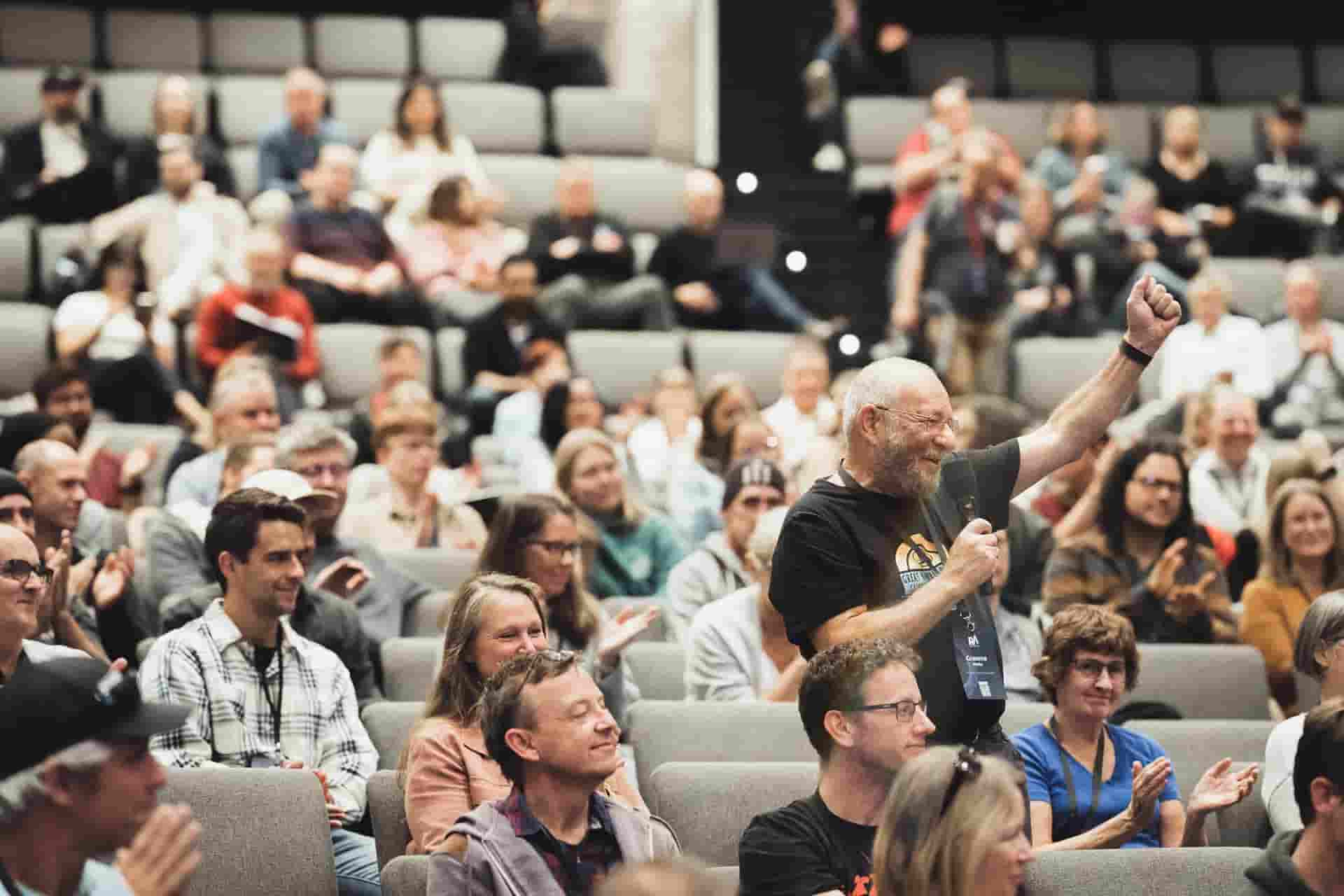
How will your church plant make new contacts in the community? Ideally, you can become known as ‘the church I know I don’t go to’. This episode points to four ways to make contacts: 1) The personal contact of your launch team. 2) The ‘new front door’. 3) Community leaders and existing groups in the community. 4) Special events.
Transcript
This transcript has been generated, and can contain errors. Please refer to the original recording for the definitive language used.
Read transcript
[0:00]
So, as you begin to walk through the opportunities and consider how you are going to connect and make contact uh with those you're trying to reach, keep remembering this. You don't have to do everything. At the end of this module, uh one of the later episodes, we're going to start to I'll give you a tool to start mapping out uh your whole ministry funnel, the ecosystem of your church life, and start making some of those hard decisions about what you aren't going to do. They're the much harder decisions.
[0:37]
Well, welcome to the next episode of the Church Planting Australia podcast. This episode, we are talking about making contact. We're going to start at the top of the mission funnel. If you don't know what the mission funnel is, uh check out the show notes for an image of it, or you can check out the ebook for an image of it. Uh really, the mission funnel is just a a diagrammatic way of helping us understand how it is we help people take the next step towards knowing Jesus. That's all it is. And so, right at the top of this funnel, the first question we're asking is how do we contact
[1:08]
people? And particularly in a church plant, where you're beginning from scratch, uh that's the question you want to ask. How is it that we make contact with people in the community that we're planning? As we launch, we want to make some noise. Now, not everyone is going to come to your church plant, but you want to begin to be known in the community that you're planting in. Even if they don't come to your church, or even if they don't go to any church, you want to be known as the church they know they don't come to. That's how much noise you want to make. Here's four categories then to think
[1:39]
into. You're going to give us the first one. Uh you've been involved in a number of church plants. Let me check with you. And I did check with you beforehand. We we had a conversation about this, and in my experience, it's absolutely true. In the network, it seems to be true as well. But, here it is. What have you seen as the single biggest avenue for contacts and growth in church. Yeah, I am convinced of this. Uh and it's through the personal contact of church members. So, people at your church, they know lots of other people who aren't Christians. Uh and it'll be the single biggest avenue of growth in
[2:10]
your church. Uh particularly if there's a deep conviction in your launch team of gospel truths, and they're really compelled by the vision of your plant, um and they're confident um in what their friends will experience on a Sunday in the main gathering and at the other other events that your church will run. They'll look for opportunities to bring their friends, their families, and their neighbors. Um and I found this to be true from launch and every moment after launch as well as the church grows. So, the single most effective opportunity for
[2:40]
evangelism is the friends and family of those in your church. One of the key things we do at Geneva Push, the planting arm of Reach Australia, is help men and women work out who they're trying to reach, how they're trying to reach them, whether they are the people at the right time in the right place under God to plant a church. We do that through our assessment process. We would love you if you're thinking about moving towards planting to have a talk to us about that. You can find out more information on church planting assessment at genevapush.com/get-assessed.
[3:13]
All right, the second one is this. You want to sort out what is referred to as the the new front door. Now, we were having a chat about this beforehand as well. For some churches, this is a huge part of making contact, this new front door. The avenues that people might use to to find your church will often be online. So, it might be your website, it might be social media, it might be marketing even, even putting out letterbox drops which quite quite well as part of a whole package. Um and as you move towards that public launch moment, uh maybe signage, billboards, whatever signage you can do.
[3:45]
These are crucial to have and they're crucial to get right as well. The tone is really crucial to get right on this stuff, and we'll come back to that later in future podcasts. But for many, even friends and family of those in your church, the first thing they're going to look at, if you've invited them or they Google, the first thing they're going to stumble upon is that social media presence. Go to your website, dig around, have a look. That will be their front door. And you want them to know when they look at that what to expect. You want them to know what their next steps might be. If they've gone and
[4:16]
they're checking that out, whether that's for a contact form or attending some sort of connect event or evangelistic course, whatever it might be, you want them to know how to take that next step that through that new front door, website, social media marketing. Yeah. And third, there's a work to connect with the community and the community leaders that you're planting in. So who are the key leaders? What are the key organizations that serve that community? What are the places that people connect quite organically? And the question in
[4:46]
each of these is, well, how do you build a bridge between your plant and the community that you're trying to reach to demonstrate and share Jesus's love. Here's the fourth one. What events can you run to increase the surface area of connection with your wider community? Now, you don't go into these events expecting them to create a flood of new people coming to your main gathering, to church on Sunday. In fact, generally, the people who will filter down to that Sunday and other events you might run, they're already going to be
[5:17]
connected. But these these big events are often worth running because of the role that they play in helping your community know that you are there. For those moments where people will be seeking meaning, connection, you want them to know about you. And they often provide as well for people who are friends and family of people at church a very easy invite for them to come to. They're kind of a megaphone to the community, but it's just an easy next step for people within your church, low confrontational, easy relational
[5:50]
event. So, as you begin to walk through the opportunities and consider how you are going to connect and make contact with those you're trying to reach, keep remembering this. You don't have to do everything. In fact, you absolutely should not do everything. At the end of this module, one of the later episodes, we're going to start to I'll give you a tool to start mapping out your whole ministry funnel, the ecosystem of your church life, and start making some of those hard decisions
[6:22]
about what you aren't going to do. They're the much harder decisions. But, as you start to consider what you might do in this area, begin with the question, as we pray for the thousands who don't know Jesus, how do we introduce ourselves to them? My chest hair. Actually love your hair. Oh, yeah. Do I need to shave my entire body next
[6:53]
time I film? Is this unhelpful me waving my pencil around? I think I did that at point for emphasis. Cuz I'm just I didn't notice. It's not pointing. Passion. Do this. Um