

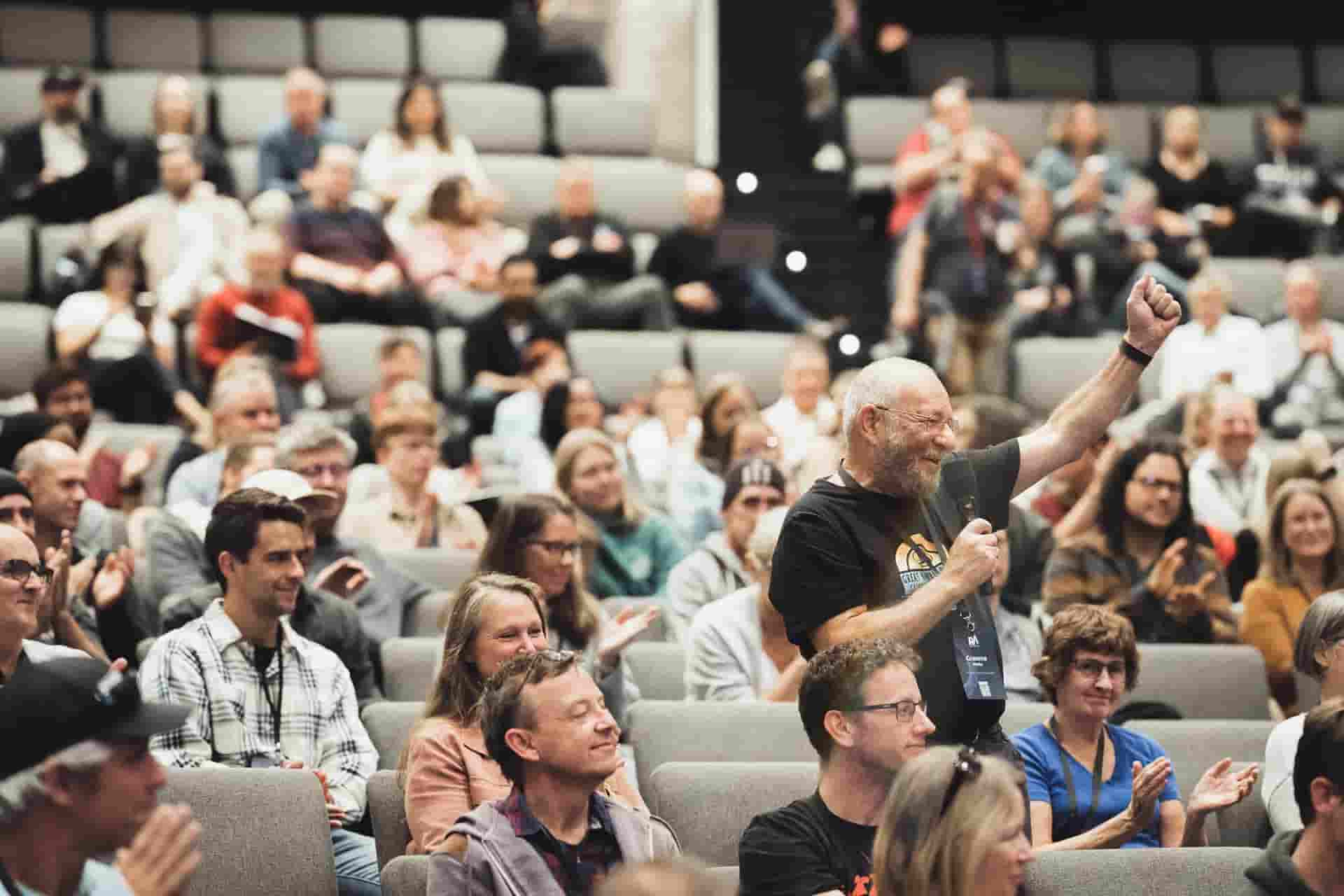

Ben Chapman from Adelaide’s Trinity Network and Dave Moore from Hunter Bible Church address the practical aspects of running a church effectively, from administration and finance to building maintenance.
Ben and Dave draw on their management and leadership roles, both in the secular and Christian worlds, to despiritualise disorganisation, and address the principle behind running all the background tasks that makes ministry run smoothly: loving people.
This workshop was run as part of the 2019 Reach Australia conference.

Transcript
This transcript has been generated, and can contain errors. Please refer to the original recording for the definitive language used.
Read transcript
[0:02]
I know this is the session you've all been waiting for. So, this is the highlight of the conference. This is where the rubber hits the road. This is the nuts and bolts of church life. Uh, we're going to introduce ourselves in a a second. Um, What we want to do is we want to you guys have got principles all week. Uh, and so we're going to move really quickly through those as fast as we can. We want to tell you what we're doing in church operation world uh, to try and make things easier uh, so that you can you can take take ideas away uh, and
[0:34]
implement them and ask us questions. So, hopefully we have a lot of time for questions and because we do operations means we do things effectively and fast and we'll we'll hopefully finish with loads of time to spare. Yeah. There's no PowerPoint or anything like that. So, we'll just get straight into it. But to make it a little bit easier for us, what would be really helpful is to actually know who we're talking to and uh, what your kind of role is. So, rather than going around get everyone to introduce themself which would just take too long, how about we do it like this? Uh, put your hands up. So, everyone put their hands up.
[1:06]
Great. So, if you are responsible for setting the vision direction of your church, uh, i.e. you're a senior pastor, put your hand down. Good. This isn't for you anyway, so that's fine. Um, Off you go Liam. You can you can go. That's fine. Okay. Uh, if you are involved in business or administration of your church, so things such as finance, risk, governance, basically all the boring stuff, put your hands down.
[1:39]
Excellent. Uh, maybe you're involved in communications or uh, web, media, graphics type stuff, put your hands down. All right, who's left? What have we got left? Uh, so we've got an elder. Elder? Yep. I'm a stay-at-home dad and I used to be in the army. Good. Excellent. He's just a legend. Yeah. Maintenance. Maintenance. Okay, great. And was someone else over here with their hand up? It's just admin. Just
[2:10]
general admin. So, like all the stuff. Yeah, great. Love having you here. Yeah. Anyone else? Do we not talk to anyone? No. Okay. Cool. Excellent. That's really helpful. So, we get a good idea of who we're talking of the people who are doing finance and and business, that type of thing. Um hands up if you do more than that, more than finance. Yeah, so just general admin stuff, like all that stuff. Yeah, that's what you do. Okay, cool. So, there's some people who just who are primarily finance. Is
[2:40]
that right? Okay. Okay. Excellent. Okay. Oh, look, what we want to do is I'm Dave, so I'm at Bible Church. I came from a I did a couple of years in IT when internet startups were a thing and I got made redundant a few times. It was fantastic and then went into MTS thinking that I would just go and be church support person, but my trainer said, "No, no, we'll get you reading the Bible with people." And so, I did MTS and loved ministry and ended up going to
[3:12]
theological college and I've been in pastoral ministry for the past 11 years after Bible college. Yep, that's my world. That's where I've come from. So, very little in the workforce and I'm a pastor. That's right. Cool. So, I studied engineering, but I was rubbish at it. So, my first engineering job I quickly got promoted to being a manager, which is normally what happens in these situations. And then I thought, "Oh, I probably should get some skills around managing." So, I went back and I studied an MBA.
[3:42]
I spent time working as a project manager in the defense industry in Adelaide. So, large complex projects. After that, I moved into the only other industry that's in Adelaide, which is mining. Uh, so I spent uh, 7 years uh, in BHP Billiton in a variety of different leadership roles, predominantly around developing strategy and then seeing it implemented. Um, during that time I attended one of the Trinity Network church plants uh, and I was on a leadership team in that church plant. And uh,
[4:15]
one day Paul Harrington, the boss of the Trinity Network uh, asked me if I'd come and work with him and to be honest with you I couldn't really come up with a good reason why I shouldn't. Uh, so 3 years later here I I am. Um, the Trinity Network of churches, you probably if you heard Matt speak last night you'd heard a little bit about it. We're in Adelaide. We've got 10 churches uh, that are across the metropolitan area of Adelaide and we we operate as a network so we think by hanging together we can achieve more than by all going separate. That plays
[4:46]
out in church operations quite a bit cuz we actually do centralize uh, a lot of what we do so I understand when I talk about what we do that's kind of the context I'm coming on from in that respect. Yeah. Now this is one thing I think is going to be helpful. For those of us in the room who have who have who have gone through Bible college, can I just get a show of hands? Have you gone to Bible college or something? Okay, hands down. Those of you who have who have who you would call yourself in corporate world, like you've come from corporate world and you're in corporate world. Amen. All right. Okay. What we're going
[5:18]
to do is This is normally thought to be a problem. So this is what normally happens, right? Pastor looks at corporate world guy and says, "You don't understand. You don't get church world. You're and and nothing you have to say is helpful." Okay, this is this is what happens. We don't like to say this but this is what pastors can think. So what pastors will think things like "Look, you corporate world people, all you think is that if you if we make a strategy and hold to it, it'll all
[5:48]
work. You don't understand church. That you just want to if we just get the programs right, then that's all you got to do and and church just flows out of that. You don't actually care about people. That's your problem. Thanks. Okay. Um what I'd say to that is right, it's not just about organically growing the church. That's an excuse for not attending to basic fundamental tasks. That's right. That's right. And it's right. It's right. So, one of the things that pastors we need to own
[6:20]
is that we spiritualize disorganization. We think we're being spiritual and godly by not planning things and not organizing things and not executing things well. We think we're being Christian and we despiritualize organization. We think, "Oh, because you're putting so much thought and planning and strategy, you're not trusting in God. You're using worldly wisdom." When it's not that.
[6:52]
It's simply loving people. It all comes down to the the idea if you've got lots of if you've got a family of one child, organizing a weekend away doesn't take that much effort. All right? If you've got four kids, I'm from we've got four kids. You know, you've got to organize that thing weeks in advance. You need to have the car that can fit it. You need all You've got to put so much planning As soon as you get more people, you have to plan well. It's just loving to do that. And the same is is true with church. The more people you get, the more you have to think
[7:23]
carefully and lovingly and so plan things and structure them and put systems in place. Systems love people. And uh we think that uh because uh because uh because Christian because Christians should just love each other, it should just happen. And if you have to plan or put thought into building a system to love, then it's not not loving. And that's just bad that's that's that's not right thinking.
[7:54]
So, Acts chapter 6 should show us this that if you want to love lots of people, you work out a system and a structure. You entrust that to people so that you can focus on the word of God and prayer. That you need to build systems when there are lots of lots of people. So, one of the things we want to do is help pastors not have that view that they're being more spiritual by not being organized, not not planning, and not doing strategy. Um what do you think corporates need to understand about church?
[8:25]
Hm, that's really good. I should have taken notes. Um So, I think having moved from the corporate world, business world into the church world, uh the thing that I've spent the most time wrestling with, uh and I still do, is that uh in the corporate world, the process and the end game is all tangible. Everything's tangible. Uh increase market share, uh higher profits, on-time project completion. All these things are tangible, measurable,
[8:56]
uh and to a point controllable. And when they're not controllable, we've developed a way to try and make them controllable, which is called risk management. So, we try to make everything as controllable as possible. Um Now, I think some people say to that, "Yeah, but you're still working with people all the time and everything." But corporate world is a little bit different. If I could How do I say this gently? At BHP, if uh there was a problem person, I'd release them to industry. Right?
[9:26]
Um problem solved. Yeah. But you can't do that in a church and we should and we shouldn't do that in a church. Um we're we're more of a family than we are a business or a family business. And my grandfather, he was a a great businessman. He used to say to me, "Ben, never mix business with family." Which is great in the business world, but that's church. That that is church. Church is This is we have to embrace this rather than fight it. So, yes, I think a common thing that corporates can do is go, "We
[9:57]
just treat it like a business." Now, I think that's an exaggeration. I I haven't met any corporate corporate people who come into church world who really believe that. That they really want to love people, but that can be our reaction to it. However, there is a truth to it where um because corporate world is not family and you keep family out of it and you're not ruled by emotions and that type of thing. Church world is family, and so church world, we have to actually embrace that that it's true. We do have
[10:28]
a family and it's a business. It's an organization. um the track, let alone be thinking big picture vision and and strategy uh type things. But, can I say, I think at the end of the day, the the process that you go through in strategic planning is actually as important as where you end up. So, that is the process of thinking strategically, working out what the opportunities and your issues and ways in which they can be tackled, uh interacting with other people in your
[10:59]
team, bouncing ideas off them, uh that can all bring immense clarity to you as a team and a church, uh and help you as you go forward. It's one of the few areas that actually requires everybody in a team to have a a good input on as well. So, whether you're a a communications guy or senior pastor or an admin person, there's input that's really helpful into strategic planning. But, if it's done poorly, it's confusing and a huge waste of time. So,
[11:29]
um and at the end of the day, a strategic plan is what you're trying to do is you're trying to capture and align the heads and the hearts of people within your church and point them all in the same direction. And when you boil it down to that, it's all it is really is a leadership tool. Can I ask so in in your church, do you lead the strategic planning or is that Paul? Um Paul's one who sets the vision and then Yeah, we we both work fairly closely on
[12:01]
the the planning of how we see that implemented. That's at a network level. So a lot of that's not ministry nuts and bolts. Each church kind of does that and I assist the churches as they go through that. you and Paul sit down and go okay, so the strategy that we're going to implement at our level is this, but it's going to affect these people, at what point do you bring them into the strategy discussion? Oh, well before we decided that's what we're going to do. Right. Okay. So even if you Well before we tell them that's what we think we're going to do. It's an iterative process that they're involved
[12:32]
in. Yeah. So you don't want to make a decision without including them without including their thoughts. Yeah, where where where at all possible. There's some decisions you just need to make. But no, generally Get everyone in the room. But when you say everyone, you're not getting everyone in the room. No, so that's that's the balance you got to work out the level at which you include people in that. So in a church situation is a I'm not past to say. What would I know? As a pastor See what we unconsciously communicate to
[13:04]
to corporates is terrible. So bad. I've now forgot what I was going to say. Who gets in the room? Who gets in the room? Anyone who's going to be affected or who needs to be able to help you implement it at the end of the day. I think that's that's kind of how I would Yeah. I think I think one of the key key thing like you're saying about the strategy thing is is again it's not so much what you end up with. It's going through the process because as you do as you so for sorry for many of us here we're probably
[13:34]
not in a role that we can initiate that strategy discussion. And so you and I are in particular roles where we can but for many of us we're not but encouraging it to happen is not a smooth process because as you say what should be our strategy and you've got five very clever people in the room who will have their idea of what ministry should look like. They will have an opinion about what it should be and it's really helpful to realize oh so you you don't think that mission
[14:07]
should be that important. Right. Okay. That's an interesting discussion that as a staff team we're probably going to need to have. How important is mission in the strategy? You know, and so it raises areas that you've assumed everyone's on the same page with. Yeah. But helps realign them at the same time. Clarify. Yeah, that's exactly right. Yep. So I I have spent a fair bit of time thinking about this because I I came out of the corporate right world and I think we've
[14:37]
got to be really careful not just to adopt the corporate model of strategic planning in a church. Because like strategic planning has just by name has corporate characteristics and even I found even the most godly people uh who are on boards or whatever that they bring their work experience and the the idea of making everything tangible and measurable into that context. It's just human nature
[15:08]
and that that can make the strategic planning process actually really difficult. So I think I don't really know the answers here. I'm just hypothesizing. I think a better way to do it is what is called in the corporate world is called straw man planning, which is actually here's all the options we could go through. Let's talk about the benefits of options and what we would see happen in these options. Document them, talk with people, and as opportunities come up, let's take one of those. We know they
[15:39]
align with our vision where we want to go. Uh so, trying to think the example would be church planting. It would be really easy for me and Trinity Network to say in 2026, we're going to plant in um Seaford, which is a suburb south of Adelaide. We're going to send 300 people. Uh it's going to launch on the 24th of March. Uh we're going to find a pastor for it. That's our strategic plan. Let's measure how we're going against that. So much of that's uncontrollable and not going to happen, right? So, the level of
[16:10]
strategic planning needs to be flexible. And I think straw man planning, you can go away and Google it and read about it, is actually far more helpful method. It's options and it allows you to to analyze options in concept phase and think, yeah, these align. So, when they come up, be able to follow them. Yeah. So, I'm really interested in the straw man planning. Yep. I think because we did all this time with a 16-page strategic plan, which is short for some strategic plan. And then hit the ground this year
[16:42]
and the whole thing's just blown up. Waste of time. Yes. And all these opportunities came up. I agree the process is great. Mhm. But going through the process gave us confidence to take opportunities when they came up. Yes. But I'm thinking I don't know what we're going to do next. Yep. Cuz I still think planning is important. Yep. I don't know if it needs to be 100-page long. Yep. Cuz I didn't read it again. We wrote the whole thing out, I put it up on the wall, and I just left it. Yeah. Most people put it in a drawer at the bottom, yeah.
[17:13]
But I'd like to just maybe something like how you straw planned it. Yeah. Uh specifically cuz Yeah. We could spend all session talking about this. Um So, I'll I'll give you a really quick summary of it. Um The quickest way to do it is uh you have opportunities, threats, SWOT analysis type thing, all right? And you you sit around as a group and you you know this is assuming you've got your vision set, you know what
[17:44]
your values are and who you are and where you're going and all those kind of things. And then you sit around and you you methodically go through all those different bits and pieces is and then you think, "Well, what are the opportunities we've got? What what can we potentially see coming up?" So, church planting, two services, um cross-cultural ministry, um etc. etc. So, you'd think your way through those and through that process you'll work out some of those potential opportunities that don't fit with our core vision or whatever as you analyze
[18:16]
them against the other ones. Uh and so you make sure you document all that. And so that 6 months time once you've started and you're in the busyness of church life and everything, someone comes along and says, "Hey Lawson, we want to start a um Try not to be rude to anyone by suggesting a particular ministry. Pardon? Ukulele A ukulele group. Thanks, mate. Yeah. Um I'm not sure they would have come up with that yeah, they don't know. Um You'd be able to say, "Great idea. We
[18:47]
had that thought 6 months ago, but we know it doesn't fit with our our vision." Or yes, that's exactly what we thought. Let's have a chat more about that. So, I think that the key difference between strawman planning and strategic planning is the level of detail that you go to and how that gets played out. From like for our for our circumstance, we've gone um you know, this is a rough thing of what we would what we pray God will do in our church in 12 months, 3 years, 5 years,
[19:20]
and 10 years. Just It's all like in a table. We'd love to have this many people. We'd love to be here. That sort of thing. And then we've gone, "What would we need to for that to happen?" Actually, no, we could probably manage that and we could probably manage that. We could not manage that. That would mean this and we haven't even thought about that yet. So, at that point it's just been a We've used strategic planning that sense to go, "What would we love?" And it's very vague. Um, uh, I think Andrew
[19:51]
I've forgotten your name, Andrew. Andrew Mitchell is a great person to have have chatted with this. So, Andrew Mitchell has done this type of thing a bit here and, uh, I think you've got a an idea of how to be be doing this well. Yeah. So, there you go. I've just thrown you under the bus. Do you want me to say something? If you Do you want to say something? I can say something quickly. Yeah. Um, look, I I think it on a one-page thing, I think it is as simple as thinking,
[20:23]
say just for the year, where do I want to be at the end of this year? So, yeah, basic point is, you know, with 5% growth, how many people we're going to have? How many leaders do we need? And all that. So, get a vision for the future and then it's just working out SWOT analysis, whatever. But, what are the what are the key five things that we're going to do to achieve that. What are the things that are going to move us forward?
[20:55]
And identifying in all the things church is doing, what are the key things we're going to push into, key initiatives, to achieve the outcome. How do going them some active steps towards that? Let's be clear on what they are. You you you're realizing that to move forward you need to raise up leaders. So, we're going to have a leader We're going to raise up three more leaders in this part of ministry and we're going to work by that. Um or or whatever. Yeah. Uh
[21:27]
but yeah, with the SWAT analysis we're thinking about church life, where where are the weaknesses and then where are you going to get the biggest bang for your buck if you were to work Yeah. Yeah, thanks. The other thing that we've done is we've gone uh so, we've got these congregations and we're looking to uh plant new congregations, like split congregations, that type of thing. And so, we've gone, "Okay, what are the triggers? What are the things that we need to have in place before we do it?" So, again, it's kind of opportunity opportunity thinking rather than strategy thinking.
[21:58]
If if you can make that distinction. I'm going, "We we the opportunity won't be there unless these things are in place." So, we've got to have this many people and we've got to have a we've got to have the ability to manage this type of thing and we have to be able to to to do this. And until that happens, we can't do it. Okay. All right, that's really helpful. We know what we're trying to aim at. That's You look at that and go, "Wow, that's going to take 3 years before we do that." Or we can do that now.
[22:29]
Why aren't we doing it? Okay. Is there Is there another trigger that we haven't seen? What's stopping me? So, yeah, there's all ways to think about it principle wise. Uh we I think we're I think one of the key ideas we're talking about here is probably more principle driven than um measurable measurably Yeah. driven. Yeah. That's right. I think the other benefit of changing the terminology from strategic planning to straw man planning is if you do have corporate people in your church,
[23:00]
they'll go, "Ah, I know what you mean. Yeah, we do that at work. Oh, so you don't want me to tell you what the KPIs should be and uh hold you accountable to that. Oh, you you want We're thinking options." Great. Yeah, and so you you're starting to talk a language that they understand. Cool. Uh let me move on to the next session. Uh we did a communications one before, a lot of you guys were there. I just want to say a couple of things around communications. Uh the best way to empower your staff team to communicate well is tell them no that they can't do things. So, you cannot make announcements on
[23:32]
Sunday. That's one of the best ways to empower them because what it does it forces them to be really clear and think better about how they are going to communicate. What normally happens is people go, "Oh, yeah, we're running this thing and so we need to announce it on on Sunday." To which we say, "Okay. Tell me one of the announcements from last Sunday." Every time, they can't remember. All right.
[24:02]
Sunday announcements do not work. You have to have a better idea and so you push the responsibility back onto them saying, "How are you going to communicate this other than Sunday? If you've got a way of communicating other than Sunday, then come back to us. And we might communicate and we've got three principles about what we communicate um on Sunday. It's got to fit It's got to be core to your church, core vision and values. The church soccer team is not church is not core vision and values for your church. It does not get a mention out the front. It's got to be urgent. It's got to be It's happening soon. It's got to be it's
[24:34]
present in people's minds. Telling people that something's happening 6 months ahead on a Sunday does not help them. They're not writing it down. They don't have their diaries. They're not writing things. Asking them to get their phone out and put it in isn't going to work. You know, just don't do that. And um it's got to be for more than 50% of the people in the room. So, if there's an event on for 20 people and you've got 100 people in the room, go and talk to the 20 people. It works so much better than taking up 100 people's time for 3 minutes. You know, so empower your staff to communicate better
[25:05]
by stopping them communicating whenever they want to. Uh there's other things like um uh control will uh on that's what we do next. Um Uh part of this is helping your church give them consistent ways that you communicate. So, we kind of talked about that in the uh in the communication things. So, we won't go through that. But we we've we've identified a couple of key ways. We send out an email every month and that's got all the details for every event for that month. And so, if people got questions about where things are, they know to go to
[25:36]
that email. We tried doing other ways and we've just decided email's going to be the easiest way people can search for it. Yeah. What's the advantage of doing it monthly as opposed to weekly or It takes so much time for us to do it. Just Sorry. And uh if people get emails too regularly, they just ignore it. And so, I Yep, I reckon. You're dropping nothing weekly. Yeah. Uh why do it? Like Yeah. I mean, you get people to church
[26:07]
every week. Good like is is it is there something that has to be communicated that week that's so urgent you need to put another thing in their inbox? And I just put the question back at you then. With our church calendar that's weekly and the helpful thing is you you're expecting it weekly. Yes. And it's also a great way to think of Sundays to look forward to if you're thinking of something this Sunday. Yeah. It's kind of
[26:37]
church news, but um centered on on what we're doing in church. Yeah. So, part of that is being really clear on why we're doing it. We're sending this email cuz we want you to be aware of what's happening on Sunday to pick up the ideas from last Sunday. So, So, Sorry. saying you shouldn't do it every week. I'm saying you should be really clear on why. We've just gone It We don't think we're going to hit those things and the amount of effort it takes to do it is quite high. So, we're not We're going to do these other things otherwise. How do you communicate a church event that's for the whole church like a
[27:08]
church camp Mhm. that's in a year's time frame? I don't know. So, You want to save the date? Yeah. We have slides that run before and after church and Yeah. So, there will be the thing that will say, "Hey, this is on." But, yeah, we can't expect that it'll work. One of the ways I think communication I think it got raised there. The best way to to solidify something that you communicate is by getting people to talk about it.
[27:40]
And so, we've started communicating to growth groups by via video. We've filmed a video every month and we show it we get to growth group leaders, "Show this video." They show it on the screen and then the point of the video is, "Pray about the content in your group." So, people look each other in the eye and go, "Oh, yeah, I forgot that thing was on and are you going to that?" That sort of thing. And that solidifies cuz they're communicating about it solidifies the idea that you're commun- you're communicating. And so, uh that's one of the ways that we've done that. And so, we might do it like that. So,
[28:11]
for someone that likes to be organized holidays three years Mhm. then I know not to book a holiday when they have a church camp. Yeah. That's right. Yeah. And so, we'll So, in the in the email, we'll we'll we'll communicate things like a few months away something's happening. We'll we'll do that as well. Yeah. Back on the email thing, if you're using something like Mailchimp, it will tell you how many people actually open the email and read it. Can be a bit defeating if you do that and you're sending out a weekly email and you work out two people are reading
[28:42]
it, but it's helpful information, too. Yeah. Uh other things that we do in communication, website and social media we can discuss later. One of the things we did for our staff that was really helpful is we limited the amount of fonts they could use. We just said you can use one font. That's it. Just do that. And reason is we're freeing them up because I don't want my staff spending a second of time. Their precious pastoral ministry time. I don't want them caring about what font they use.
[29:13]
And I want it to look good. So I take that decision away from them. And they're happy cuz I get cool. Okay, I'll just use that font. No worries. It's great. And so free up your staff by taking decisions off them. What's the it's Brandon Grotesque. We paid for it. So we're now we're now allowed two. We did a full year with only one. And we said you've done well, you can now have another font. You know, you've been very good children. Well done. Thank you. Which one?
[29:43]
Roboto. Yeah, Roboto's good. Yeah, it's Yeah, we had a designer go this is what we think we use. We then had to add a kids font cuz neither of our fonts work for kids. And we had to bring in a third one. Anyway. Guys, this what fascinates Okay, let's move on to finances. So people in churches don't want to know there's a budget. They want to know their money is being invested. So you see that in the notes there. I think investing by nature conjures up the idea of a return. And in the church case the return is in
[30:15]
kingdom currency, not Aussie dollars. But how you manage or how your church manages and talks about money has a big impact on the culture Excuse me, of the church. So in our churches we still have a budget. But wherever possible we try and talk about use the language of investing rather than budgeting. So you you know this, you never bring a new staff member on and say, "Can you please budget for our trainee?" You don't talk in that language, do you?
[30:46]
You talk about investing in someone. Please don't talk in that language. Okay. We don't talk in that language. Um uh But we don't do that with a lot of other things. So, a lot of other church life we don't ask people to invest in. Um it just kind of is part of the budget. Uh so, that that's one learning we've got. Um and encouraging people to invest in everyday things is also really important. So, there's people who know far more about this than I do, but um
[31:17]
people are captured Some people are captured by the one-off projects or the the needs that are a one-off. Uh for us, church planting has been one of those things. We we're always amazed at um the amount of people who are keen to give towards church planting uh activities. For others, set and forget and don't talk don't talk to me about it. Um So, everyone in the church has a different different kind of uh idea about what works for them. Uh when you're reporting on finance,
[31:47]
um focus on the direction, not the details. So, whoever it is in your church is standing up reporting about finance, you can talk uh about um income to expense ratio, free cash flow, weighted average cost of capital, all these kind of things. They're only the accountants are going to care. Um And they will. And they will, yeah. And you'll get more questions. Um the feedback needs to be at a level that anyone can understand in the church. Uh
[32:17]
and so, therefore, focusing on the direction rather than um the detail, the actual numbers, is really helpful, I think. One thing we've started doing is breaking uh church expenses and everything down to numbers that people can actually understand. So, we'll say something like, "For every $100 that's been given, uh we spent 85 of them and we're putting away 15 uh, for the future. Talking in that kind of context, people can actually Anyone can understand that.
[32:48]
Um, and then the other thing I'd say to how you talk about money in church is be consistent with it. People don't like it when one month you're talking about something over here and then the next month you're talking about a different and they can't equate the numbers. Your accountants get upset. etc. etc. Uh, and you want to provide people with confidence. So, I think this is one area you do want to be business-like in how you you treat treat money. So, you never want to appear like you're hiding anything or you're being um,
[33:20]
you know, not transparent. Um, and people respect when you're being transparent and honest, I think. So, yeah. So, in our situation in Trinity, we have a business manager. That job title has been picked for a very good reason, uh, because it in instills confidence. He's the one who manages the money. Uh, he knows business stuff. So, cool. Any questions? Well, so one of the things we do when we we communicate money is we give a a
[33:51]
simple handout to everybody and then we have a really big handout up the back. So, we say, "If you want the details, they're all there. We want to be as transparent as possible and you can ask any question or if you want the big details, it's all there. You can go get it. But, for everyone else, th- this is what what we we're going to understand." Yeah. Um, just catching on that. Hm. Um, how often are you Um, I see. Hm. In my situation, it it's
[34:22]
What's the question again? Uh, uh, sorry. The question was how often are you feeding back about finance details? Um, to be honest, I think in our churches it it varies. So, some churches it's quarterly, some churches it's monthly. If it's a church plant and it's just started, you're probably actually talking about it more regularly than not, just so that people are understanding how things are going. We don't have a hard and fast rule. We in our situation, we leave that up to the the ministry teams to work out what they think works. Yeah, we are
[34:53]
we've we we've tried doing every month at at church an update and we found that didn't work for various reasons, normally because in certain months it's just not the right month to do it and then it gets too close to the next one, that type of thing. And so, we've decided to move it to the growth group videos. So, in the growth group videos, we have a quick update. This is how we're going on finance. And we say and we keep reminding them the reason we're doing this cuz this is family business and when you have people over for tea at your house, you don't talk about your finances with your
[35:25]
family. So, why would we do it on Sunday? And so, we we avoid talking about money at all costs because it's one of the big stumbling blocks for non-Christians. They think Christians only the that they think their friends are fools for giving money to church. They think it's church is just a cult that's getting your money and if they if they turn up at church and you say, "Hey, you know, struggling with money. If you can give, we're going to pass the Please don't pass the plate." Um yeah, they it just
[35:56]
feeds into all of their expectations about our church. So, we don't pass the plates. We don't we we as much as possible don't talk about money. Now, having said that, this Sunday just gone, we talked about money at church, you know. So, it's not a hard and fast rule, but at all costs. So, this is where the our the the mission guy at our church has spoken in to what we do and he's going, "Hey, if we care about non-Christians, we need to think harder about how this happens." Any other questions about finance before we
[36:26]
roll over to the next one. Uh if in your budget you plan for a deficit, how do you then communicate the need to be giving and part of that without putting the expectation that the congregation needs to give up what we plan that they're paying for if they don't give it up? Does that make sense? Yeah. Yeah. Has someone else planned a deficit that can speak into this? We've never
[36:57]
planned a deficit. We've made a We've We've achieved a deficit. Yeah. Dominic, have you ever planned a deficit? Uh no. I don't think so. Yeah. Mhm. Um I I mean, sorry. Obviously, we we had a year We had a 70 grand deficit last year. Uh it was really bad. Something came up. Yeah. That's It's not a planned one. You're not putting it in the budget.
[37:27]
Yeah. Andrew. I think you you work out what the budget giving you want and you talk about that. I mean, at your AGM or whatever, you say, "Look, we are planning for a deficit for whatever reason." But then as you communicate through the year, even though you're planning for a deficit, there's a certain amount of giving that's required. So then I'd I'd talk to them about how you're going against the budgeted giving from that point on.
[37:58]
Mhm. Yeah. We've even talked about it in terms of like when we want to make surplus, we've just called the surplus part of our expenses. You know, we part of our expenses is putting this money aside. And so these are expenses for this month and our income's this month. And part of our expenses is our savings, but we're expensing it, you know, off to the side. And so But if you're going to make a deficit, I'd I'd be uh wanting to communicate really clearly why and when. Why we're doing this. This is really
[38:29]
important, so important that we do this sort of thing, and we can only be this much. We cannot deal with a deficit less than this, and so I'm giving this with this, and when this is only for this year. You know, it it's a long-term plan rather than a a plan thing. Yeah. It may be the case if you've got a capital expense that you're going to benefit from it for the next few years. Yeah, that's right. Yeah. you haven't got the reserve and you've saved. Yeah, we're budgeting for a deficit, but it'll be utilized in the next year. Yeah, that's right. This is why we're doing it. Yeah.
[38:59]
Now, I think about it, and I think in our case when we do have a deficit, we actually end up talking longer term, so we kind of show that yeah, we might we may be church planting this year, and we are going we are budgeting for a deficit, but our plan is that over 3 years that uh doesn't happen. That deficit gets erased or something like that. So. Yeah. Yeah. Uh one of the things about communicating money is I have two things that I do, or I one now, is I will uh I will try to explain it to my wife.
[39:31]
And if I can't explain it in 20 seconds, it's not good enough communication. Or sorry, if she can't understand it, what what point I'm trying to make in 20 seconds, it's not good communication. I need to get it to that level because so she loves our church by finding this hard. She's an accountant, right? Uh couple of things we want to quickly work through. Uh yes. Um which accounting package are you using? Uh we're using Xero. Same. Xero. Yeah.
[40:01]
Uh with that, we've got uh we manage it through uh through volunteers. So, we we get a professional audit, but everything is all done by volunteers. That is as much as possible, if you can not staff for finances, if you can it saves you money and it's something that you should be able to Yeah, hopefully depending on size that's all right. But yeah, once you get quite big it's hard to do. Uh a couple of things to work through. I want to encourage you uh to build an admin team uh I I idea that they are helping the
[40:32]
kingdom by helping run stuff at church. And so uh we have a team of people One of the ways we've set this up is we've got an email address which is [email protected] and our staff team we train them we say, "If you've got a little job that you just need done, printing, update the database with a list of people, things need done, just email admin." And we have volunteers who come in and open the the admin inbox and go do it and then they reply done.
[41:04]
And so our staff can send stuff off cuz I don't want our staff spending time updating fields in the database. Like if like 100 people there's one one you go and do it I think. But so often print off a list and go, "Oh, these people need to change." I don't want them doing that. That's not their job. I We can get that other people to do. So we try to do that as much as possible. When we get our volunteers in this one of the things I'll do with them is say, "This is great. Do you understand how this is serving the kingdom?" And so I'll ask them as I'm
[41:36]
I'm kind of actually training them, "How does this job grow the kingdom? Explain the steps. Explain the connection between this job and the kingdom growth." And they're like, "Oh, you know, whatever." No, no, no. Take the time. Let's Let's Explain to me how this and they go, "Well, this is updating where people are at uh with the life series and who finished it this week and we want these people to be well followed up so that they can hear the gospel again." Great. You're doing kingdom work. I would I'll make sure those admin people don't feel like they're just doing a job. I want to help
[42:08]
them see that they're doing an integral role in the kingdom in the church. Um So we get into all all sorts of things such that our staff team doesn't have to spend time on that. My ideal The One of things Again, one of things pastors do is we think that the exciting work is preaching the gospel and leading Bible studies and that sort of thing. And so, we go, "Ah, this is this is this is admin work. This is terrible. Nobody wants to do this. So, I have to do it." And what they don't realize is there are
[42:39]
people in church who would love to do that. We have someone who enters rece- enters the total value of receipts. And she loves it. It's a spreadsheet that's like a thousand lines long, and she's just like, "This serves the kingdom? Like, yeah. This earns money for church." And she's like, "This is great." And so, it's her dream job. And we tell our staff, "There are people who want to do this for you." And they can't believe it because they think it's the worst job in the world. But those people, those admin people who
[43:09]
love admin and lease, they think leading a Bible study is the worst thing in the world. Not They love the value of it, but they're petrified of it. They could never do it. And so, helping our staff realize that there are people out there who love doing this stuff and encouraging the connection. So, my ideal, my dream is that we have a one day a week or two day a week admin helper for every one of our staff that basically works as a PA. That's my dream. That our all of our staff just have someone that they don't send any to send an email to admin anymore. They send to their person, and their person just does so much of their job. Because I don't want our staff
[43:41]
doing all that stuff. Yeah. What sort of people are these? Are they stay-at-home moms? Are they retirees? Are they A whole mix. Yeah. Um so, um We've had people who are um who are students. We've had uh moms. Um we've got a guy who's on dialysis. You know? Yeah. And having said that not just that. So, I
[44:11]
We have someone at the moment who we've said, "You're great at this. Can you work your job 4 days a week and do this 1 day a week?" And so, that's what she's done. So, we've we've asked her to invest time in this because it grows our church. And it's great. Yeah. So, you have someone who overlooks those admin duties, or is it admin or just the email or such? Mainly the So, mainly the email, but we train them. So, as they come in, we train them up so they can respond to things in the email.
[44:41]
And then when certain things come up that they can't manage, that gives an opportunity to develop them more. Um quite often things will come in that our staff think, "Oh, this is easy." And it's actually not. It's actually a project, not a task. And so, we take those opportunities to go, "Okay, can we skill this person up in this particular role for this this person and tee them up together?" And that trains the staff member in how to delegate an admin responsibility to to someone such that next time that staff member has that job, they can find someone in their team that can give them
[45:12]
that job to. So, we're about matching our staff to admin people as much as we can. And we take the opportunities as they come. Quite often, uh by quite often I mean once every 12 months or maybe more, we'll go to our staff to down have a meeting and go, "What are the jobs you hate doing? If I could If I could take a job off your plate right now, what would it be?" And they go, "Oh, well, I actually hate putting the names in the roster for Sunday." And we go, "Why are you doing that? Why didn't you tell us you were
[45:43]
doing that? Don't do that. We'll find someone for you to do that type thing." But they think that that's not something they can hand off. And so, we've got to keep training them that No, that's just an admin role. But people who love doing that can do it twice as fast and and twice as well. Yeah, cuz they make mistakes. Cuz ambiguous, yeah. Does the use of Elvanto database help write Speaking of databases. Yes. Yes, it does. Um,
[46:14]
can we move on to databases? And we got we got a section we're going to talk about that. So, a mate of mine, Albert Einstein, once said, um, "Not everything that can be counted matters, and not everything that matters can be counted." I think it's really helpful when it comes to thinking about uh church health and measuring church health. Um I'm sure you've all been in You've got mates who've been in other churches, not your church, uh where a lot of decisions are made by
[46:45]
anecdote, you know. Someone told me. Someone told me this, etc. Uh that happens all the time. I I think a database And so, what I'm talking about a database is a a collection of data about uh what's going on in your church is really helpful lens uh that helps pastors make accurate decisions rather than just operating on anecdotes. So, um if your church doesn't have a data Well, hands up, who has a database in their church? Everyone.
[47:16]
Nearly everyone. Fantastic. I think cool. Elvanto? CC CCB? One, two, three. Yeah. Okay. Anything else? Fluro? Yeah. Fellowship One. Pastoral Care. Pastoral Care. Fluro. Fluro and Elvanto, but we're not happy, so we're going Yeah. Okay. Yeah. Church Community Jethro. Jethro. Works like it sounds. All right. So, who then met uh
[47:46]
Who then captures weekly attendance? Is that all? Yeah, good. Excellent. So, just by just by capturing weekly attendance, there's about 10 different measures that you can uh calculate from that. When you start looking at them in in parallel can be really helpful. So, individual attendance gives you the total size of your gathering on any given Sunday. So, you can get trends within your gathering. You can compare it to the year before, to last month, whatever.
[48:17]
If you've got a roll and you're measuring individual attendance, you should be able to work out the number of visitors you've got. So, the people that were there that weren't on the roll by subtracting the total head count. You get a good indication of number of visitors that you've got coming in. You can also work out how regularly people attend. So, the average across Australia is 60% of people who are regular members are in church on a Sunday. So, you can get that from that number. And then when you start looking at them all in parallel, you
[48:49]
really helps you kind of understand the trends of your church. We In our situation, we see churches with really high regularity of attendance often trend towards having low numbers of visitors. So, they're quite They become quite clicky and insular. And the opposite, churches that have really high number of visitors have lower regularity of attendance cuz their fringe is is getting bigger. So, getting those kind of insights from just
[49:19]
capturing who's there on a Sunday will help you plan your ministry that help the ministry teams plan their ministry so so much. Things like all our visitors in Adelaide, I'm not sure where how it's like around the rest of the country. All our visitors show up in January. That's our highest month of visitors. When do our staff all take leave? January. When do all our regulars go on leave? January. So, now our staff don't take leave January and
[49:51]
they don't know that yet, but we taught our staff that a few years ago. Ah, so you guys have learned all this already. Yeah, don't don't take leave in January. Um yeah, so database is such a helpful helpful tool, and if you use it properly, the insights you can gain on the church health that is just quite fantastic. Um I've got I've got a few principles on database. Um uh one of them is uh What a database is meant to be is a is a is a helpful reflection of a spiritual
[50:21]
reality. That you what you're trying to do is capture as close as you possibly can the spiritual reality of your church. Uh so the running joke in our church in our staff team is if someone has a baby uh so we go, "Oh, isn't that exciting? They had they had a baby." And we'll be like, "Are they in Elvanto yet?" No, they haven't. Someone became a Christian. Are they marked as a Christian on Elvanto yet? No, they haven't. They're not They're not They're not sitting in the heavenly realms with Jesus unless their name is Elvanto has become a Christian 2019. You know, you know, it's it has to be like that. And so part of coming out of that
[50:52]
is um if one of your staff has a spreadsheet with names in it, fire them. You do not have separate databases. So this is our threat to our staff that we've never pulled through on, but you don't have separate lists. The database is a shared list for team pastoring. That is your church, your flock, is pastored by a team. So in order to love the flock, your team needs to share the details. If you've got this team if you're life life mission team's the
[51:24]
worst. Love mission teams. They bring chaos that we help support. They they've got these lists of people who came. And you go, "That's great." But are they in the database? Oh, no, no, they haven't not in in database. So when we contact Who do you know who to contact? Well, this person has a list from last year and it's different to this person's list from last year. You're going, "No, you're not You're You think you're loving people because you've got this list, but we So, we ask our staff to make a sacrifice so that we all use a shared thing for the sake of the saints, for
[51:54]
the sake of those who we want to be saints. Uh and so, we're constantly enforcing that, and then that means part of our job is to go to them and say, "Is the database working for you? What's stopping you use it?" And so, uh that means we've We're constantly changing how we use the database. Because our teams are constantly changing. They're building systems in order to for growth. And so, the the system we use to record the growth needs to change as well. So, one of the things we do We were using our
[52:25]
PeopleFlows in Elvanto uh for uh non-Christians being involved. And what we're finding was the the mission team just could not do it. They just could not get to the point that they would put these things in. And we went, "Okay, what do you want? W- What What do you want to record?" And I said, "W- We just want to record a name of who in church is following this person up. And we just want to record what stages they're up to." And I said, "Write down for me w- what stages." They can't They think there are nine stages
[52:56]
people are up to. Great. Okay. So, we made a drop-down field for every single person in church with a drop-down field of what stage they're up to. And we made a field who's following up. And the mission team used those fields. And so, all of a sudden, the mission team has jumped onto using Elvanto. They love it because now it helps them do the the thing they want to do. So, rather than creating a thing that fights against what they're doing, we want to We want to adapt as much as we possibly can, so helping them do the thing they want to
[53:26]
do. Yeah. Sorry, just on the database. I'm not familiar with Elvanto, but how do you go managing privacy issues and having so many people being able to access other people's Yeah, well, we use CCB, and you can control that very easy. There's levels within CCB. People can have access. Yeah, it does multi-campus stuff really well, as well. Yeah, same in advance. So, we get people to sign a policy of database access policy beforehand that describes how they're
[53:56]
supposed to use it and by what conditions we will not let them use it anymore. And that sort of thing. And so, we get them to resign that every year. So, it makes sure they understand what those responsibilities are. Time's getting away from us, so let's keep Let's keep moving. Uh do Yeah, I think Yeah, we've done most of the stuff. Are there questions Are there in general Are there the questions that people want to ask about Are there things that you're doing at your church that you like, "We do this
[54:29]
and we or others in the room might just have ideas or suggestions?" Okay. Um can you talk a bit more about I don't know what the accounting term is, but it's like giving away money Growing churches seem to have a finance guy not like I'm committed, but they're just like You want to You want to pay people to reach this barrier and you want to take your staff team and DTS's
[55:00]
We'll pay for like to get you there cuz we value this. Like you just seem to There's a lot of extra cost that People are spending on things like that. How do you How do you think about that? How do you think about that person? So, are you saying there's somebody who is willing to give money to certain things? Is that what you're saying? Yeah, or how do you budget for it? Or is it
[55:30]
Is it that you're willing to go over budget when you see something Or what's the mindset Yes, so with our context, we plan for it. So, we say to all our staff um you can have one conference a year that the church will pay for. And so, that's flights, accommodation, conference rego, and everything. Over and above that it's kind of by negotiation with their leadership team depending on how the year's going. So. Yeah. Is that something you meant? Yeah.
[56:01]
Can you explain it um How do we treat ad hoc things? at good opportunities. Um especially things that you haven't planned a year in advance. So. It's not in the budget. But you see that opportunity and there seems to be money that Yeah. Thank you. And that's good. That's Yeah, like Where does that come from from an operations perspective? Yeah. Yeah, so we often have situations where like a budget's just a something that
[56:32]
happens in a point in time that a group of people dreamt up a year ago. But the reality changes. Yes. Yeah, it's a guess. Um if there's a good ministry case for it uh what we'll often say is well, what were you planning on doing that you're now not going to do so you can do that because that's a better thing. Um and most people are quite happy to operate within that. They go, "Oh yeah, we we budgeted this much to videos for this series we're going to do. We're actually going to change that and do something
[57:02]
else because this is more important than that." Mhm. Well, yeah. So, we'd go uh there's uh certain things that we put in the budget for. If money's tight, then we'll cut stuff. But at the same time, so that's an opportunity lost. We go, "Because of these circumstances this this circumstances happened, so we're reducing the amount we're spending." By that same principle if this opportunity happens, then we will increase spending. So, it's it's responding to opportunities. So, cutting money from the from your expenses is responding to
[57:33]
opportunities. Responding to circumstances and increasing the money you're spending is responding to opportunities, circumstances. And so, working out how how to do that. And part of that is setting a mini budget of going, "We think this opportunity and we think we can raise an extra 50 grand by selling this opportunity or by going tapping these these people on the shoulder." Uh so, it's it's the same type of thing you're doing in a year, but just doing for a sh- for a short bit. Yeah, so that's one way to do it. And so, you can do it the you can do it the whole church or you can have certain people. So, at
[58:04]
certain points we've gone and tapped certain people on the shoulder and said, "Hey, you know how you love Jesus? Well, this is an opportunity and we thought you'd like to know. Is that something you'd like to give particularly to?" You know, if that's the right circumstance for for that thing. And other times we've gone to everyone. Yeah. Um so, as as part of our operation like structure, um we are the operations Um on a possible level, I guess, you know, what they see as practical
[58:34]
for the finance factor of the church, how do you encourage the pastors to have a structure that operates a pipeline in our role as operations department? Dave's the expert on this one. Uh so, the question is how do you encourage pastors to develop a structure whatever they're in? Yeah. Yeah. So, I think um I think one of the things we want to do is support. And so, we want to go to them and say,
[59:04]
"Hey, can I w- would you like me to chat to you?" So, that that poetry plumbing thing was actually helpful. "Hey, you've got this really clear poetry idea. You want to do this thing that's great. Can I sit down with you and offer some suggestions?" So, I I would go into it. That's the way I got into it the role that I'm in now is because I just started to do that with our staff team anyway, that I noticed that I was able to do this this thinking strategically that they were less
[59:35]
not less able to do, they're great at it, but I was able to do it in a way that they weren't. And so, I'd go to them and say, "Hey, can we sit down and have a chat about that? I I've had some ideas that you can take on board." And so, they I say, "So, explain to me what's going?" And I say, "Well, have you thought about doing this and this?" And most of the time, they go, "Actually, that's a great idea." Or they go, "No, that's not going to work because of this." And go, "Oh, you didn't mention that before. Okay, well, if that's the case, why don't you do this?" You know? And so, I'm offering them suggestions that they can then take on
[1:00:06]
board that I want to be I want to show that I don't this If they don't need to improve their structure, I don't want to annoy them. But if they do need to, then I want to support them. I want to help them. And so, part of this I need to understand what they're doing, and so I want to offer support wherever I can. And sometimes, the structures they've got are the best things that that they can. For various circumstances, the the ugly pipes they've got is what at the moment is best. And so, I'm helping them do the best they can
[1:00:38]
because usually, a lot of our pastors are really good at the people stuff. Um And that's good. We don't want to take that away, but we want to increase it. And so, if we can convince them that's what we want to do, that we want to help them increase that that people stuff, then they actually like the ideas. Yeah. So, say what happens say for example if they're good at what they're doing, Mhm. they understand like say they're they're heroing it and they know but articulating it back out is a different
[1:01:08]
ballgame. Articulating the system they've got? Yeah, but in their head it's it's working, right? Yeah, yeah. But articulating it back out to, you know, a lay person to understand how that works. So, it's helping a lay person understand the system they've got. Also, maybe it's helping them understand that there's a problem that their lay people don't understand. And so, that's it's going to say, "Hey, can I raise this with you? I wonder if your team don't necessarily understand the system you've got. Uh do you think they do?" And they're
[1:01:38]
like, "Oh, yeah, it's fine." Okay. Explain it to me. And they are this and then you go, "Okay, it's been 10 minutes. Have you Is it all out yet?" "No, no, no, there's still more system to go." Okay. Do you see how people are going to find You know, helping them understand that there's an issue, not doing it arrogantly and this is the thing I have to struggle with, not doing it arrogantly and stuff like that. Uh doing it in a way that's helpful for them. Yeah, so I think we want to helpfully encourage them to be clear and improve that clarity if we can.
[1:02:09]
Yeah. Yeah. Um 10 churches and you're across those 10 churches and you're aware of their finances. Mhm. Have you worked out um ratios of percentage maintenance to value buildings, numbers of people in buildings, um Yeah, so we own one building for the 10 churches. We rent nine others. Um Do you're asking a particular venue
[1:02:39]
question there, are you? Or yeah, just um yeah. Yeah. So, uh what we have done in terms of ratios is we know what an average household gives across our network. Um we know what and then we kind of can adjust that for the different demographic areas we've got and we can tell the churches, uh you know, in in your area, we think you're um if you're planning on putting another staff member on, this is going to be
[1:03:10]
your budget. You're going to be sitting in the top 5% quartile of what people would be expected to be giving across your whole church. So, we can bring that kind of sense to a a budget number. They're the kind of ratios we work on. We don't We don't do a lot in terms of We've got one building. It's historic. It's falling down. It's It's a nightmare, so we don't do a lot of useful stuff there. Sorry. When you said you would justify the budget budget adjustments normally come out of
[1:03:41]
maintenance. Yeah. Yep. Um we're short of money. We won't fix We'll do it next year. Yep. Um which then builds up a debt. Mhm. And that debt then needs to be paid off. Yep. But trying to give um somebody a concept of um you have a value you have a land value or you have a building value here of a million dollars. Mhm. Um you should expect to spend uh 15% of that million in maintenance per year. Yep. And if you
[1:04:12]
don't, you're just simply building up a debt. Trying to get that sort of concept through and Yeah. um Yeah. So, there's built like from previous industries there's um rules of thumb that a lot of people use for those kind of things. It's very commercial. Um but that information is available and I'm not quite sure it'd be too different for a church in many sense. Like if your building is X size, it's going to cost you this much to run your air conditioning and it's going to cost you this much to maintain it and that kind of stuff. Um we haven't done a lot of that work
[1:04:43]
just cuz we don't need to, but When you said 10, I thought 10 buildings. We want 10. You must be gathering this. Yeah, I wish. No, we don't. Yeah. Very slightly off that question. Why that that model of church network? So, why not three main centers rather than 10 smaller? Why is it always the community aspect even though it might not be as cost effective as worth it as you put it in the operations point of view. Um is that Are you asking an operations
[1:05:14]
question or a why do we church plant? Yeah, kind of both. So, you know, what's the better what's the better way to obviously going to chosen to do 10 church planting rather than say three centers around Adelaide and people travel. Mhm. In our experience, uh people travel about 20 minutes to something in Adelaide. Any further than that and they're going on holidays. Um so we planted essentially on a 20-minute ring around Adelaide. If you looked at the map the other night, we've kind of
[1:05:44]
picked points that are 20 minutes away from our main church. Uh and then we try to It's a balance between 20 minutes and where you've got people that are coming from because we like to plant with people. Um so yeah, 20 minutes and then trying to keep going further and further away. So, you we think we can reach more people by having 10 churches of 300 than we can by having three churches of 1,000 essentially.
[1:06:16]
But, we might be wrong, but um that's the way we've decided to do it. Other questions? Yeah? Yeah. Um and you're leveraging that with cost savings? Yeah. So, uh from a finance, payroll, um accounting point of view, that's all centralized for us. So, none of the churches have to worry about that. We've we've got an accountant who sits in the
[1:06:48]
network who manages all that kind of stuff. Um just at the point where like buying power is starting to become significant. So, um you know, doing deals with printers and stuff like that, we can see significant cost savings just on volume rather than um you know, a church guy and getting 10 Bible studies printed, you know, if we're getting a thousand of them printed, the cost are often quite the same. And it's it's even more than that. I'm speaking to you It's more than that. It's there's It's It's
[1:07:20]
like the font thing. You've got these 10 churches and you've made all of these decisions on their behalf that are minor, but it just means they don't have to. And so there's this cost benefit to time, which on top of that um there's an evangelistic outcome that you've got these 10 places that are operating at a high level. So, normally you get a a church plant that's completely on its own and it exhausts itself just running, just existing. And so you spend your first three to five years not dying.
[1:07:53]
And then if you do that, you might grow. Right? And so um what this does is it says, "Here's all the support such that you can not just survive, but try to thrive." And so it's not so much a cost benefit, it's an opportunity cost benefit that can so much more with by trying to centralize the right things. And that's one of the decisions that you make with any church is working out As soon as you got multiple staff, you're working out what do we centralize?
[1:08:24]
And that's something you want to change over time as well. And so at various points But working out what you centralize and what you externalize to each staff what what you what what how you disperse responsibility and how you centralize responsibility is something that feeds into your staff culture and your efficiency as a church. Yeah. Yeah. Um one of the Last question. things that we use for um like organizing and operating churches, you know, our email systems and our file systems. Mhm. Um
[1:08:56]
do you have any thoughts on do you have shared like cloud source things that you use for Mhm. like files How do you So, a question about how do you keep How do you consolidate your data and your your content and So, we've invested in domain names. So, we've we're kind of in the middle of changing that all over. Um
[1:09:26]
we had a trademark Trinity cuz apparently you can't get a domain name with Trinity in it without doing a trademark. So, we've been through that process. So, we we own the Trinity domain now, which means all our pastors have you know, [email protected] uh type thing. So, um we do that. Uh we use Google um suite that we That's what we use as well. Um for charity and everything, it's quite effective. Um it works well
[1:09:57]
when you're interfacing back to lay people as well cuz there's a lot of them understand it and they use it. Um so, Google Drive is pretty effective way of sharing things. We set up resource libraries using that that people can home group leaders can log into and find all the Bible study materials that have been used in one of the nine other churches. Um yeah, that kind of stuff. In general, we've we've we've avoided making a resource library much as much as we can cuz I change too quickly and
[1:10:28]
there's a cost of not having it, but there's also a cost of having it and updating it. As soon as the the single time someone logs in to find something and it's out of date, communicates to them never look again. So, unless you're going to devote yourself to making sure it's up-to-date all the time, then I'm happy to email it out every week to everyone. You guys are so professional. Yeah. Last question. I didn't say it all. Just with regard to your comment of not dying the first three to five years Mhm.
[1:10:59]
Uh would deliberately decided to call our church New Life. So I said I had I remember someone saying that they are when they started church planting they had this vision for we're going to reach the world with the gospel of Jesus and and with all power and that sort of thing and they said that after 12 months their vision statement was we're walking around in the darkness with our pants around our ankles. We
[1:11:29]
It's like we have no idea what we're doing. It's just we're just surviving. Who knows that sort of thing. Hopefully that's not your experience. How about I pray and then we'll finish up. Heavenly Father we are desperate to see your glory and your kingdom grow. We like the angels want to rejoice at the the the thought of someone repenting and turning to Jesus and being saved. Father that brings us joy and so with a heart for that we want to see our our
[1:12:00]
staff and our teams and our our volunteers be able to do as much ministry as they can and we would love to resource them for that. Father please help our churches to be well supported and well organized to think clearly about what they're doing. Father we pray that we'd be able to look back in years to come and be able to see the fruit of our labor not necessarily in what we have done but in what and in what those we have supported and what they have done. We pray that you would bring yourself glory in this way. In Jesus name. Amen.
[1:12:31]
Thanks so much guys.